

Let's learn about Pytorch via these 54 free blog posts. They are ordered by HackerNoon reader engagement data. Visit the Learn Repo or LearnRepo.com to find the most read blog posts about any technology.
PyTorch is an open-source machine learning framework known for its flexibility and ease of use. It matters significantly for research and development in deep learning, enabling rapid prototyping and deployment of complex AI models.
1. Yet Another Lightning Hydra Template for ML Experiments
 Flexible and scalable template based on PyTorch Lightning and Hydra. Efficient workflow and reproducibility for rapid ML experiments.
2. What Does Facebook Hydra Mean For The Future of Python

Ever since its inception in the year 1089 by Guido Van Rossum, the programming language Python has along far away. Sheldon did its creator knew that Python would in today's world be utilized for a variety of purposes such as research, development, scripting, among many others. Built as a successor in the ABC language, Python does not just find its applications in software development but also in research.
3. How to Sample From Latent Space With Variational Autoencoder
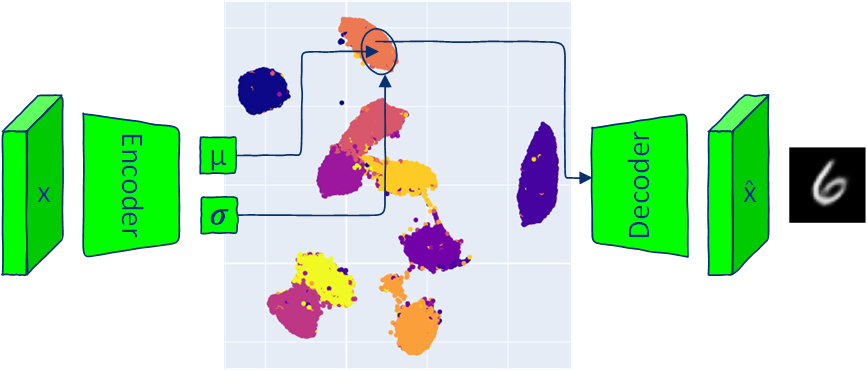 Explore the unique aspects of VAEs, which separate them from traditional autoencoders by enabling data generation through sampling from a distribution
4. How to Run Machine-Learning Models in the Browser using ONNX
 Learn how to use ONNX Runtime Web to deploy machine-learning models natively to the browser.
5. 11 Torchvision Datasets for Computer Vision You Need to Know
 With torchvision datasets, developers can train and test their machine learning models on a range of tasks, such as image classification and object detection.
6. Build a Custom-Trained Object Detection Model With 5 Lines of Code
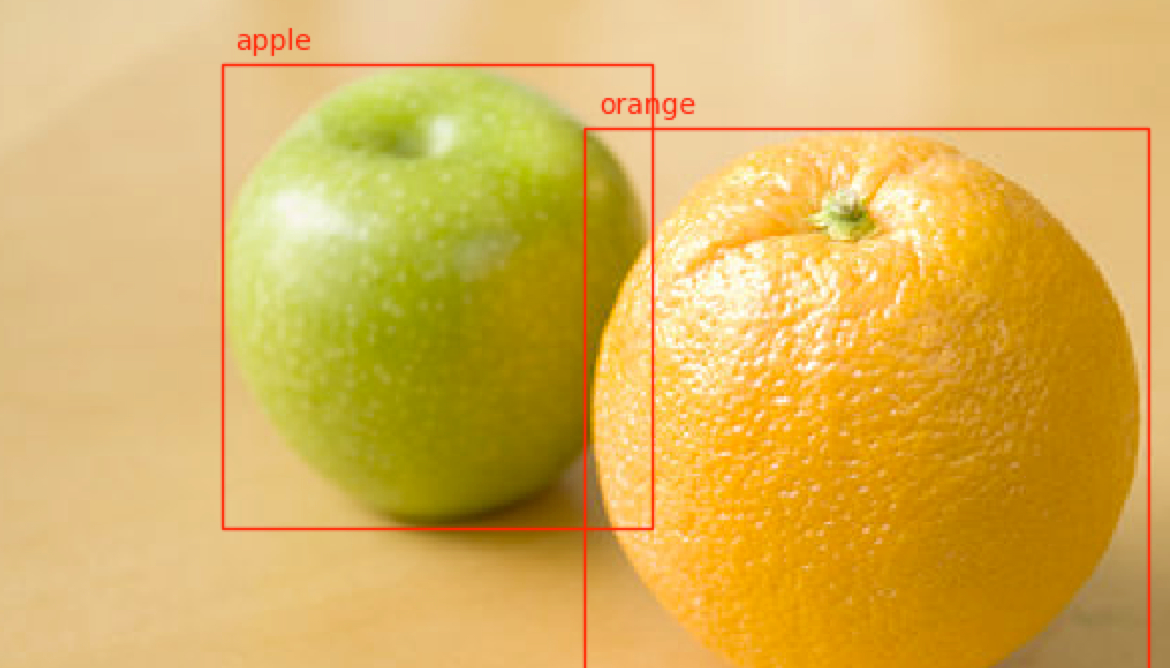 These days, machine learning and computer vision are all the craze. We’ve all seen the news about self-driving cars and facial recognition and probably imagined how cool it’d be to build our own computer vision models. However, it’s not always easy to break into the field, especially without a strong math background. Libraries like PyTorch and TensorFlow can be tedious to learn if all you want to do is experiment with something small.
7. Object Detection Frameworks That Will Dominate 2023 and Beyond
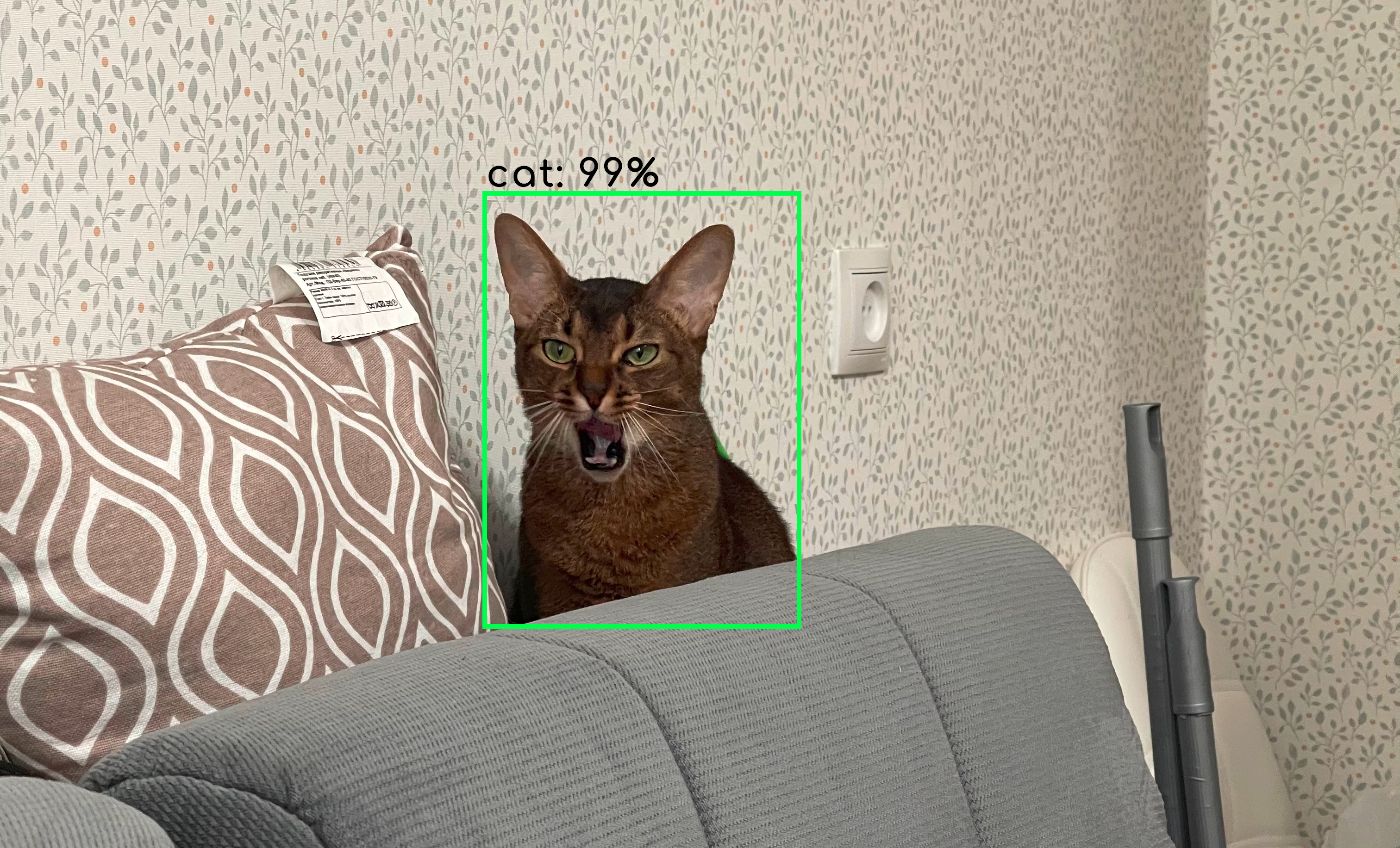 Frameworks for object detection and computer vision tasks are indeed numerous. This article attempts to highlight the available frameworks for object detection.
8. Accelerating Neural Networks: The Power of Quantization
 A hands-on guide to neural network quantization: theory, PyTorch implementation, and practical tips for optimizing models for edge devices
9. Entendiendo PyTorch: las bases de las bases para hacer inteligencia artificial
 <meta name="monetization" content="$ilp.uphold.com/EXa8i9DQ32qy">
10. Manipulación de tensores en PyTorch. ¡El primer paso para el deep learning!
 *Nota: Contactar a Omar Espejel (omar@tsc.ai) para cualquier observación. Cualquier error es responsabilidad del autor.
11. Binary Classification: Understanding Activation and Loss Functions with a PyTorch Example
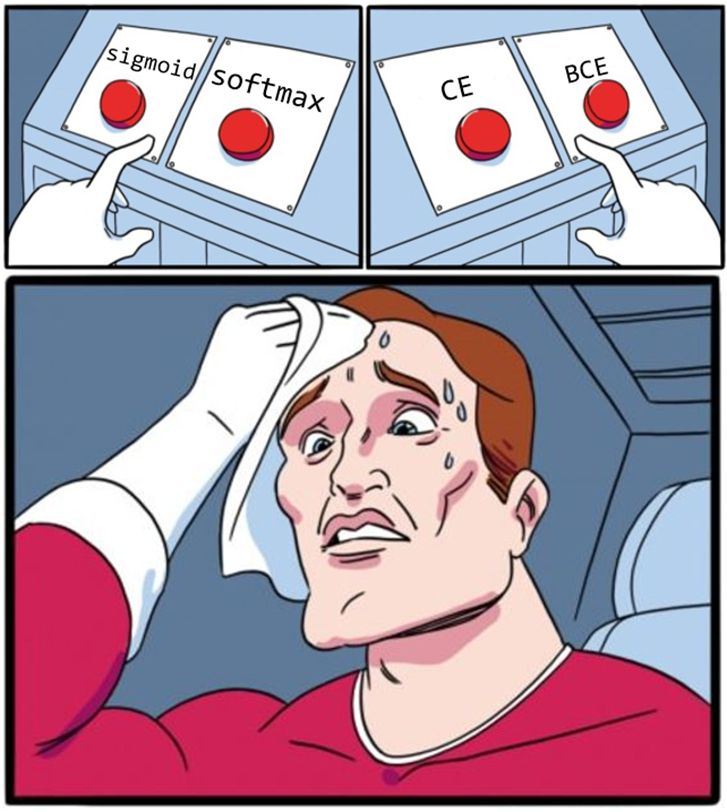 Binary classification NN is used with the sigmoid activation function on its final layer together with BCE loss. The final layer size should be 1.
12. How to Build Your Own PyTorch Neural Network Layer from Scratch
 This is actually an assignment from Jeremy Howard’s fast.ai course, lesson 5. I’ve showcased how easy it is to build a Convolutional Neural Networks from scratch using PyTorch. Today, let’s try to delve down even deeper and see if we could write our own nn.Linear module. Why waste your time writing your own PyTorch module while it’s already been written by the devs over at Facebook?
13. How Genetic Algorithms Can Compete with Gradient Descent and Backprop
 We will train a simple neural network to solve the OpenAI CartPole game using a genetic algorithm, PyTorch, and PyGAD.
[14. Accelerating Diffusion Models with TheStage AI:
A Case Study of Recraft's 20B and Red Panda models](https://hackernoon.com/accelerating-diffusion-models-with-thestage-ai-a-case-study-of-recrafts-20b-and-red-panda-models)
 How to achieve 2x acceleration for diffusion models on Nvidia GPUs by using TheStage AI's Python framework—as demonstrated with Recraft AI models.
15. Top 3 Face Datasets and How to Work with Them
 An image dataset contains specially selected digital images intended to help train, test, and evaluate an artificial intelligence (AI) or machine learning (ML)
16. 20 Best PyTorch Datasets for Building Deep Learning Models
 PyTorch has gained a reputation as a research-focused framework, and these are the Best PyTorch Datasets for Building Deep Learning Models available today.
17. How to Structure a PyTorch ML Project With Google Colab and TensorBoard
 Let’s build a fashion-MNIST CNN, PyTorch style. This is A Line-by-line guide on how to structure a PyTorch ML project from scratch using Google Colab and TensorBoard
18. Multi-Class Classification: Understanding Activation and Loss Functions in Neural Networks
 Multi-class classification NN is used with the softmax activation function on its final layer together with CE loss. The final layer size = classes_number.
19. Scale Vision Transformers (ViT) Beyond Hugging Face
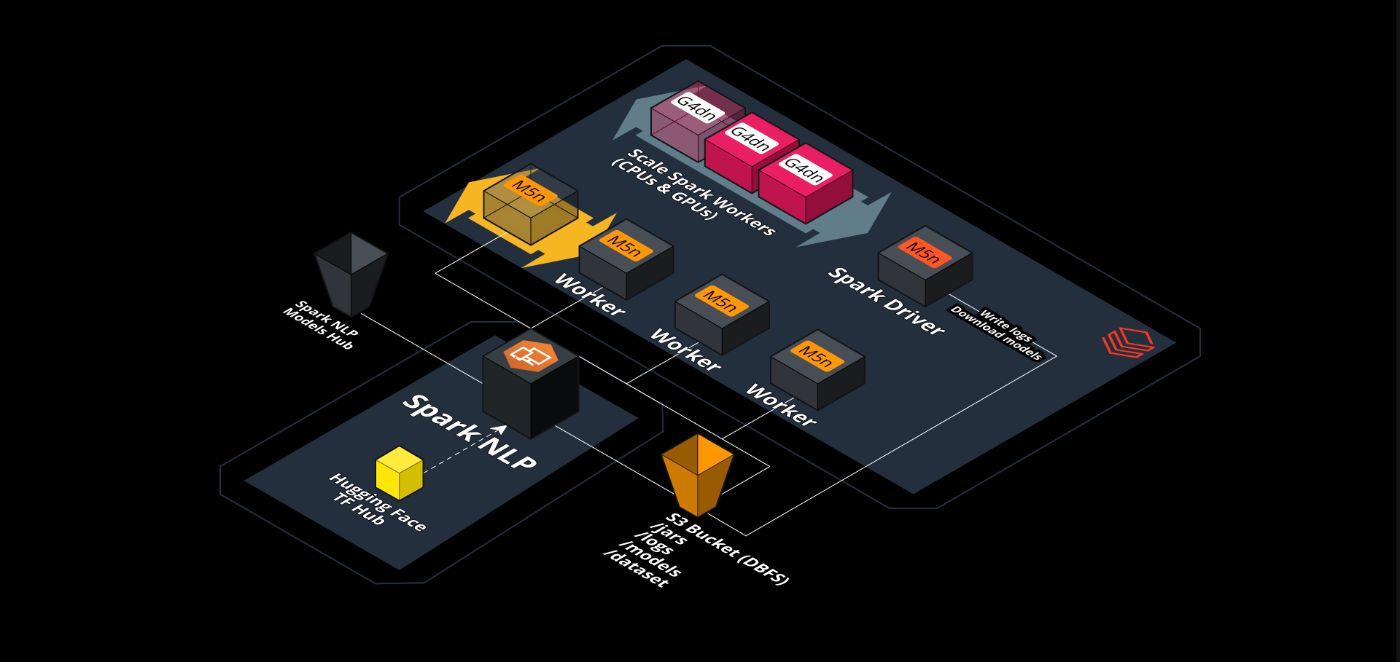 Speed up state-of-the-art ViT models in Hugging Face 🤗 up to 2300% (25x times faster ) with Databricks, Nvidia, and Spark NLP 🚀
20. With AI, You Can Count 1000+ Sunflower Seeds In Seconds
 In this post I will explain how we use artificial intelligence to count sunflower seeds on a photo taken with a mobile device.
21. PyTorch vs TensorFlow: Who has More Pre-trained Deep Learning Models?
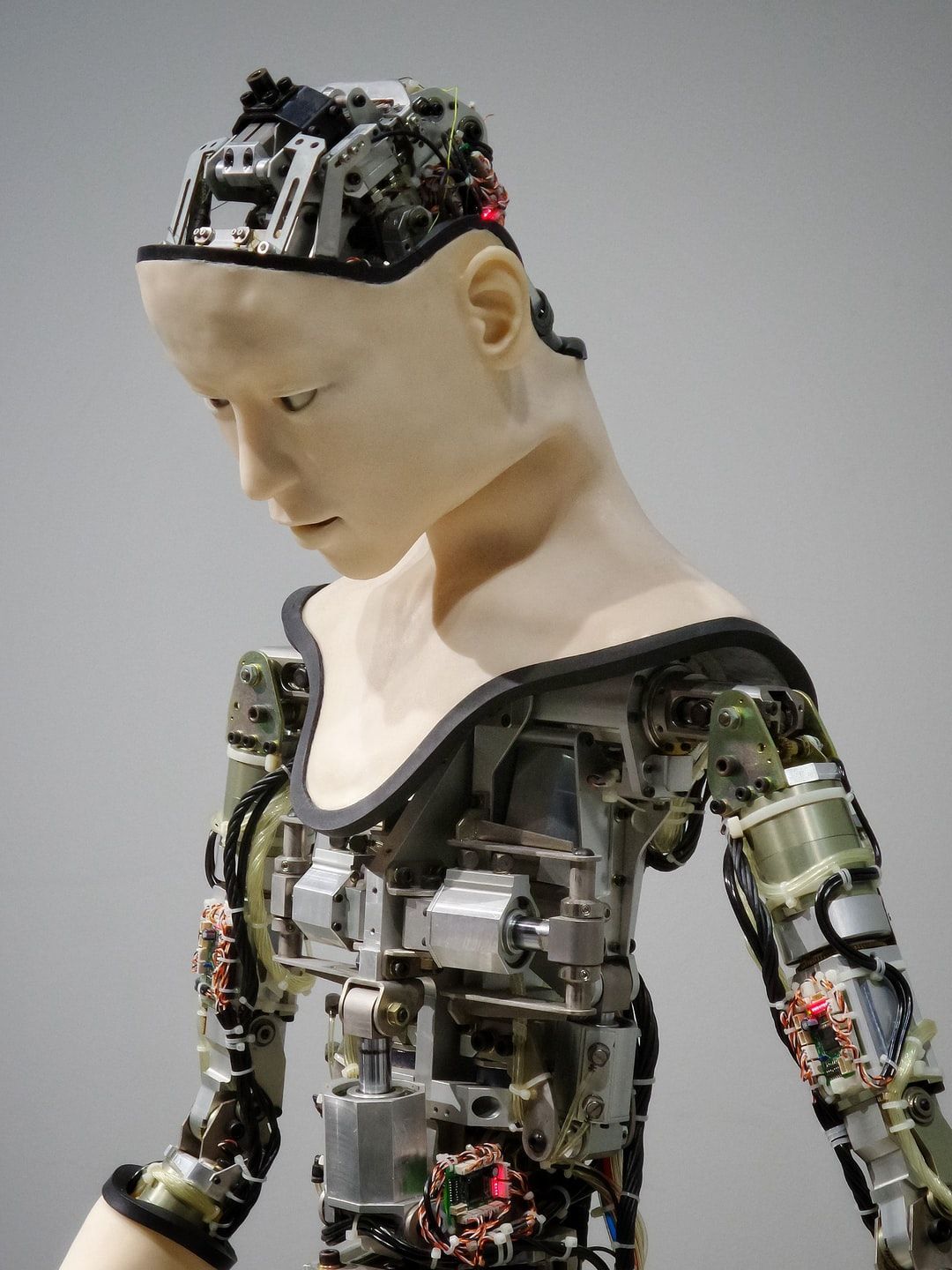 Given the importance of pre-trained Deep Learning models, which Deep Learning framework - PyTorch or TensorFlow - has more of these models available to users is
22. Why ML in Production is (still) Broken and Ways we Can Fix it
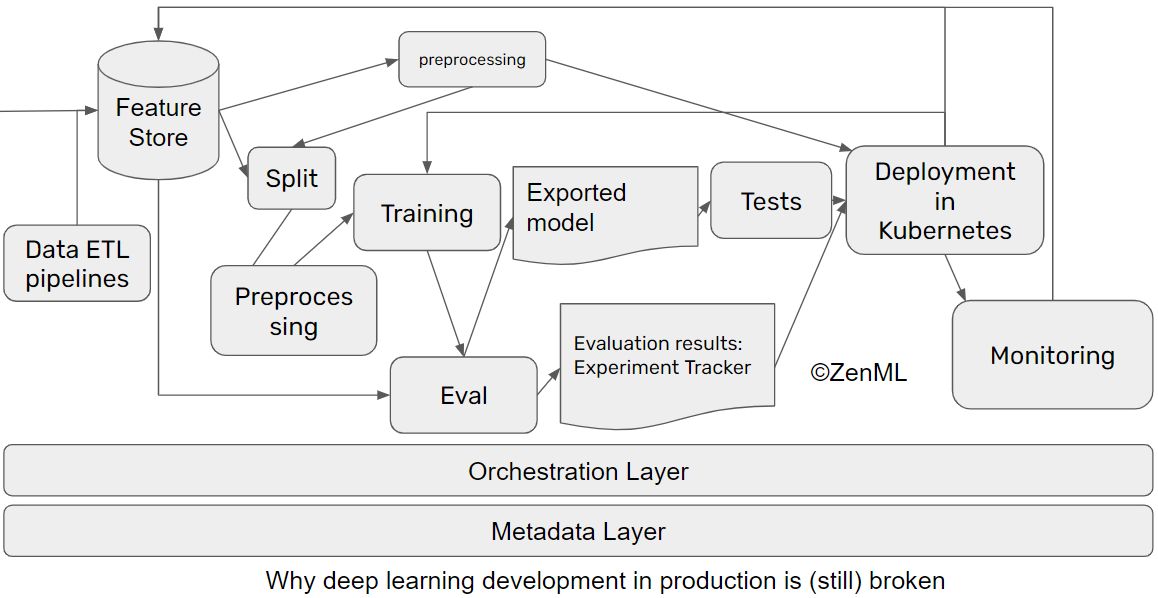 Machine Learning, Deep Learning development in production was still broken. ZenML, an extensible, open-source MLOps framework for production-ready ML pipelines.
23. 'El transformador ilustrado' una traducción al español
 <meta name="monetization" content="$ilp.uphold.com/EXa8i9DQ32qy">
24. How to Get Started With Embeddings
 Getting started with embeddings using open-source tools.
25. Building an End-to-End Speech Recognition Model in PyTorch with AssemblyAI
 This post was written by Michael Nguyen, Machine Learning Research Engineer at AssemblyAI. AssemblyAI uses Comet to log, visualize, and understand their model development pipeline.
26. Procesando Datos Para Deep Learning: Datasets, visualizaciones y DataLoaders en PyTorch
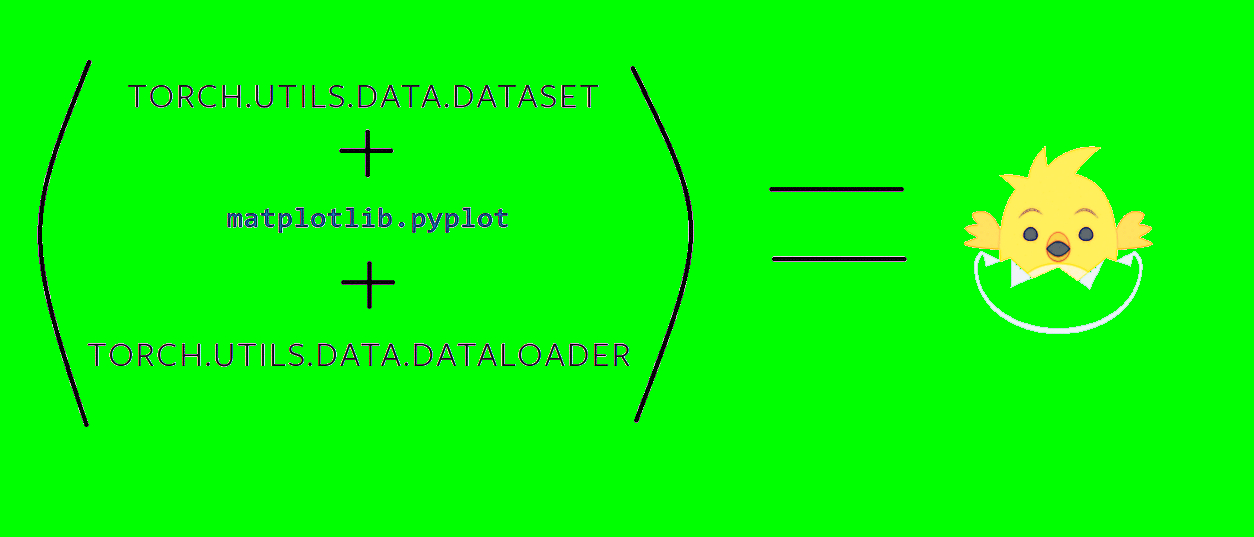 <meta name="monetization" content="$ilp.uphold.com/EXa8i9DQ32qy">
27. How to Change the Tone of a Text Message with Gradio and Python
 How to Build a Text Style Transfer AI using Open Source Project Styleformer
28. Why Learning PyTorch Can Make you a Better Engineer
 Pytorch is a powerful open-source deep-learning framework that is quickly gaining popularity among researchers and developers
29. How To Get Started With Machine Learning: A Tutorial For Beginners By A Beginner
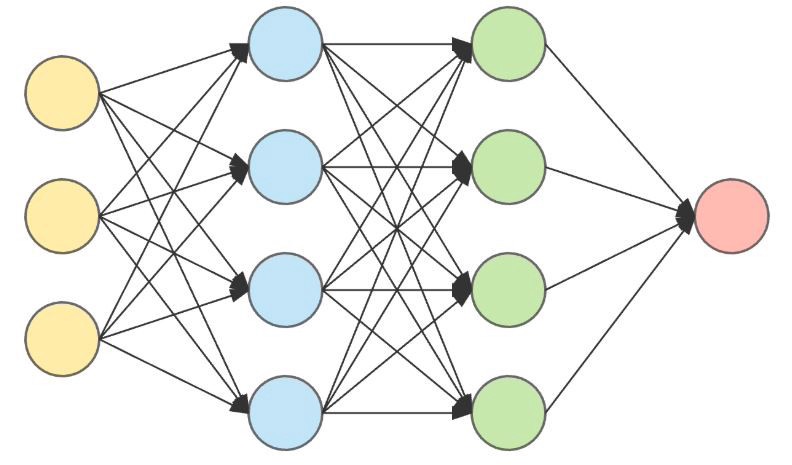 I Learned Machine Learning in a Weekend, here's how I did it and the steps that I would recommend to take if you want to do the same!
30. A Beginner Guide to Incorporating Tabular Data via HuggingFace Transformers
 Transformer-based models are a game-changer when it comes to using unstructured text data. As of September 2020, the top-performing models in the General Language Understanding Evaluation (GLUE) benchmark are all BERT transformer-based models. At Georgian, we often encounter scenarios where we have supporting tabular feature information and unstructured text data. We found that by using the tabular data in these models, we could further improve performance, so we set out to build a toolkit that makes it easier for others to do the same.
31. Training Machine Learning Models Using TensorFlow or PyTorch
 I will show you how gradient descent works, which is in the deepest deep of machine learning.
32. Why Measuring Time is Not Enough: a Practical Roofline Model for ML Training
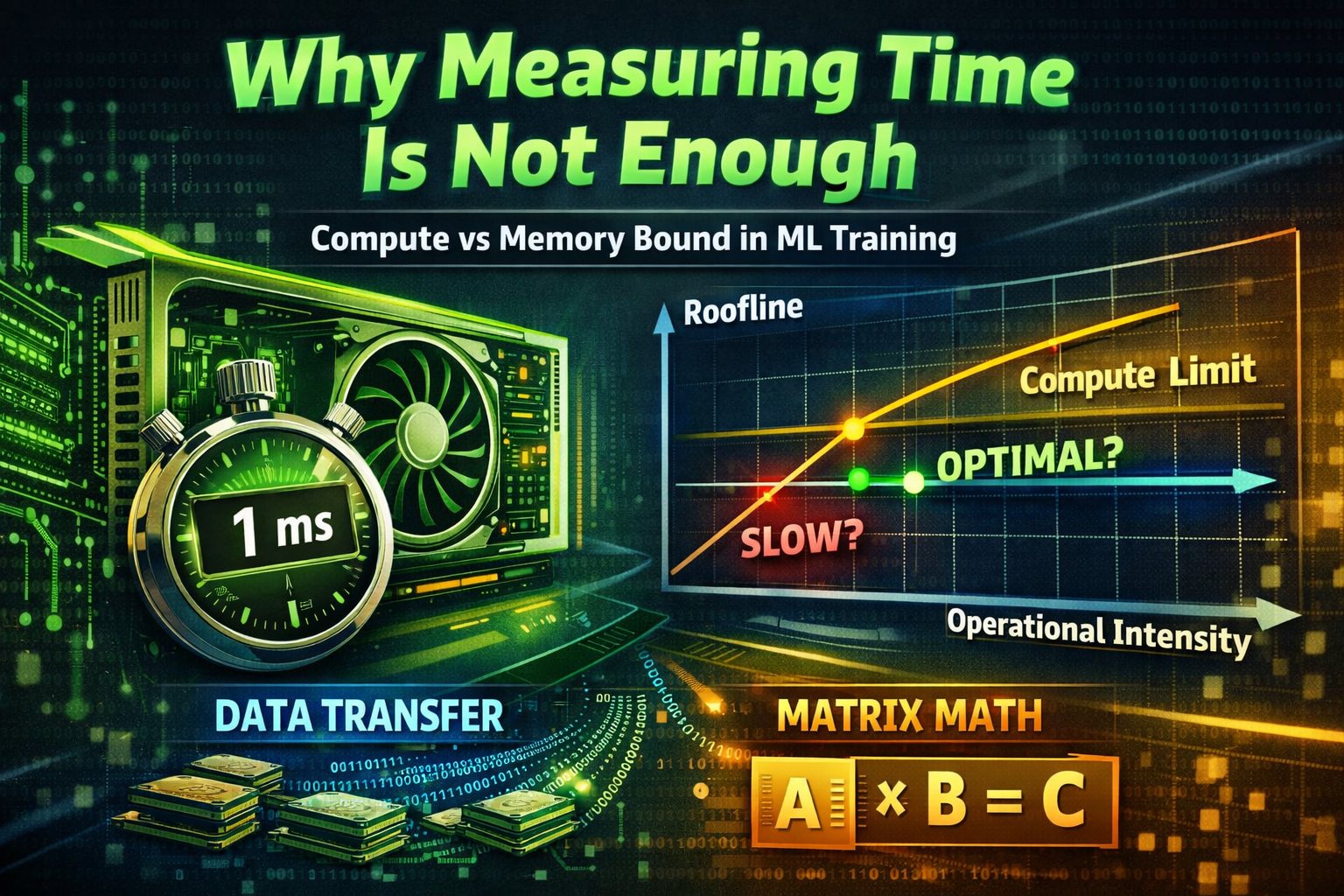 Raw measurements don’t tell the full story.
33. Meta-Learning: Teaching AI to Learn to Learn
 Meta-learning helps AI models adapt quickly to new tasks with minimal data. Learn how it works through MAML and Prototypical Networks, with PyTorch code.
34. How Transfer Learning and Domain Adaptation Let You Build Smarter AI (Without More Data)
 Build smarter AI with less data using transfer learning and domain adaptation. Fine-tune models and align domains with real PyTorch examples.
35. Facebook’s PyTorch3D : A Catalyst for Deep Learning and 3D Objects
 To understand what PyTorch is, how it works, and its ability to catalyze technological advancements. It’s important first to understand the answer to the question, “What is PyTorch?”
36. How to Train a Semi-Supervised Classifier With Pseudo-Labeling and CNN Embeddings
 Extract features with a pretrained CNN, cluster unlabeled images, propagate labels with pseudo-labelling, and train a semi-supervised classifier.
37. Pytorch Contiguous Tensor Optimization
 Pytorch requires manual management of tensor contiguity in many cases. This automates that.
38. Eight Leaders Explain Their Model Training Libraries For The PyTorch Ecosystem
 I started using Pytorch to train my models back in early 2018 with 0.3.1 release. I got hooked by the Pythonic feel, ease of use and flexibility.
39. The Hitchhikers's Guide to PyTorch for Data Scientists
 PyTorch has sort of became one of the de facto standard for creating Neural Networks now, and I love its interface. Yet, it is somehow a little difficult for beginners to get a hold of.
40. What Really Determines the Speed of Your PyTorch Code?
 Learn how to benchmark PyTorch and CUDA code correctly. A practical guide to measuring GPU performance using CUDA events.
41. How to Use ASR System for Accurate Transcription Properties of Your Digital Product
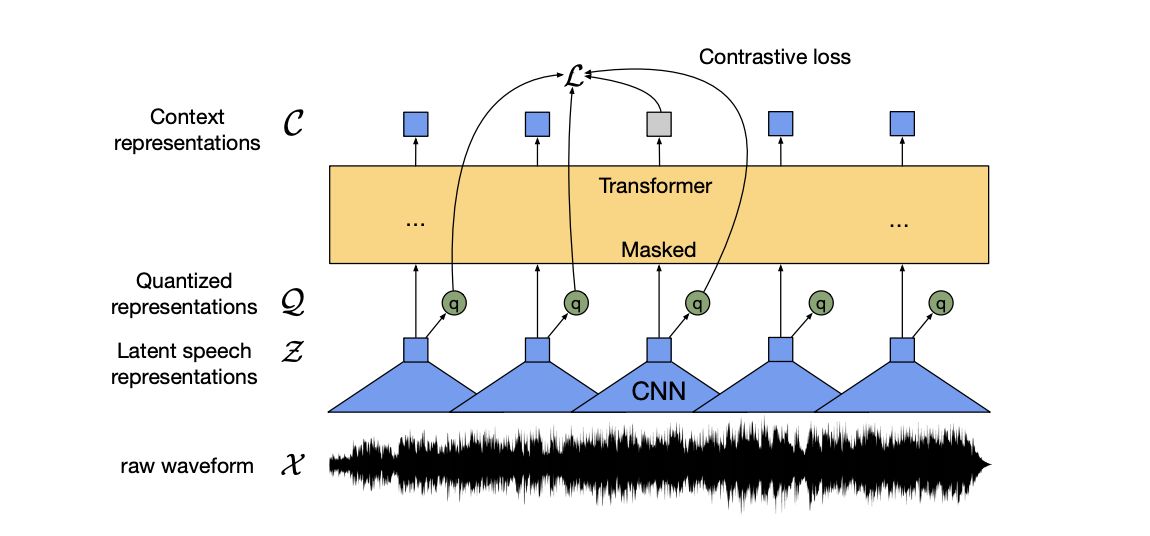 building an end to end automatic speech recognition system with Wav2vec 2.0. The full blog post shows code samples using python and pytorch.
42. Deep Learning at Alibaba Cloud with Alluxio: How To Run PyTorch on HDFS
 This tutorial shows how Alibaba Cloud Container team runs PyTorch on HDFS using Alluxio under Kubernetes environment. The original Chinese article was published on Alibaba Cloud's engineering blog, then translated and published on Alluxio's Engineering Blog
43. Exploring T5 Model : Text to Text Transfer Transformer Model
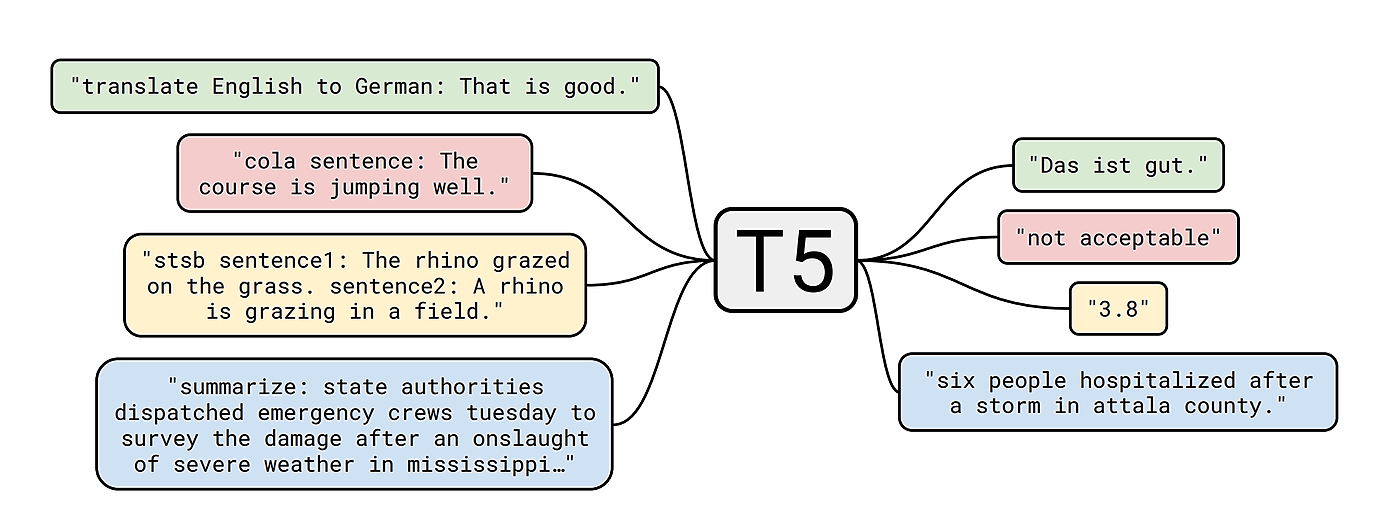 Recent years have seen a plethora of pre-trained models such as ULMFiT, BERT, GPT, etc being open-sourced to the NLP community. Given the size of such humungous models, it's nearly impossible to train such networks from scratch considering the amount of data and computation that is required. This is where a new learning paradigm "Transfer Learning" kicks in. Transfer learning is a research problem in machine learning that focuses on storing knowledge gained while solving one problem and applying it to a different but related problem.
44. Reverse Engineering the AI Supply Chain: Why Regex Won't Save Your PyTorch Models
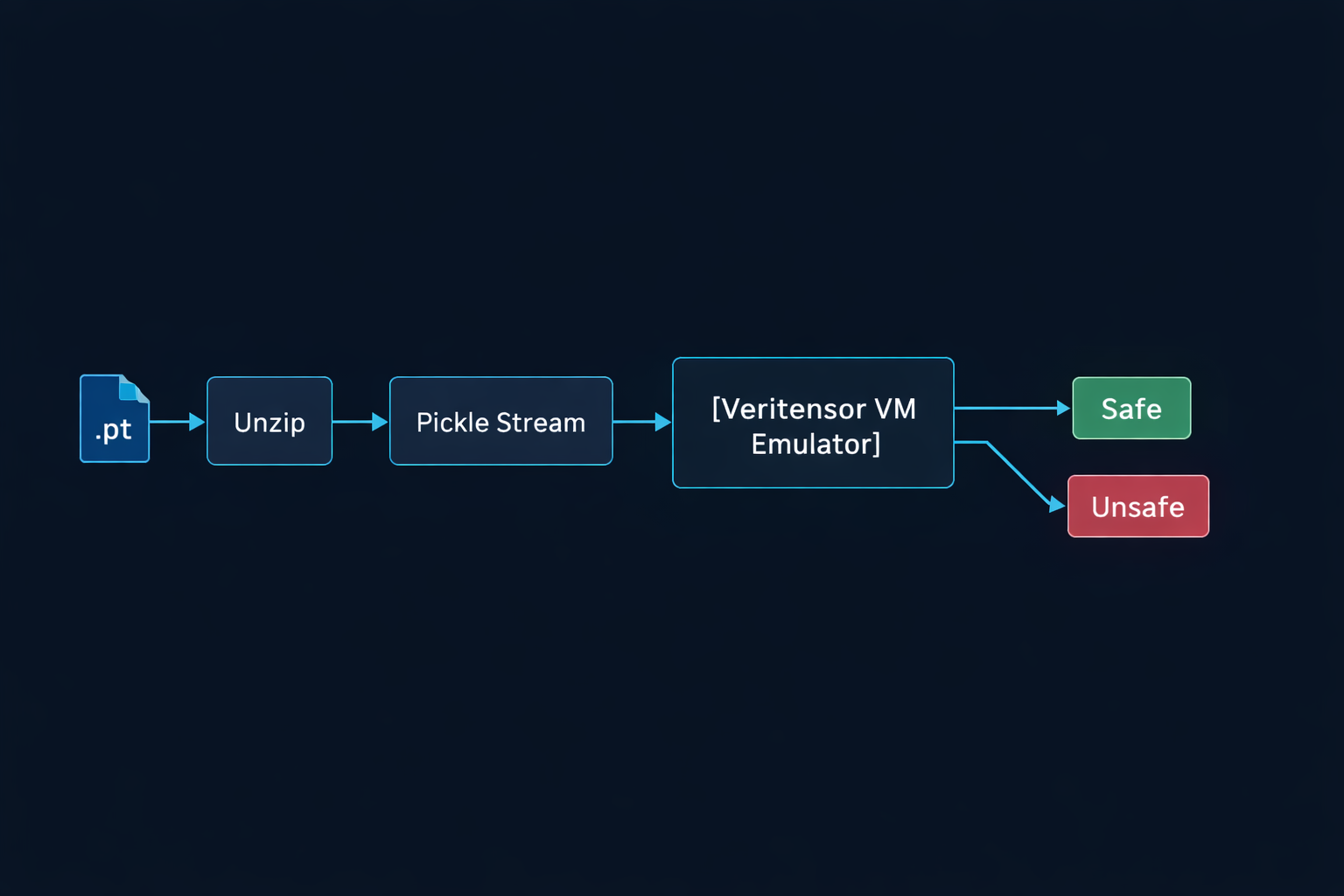 Stop blindly trusting AI models. Veritensor is an open-source CLI that detects RCE malware in Pickle/PyTorch files and verifies Hugging Face integrity.
45. Our GPU Was Idle 77% of the Time. Here's How We Fixed It
 Pinned memory and non-blocking streams can speed up data transfers.
46. Arm, Meta Partner to Improve AI Power Efficiency
 Arm and Meta form partnership to optimize AI software for energy-efficient chips used in data centers and devices.
47. Implementation Details of Tree-Diffusion: Architecture and Training for Inverse Graphics
 This article provides the technical implementation details of the Tree-Diffusion architecture using PyTorch and NF-ResNet.
48. The HackerNoon Newsletter: How to Grow Your Reach and Authority as a Writer (1/28/2026)
 1/28/2026: Top 5 stories on the HackerNoon homepage!
49. Your PyTorch Model Is Slower Than You Think: This Is the Reason Why
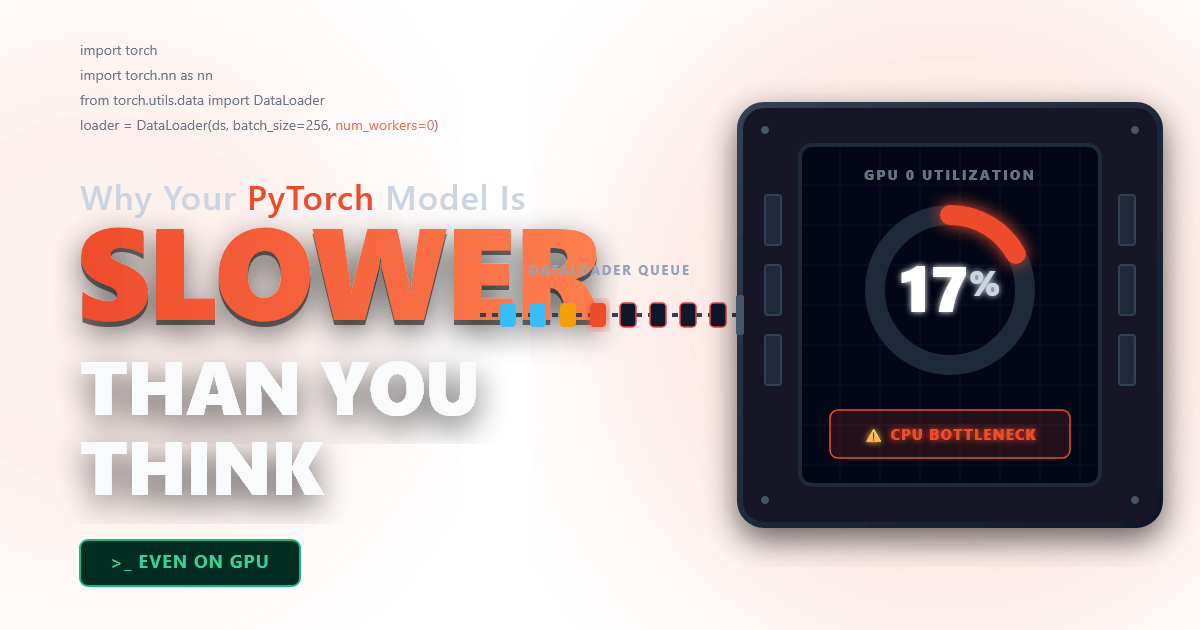 We’ll cover three categories of hidden bottlenecks I measured on a real RTX 5060 training loop. None of them are in your model architecture.
50. Implementing Automatic Filtering with PyTorch and Transformers
 Explore the seamless implementation of automatic filtering using PyTorch and the Transformers library.
51. Lessons from Testing AI Models on Global Damage Data
 This article’s results show Faster R-CNN with ResNet backbones beats YOLOv5 for road damage detection, with noted gains and failure case insights.
52. Fair Data Pruning Implementation: Datasets, Methods, and Augmentation
 This section details the datasets (CIFAR, TinyImageNet), pruning algorithms (including MetriQ), query model training, score extraction, and data augmentation
53. Benchmarking Faster R-CNN and YOLOv5 for Global Road Damage Detection Across Countries
 This article details model choice, tuning, and dataset prep for road damage detection, comparing Faster R-CNN and YOLOv5 on a global multi-country dataset.
54. Potholes, Pipelines, and Precision: Benchmarking Object Detectors for Global Road Safety
 This article compares YOLOv5 and Faster R-CNN for road damage detection, finding two-stage models with ResNet backbones yield top generalized results.
Thank you for checking out the 54 most read blog posts about Pytorch on HackerNoon.
Visit the /Learn Repo to find the most read blog posts about any technology.