
Let's learn about Deep Learning via these 500 free blog posts. They are ordered by HackerNoon reader engagement data. Visit the Learn Repo or LearnRepo.com to find the most read blog posts about any technology.
Curious about the deepfakes and self-driving cars? One must have an opinion on the algorithms mimicking the human brain.
1. Deep Learning vs. Machine Learning: A Simple Explanation
 Machine learning and deep learning are two subsets of artificial intelligence which have garnered a lot of attention over the past two years. If you’re here looking to understand both the terms in the simplest way possible, there’s no better place to be.
2. Gradient Descent: All You Need to Know
 What’s the one algorithm that’s used in almost every Machine Learning model? It’s <strong>Gradient Descent</strong>. There are a few variations of the algorithm but this, essentially, is how any ML model learns. Without this, ML wouldn’t be where it is right now.
3. A list of artificial intelligence tools you can use today — for personal use (1/3)
 Artificial Intelligence and the fourth industrial revolution has made some considerable progress over the last couple of years. Most of this current progress that is usable has been developed for industry and business purposes, as you’ll see in coming posts. Research institutes and dedicated, specialised companies are working toward the ultimate goal of AI (cracking artificial general intelligence), developing open platforms and the looking into the ethics that follow suit. There are also a good handful of companies working on AI products for consumers, which is what we’ll be kicking this series of posts off with.
4. Top 5 Machine Learning Projects for Beginners
 As a beginner, jumping into a new machine learning project can be overwhelming. The whole process starts with picking a data set, and second of all, study the data set in order to find out which machine learning algorithm class or type will fit best on the set of data.
5. Deep Learning CNN’s in Tensorflow with GPUs

6. Search Algorithms in Artificial Intelligence
 There can be one or many solutions to a given problem, depending on the scenario, As there can be many ways to solve that problem. <strong><em>Think about how do you approach a problem.</em></strong> Lets say you need to do something straight forward like a math multiplication. Clearly there is one correct solution, but many algorithms to multiply, depending on the size of the input. Now, take a more complicated problem, like playing a game(imagine your favorite game, chess, poker, call of duty, DOTA, anything..). In most of these games, at a given point in time, you have multiple moves that you can make, and you choose the one that gives you best possible outcome. In this scenario, there is no one correct solution, but there is a best possible solution, depending on what you want to achieve. Also, there are multiple ways to approach the problem, based on what strategy you choose to have for your game play.
7. Rational Agents for Artificial Intelligence
 There are multiple approaches that you might take to create Artificial Intelligence, based on what we hope to achieve with it and how will we measure its success. It ranges from extremely rare and complex systems, like self driving cars and robotics, to something that is a part of our daily lives, like face recognition, machine translation and email classification.
8. Begin your Deep Learning project for free (free GPU processing , free storage , free easy upload…
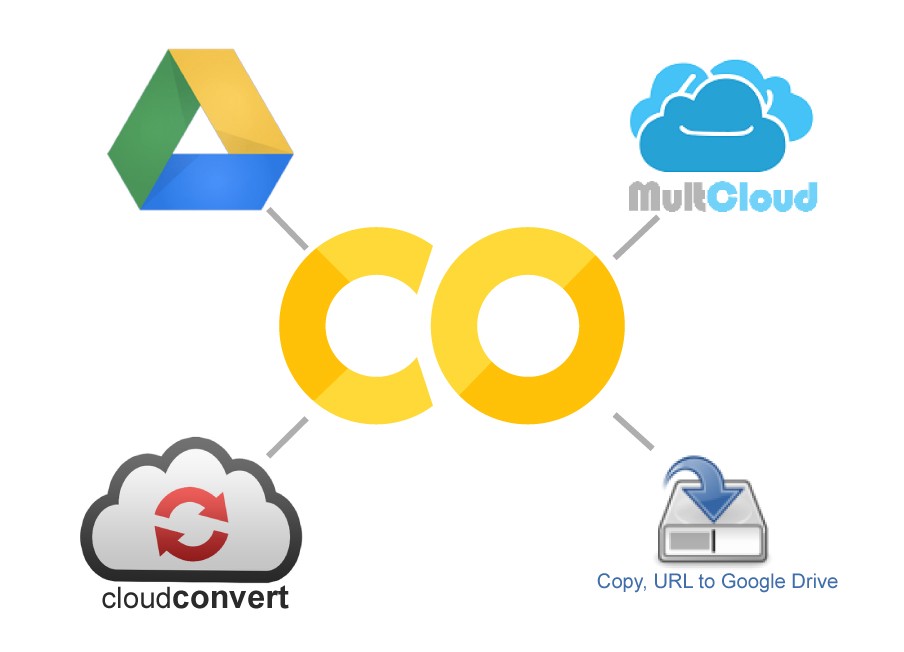 In this story i would go through how to begin a working on deep learning without the need to have a powerful computer with the best gpu , and without the need of having to rent a virtual machine , I would go through how to have a free processing on a GPU , and connect it to a free storage , how to directly add files to your online storage without the need to download then upload , and how to unzip file for free online .
9. 🎁 Releasing “Supervisely Person” dataset for teaching machines to segment humans
 Hello, Machine Learning community!
10. Deep Learning Chatbots: Everything You Need to Know
 When you’re creating a chatbot, your goal should be to make one that it requires minimal or no human interference. This can be achieved by two methods.
11. How to Initialize weights in a neural net so it performs well?
 We know that in a neural network, weights are initialized usually randomly and that kind of initialization takes fair / significant amount of repetitions to converge to the least loss and reach to the ideal weight matrix. The problem is, this kind of initialization is prone to vanishing or exploding gradient problems.
12. 10 Machine Learning, Data Science, and Deep Learning Courses for Programmers in 2020
 A curated list of courses to learn data science, machine learning, and deep learning fundamentals.
13. 6 Biggest Limitations of Artificial Intelligence Technology
 While the release of GPT-3 marks a significant milestone in the development of AI, the path forward is still obscure. There are still certain limitations to the technology today. Here are six of the major limitations facing data scientists today.
14. How to Interpret A Contour Plot
 Contour Plot
15. 5 Cool Python Project Ideas For Inspiration
 In the past few years, the programming language that has got the highest fame across the globe is Python. The stardom Python has today in the IT industry is sky-high. And why not? Python has got everything that makes it the deserving candidate for the tag of- “Most Demanded Programming language on the Planet.” So, now it’s your time to do something innovative.
16. What I Learned Trying to Predict the Price of Cryptocurrencies
 A few days ago, I presented a webinar about price predictions for cryptocurrencies. The webinar summarized some of the lessons we have learned building prediction models for crypto-assets in the IntoTheBlock platform. We have a lot of interesting IP and research coming out in this area but I wanted to summarize some key ideas that can result helpful if you are intrigued by the idea of predicting the price of crypto-assets.
17. The Cheapskate’s Guide to Fine-Tuning LLaMA-2 and Running It on Your Laptop
 Everyone is GPU-poor these days So my mission is to fine-tune a LLaMA-2 model with only one GPU and run on my laptop
18. A list of artificial intelligence tools you can use today — for businesses (2/3)

19. Contextual Multi-Armed Bandit Problems in Reinforcement Learning
 Explore context-based multi-armed bandit problems in RL. Learn to implement LinUCB, Decision Trees, and Neural Networks to solve them.
20. Difference between Artificial Intelligence, Machine learning, and deep learning
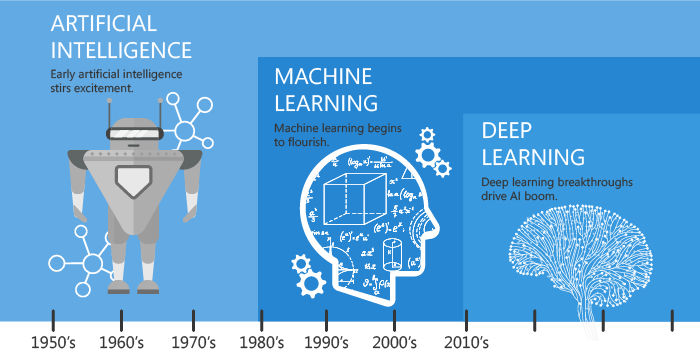 The development in the field of technology has enhanced over the years. With time, we get terms like Artificial Intelligence, machine learning, and deep learning in technology. We often confuse in these terms and define them similarly. But it is not a precise definition as these terms are different from each other. If you do not want to make this mistake again, then you must read out this article. Here we are going to discuss the difference in these three terms AI, ML, and Deep learning.
21. How to Sample From Latent Space With Variational Autoencoder
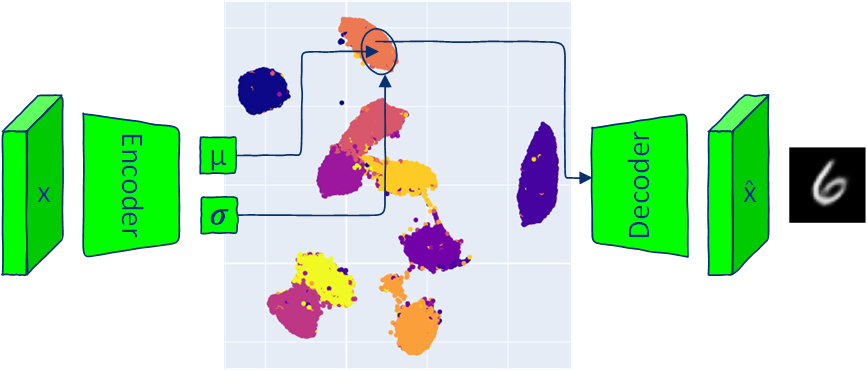 Explore the unique aspects of VAEs, which separate them from traditional autoencoders by enabling data generation through sampling from a distribution
22. Top Resources for Learning About AI in Finance
 Curated list of top resources to learn about AI in finance.
23. What's The Best Image Labeling Tool for Object Detection?
 An image labeling or annotation tool is used to label the images for bounding box object detection and segmentation. It is the process of highlighting the images by humans. They have to be readable for machines. With the help of the image labeling tools, the objects in the image could be labeled for a specific purpose. The process of object labeling makes it easy for people to understand what is in the image. The labeling tool helps the people to mark the items in an image. There are several image labeling tools for object detection, and some of them use varied techniques for detection of the object, like a semantic, bounding box, key-point, cuboid, semantic and many more. In this article, we will talk about image labeling and the best image labeling tools.
24. Implementing different variants of Gradient Descent Optimization Algorithm in Python using Numpy
 Learn how tensorflow or pytorch implement optimization algorithms by using numpy and create beautiful animations using matplotlib
25. Deep Learning & Artificial Neural Networks: Solving The Black Box Mystery
 I often hear people talking about neural networks as something as a black-box that you don’t understand what it does or what they mean. Actually many people can’t understand what they mean by that. If you understand how back-propagation works, then how is it a black-box?
26. Why I Dropped Out of College in 2020 to Design My Own ML and AI Degree
 Most people would think I was crazy for starting 2020 as a college dropout (sorry mom!), but I wish I made this decision sooner.
27. Driver Drowsiness Detection System: A Python Project with Source Code
 Drowsiness detection is a safety technology that can prevent accidents that are caused by drivers who fell asleep while driving.
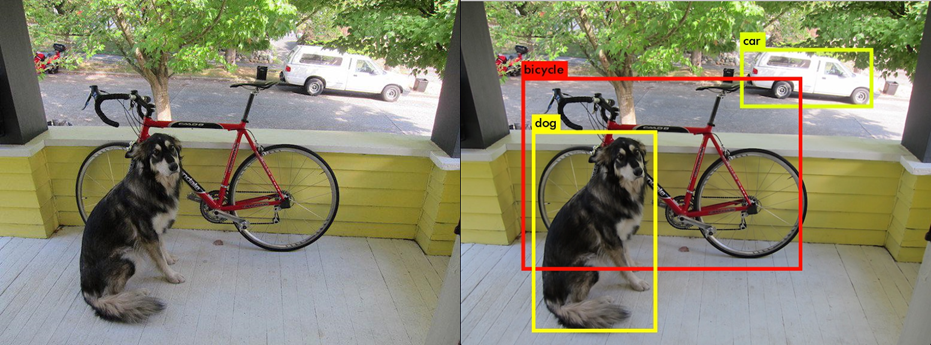
28. Revolutionizing Image Analysis: YOLOv3 and PolyRNN++ Integration for Image Annotation
29. Karate Club a Python library for graph representation learning
 Karate Club is an unsupervised machine learning extension library for the NetworkX Python package. See the documentation here.
30. Introduction To Maths Behind Neural Networks
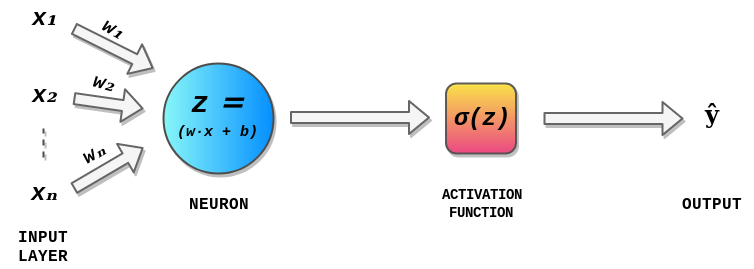 Today, with open source machine learning software libraries such as TensorFlow, Keras or PyTorch we can create neural network, even with a high structural complexity, with just a few lines of code. Having said that, the Math behind neural networks is still a mystery to some of us and having the Math knowledge behind neural networks and deep learning can help us understand what’s happening inside a neural network. It is also helpful in architecture selection, fine-tuning of Deep Learning models, hyperparameters tuning and optimization.
31. Is GPU Really Necessary for Data Science Work?
 A big question for Machine Learning and Deep Learning apps developers is whether or not to use a computer with a GPU, after all, GPUs are still very expensive. To get an idea, see the price of a typical GPU for processing AI in Brazil costs between US $ 1,000.00 and US $ 7,000.00 (or more).
32. 20 Best Machine Learning Resources for Data Scientists
 Whether you’re a beginner looking for introductory articles or an intermediate looking for datasets or papers about new AI models, this list of machine learning resources has something for everyone interested in or working in data science. In this article, we will introduce guides, papers, tools and datasets for both computer vision and natural language processing.
33. How To Apply Machine Learning And Deep Learning Methods to Audio Analysis
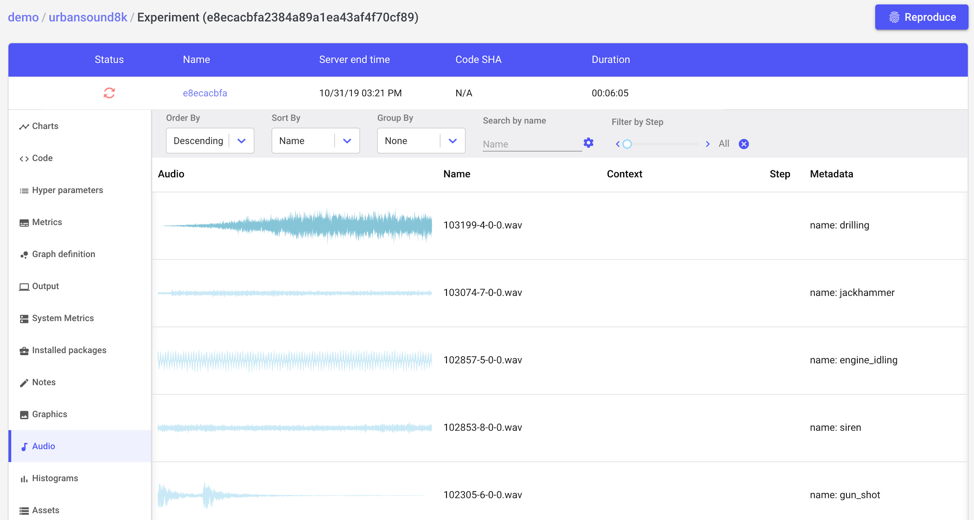 To view the code, training visualizations, and more information about the python example at the end of this post, visit the Comet project page.
34. Creative AI ‘Shakes’ the Core of Humanity and Requires a Broader Discussion About Ethics
 The boundary between machine and humans was clear. But now the machine has become creative! Can self expression still be at the core of our humanity?
35. How I Built an AI to Detect License Plate Number Registration (ANPR)
 This Car Mod Is A Privacy Nightmare! (AI Number Plate Reader with Python, Tensorflow, OpenCV, OpenALPR)
36. Build an Abstractive Text Summarizer in 94 Lines of Tensorflow !! (Tutorial 6)
 This tutorial is the sixth one from a series of tutorials that would help you build an abstractive text summarizer using tensorflow , today we would build an abstractive text summarizer in tensorflow in an optimized way .
37. Deploy Computer Vision Models with Triton Inference Server
 There are a lot of Machine Learning courses, and we are pretty good at modeling and improving our accuracy or other metrics.
38. Deploying Deep Learning Models with Model Server
 Learn how to deploy deep learning models with Model Server.
39. Build a Custom-Trained Object Detection Model With 5 Lines of Code
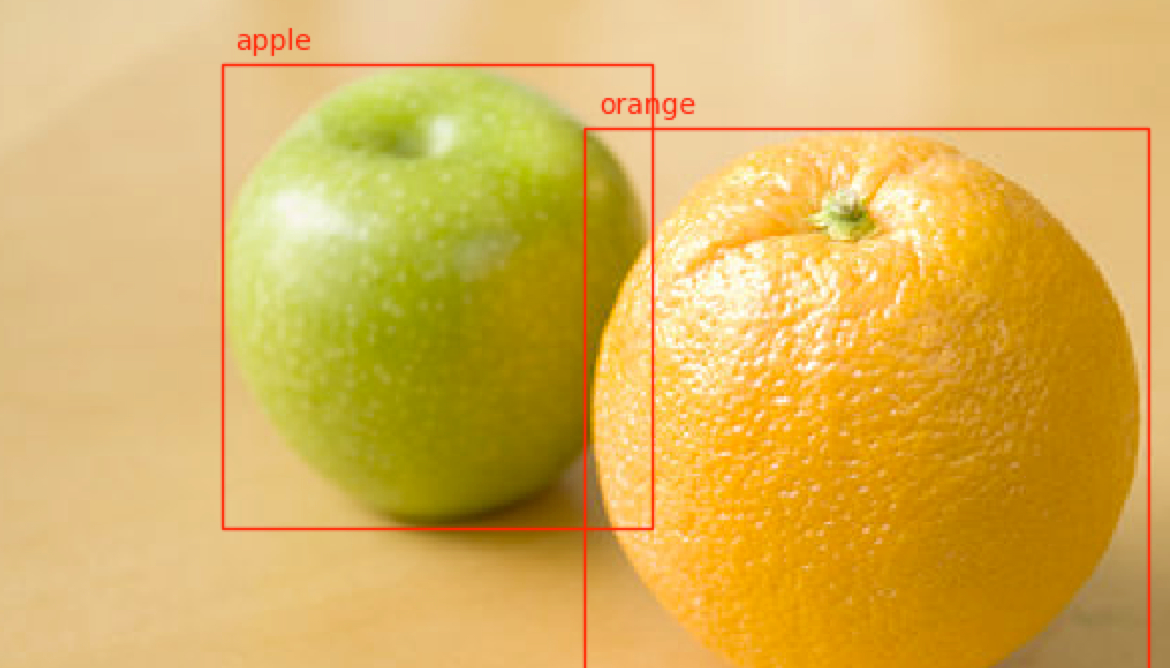 These days, machine learning and computer vision are all the craze. We’ve all seen the news about self-driving cars and facial recognition and probably imagined how cool it’d be to build our own computer vision models. However, it’s not always easy to break into the field, especially without a strong math background. Libraries like PyTorch and TensorFlow can be tedious to learn if all you want to do is experiment with something small.
40. This AI Creates Videos From a Couple of Images
 Researchers created a simple collection of photos and transformed them into a 3-dimensional model.
41. How Search Engines Actually Answer Your Questions
 Modern search Q&A explained: how knowledge graphs, DeepQA, and MRC turn messy web pages into direct, trustworthy answers.
42. The Hidden Problem With Group Rewards in Multi-Agent AI
 Group rewards are breaking your multi-agent RL training. Decoupled normalization keeps coordination intact while stopping gradient collapse.
43. The Revolutionary Potential of 1-Bit Language Models (LLMs)
 The Revolutionary Potential of 1-Bit Language Models
44. How Does "Hey Siri!" Work Without Your iPhone Listening To You At All Times?
 Ever wondered if our phone can detect the “Hey Siri!” command anytime and interpret it, is it recording our daily life conversations too?
45. So you think you know what is Artificial Intelligence?
 When you think of Artificial Intelligence, the first thing that comes to mind is either Robots or Machines with Brains or Matrix or Terminator or Ex Machina or any of the other amazing concepts having machines that can think. This is an appropriate but vague understanding of Artificial Intelligence. In this article we’ll see what A.I. really is and how the definition has changed in the past.
46. Introductory Guide To Real-time Object Detection with Python
 Researchers have been studying the possibilities of giving machines the ability to distinguish and identify objects through vision for years now. This particular domain, called Computer Vision or CV, has a wide range of modern-day applications.
47. An Introduction to “Liquid” Neural Networks
 Liquid neural networks are capable of adapting their underlying behavior during the training phase.
48. The World's Most Powerful Deepfake Model was Just Released by Google
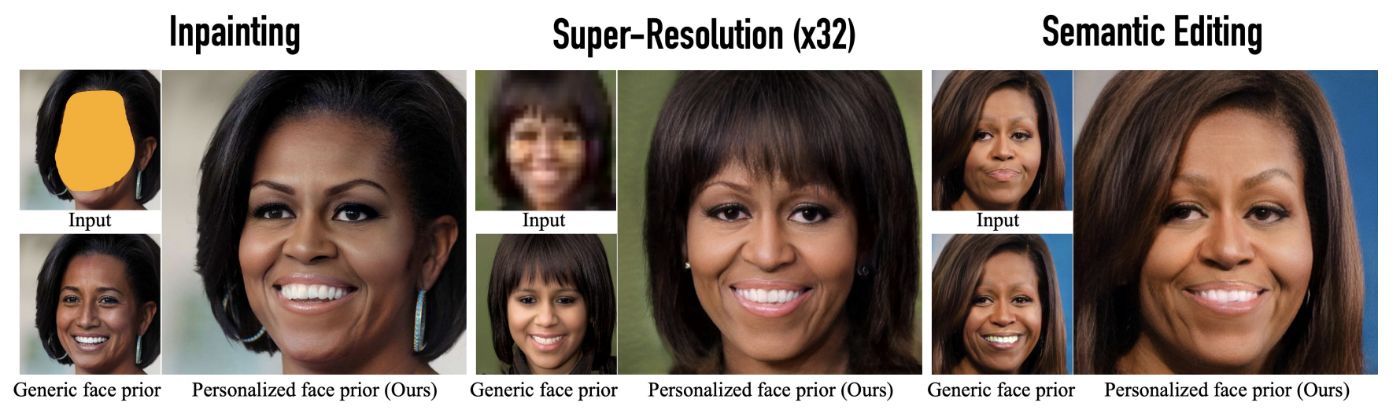 This AI can reconstruct, enhance and edit your images!
49. Top 10 Data Science Project Ideas for 2020
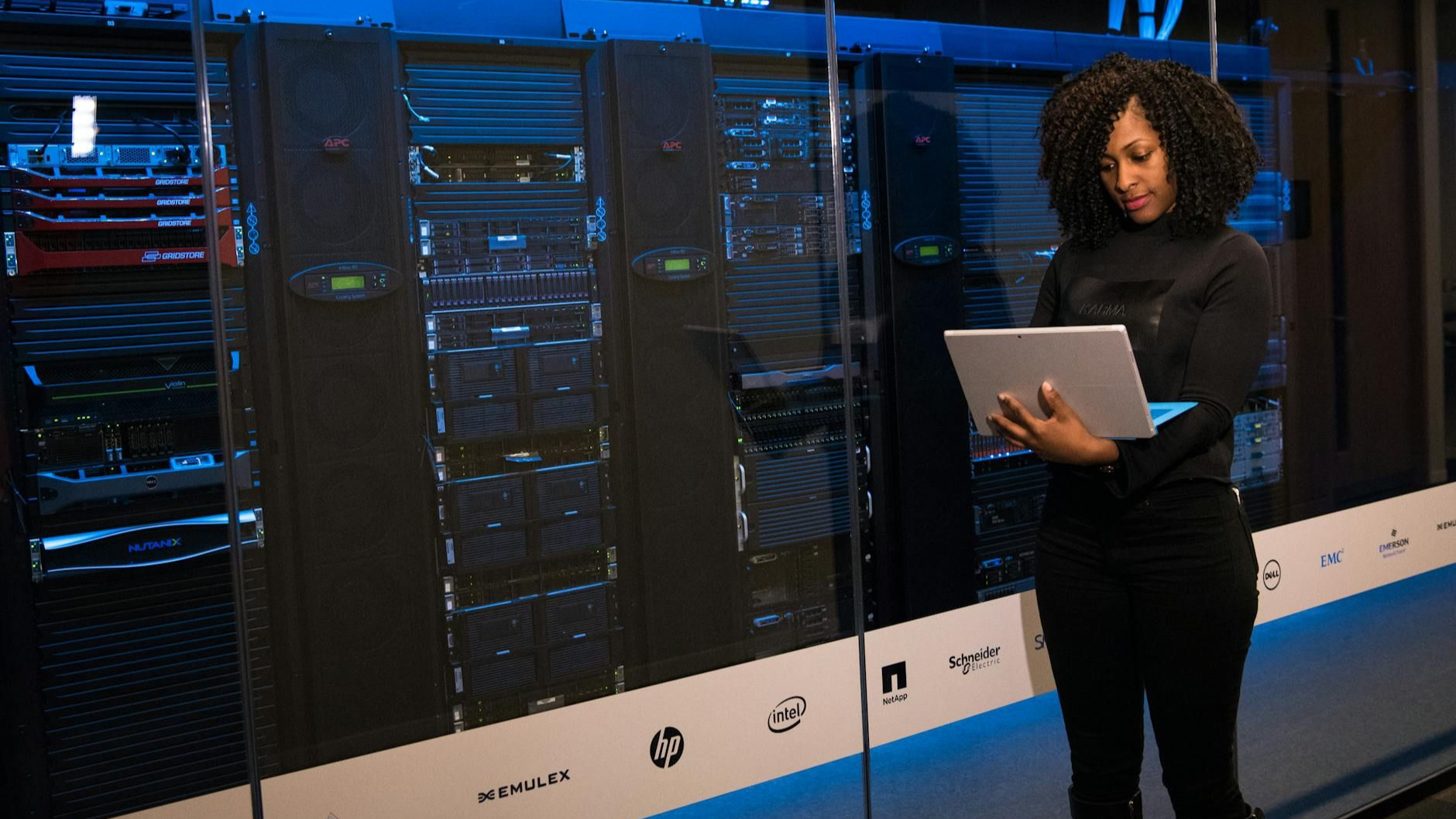 As an aspiring data scientist, the best way for you to increase your skill level is by practicing. And what better way is there for practicing your technical skills than making projects.
50. Going From Not Being Able To Code To Deep Learning Hero

51. What is an RNN (Recurrent Neural Network) in Deep Learning?
 RNN is one of the popular neural networks that is commonly used to solve natural language processing tasks.
52. Accelerating Neural Networks: The Power of Quantization
 A hands-on guide to neural network quantization: theory, PyTorch implementation, and practical tips for optimizing models for edge devices
53. Demystifying Different Variants of Gradient Descent Optimization Algorithm

54. An Intro to Prompting and Prompt Engineering
 Prompting and prompt engineering are easily the most in demand skills of 2023.
55. Facial Recognition Comparison with Java and C ++ using HOG
 HOG - Histogram of Oriented Gradients (histogram of oriented gradients) is an image descriptor format, capable of summarizing the main characteristics of an image, such as faces for example, allowing comparison with similar images.
56. Entendiendo PyTorch: las bases de las bases para hacer inteligencia artificial
 <meta name="monetization" content="$ilp.uphold.com/EXa8i9DQ32qy">
57. Neural Network Layers: All You Need Is Inside Comprehensive Overview
 Explore an in-depth overview of various neural network layers, their history, mathematical formulations, and code implementations. The publication covers common
58. Image Annotation Types For Computer Vision And Its Use Cases
 There are many types of image annotations for computer vision out there, and each one of these annotation techniques has different applications.
59. Manipulación de tensores en PyTorch. ¡El primer paso para el deep learning!
 *Nota: Contactar a Omar Espejel (omar@tsc.ai) para cualquier observación. Cualquier error es responsabilidad del autor.
60. Data Testing for Machine Learning Pipelines Using Deepchecks, DagsHub, and GitHub Actions
 A complete setup of a ML project using version control (also for data with DVC), experiment tracking, data checks with deepchecks and GitHub Action
61. How to Perform MNIST Digit Recognition with a Multi-layer Neural Network
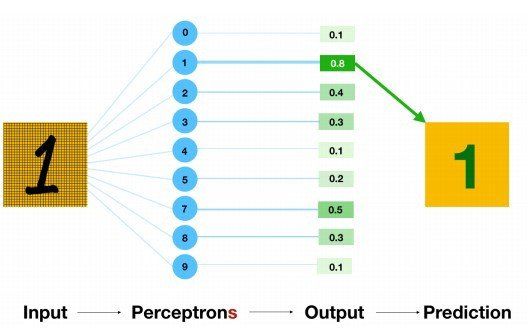 Human Visual System is a marvel of the world. People can readily recognise digits. But it is not as simple as it looks like. The human brain has a million neurons and billions of connections between them, which makes this exceptionally complex task of image processing easier. People can effortlessly recognize digits.
62. ChatSQL: Enabling ChatGPT to Generate SQL Queries from Plain Text
 ChatGPT was released in June 2020 that it is developed by OpenAI. It has led to revolutionary developments in many areas. One of these areas is the creation of
63. Increase The Size of Your Datasets Through Data Augmentation
 Access to training data is one of the largest blockers for many machine learning projects. Luckily, for various different projects, we can use data augmentation to increase the size of our training data many times over.
64. Understanding A Recurrent Neural Network For Image Generation
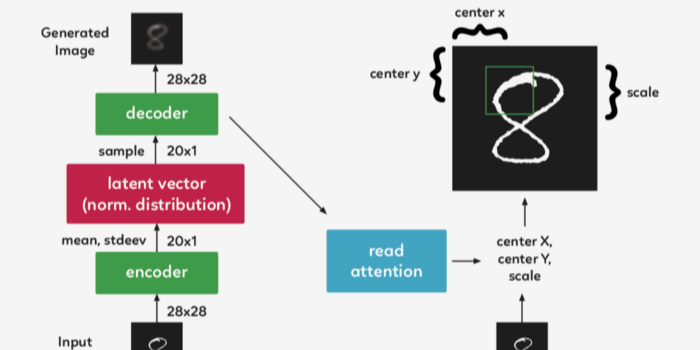 The purpose of this post is to implement and understand Google Deepmind’s paper DRAW: A Recurrent Neural Network For Image Generation. The code is based on the work of Eric Jang, who in his original code was able to achieve the implementation in only 158 lines of Python code.
65. From 140GB to 4GB: The Art of LLM Quantization
 Quantization shrinks 140GB LLMs to under 4GB, bringing enterprise AI to consumer GPUs. A deep dive into GPTQ, AWQ, GGUF, and beyond.
66. Model Quantization in Deep Neural Networks
 To get your AI models to work on laptops, mobiles and tiny devices quantization is essential
67. Gain State-Of-The-Art Results on Tabular Data with Deep Learning & Embedding Layers [A How To Guide]
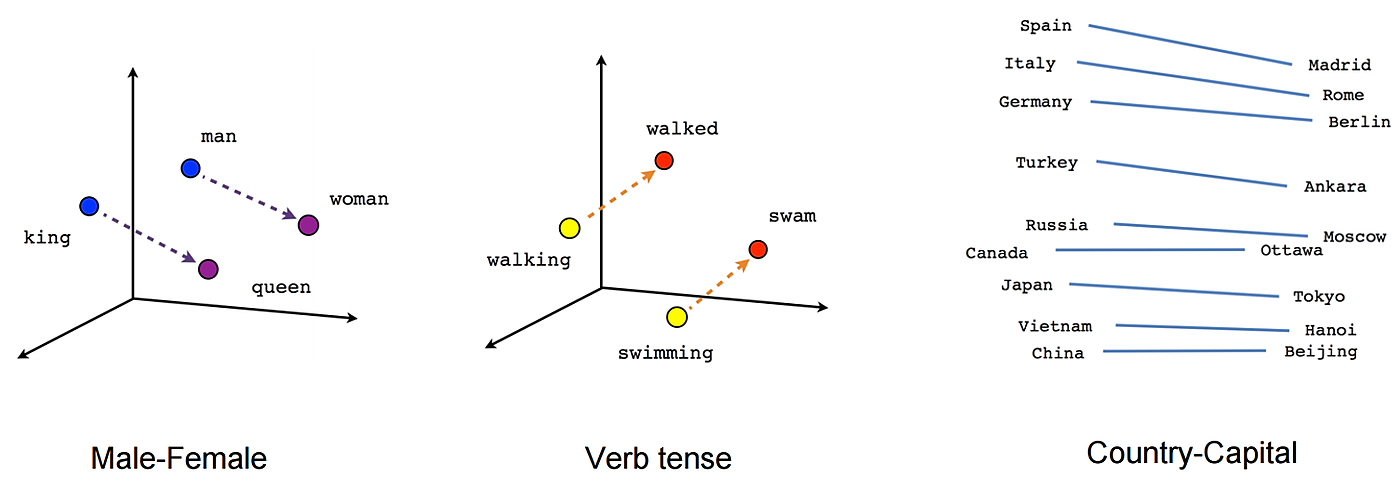 Tree-based models like Random Forest and XGBoost have become very popular in solving tabular(structured) data problems and gained a lot of tractions in Kaggle competitions lately. It has its very deserving reasons. However, in this article, I want to introduce a different approach from fast.ai’s Tabular module leveraging.
68. Understanding The Importance Of Data For Machine Learning
 Data is the most important and must-have food for machine learning. It can be any fact, text, symbols, images, videos, etc., but in unprocessed form. Let us see
69. Character AI in 2025: A Practical Guide and Comparison With ChatGPT, Gemini, & More
 Character AI lets you build and chat with AI personas—but how useful is it really? This guide covers its features, flaws, and how it stacks up against tools.
70. Text Classification With Zero Shot Learning
 Zero-shot text classification using trnasformers and TARSclassifier.
71. Israel’s Artificial Intelligence Startups
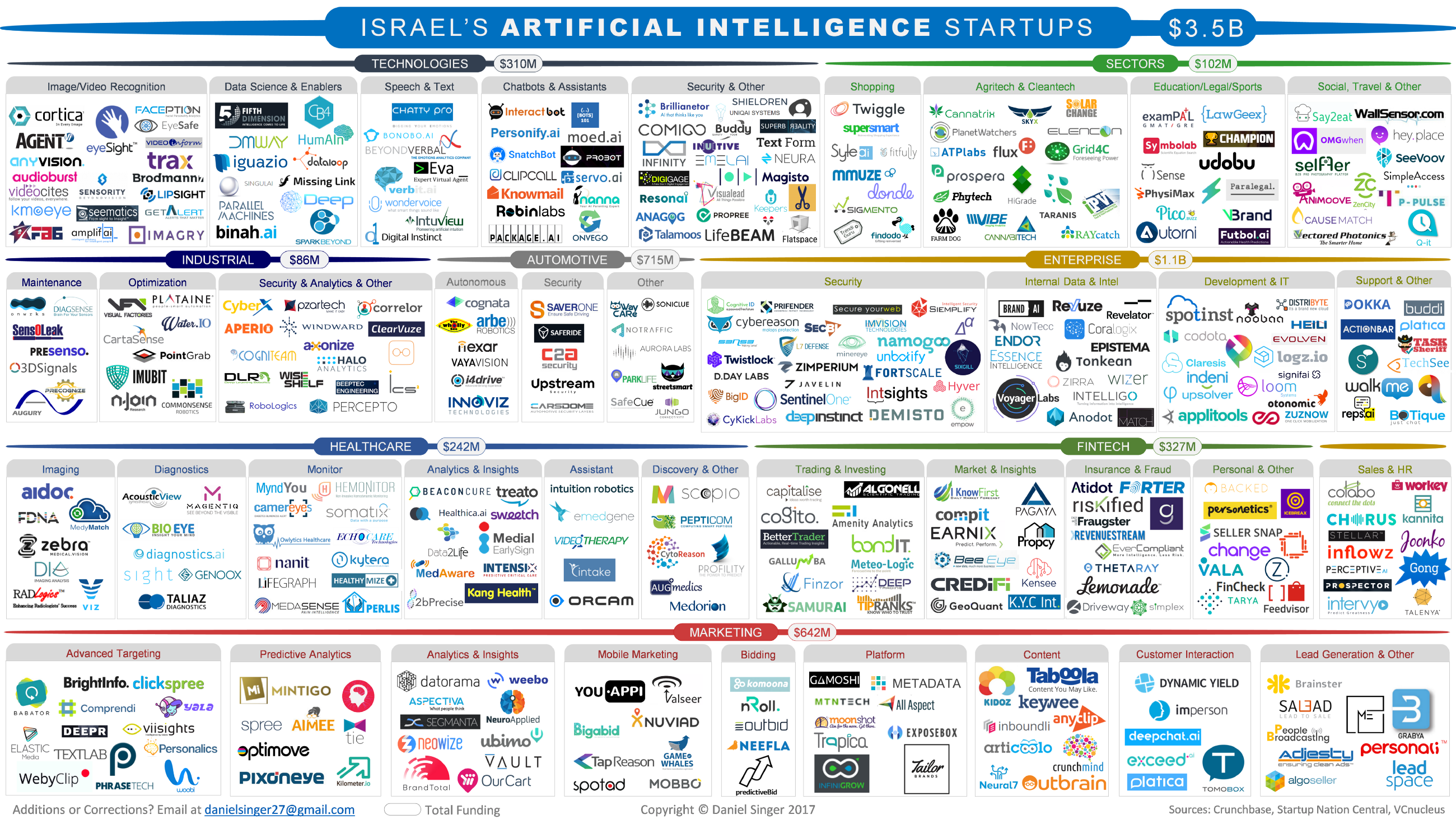 The artificial intelligence industry is expected to be worth <a href="https://www.tractica.com/newsroom/press-releases/artificial-intelligence-software-revenue-to-reach-59-8-billion-worldwide-by-2025/" target="_blank">$59.8 billion by 2025</a>, and the term AI has become ubiquitous worldwide; the frenzy of many tech enthusiasts, or the topic of discussion at a dinner table. But the hype actually lives up to its name. AI startups are flush with VC cash and even key corporate leaders are actively utilizing the technology to add value and gain a competitive edge.
72. How to Structure a PyTorch ML Project With Google Colab and TensorBoard
 Let’s build a fashion-MNIST CNN, PyTorch style. This is A Line-by-line guide on how to structure a PyTorch ML project from scratch using Google Colab and TensorBoard
73. The Best Slack Groups for Data Scientists to Join
 The online data science community is supportive and collaborative. One of the ways you can join the community is to find machine learning and AI Slack groups.
74. No-Code Machine Learning inside Google Sheets
 Introduction
75. Data Set and Data Augmentation for Face Detection and Recognition
 When it comes to building an Artificially Intelligent (AI) application, your approach must be data first, not application first.
76. Flax: Google’s Open Source Approach To Flexibility In Machine Learning
 Thinking of Machine Learning, the first frameworks that come to mind are Tensorflow and PyTorch, which are currently the state-of-the-art frameworks if you want to work with Deep Neural Networks. Technology is changing rapidly and more flexibility is needed, so Google researchers are developing a new high performance framework for the open source community: Flax.
77. Can Graph Neural Networks Solve Real-World Problems?
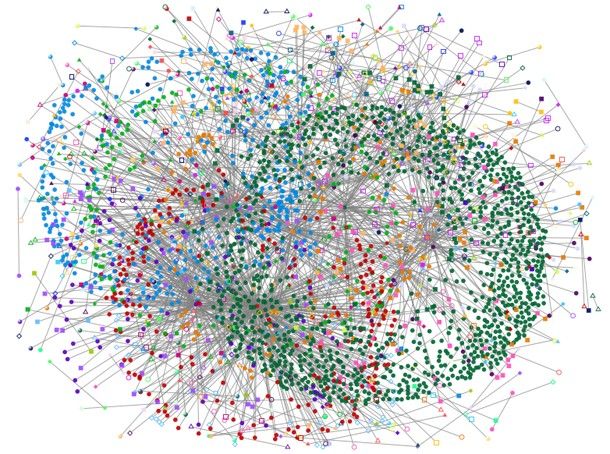 In this article, we will learn about GNNs and its structure as well as its applications
78. Artificial Intelligence, Machine Learning, and Human Beings
 In a conversation with HackerNoon CEO, David Smooke, he identified artificial intelligence as an area of technology in which he anticipates vast growth. He pointed out, somewhat cheekily, that it seems like AI could be further along in figuring out how to alleviate some of our most basic electronic tasks—coordinating and scheduling meetings, for instance. This got me reflecting on the state of artificial intelligence. And mostly why my targeted ads suck so much...
79. How I Designed My Own Machine Learning and Artificial Intelligence Degree
 After noticing my programming courses in college were outdated, I began this year by dropping out of college to teach myself machine learning and artificial intelligence using online resources. With no experience in tech, no previous degrees, here is the degree I designed in Machine Learning and Artificial Intelligence from beginning to end to get me to my goal — to become a well-rounded machine learning and AI engineer.
80. Why Quadratic Cost Functions Are Ineffective in Neural Network Training
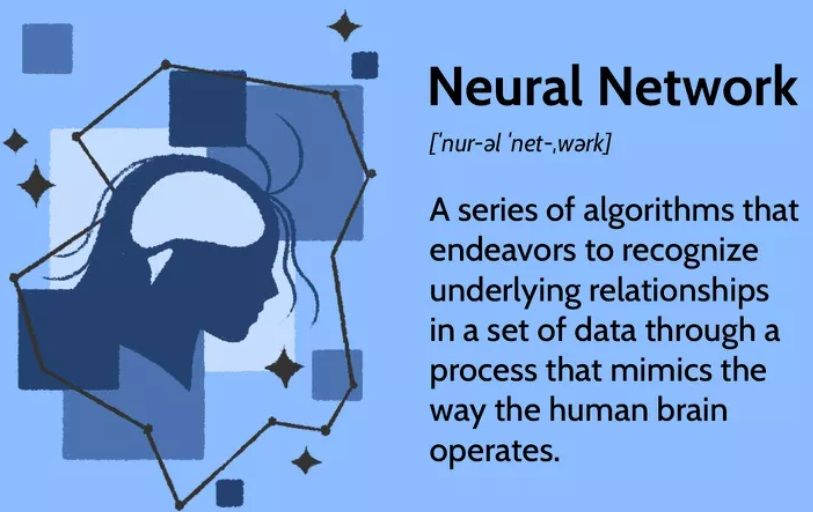 Explore why quadratic cost functions hinder neural network training and how cross-entropy improves learning efficiency in deep learning models.
81. How AI Is Transforming Your Smartphone
 The tech industry and the world are relying on artificial intelligence to solve big problems such as cybersecurity, healthcare and sustainability.
82. Why It’s Very Difficult to Create AI-Based Slow Motion
 Over the last few years a number of open source machine learning
projects have emerged that are capable of raising the frame rate of
source video to 60 frames per second and beyond, producing a smoothed,
'hyper-real' look.
Over the last few years a number of open source machine learning
projects have emerged that are capable of raising the frame rate of
source video to 60 frames per second and beyond, producing a smoothed,
'hyper-real' look.
83. Five Successful AI and ML Use Cases In Manufacturing
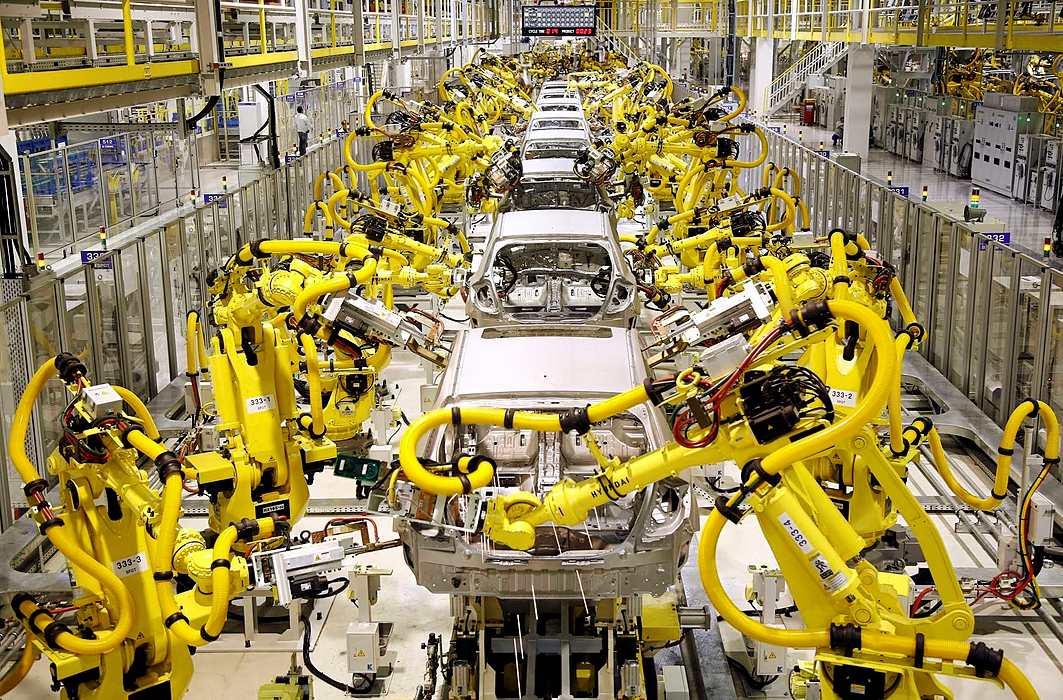 How can manufacturers put artificial intelligence to work in the industry? In this article, you will find five possible applications of Machine learning and Deep learning to industrial processes optimization.
84. My Time at NUS, Singapore
 Singapore is home to some of the best schools in the field of Computer Science, specifically Artificial Intelligence. The cutting edge research going on there is unparalleled. Colleges like Nanyang Technological University (NTU) and National University of Singapore (NUS) have a great reputation all over the world for their CS programs.
85. Summarizing Most Popular Text-to-Image Synthesis Methods With Python
 Comparative Study of Different Adversarial Text to Image Methods
86. Where to Learn Machine and Deep Learning for Free

87. Image to Image Translation and Segmentation Tutorial
 In this article and the following, we will take a close look at two computer vision subfields: Image Segmentation and Image Super-Resolution. Two very fascinating fields.
88. PixelLib: Image and Video Segmentation [Maybe just a Quick One]
 PIxelLib: Image and video segmentation with just a few lines of code.
89. How To Create A Simple Neural Network Using Python
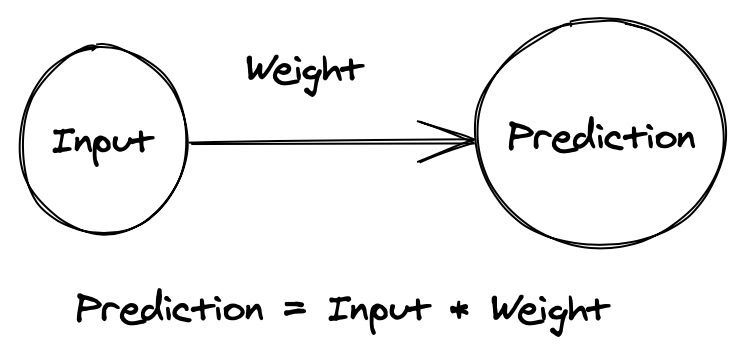 I built a simple Neural Network using Python that outputs a target number given a specific input number.
90. The Implications of Open-Source AI: Should You Release Your AI Source Code Publicly?
 In this article, I will share my thoughts on why it's better and safer to bring the new AI tech into the hands of business rather than release it into the wild.
91. Retraining Machine Learning Model Approaches
 Retraining Machine Learning Model, Model Drift, Different ways to identify model drift, Performance Degradation
92. PyTorch vs TensorFlow: Who has More Pre-trained Deep Learning Models?
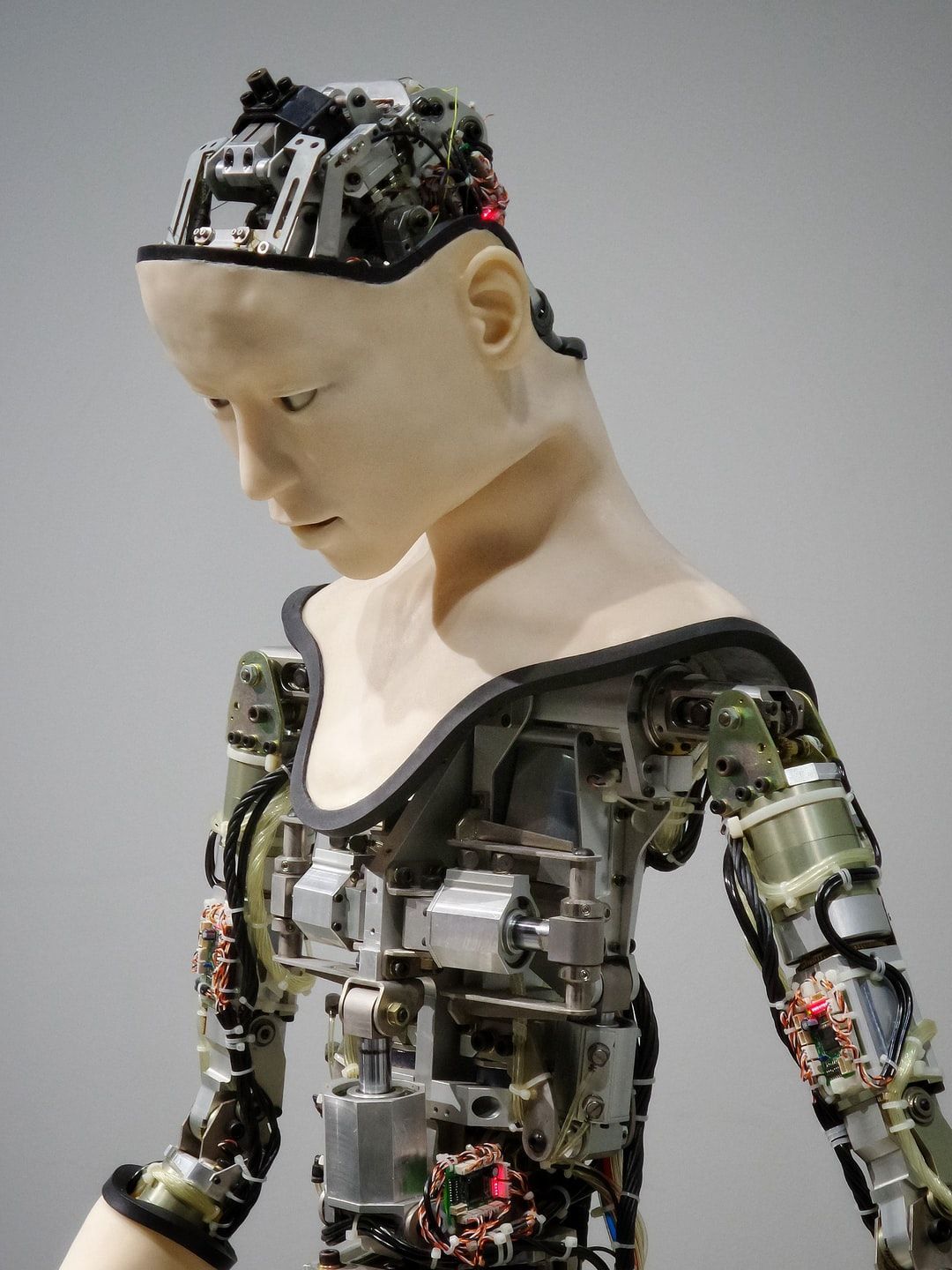 Given the importance of pre-trained Deep Learning models, which Deep Learning framework - PyTorch or TensorFlow - has more of these models available to users is
93. AI Facts Every Dev Should Know: Artificial intelligence is older than you, probably
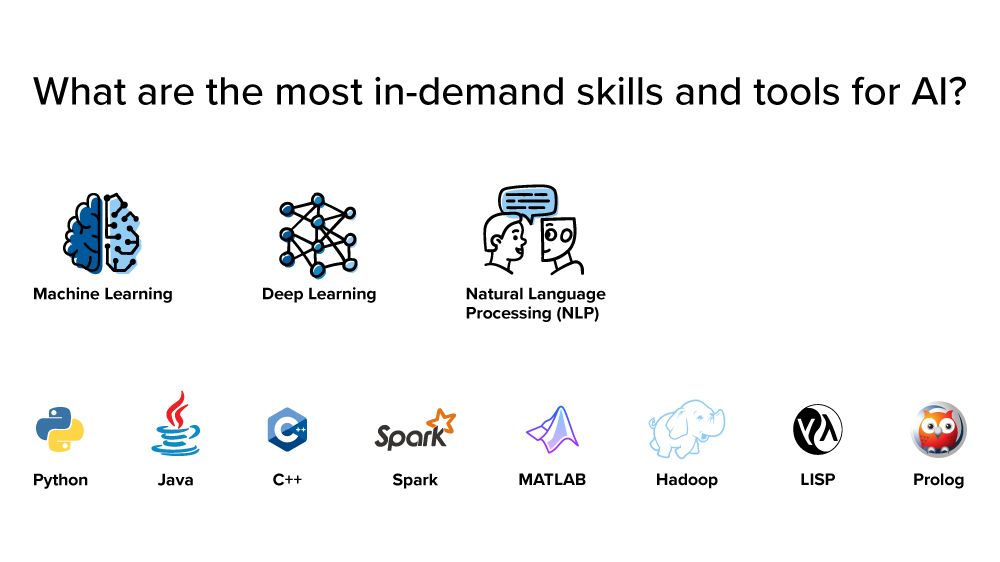 The hype around AI is growing rapidly, as most research companies predict AI will take on an increasingly important role in the future.
94. How to Turn Your Business into a Cognitive Enterprise with AI Technologies?

95. 11 Awesome (and Worrisome) Applications of AI
 For years AI was touted to be the next big technology. Expected to revolutionize the job industry and effectively kill millions of human jobs, it became the poster child for job cuts. Despite this, its adoption has been increasingly well-received. To the tech experts, this wasn’t really surprising given its vast range of use cases.
96. Primer on Large Language Model (LLM) Inference Optimizations: 1. Background and Problem Formulation
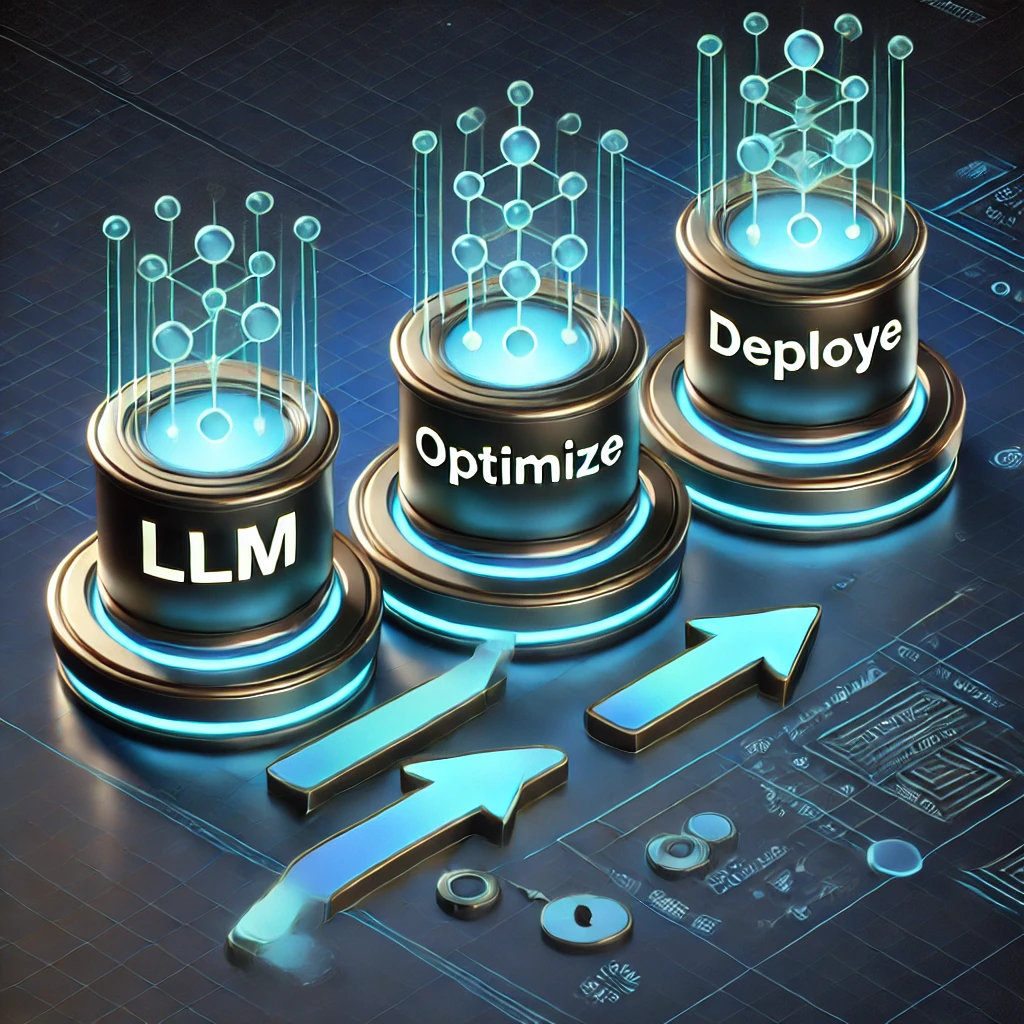 Overview of Large Language Model (LLM) inference, its importance, challenges, and key problem formulation.
97. DJL: Deep Java Library and How To Get Started
 Want to get your hands dirty with Machine Learning / Deep Learning, but have a Java background and not sure where to start? Then read on! This article is about using an existing Java skillset and ramp-up your journey to start building deep learning models.
98. Living in the world of AI - The Human Transformation
 Today, if you stop and ask anyone working in a technology company, “What is the one thing that would help them change the world or make them grow faster than anyone else in their field?” The answer would be Data. Yes, data is everything. Because data can essentially change, cure, fix, and support just about any problem. Data is the truth behind everything from finding a cure for cancer to studying the shifting weather patterns.
99. Why You Should Use Deep Learning - A Thread
 Rich Harang explains why you should use deep learning.
100. 'El transformador ilustrado' una traducción al español
 <meta name="monetization" content="$ilp.uphold.com/EXa8i9DQ32qy">
101. How Amazon Uses Deep Learning to Improve Buying Experience
 Up to 80 percent of customer interactions are managed by AI today.
102. How to Remove Gender Bias in Machine Learning Models: NLP and Word Embeddings
 Most word embeddings used are glaringly sexist, let us look at some ways to de-bias such embeddings.
103. Use plaidML to do Machine Learning on macOS with an AMD GPU
 Want to train machine learning models on your Mac’s integrated AMD GPU or an external graphics card? Look no further than PlaidML.
104. Beat The Heat with Machine Learning Cheat Sheet
 If you are a beginner and just started machine learning or even an intermediate level programmer, you might have been stuck on how do you solve this problem. Where do you start? and where do you go from here?
105. Small Object Detection in Computer Vision: The Patch-Based Approach
 How to carry out small object detection with Computer Vision - An example of finding lost people in a forest.
106. How to Get Started With Embeddings
 Getting started with embeddings using open-source tools.
107. How to Build a Training Pipeline on Multiple GPUs
 In the current big data regime, it is hard to fit all the data into a single CPU.
108. Black Mirror's 'Be Right Back' in Real Life: Clone Yourself as a Chatbot
 Replika AI has created a platform where anyone, including people with zero knowledge of machine learning, can create and train a chatbot of their own.
109. Machine Learning 101: How And Where To Start For Absolute Beginners
 This post covers all you will need for your Journey as a Beginner. All the Resources are provided with links. You just need Time and Your dedication.
110. Embeddings for RAG - A Complete Overview
 Embedding is a crucial and fundamental step towards building a Retrieval Augmented Generation(RAG) pipeline. BERT & SBERT are state-of-the-art embedding models.
111. Building an End-to-End Speech Recognition Model in PyTorch with AssemblyAI
 This post was written by Michael Nguyen, Machine Learning Research Engineer at AssemblyAI. AssemblyAI uses Comet to log, visualize, and understand their model development pipeline.
112. Stateless vs Stateful LSTMs in Machine Learning
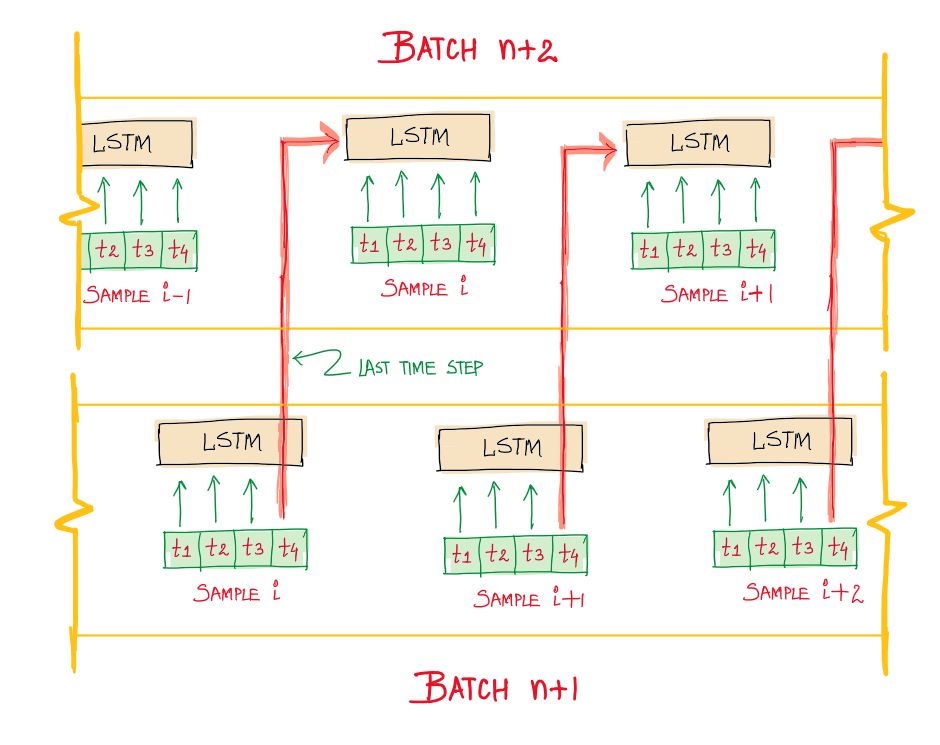 A brief description of Stateful and Stateless LSTM (one of the sequence modeling algorithms)
113. Basic Use Cases of AI, ML, Deep Learning and Internet of Things

114. Procesando Datos Para Deep Learning: Datasets, visualizaciones y DataLoaders en PyTorch
 <meta name="monetization" content="$ilp.uphold.com/EXa8i9DQ32qy">
115. Spoken Language Understanding (SLU) vs. Natural Language Understanding (NLU)
 Differences between SLU (Spoken Language Understanding) and NLU (Natural Language Understanding). Top FOSS and paid engines and their approach to SLU.
116. P-HAR: Pornographic Human Action Recognition
 We utilize advanced human action recognition models to accurately identify individuals performing various actions within pornographic videos.
117. Approach Pre-Trained Deep Learning Models With Caution
 Pre-trained models are easy to use, but are you glossing over details that could impact your model performance?
118. Fraud Detection Using Artificial Intelligence and Machine Learning
 Explore how AI and ML techniques are revolutionizing fraud detection across industries, improving accuracy, adaptability, and real-time threat response.
119. Using Reinforcement Learning to Build a Self-Learning Grasping Robot
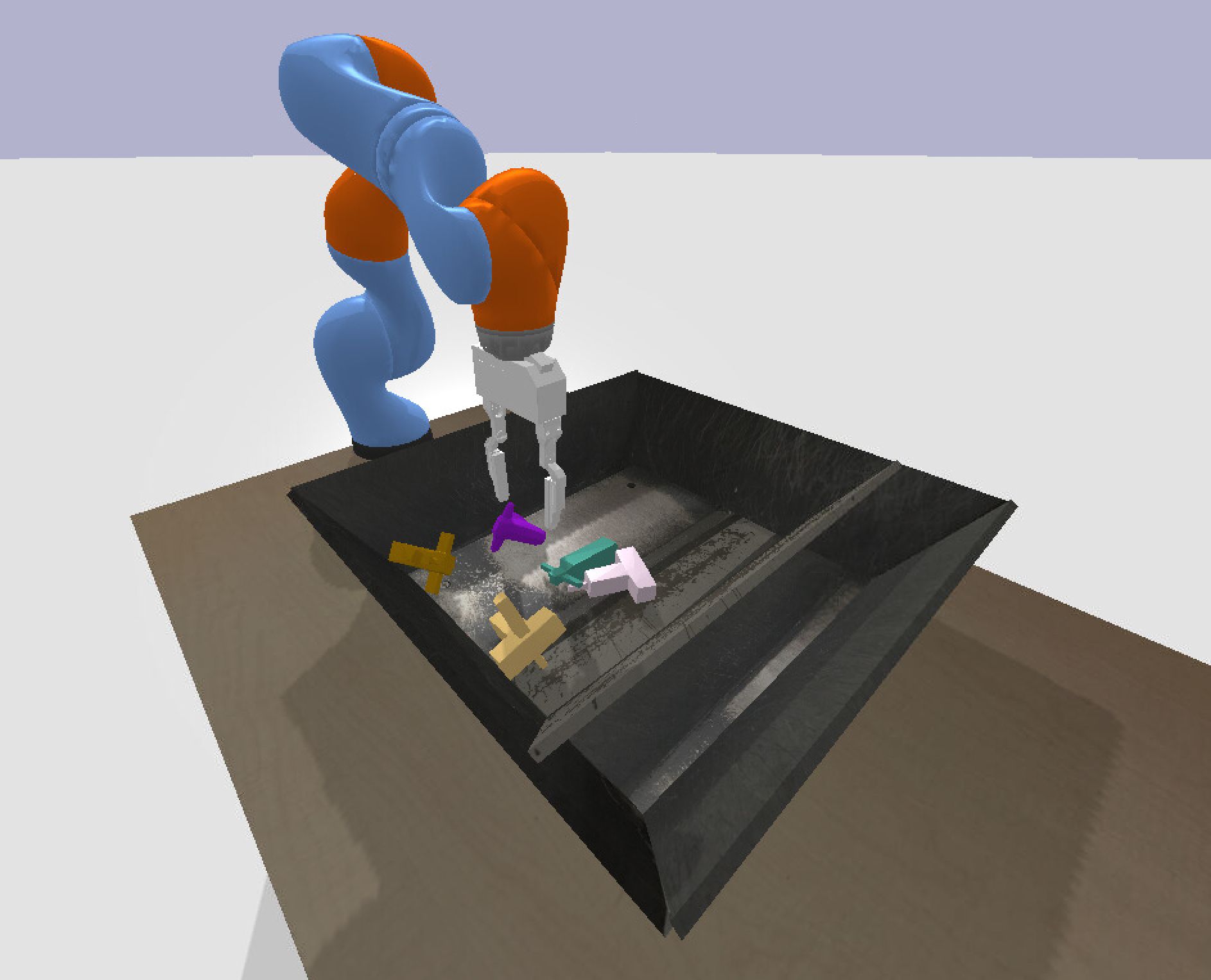 Tips and tricks to build an autonomous grasping Kuka robot
120. Gone Are Those Days of AI
 AI has truly evolved over the past decade - from a baby to a beast. Here I quickly summarise what has changed
121. Facebook's Deepfake Challenge That Will defeat Deepfakes. Hopefully.
 Nowadays, we are seeing a new wave and great advancements in different technologies. Things like Deep Learning, Computer Vision, and Artificial Intelligence are improving every single day. And Researchers and scientists are having amazing use-cases with these technologies which can change the direction of our world.
122. Signal DeNoising using Auto Encoders
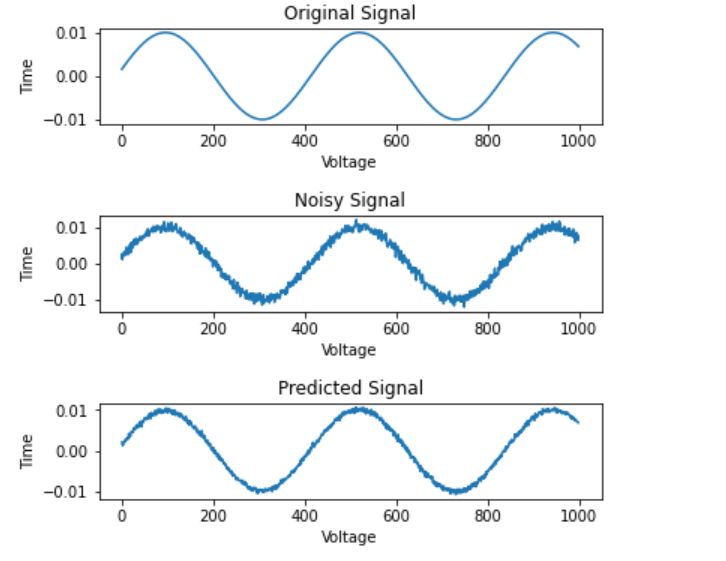 A project that added Additive White Gaussian Noise to a sinusoidal signal before training machine learning networks to denoise it effectively as a challenge.
123. Tired of Slow Python ML Pipelines? Try Purem
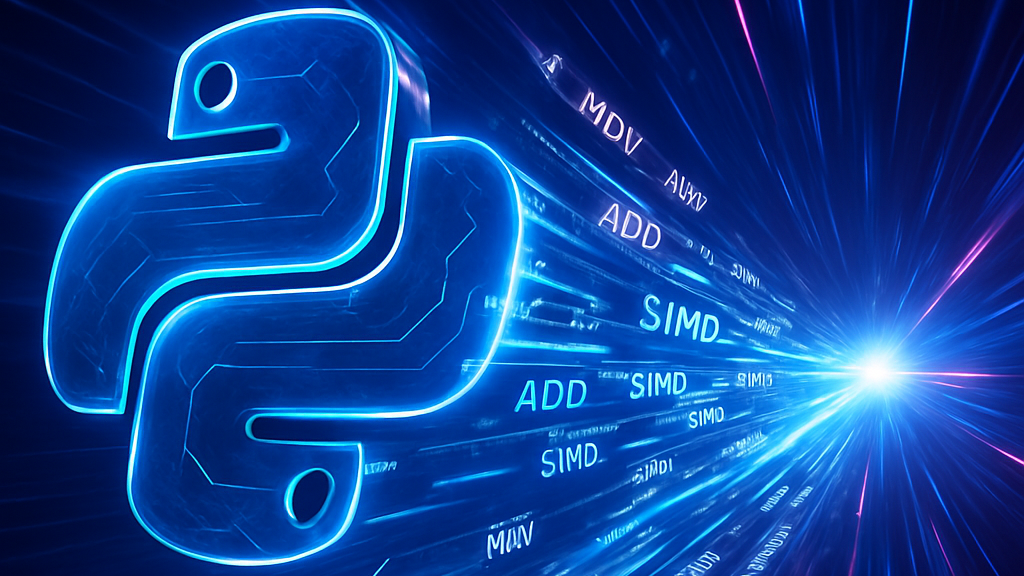 Purem brings native-speed execution to Python ML workloads – no boilerplate, no wrappers. Just pip install purem and run code up to 500x faster.
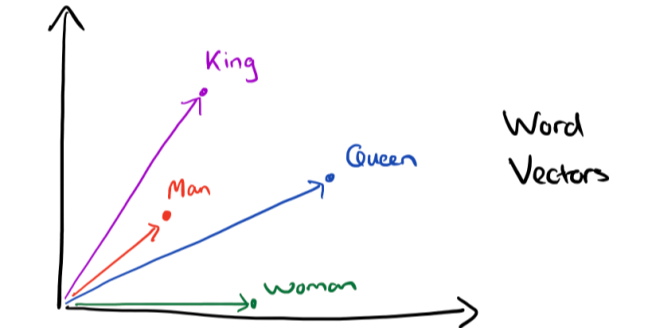
124. Embeddings at E-commerce
125. AI as the "Bad Student" in Class
 Join an ongoing quest to uncover the true nature of AI's "intelligence".
126. GPT in 200 Lines: The Beautiful Simplicity Behind Modern AI
 How does GPT really work? Explore Andrej Karpathy’s tiny 200-line implementation and discover the elegant math behind modern AI.
127. ML for Diabetes from Bangladesh

128. Creating neural networks without human intervention
 …And where is the blockchain in it?
129. Unpredictability of Artificial Intelligence
 The young field of AI Safety is still in the process of identifying its challenges and limitations. In this paper, we formally describe one such impossibility result, namely Unpredictability of AI. We prove that it is impossible to precisely and consistently predict what specific actions a smarter-than-human intelligent system will take to achieve its objectives, even if we know terminal goals of the system. In conclusion, impact of Unpredictability on AI Safety is discussed.
130. Will We See AI Like Jarvis and Samantha in Our Lifetime?
 While these AI systems have been glamorized and personified in Hollywood, it begs the question: are we on the cusp of seeing such advanced AI in our lifetime?
131. How Machine Generated Virtual Assistants can 10x Your Productivity in 2022
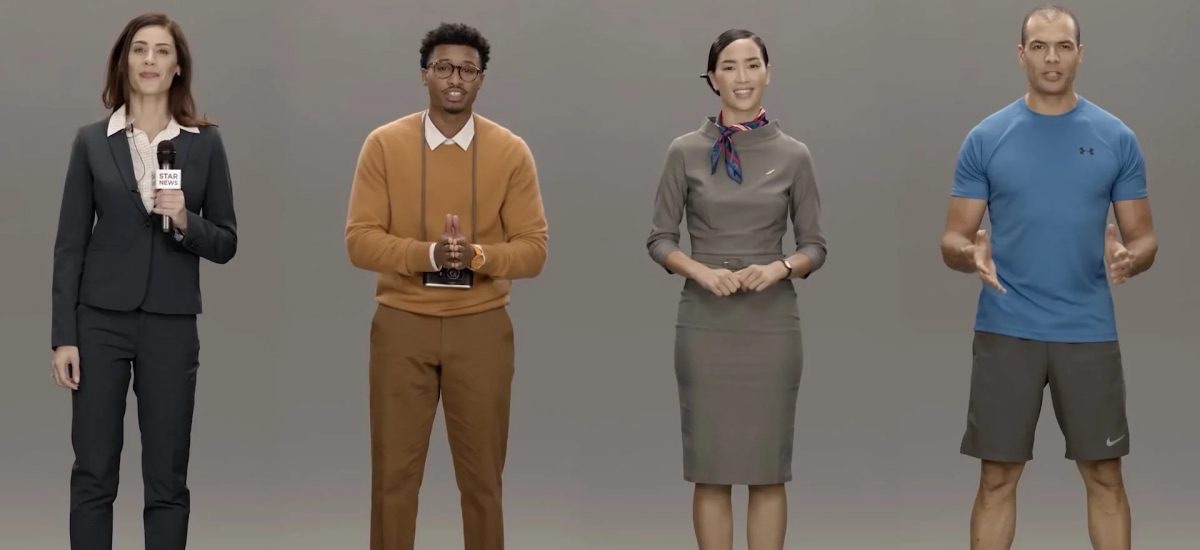 AI assistant technology is in many ways similar to a traditional chatbot but integrates next-generation machine learning, AR/VR and data science.
132. Object Detection Using Single Shot MultiBox Detector (A Case Study Approach)
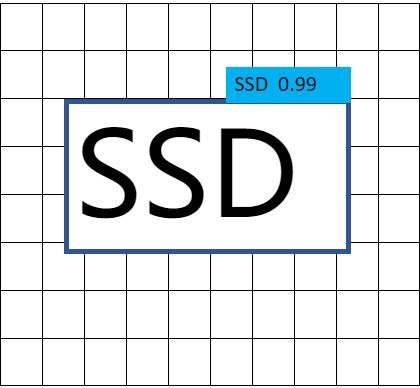 This blog post delivers the fundamental principles behind object detection and it's algorithms with rigorous intuition.
133. Top AI and ML YouTube Channels for Data Scientists to Subscribe to
 Subscribe to these Machine Learning YouTube channels today for AI, ML, and computer science tutorial videos.
134. Google Unveils Its Most Promising Text-to-Video Model Yet: Lumiere
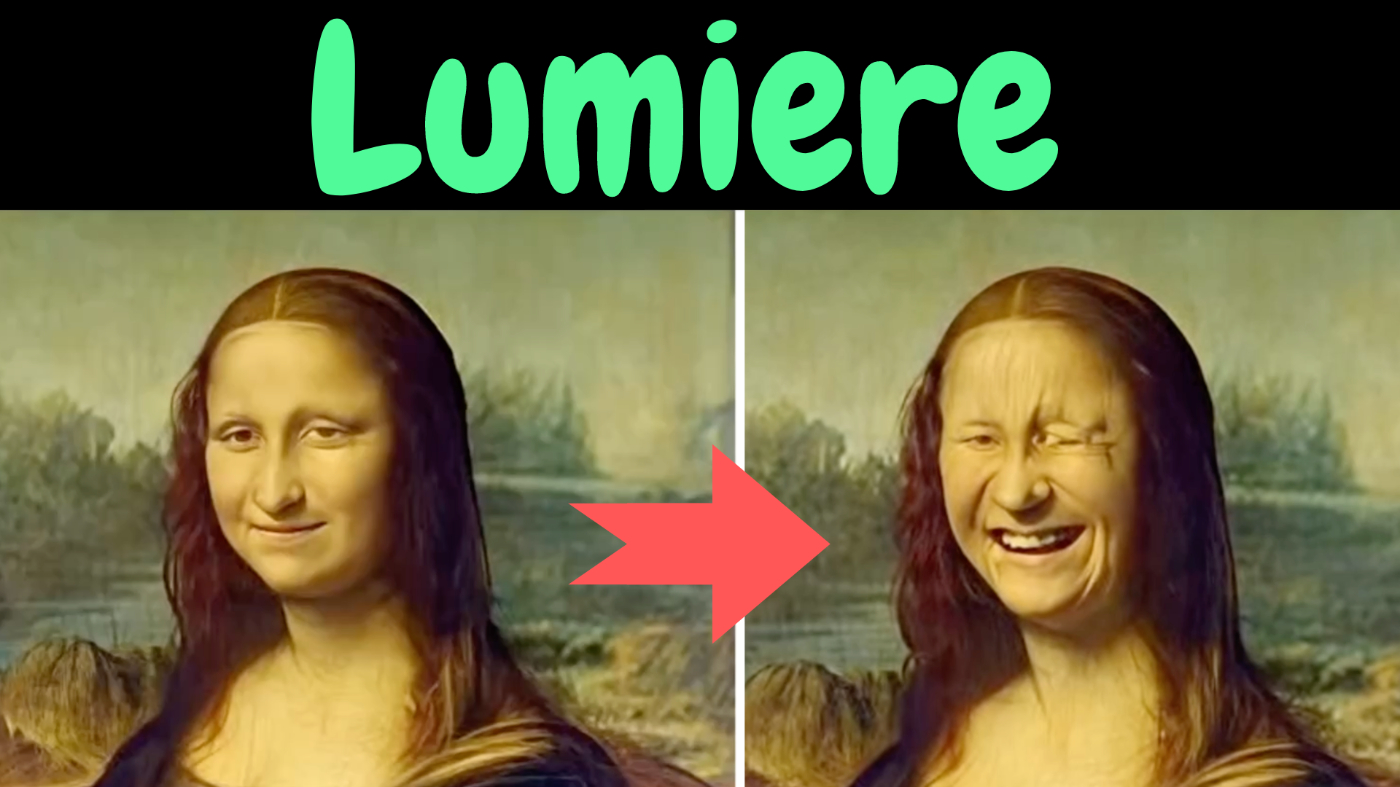 Sometimes simplicity is key to getting the best results. And that's what Lumiere by Google offers.
135. How to Configure Experiments With Hydra - From an ML Enginner Perspective
 Hydra offers a solution to these challenges. Below, you will find a basic guide on how to use it.
136. 👨🔬️ Top 10 Data Scientist Skills to Develop to Get Yourself Hired
 List of Top 10 Data Scientist skills that guaranteed employment. As well as a selection of helpful resources to master these skills
137. 10 Best + Free Machine Learning Courses Collection
 Here's a compilation of some of the best + free machine learning courses available online.
138. 70-Page Report on the COCO Dataset and Object Detection [Part 2]
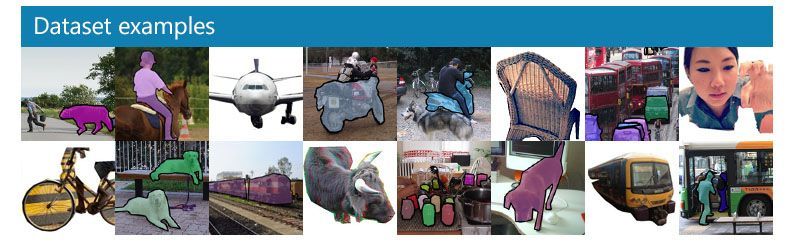 This blog is part 1 of (and contains a link to) a 70+ page report was created to quickly find data resources and/or assets for a given dataset and a specific ta
139. MIDAS: A State-of-the-Art Model for Anomaly Detection in Graphs
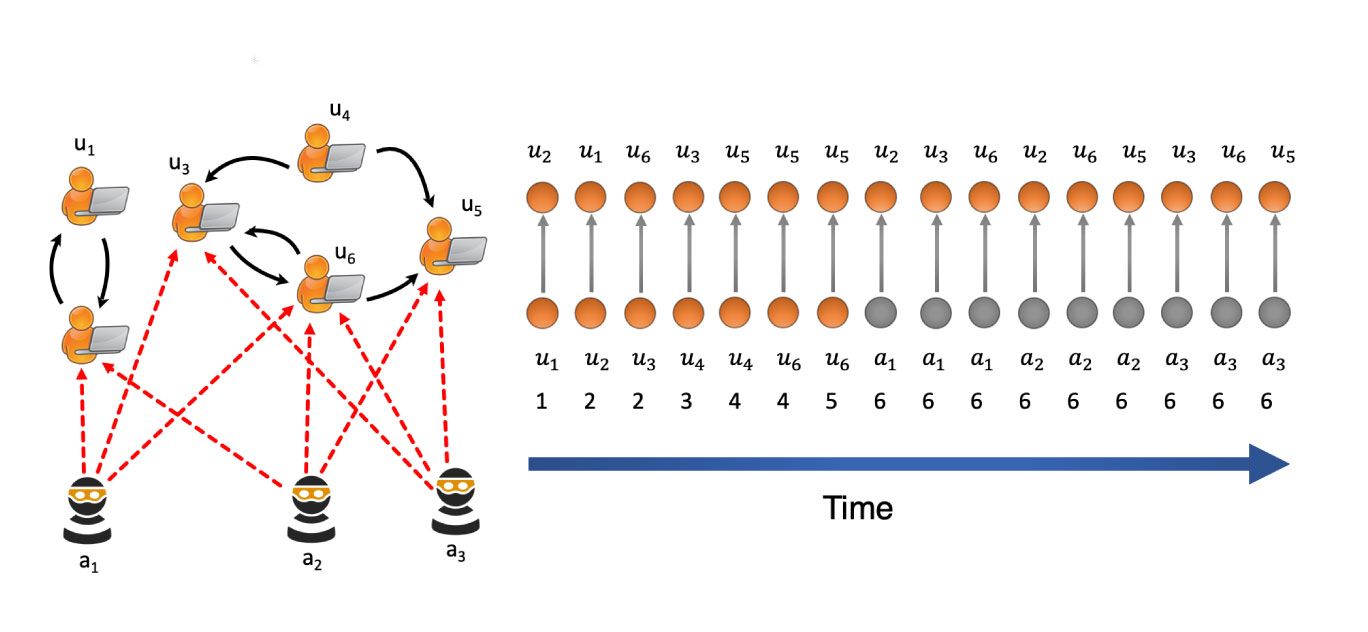 In machine learning, hot topics such as autonomous vehicles, GANs, and face recognition often take up most of the media spotlight. However, another equally important issue that data scientists are working to solve is anomaly detection. From network security to financial fraud, anomaly detection helps protect businesses, individuals, and online communities. To help improve anomaly detection, researchers have developed a new approach called MIDAS.
140. Interviews with My Machine Learning Heroes
 Meta Article with links to all the interviews with my Machine Learning Heroes: Practitioners, Researchers and Kagglers.
141. Deep Learning in an Hour, Day, Season, or Decade
 The definitive list of resources for learning how deep learning works on any time scale
142. Understanding GAN Mode Collapse: Causes and Solutions
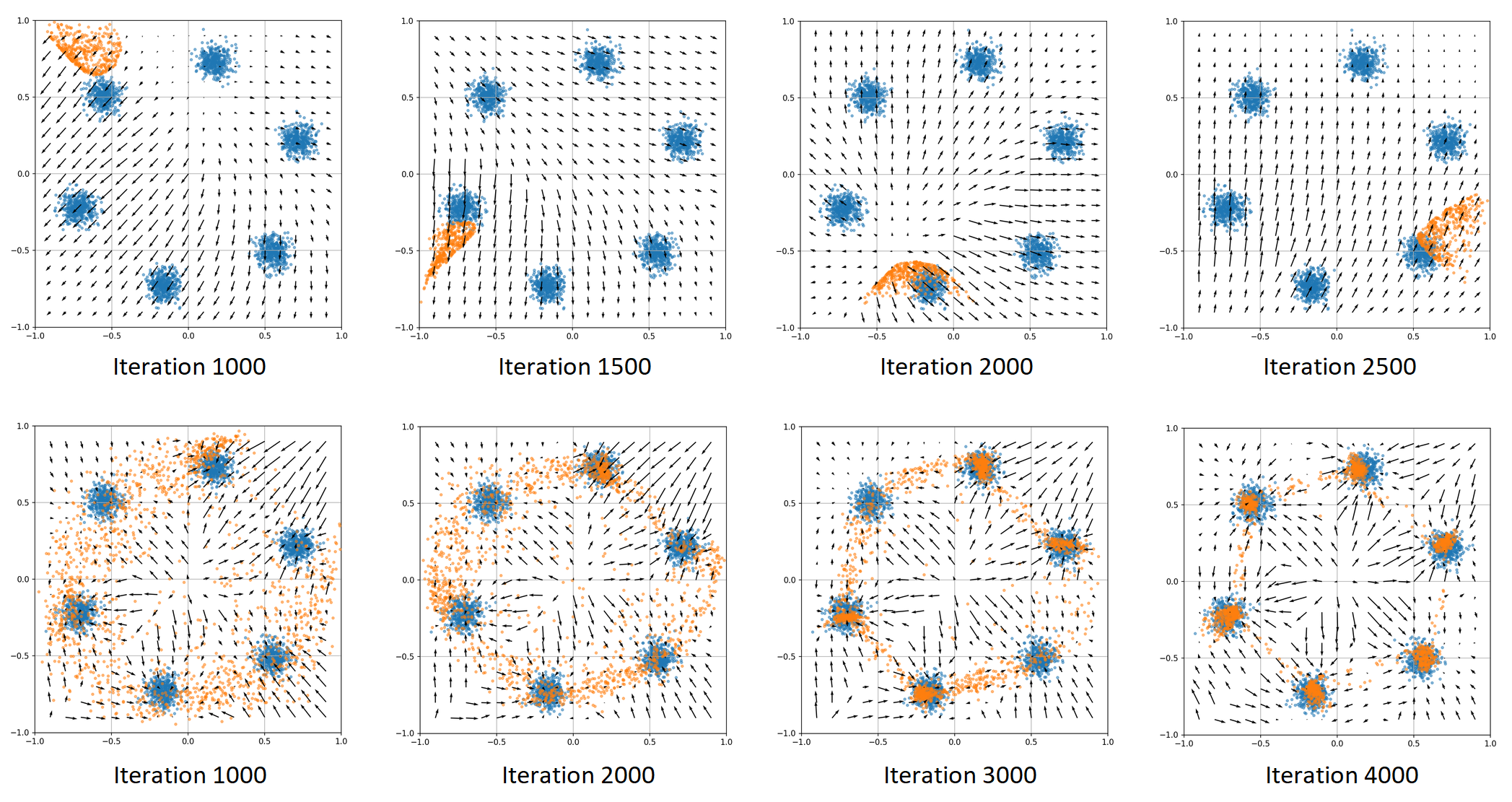 Explore the causes of GAN mode collapse, including catastrophic forgetting and discriminator overfitting, to enhance the diversity of AI-generated outputs.
143. Human Intelligence or Artificial Intelligence? We Need Both.
 Artificial intelligence (AI) has reached a tipping point, leveraging the massive pools of data gathered by every app, website, and device in our lives to make increasingly sophisticated decisions on our behalf. AI is at work in our inboxes sorting and blocking emails. It takes and processes our increasingly complex requests through voice assistants. It supplements customer support through chatbots, and heavily automates complex processes to reduce the workload for knowledge workers. Evidently, devices can adapt on the fly to human behavior.
144. The Best AI Articles of October 2022
 Support vector machines, decision trees, and AI-generated content are some of the topics in the best AI articles of October.
145. 6 important Python Libraries for Machine Learning and Data Science
 In this guide, we’ll show the must know Python libraries for machine learning and data science.
146. Debunking 4 Common Myths About Machine Learning
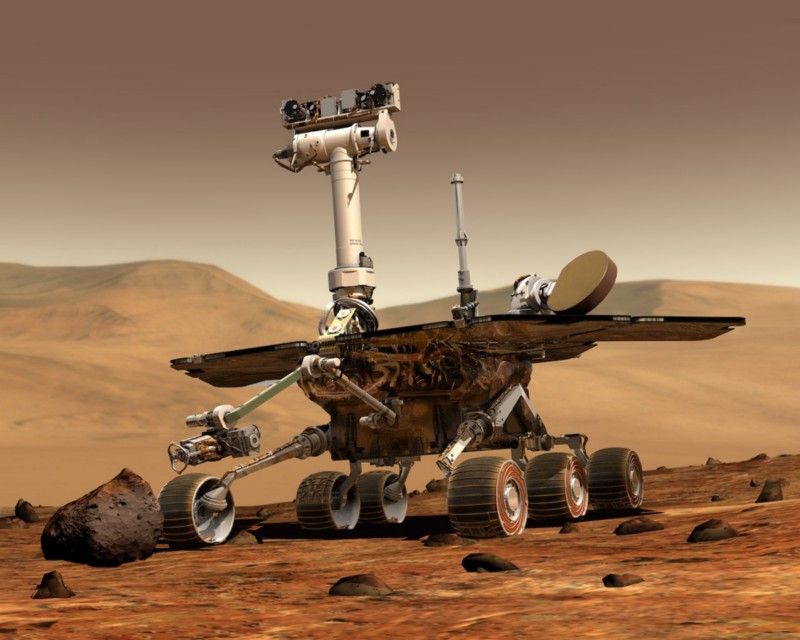 Machine learning is a subset of artificial intelligence that involves the use of algorithms and statistical models to enable computers to improve them.
147. Takeaways And Quotes From The World’s Largest Kaggle GrandMaster Panel

148. MusicGen from Meta AI — Understanding Model Architecture, Vector Quantization and Model Conditioning
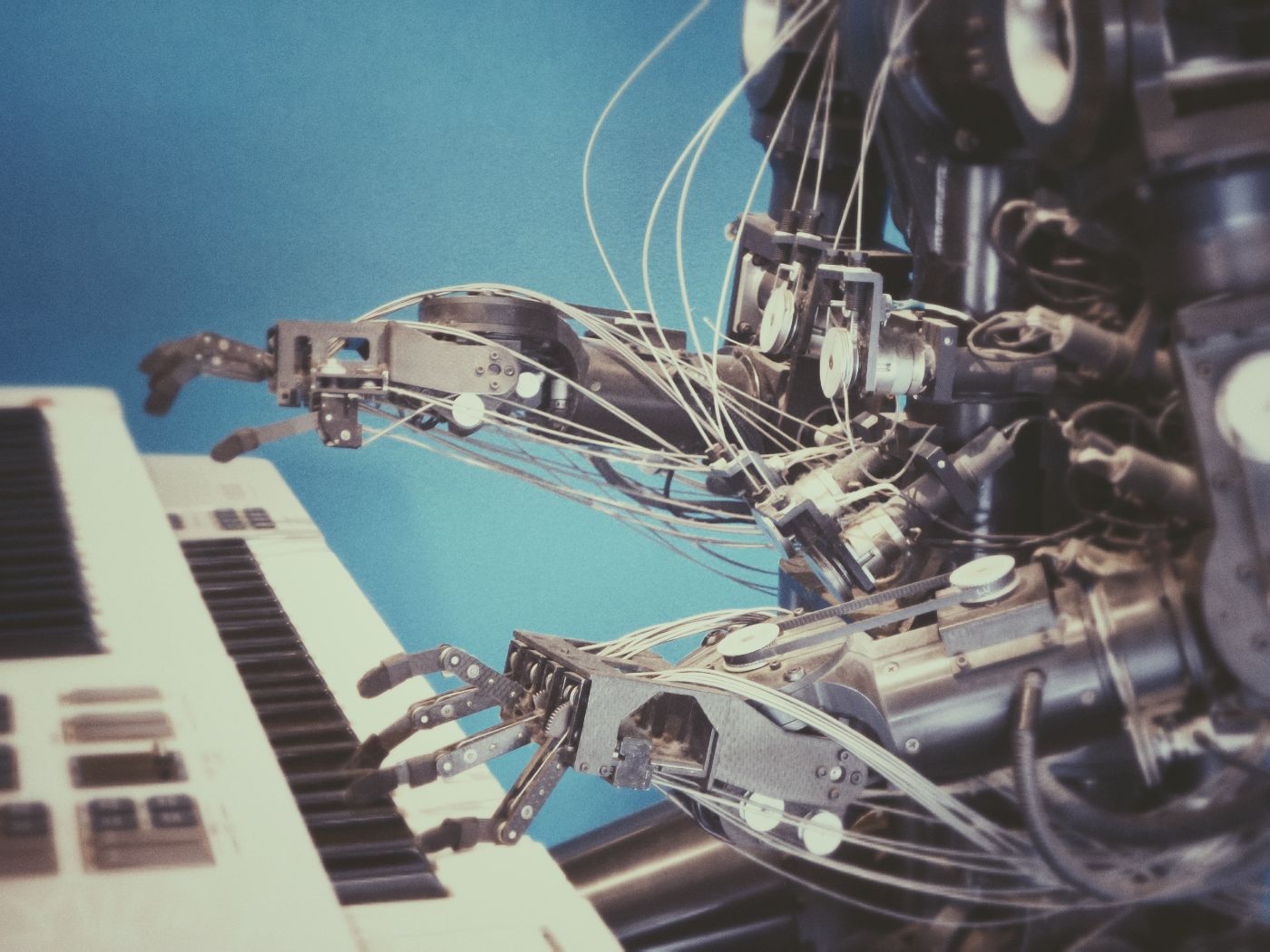 Wish to generate high quality, realistic, controllable music using AI? Meta's new MusicGen is the answer.
149. Detecting Humans in Smart Homes with Computer Vision
 Learn more about OpenCV, how you can use it to identify and track people in real-time, and what challenges you can meet.
150. 15 Essential Python Libraries for Data Science and Machine Learning
 Discover 15 essential Python libraries for data science & machine learning, covering data mining, visualization & processing.
151. A Complete Guide To The Machine Learning Tools On AWS
 In this article, we will take a look at each one of the machine learning tools offered by AWS and understand the type of problems they try to solve for their customers.
152. NEON.LIFE: Meet Your Digital Avatar from Samsung
 Anyone watched Blade Running 2049 must remember ‘Joi’, the pretty and sophisticated holographic projection of an artificial human. She speaks to you, helps you with house affairs, tells jokes to you, keeps you accompanied, and some more… just like a real human. She even has her own memory with you and developed character over time. Except, ‘she’ is not human. She is just a super complicated ‘modeling’ of a real human that can speak, act and react like one. Yet still, quite some people secretly wish that they could also have their own ‘Joi’. Well, she might not be as far away as you think. Enter NEON, Samsung’s new artificial human.
153. Why Learning PyTorch Can Make you a Better Engineer
 Pytorch is a powerful open-source deep-learning framework that is quickly gaining popularity among researchers and developers
154. How to Use Model Playground for No-Code Model Building
 We're launching Model Playground, a model-building product where you can train AI models without writing any code yourself. Still, with you in complete control.
155. Will Generative Models Be The Next Machine Learning Boom?
 Machine Learning is a rapidly growing and very complex field of study. Generative Models might prove to be a new breakthrough that will make a new boom.
156. Comparing Kolmogorov-Arnold Network (KAN) and Multi-Layer Perceptrons (MLPs)
 Discover how Kolmogorov-Arnold Networks (KAN) challenge traditional MLPs with trainable activation functions, offering a potential leap toward AGI.
157. Best Machine Learning Books You Should Read: 2020 Edition
 These books cover the Introductory level to Expert level of knowledge and concepts in ML. These Books have some core factors about ML. Give them a try. Lets Start.
158. Top 25 Quotes from ML Heroes Interviews (+ an exciting announcement!)
 Re-boot of “Interview with Machine Learning Heroes” and collection of best pieces of advice
159. An Old Statistical Trick Might Help Better Explain the Apparent Correlation Between Bitcoin and Gold
 The relationship between Bitcoin and Gold is one of the dynamics that seems to constantly capture the minds of financial analysts. Recently, there have been a series of new articles claiming an increasing “correlation” between Bitcoin and Gold and the phenomenon seems to be constantly debated in financial media outlets like CNBC or Bloomberg.
160. Eight Awesome AI Youtube Videos Under 10 Minutes
 Machine learning educational content is often in the form of academic papers or blog articles. These resources are incredibly valuable. However, they can sometimes be lengthy and time-consuming. If you just want to learn basic concepts and don’t require all the math and theory behind them, concise machine learning videos may be a better option.
161. Why Use Pandas? An Introductory Guide for Beginners
 Pandas is a powerful and popular library for working with data in Python. It provides tools for handling and manipulating large and complex datasets.
162. Optical Character Recognition Technology for Business Owners
 How to use Machine learning, Deep learning and Computer Vision for building Optical Character Recognition (OCR) solution for text recognition.
163. Best Resources To Learn Machine Learning And AI
 “Anybody can code” , I know this sentence sounds cliche so let me give you another one “Anybody can learn AI”. Well, know it sounds overwhelming except if you are not a PhD or a mad scientist.
164. 5 Steps To Build Your Dynamic Pricing Engine
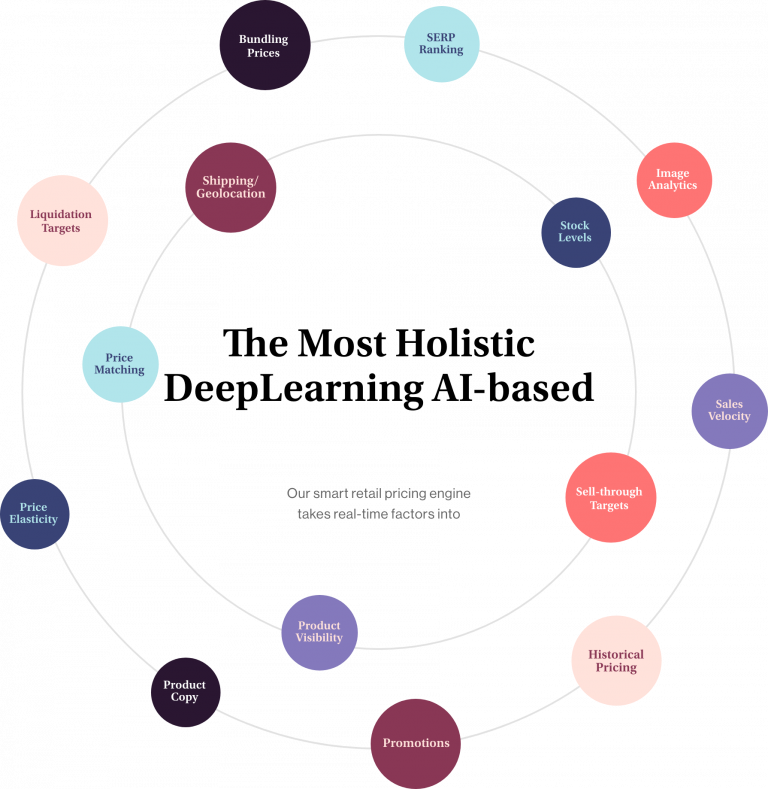 With the emergence of online platforms, B2B businesses have had to reconsider their pricing strategies. But, these same technologies help the organizations create dynamic B2B pricing models that bring substantial profits if implemented correctly. For example, an integrated sales and B2B pricing software can help sales reps negotiate with customers and reduce the processing period.
165. 5 Papers on Face Recognition Every Data Scientist Should Read
 Facial recognition, is one of the largest areas of research within computer vision. This article will introduce 5 face recognition papers for data scientists.
166. The Main Patterns in Generative AI Lifecycles
 Discover the evolution and integration of generative AI in enterprise environments: from rule-based systems to large-scale real-time content generation.
167. Federated Learning: A Decentralized Form of Machine Learning
 Major companies using AI and machine learning now use federated learning – a form of machine learning that trains algorithms on a distributed set of devices.
168. How Predictive RBPs with DL can help get a vaccine for Corona faster?
 The entire world is engulfed into a corona pandemic attack. At present, there are 191127 positive cases of noble COVID-19 infection all over the world with total fatalities of 7807 according to a report by the World Health Organization(WHO).
169. Merging Datasets from Different Timescales
 One of the trickiest situations in machine learning is when you have to deal with datasets coming from different time scales.
170. B2B Sales Is Broken. New Tech Can Help
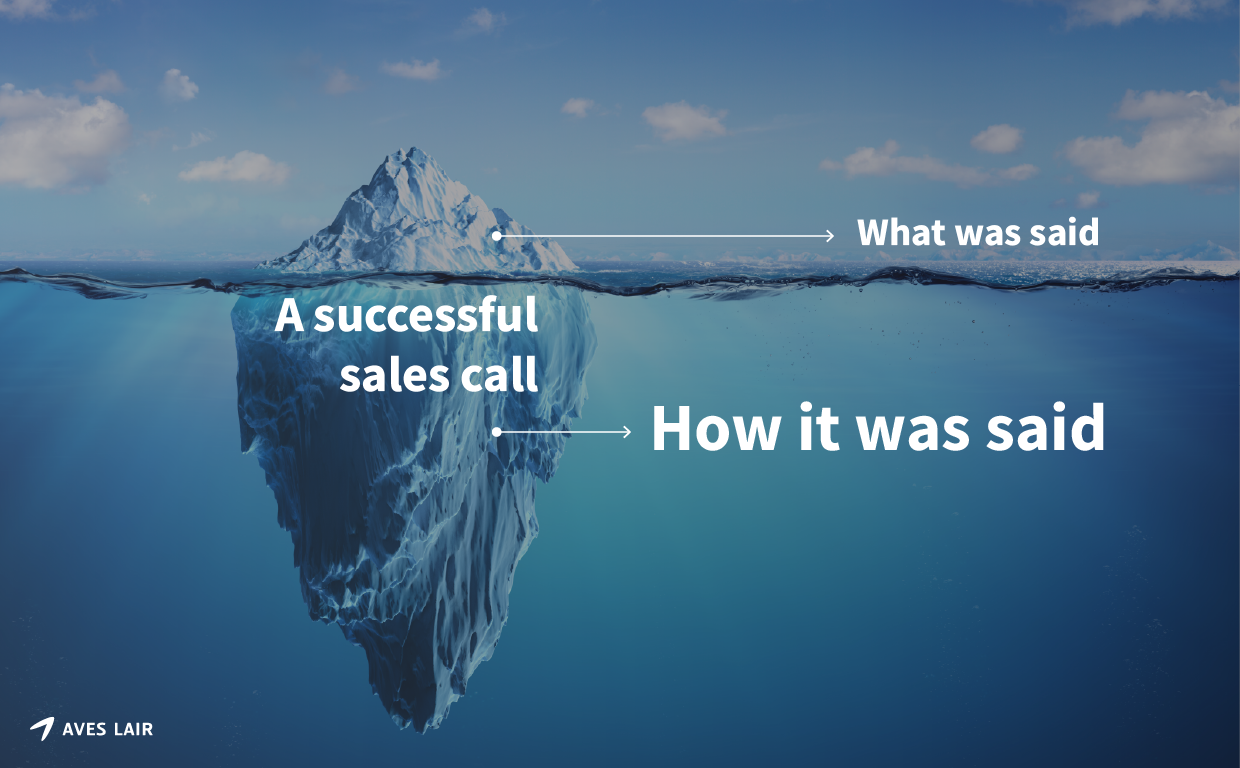 Closing b2b deals is difficult. People are not buying aggressive selling techniques. Existing sales softwares aren't helping. New tech can help.
171. Automated Essay Scoring Using Large Language Models
 Explore innovations in Automated Essay Scoring (AES), using models like Longformer and multi-task learning to address challenges in cohesion, grammar, and more.
172. The Dark Matter of AI: Common Sense Is Not So Common
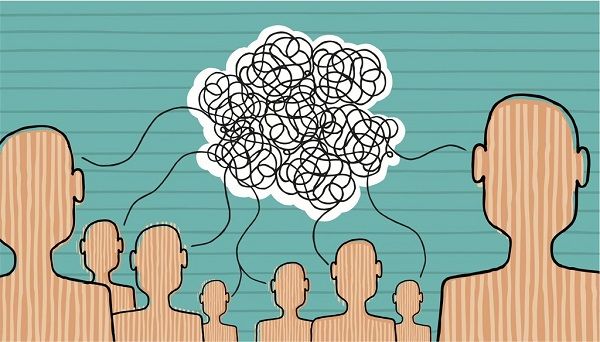 There are still areas where AI lacks and causes problems and frustration to end-users, and these areas pose a great challenge for researchers right now.
173. Large Language Models: A Beginner's Journey—Part 1
 Explore the world of Large Language Models (LLMs) in our comprehensive guide. From understanding their capabilities to overcoming limitations, discover how LLMs
174. My Experiments And How To Start with Machine Learning
 [https://hackernoon.com/images/dJ7MzRYbq8et9JjFyKAEWhkCfPO2-2023yst.jpg]
First of all, let me be clear, what this blog-post is and what it isn’t. This
[https://hackernoon.com/images/dJ7MzRYbq8et9JjFyKAEWhkCfPO2-2023yst.jpg]
First of all, let me be clear, what this blog-post is and what it isn’t. This
175. College Admissions: How AI Can Help Fight Biases
 This article is co-authored by Alex Stern & Eugene Sidorin.
176. Answering the 12 Most Common Questions About Python
 Python is an open-source high-level programming language that is easy to learn and user-friendly. It is one of the first choices of many programmers be it a beginner or experienced. So, today we have prepared a list of most asked questions on Python programming language.
177. The Issue Of Machine Ethics and Robot Rights
 Machine ethics and robot rights are quickly becoming hot topics in artificial intelligence/robotics communities. We will argue that the attempts to allow machines to make ethical decisions or to have rights are misguided. Instead we propose a new science of safety engineering for intelligent artificial agents. In particular we issue a challenge to the scientific community to develop intelligent systems capable of proving that they are in fact safe even under recursive self-improvement.
178. The AI World Has a New Darling—And It’s Not a Transformer
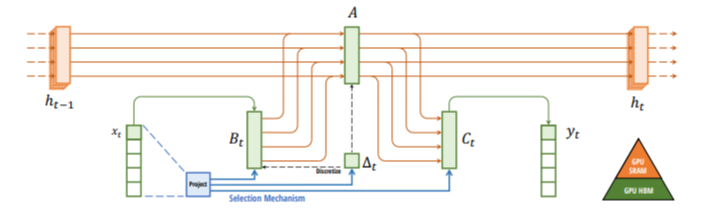 Discover Mamba, a novel selective state space model (SSM) that outperforms Transformers in speed and scalability.
179. But Is It Art?—AI and the Algorithms vs. Artists Debate
 There is a common belief among techies these days that with the arrival of AI and algorithms, professions such as those that of artists are becoming extinct. This is a misconception.
180. Selfie Biometrics: Exploring Face Recognition & Liveness Technologies for Mobile Apps
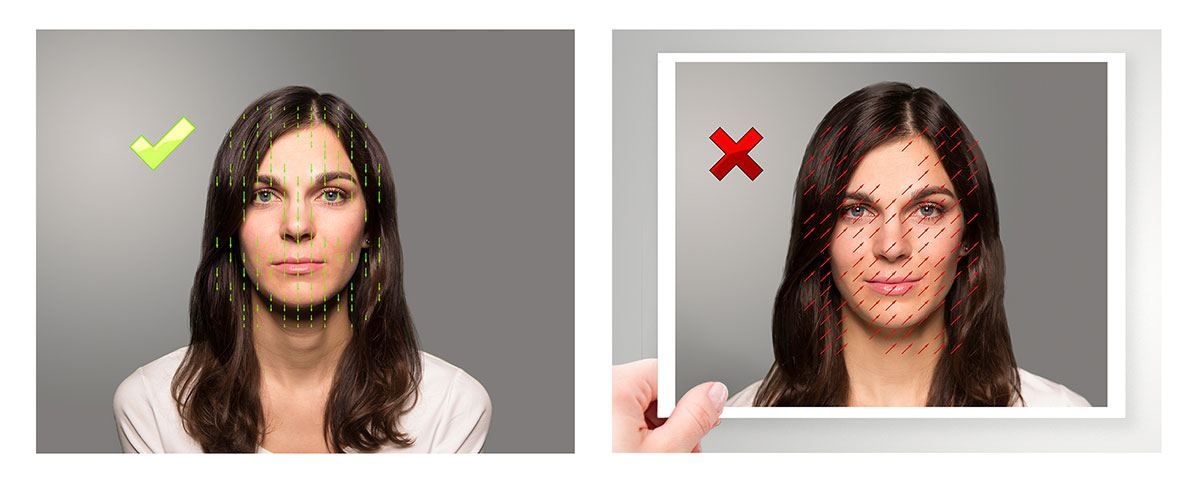 Selfie biometrics will very soon become our verification standard.
181. This Open-Source Library Accelerates AI Inference by 5-20x in a Few Lines of Code
 Nebullvm is an open-source library that can accelerate AI inference by 5-20x in a few lines of code, improving machine learning speeds without being complicated
182. A Gentle Introduction to Data Augmentation
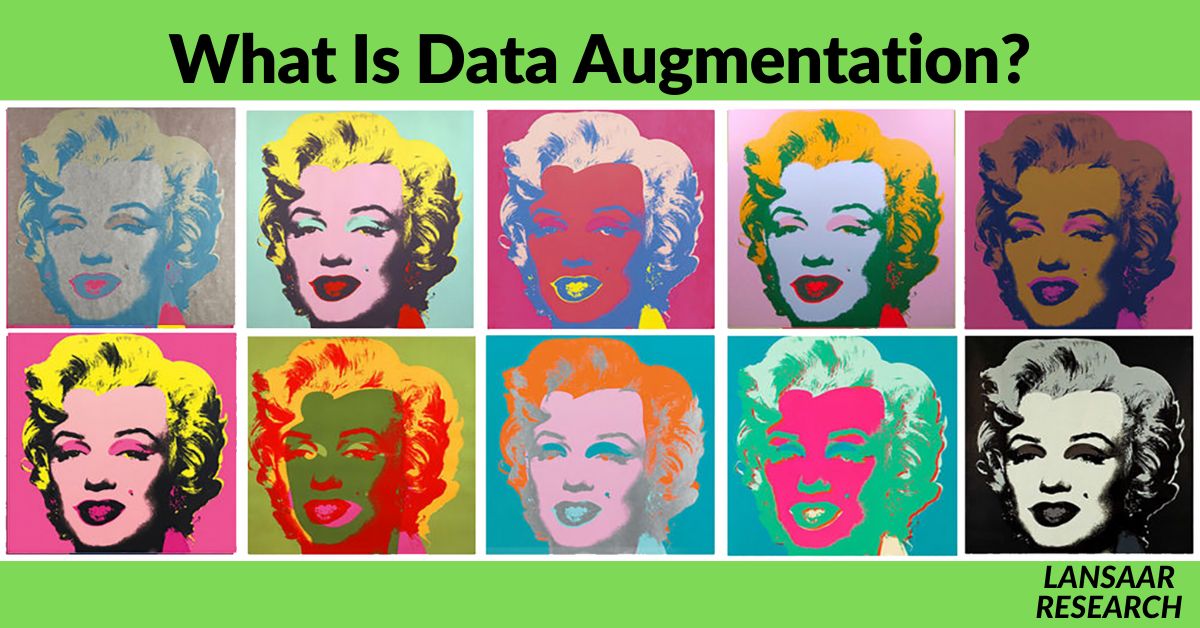 Data augmentation is a set of techniques used to increase the amount of data in a machine learning model by adding slightly modified copies of existing data.
183. Deepfakes: A Present Danger to Cybersecurity
 Deepfakes are currently a concern, but over the next few of years, they're going to get worse.
184. 70-Page Report on the COCO Dataset and Object Detection [Part 3]
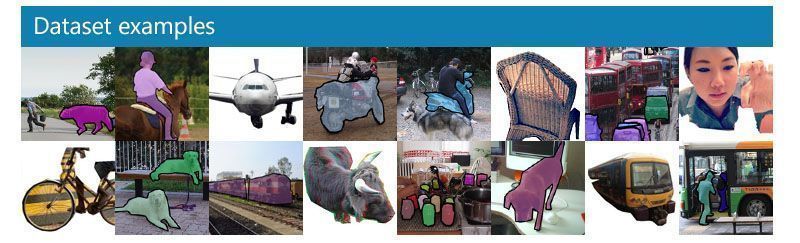
185. Image Segmentation: Tips and Tricks from 39 Kaggle Competitions
 Imagine if you could get all the tips and tricks you need to hammer a Kaggle competition. I have gone over 39 Kaggle competitions including
186. An Introduction to Active Learning
 Active learning aims to optimize the annotation of your dataset and train the best possible model using the least amount of training data.
187. AI and Machine Learning for Manufacturing Industry: Use Cases
 Artificial Intelligence(AI) has already proven to solve some of the complex problems across the wide array of industries like automobile, education, healthcare, e-commerce, agriculture etc. and yield greater productivity, smart solutions, improved security and care, business intelligence with the aid of predictive, prescriptive and descriptive analytics. So what can AI do for Manufacturing Industry?
188. Time Series Is Everywhere—Here’s How to Actually Forecast It
 A developer’s hands-on guide to time series forecasting using LSTM and Q-learning—with real code, real use cases, and lessons learned.
189. How to Power up your Digital Marketing with Deep Learning Predictions
 In this article, we explore the impact of AI and deep learning predictions on digital marketing, providing some specific hints on how to make campaigns shine.
190. How Transfer Learning and Domain Adaptation Let You Build Smarter AI (Without More Data)
 Build smarter AI with less data using transfer learning and domain adaptation. Fine-tune models and align domains with real PyTorch examples.
191. Using Explainable AI in Decision-Making Applications
 Here we explore the essence of explainability in AI and analyzing how applies to decision support systems in healthcare, finance, and other different industries
192. Navigating the Ethical Landscape of LLMs
 Explore the ethical challenges surrounding the use and development of Large language models.
193. How I Got to Top 24% on a Kaggle Text Classification Challenge Without Writing a Single Line of Code
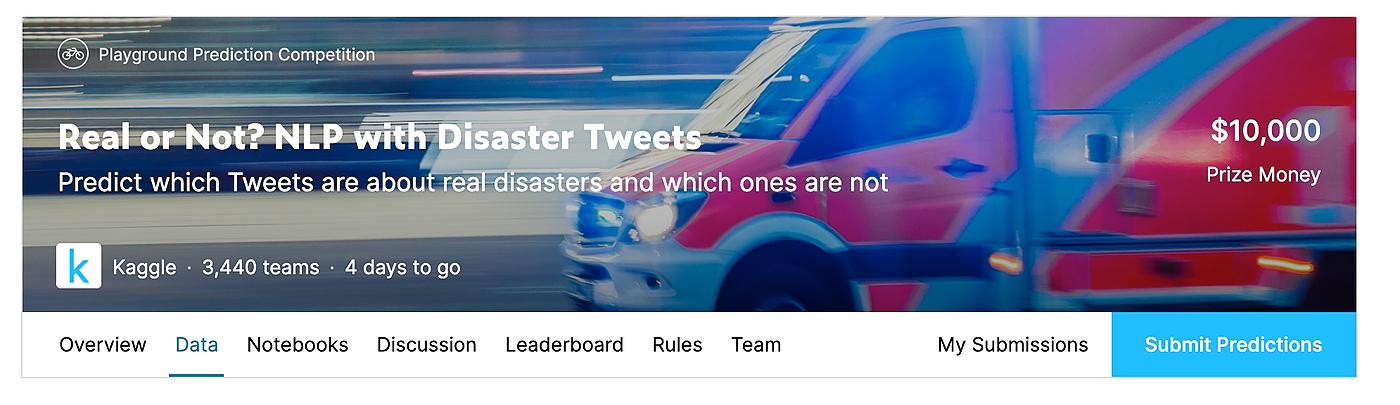 In this post, we will see how to use the platform and get a submission that achieves a respectable 83% Accuracy on the test set.
194. Why Python is Best Programming Language for Data Science & Machine Learning?
 If you want to become a Data Scientist and are curious about which programming language should you learn then you have come to the right place.
195. How You Can Make a Naruto Hand Signs Classifier using Deep Learning
 Introduction: (How I got the idea and the process of how the dataset was developed)
196. Top 12 Javascript Libraries for Machine Learning
 Rapidly evolving technologies like Machine Learning, Artificial Intelligence, and Data Science were undoubtedly among the most booming technologies of this decade. The s specifically focusses on Machine Learning which, in general, helped improve productivity across several sectors of the industry by more than 40%. It is a no-brainer that Machine Learning jobs are among the most sought-after jobs in the industry.
197. Why AI + Blockchain Make Sense?
 In today’s world, it is impossible not to acknowledge the impact of technology on development and organizational growth. The use of technology is practically indispensable; it is present in every sector and industry, in small, medium, or large enterprises.
198. Cracking the Code of Generalization: Cross-Modal Alignment Meets Cross-Domain Learning
 Discover how blending cross-modal alignment and cross-domain learning is helping AI models generalize better—across images, text, and even different domains. Th
199. Get Machine Learning Training Data Using The Lionbridge Method [A How-To Guide]
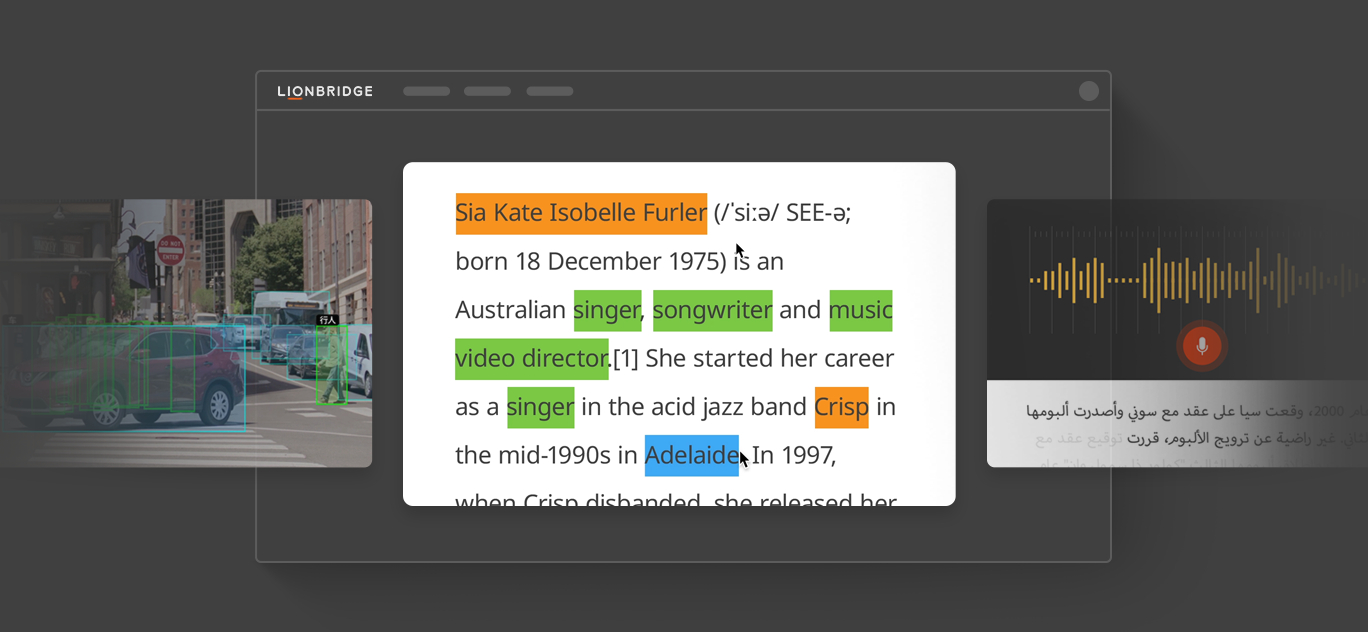 In the field of machine learning, training data preparation is one of the most important and time-consuming tasks. In fact, many data scientists claim that a large portion of data science is pre-processing and some studies have shown that the quality of your training data is more important than the type of algorithm you use.
200. What's Next for Adaptive Neural Systems?
 There is a trend in neural networks that has existed since the beginning of the deep learning revolution which is succinctly captured in one word: scale.
201. How to Orchestrate Data for Machine Learning Pipelines
 I will propose a new technique, data orchestration, to optimize the data pipeline for machine learning.
202. In Conversation with a Former NASA Machine Learning Engineer
 An interview with Cohere's deep learning engineer Kuba Perlin and how he navigated his career into AI research.
203. It’s Time to Reap the Rewards for Reading in Web3
 It's time for deep reading in Web3
204. How to 'Learn' Generative AI
 Want to know- What is Generative AI? How to Learn Generative AI? This comprehensive guide will let you explore everything about Generative AI and its use case.
205. Taking Deepfakes Seriously
 Artificial intelligence is quickly becoming a reality, but how does it affect our society. Is it something we should fear or embrace? Read to learn more.
206. Transformers, Finally Explained
 Learn transformer architecture through intuitive analogies and visual diagrams.
207. Amazon ML Services: A Deep Dive Into AWS SageMaker
 SageMaker is a fully managed service that enables developers to build, train, test and deploy machine learning models at scale.
208. How Mamba and Hyena Are Changing the Way AI Learns and Remembers
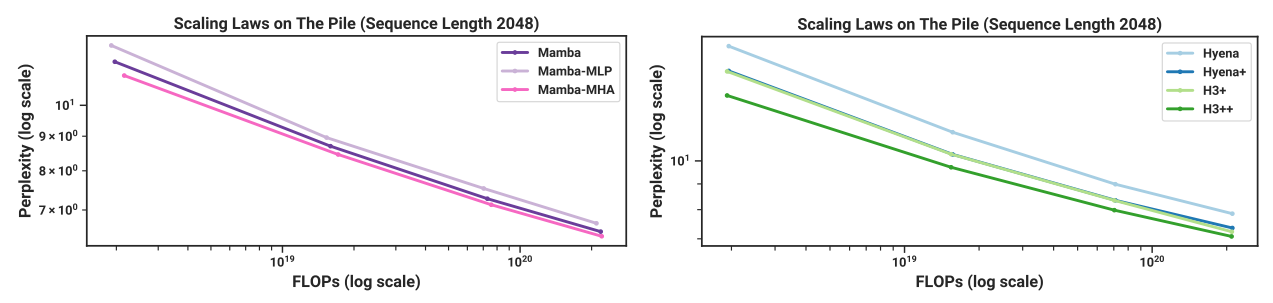 Explore detailed experimental results from cutting-edge AI architectures, including Selective Copying, Induction Heads, and innovative models like Mamba and Hye
209. Use Cascade Models to Get Better Speed and Accuracy in Computer Vision Tasks
 Great way to improve your Computer Vision models metrics
210. What Is Edge AI?

211. Breaking down GPU VRAM consumption
 What factors influence VRAM consumption? How does it vary with different model settings? I dug into the topic and conducted my measurements.
212. Understanding Convolution Neural Networks
213. Data Science with Substance: Best Massive Open Online Courses
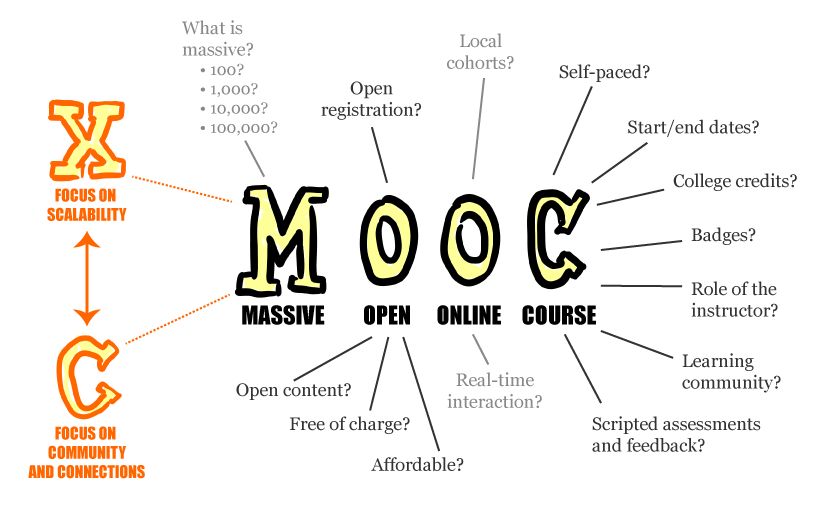 Benjamin Obi Tayo, in his recent post "Data Science MOOCs are too Superficial," wrote the following:
214. Speech-To-Text Conversion: An Introduction to Converting Spoken Language Into Text
 Today, we will look behind the scenes of Automatic Speech Recognition models that drive the speech assistants.
215. 10 Best Entry Level Machine Learning Tutorials
 The field of machine learning is becoming easier and easier to enter thanks to readily available tools, a wide range of open source datasets, and a community open to sharing ideas and giving advice. Almost everything you need to get started is online; it's just a matter of finding it.
216. Computer Vision Could Improve Health and Workplace Safety
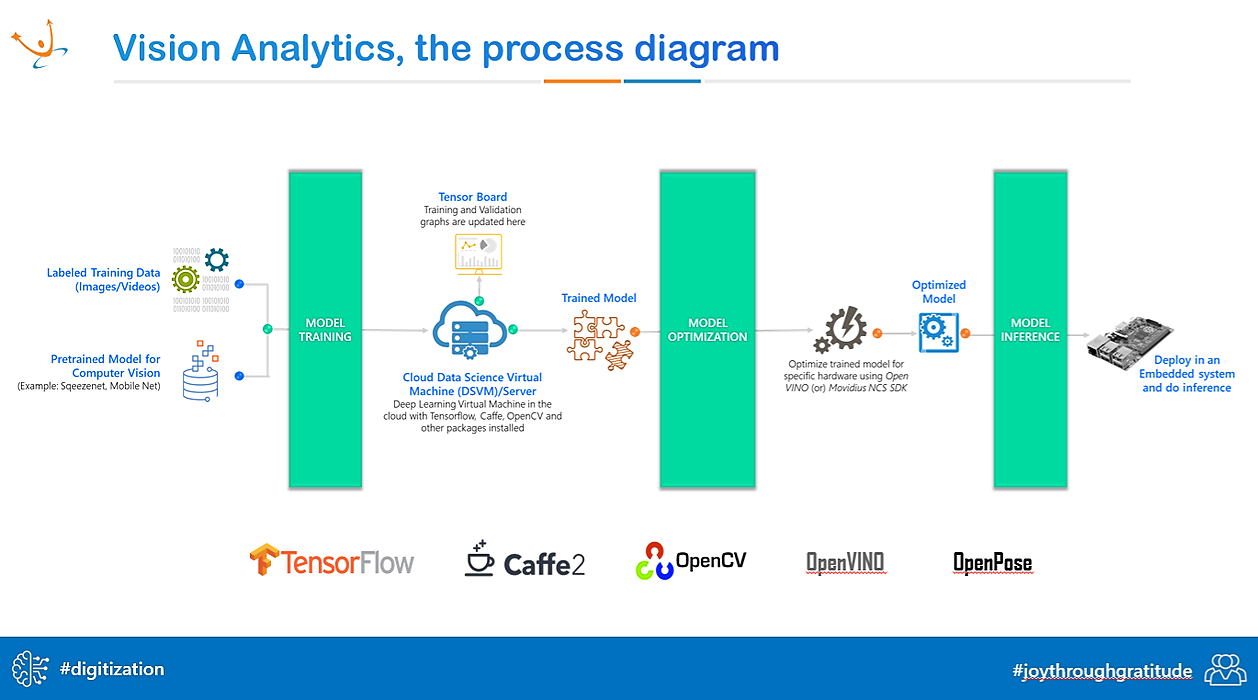 Recent developments in the field of training Neural Networks (Deep Learning) and advanced algorithm training platforms like Google’s TensorFlow and hardware accelerators from Intel (OpenVino), Nvidia (TensorRT) etc., have empowered developers to train and optimize complex Neural Networks in small edge devices like Smart Phones or Single Board Computers.
217. It Is Okay If You Don't Know What You Like. We Do (feat. Deep Recommendation Algorithms)
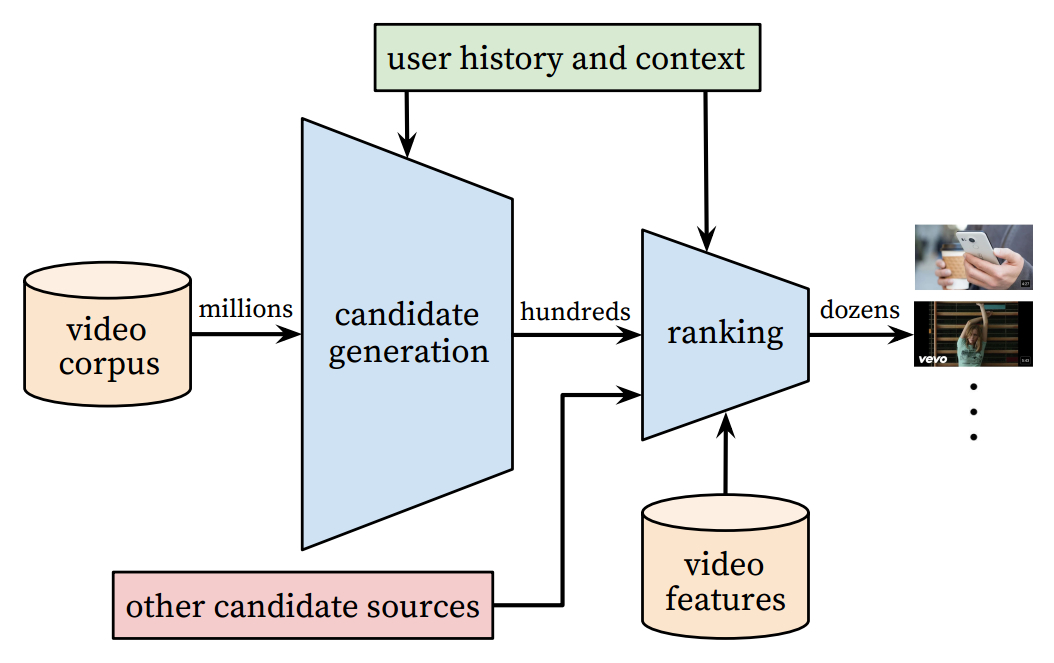 Recommendation algorithms have naturally penetrated to every part of information we get from the internet, from your basic search results on Google to your social media news feed on Instagram.
218. Recursive Language Models - Maybe a Newer Era of Prompt Engineering?
 Have you tried feeding a massive document into ChatGPT or Claude? Sometimes, it gives good insights, and sometimes, you've hit the wall.
219. AI Is Now Creating Antidotes for Snake Venom
 Bites from venomous snakes can be deadly — but AI may be able to help. Here's how scientists used AI to design new proteins to counteract snake venom.
220. How to Make Your LLM Fully Utilize the Context
 A data-driven approach that introduces a novel pipeline to synthesize a novel dataset to train LLMs to cleverly use long contexts.
221. How to Improve the Parallelization of Torch Dataloaders Using Torch.multiprocessing
 How can one improve the dataloader efficiency of torch's custom dataloader by using torch.multiprocessing in the case of 3D medical images.
222. The Evolution of Generative Image Content
 We are at the cusp of a Cambrian explosion in user generated content. It’s unlike anything we’ve seen before. New applications, powered by AI, are the catalyst
223. From Facebook to MindverseAI: Felix Tao's Insights on AI Evolution and the Future of Large Language
 NLP expert discusses the evolution of AI, waking up the consciousness and the biggest issues with LLMs...
224. The Dawn of the Transformer Neural Networks
 Why are GPT-3 and all the other transformer models so exciting? Let's find out!
225. Another Self-Driving Car Accident: New AI Development Lesson To Learn From
 (Source: https://blogs.nvidia.com)
226. Combining CNNs, GANs, and Transformers to Outperform Image-GPT
 Researchers combined the efficiency of GANs and convolutional approaches with the expressivity of transformers to outperform Open AI's Image-GPT
227. Emotion AI, ML, and Deep Learning: A Brief Introduction

228. What Does the Future of Machine Learning Look Like?
 In this article, we will discuss the future of machine learning and its value throughout industries, from automotive to healthcare and pharma industries.
229. Data Science As A Career: 12 Steps From Beginner to Pro
 12 steps for those looking to build a career in Data Science from scratch. Below there is a guide to action and a scattering of links to useful resources.
230. 8 Machine Learning Trends that Impact Business in 2021 and Beyond
 Let’s discover the latest innovations in machine learning in 2021-2022 and go over various examples of how this technology can benefit you and your business.
231. Natural Language Processing: Explaining BERT to Business People
 <TLDR> BERT is certainly a significant step forward in the context of NLP. Business activities such as topic detection and sentiment analysis will be much easier to create and execute, and the results much more accurate. But how did you get to BERT, and how exactly does the model work? Why is it so powerful? Last but not least, what benefits it can bring to the business, and our decision to integrate it into the sandsiv+ Customer Experience platform.</TLDR>
232. Foundation Models for 3D Scenes: DINOv2 vs. CLIP for Instance Differentiation
 This work moves beyond closed-set segmentation (Mask2Former) to open-set detection using SAM and Grounding DINO.
233. No Human Being Can Beat Google`s AlphaGo, and It’s a Good Thing
 (Source: Netflix)
234. Revamping Long Short-Term Memory Networks: XLSTM for Next-Gen AI
 XLSTMs, with novel sLSTM and mLSTM blocks, aim to overcome LSTMs' limitations and potentially surpass transformers in building next-gen language models.
235. Fine-Tuning Machine Learning Models with DVC Experiments for Transfer Learning
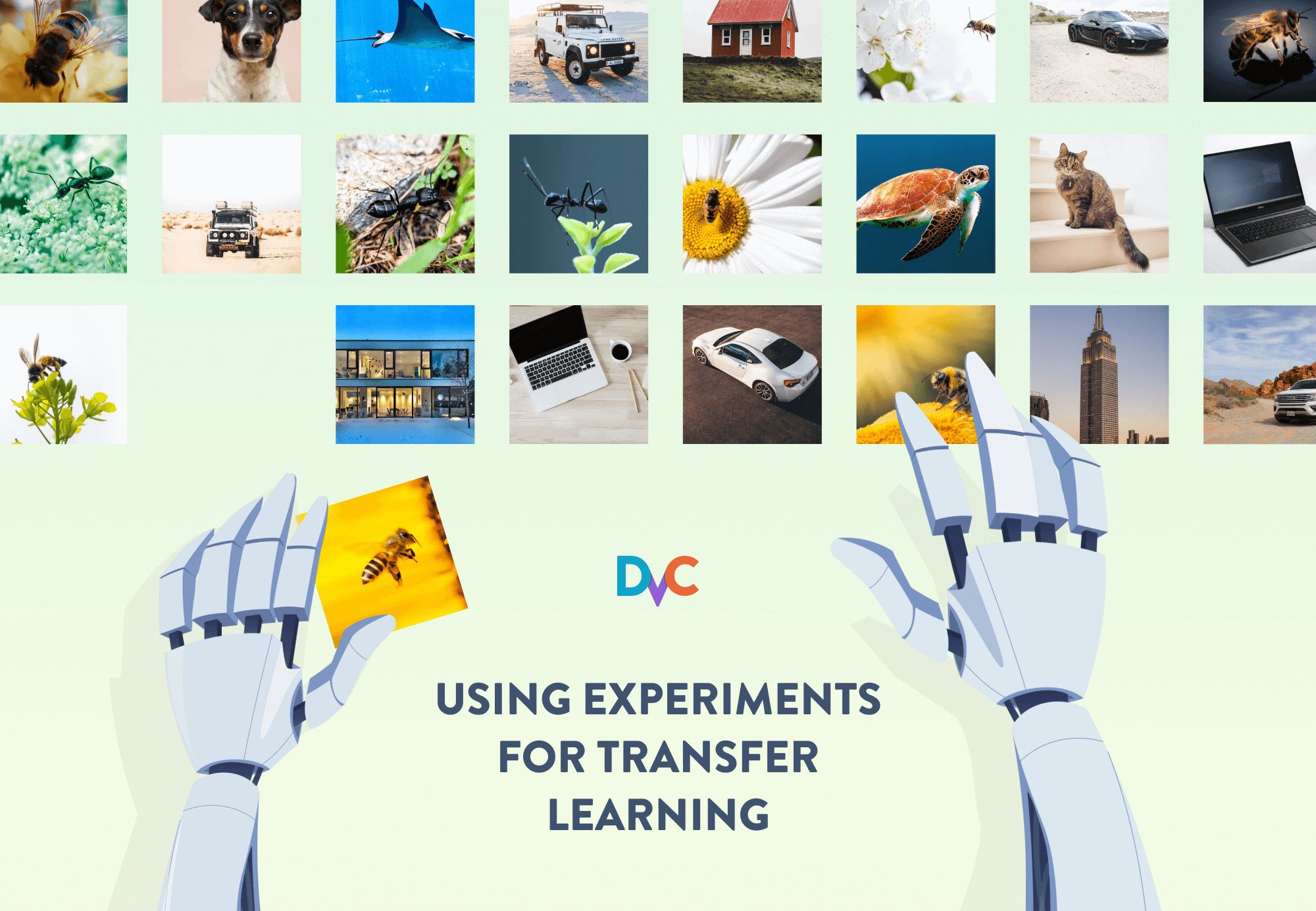 You can work with pretrained models and fine-tune them with DVC experiments.
236. VOGUE by Google, MIT, and UW: The AI-Powered Online Fitting Room
 Google used a modified StyleGAN2 architecture to create an online fitting room where you can automatically try-on any pants or shirts you want using only an ima
237. Eight Leaders Explain Their Model Training Libraries For The PyTorch Ecosystem
 I started using Pytorch to train my models back in early 2018 with 0.3.1 release. I got hooked by the Pythonic feel, ease of use and flexibility.
238. Artificial Intelligence, Machine Learning and Deep Learning Basics
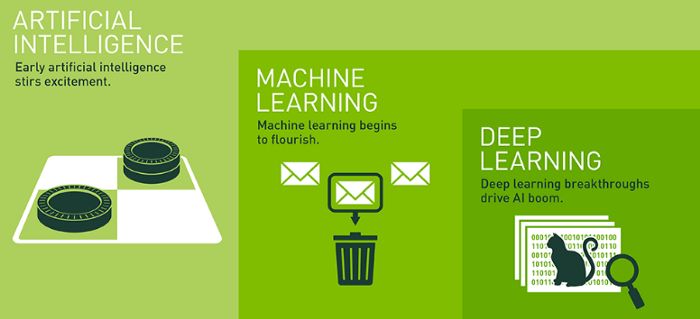 In recent years, artificial intelligence (AI) has been the subject of intense exaggeration by the media. The Machine Learning and Deep Learning in Spanish Machine Learning (AA) and Learning Deep (AP), with the IA, have been mentioned in countless articles and media regularly outside the realm of purely technological publications. We are promised a future of smart chat bots, autonomous cars and digital assistants, a future sometimes painted in a gloomy tint and other times in a Utopian way, where jobs will be scarce and most economic activity will be managed by robots and machines. embedded with AI.
For the future or current Machine Learning practitioner, it is of vital importance to be able to recognize the signal in the noise, so that we are able to recognize and spread about the developments that are really changing our world and not the exaggerations commonly seen in the media. Communication. If, like me, you are a practitioner of Machine Learning, Deep Learning or another field of AI, we will probably be the people in charge of developing those intelligent machines and agents, and therefore, we will have an active role to play in this and future society.
239. JPEG Sucks but Deep Learning Can Help It Improve
 In this post, I’ll show how you can reduce image sizes by an additional 20–50% with a single line of code.
240. A Full Time ML Role, 1 Million Blog Views, 10k Podcast Downloads: A Community Taught ML Engineer
 As the title mentions, this is a quick recap of a community taught ML Engineer's journey.
241. A Practical Approach to Novel Class Discovery in Tabular Data
 Discover how to effectively tackle Novel Class Discovery (NCD) in tabular data without relying on prior knowledge of novel classes.
242. Text Classification Models: All Tips And Tricks From 5 Kaggle Competitions
 In this article (originally posted by Shahul ES on the Neptune blog), I will discuss some great tips and tricks to improve the performance of your text classification model. These tricks are obtained from solutions of some of Kaggle’s top NLP competitions.
243. Simplifying Transformer Blocks without Sacrificing Efficiency
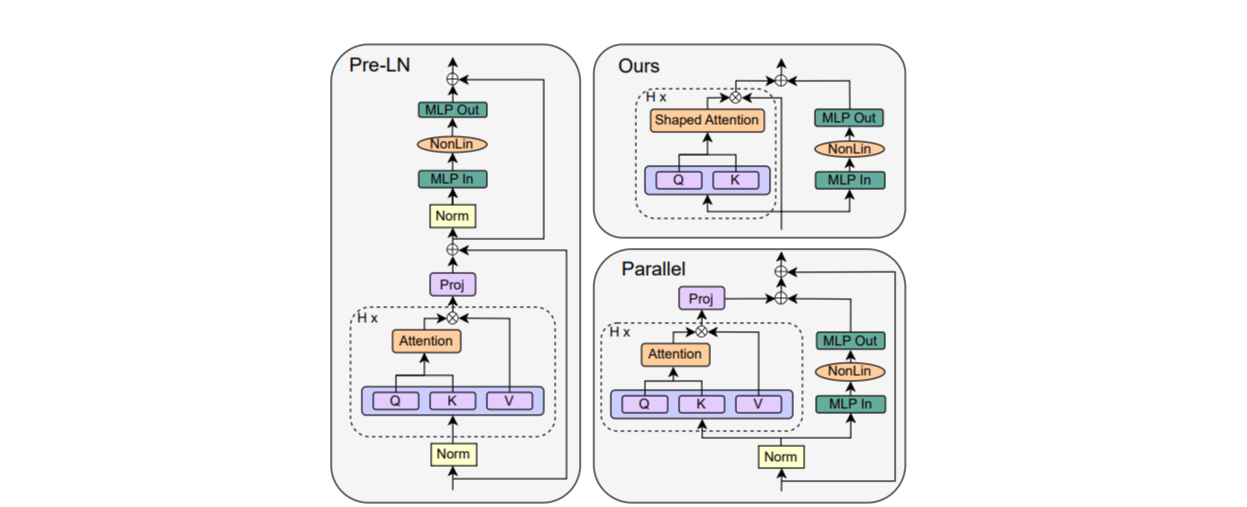 Learn how simplified transformer blocks achieve 15% faster training throughput without compromising performance in deep learning models.
244. Machine-Learning Neural Spatiotemporal Signal Processing with PyTorch Geometric Temporal
 PyTorch Geometric Temporal is a deep learning library for neural spatiotemporal signal processing.
245. Top 10 Computer Vision Papers of 2020
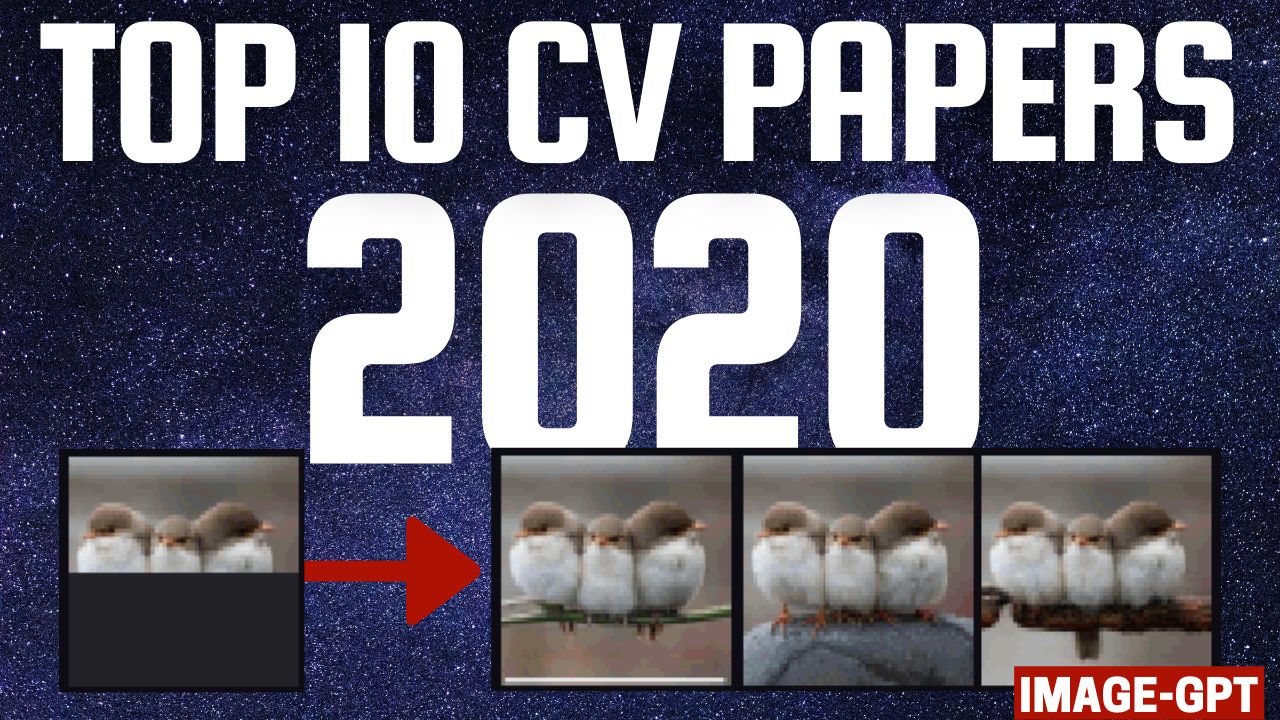 This is a video of the 10 most interesting research papers on computer vision in 2020.
246. Reflecting on AI in 2023: Magic, Hope, Innovation and Disruption
 Discover the transformative force of Artificial Intelligence. Explore the latest trends from NL to deep learning that are shaping the future of AI.
247. How Neural Networks Hallucinate Missing Pixels for Image Inpainting
 When a human sees an object, certain neurons in our brain’s visual cortex light up with activity, but when we take hallucinogenic drugs, these drugs overwhelm our serotonin receptors and lead to the distorted visual perception of colours and shapes. Similarly, deep neural networks that are modelled on structures in our brain, stores data in huge tables of numeric coefficients, which defy direct human comprehension. But when these neural network’s activation is overstimulated (virtual drugs), we get phenomenons like neural dreams and neural hallucinations. Dreams are the mental conjectures that are produced by our brain when the perceptual apparatus shuts down, whereas hallucinations are produced when this perceptual apparatus becomes hyperactive. In this blog, we will discuss how this phenomenon of hallucination in neural networks can be utilized to perform the task of image inpainting.
248. Language Modeling - A Look at the Most Common Pre-Training Tasks
 This article is about putting all the popular pre-training tasks used in various language modelling tasks at a glance.
249. Why "Big Data" is No Longer Relevant in the Age of Machine Learning and Deep Learning
 Discover why "Big Data" is no longer relevant with the rise of Machine Learning and Deep Learning. Learn how these technologies transform data analytics.
250. 82 Stories To Learn About Neural Networks
 Learn everything you need to know about Neural Networks via these 82 free HackerNoon stories.
251. Princeton and CMU Push AI Boundaries with the Mamba Sequence Model
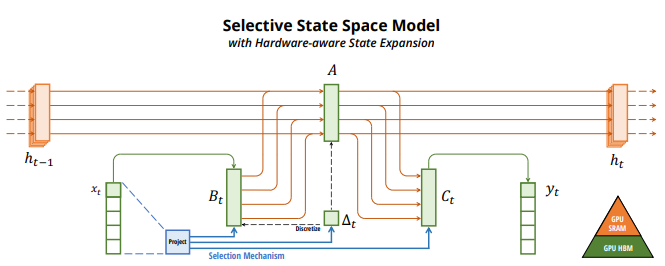 Mamba, a new linear-time model, matches Transformer performance with 5× higher efficiency, excelling in language, audio, and genomics tasks.
252. Breaking into Deep Learning: Transforming the World Without Expert Input
 Deep learning is a subdivision of machine learning in which Artificial Neural Networks (ANNs) learn from a huge influx of data to produce high-quality output.
253. The Science of AI Hallucinations—and How Engineers Are Learning to Curb Them
 Why large language models hallucinate, how tech giants fight back, and what developers can do to make AI more truthful.
[254. "Deep Learning is Rubbish"
Karl Friston & Yann LeCun's Panel at the Davos 2024
World Economic Forum](https://hackernoon.com/deep-learning-is-rubbish-karl-friston-and-yann-lecuns-panel-at-the-davos-2024-world-economic-forum)
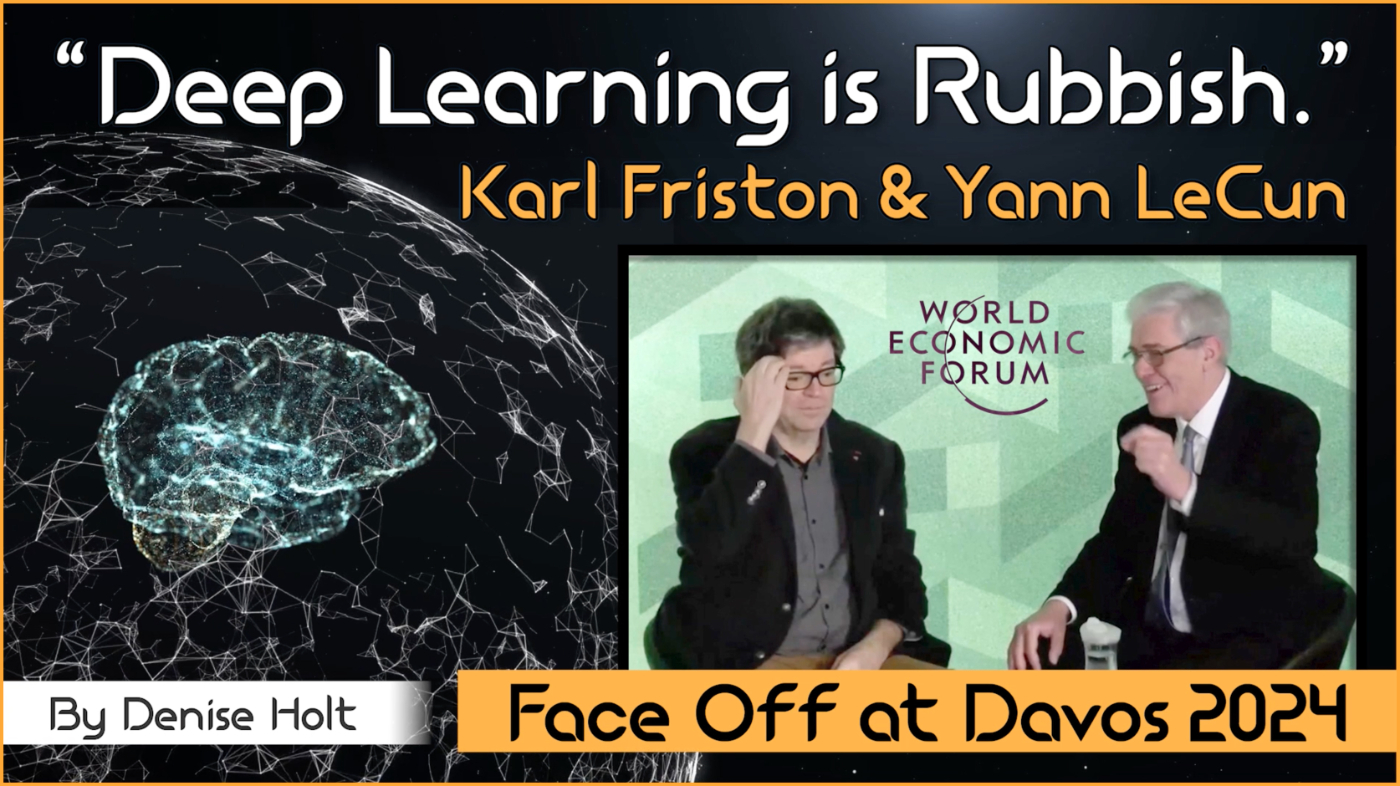 At Davos 2024, Karl Friston declares, "Deep Learning is rubbish", while Yann LeCun asserts, "The future of AI is non-generative."
255. Synthetic Data in Face Recognition: A Game Changer or Just Hype?
 Feasibility of genAI face images to train Face Recognition (FR) models. Article compares performance of FR models trained on real vs synthetic datasets.
256. Google is hustling its butt on AutoML next
 With the major intrusion of <strong>technological singularity</strong> in our current world, the potential of every AI we create, to perform specific tasks is beginning to explode.
257. How to Build Feedforward Neural Networks: A Step-by-Step Guide
 Create a deep learning framework from scratch!
258. Primer on Large Language Model (LLM) Inference Optimizations: 3. Model Architecture Optimizations
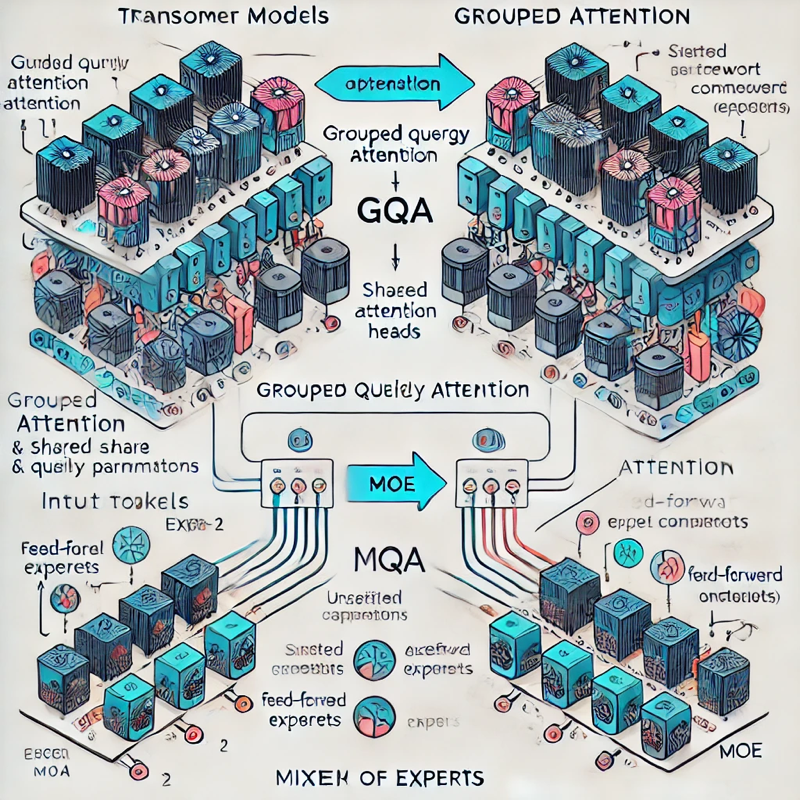 Exploration of model architecture optimizations for Large Language Model (LLM) inference, focusing on Group Query Attention (GQA) and Mixture of Experts (MoE)
259. Introducing ML News
 I know.
260. The Ten Must Read NLP/NLU Papers from the ICLR 2020 Conference
 The International Conference on Learning Representations (ICLR) took place last week, and I had a pleasure to participate in it. ICLR is an event dedicated to research on all aspects of representation learning, commonly known as deep learning. This year the event was a bit different as it went virtual. However, the online format didn’t change the great atmosphere of the event. It was engaging and interactive and attracted 5600 attendees (twice as many as last year). If you’re interested in what organizers think about the unusual online arrangement of the conference, you can read about it here.
261. Creating Cost-Effective Deep Learning with Custom AMIs and Spot Instances on AWS
 How to Create and Setup a Custom Deep Learning AMI and Reduce Costs With “Spot Instances”
262. 70-Page Report on the COCO Dataset and Object Detection [Part 1]
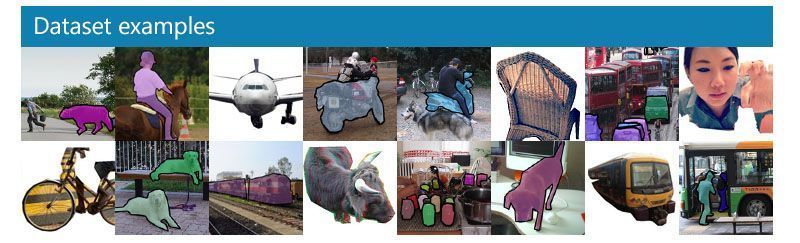 Quickly find common resources and/or assets for a given dataset and a specific task, in this case dataset=COCO, task=object detection
263. Jeremy Howard’s fast.ai vs Andrew Ng’s deeplearning.ai - Are They That Different From Each Other?
 How Not to ‘Overfit’ Your AI Learning by Taking Both fast.ai and deeplearning.ai courses
264. Fine-Tuning an LLM — The Six-Step Lifecycle
 An end-to-end bird's eye view of the fine-tuning process
265. Active Inference AI: Here's Why It's The Future of Enterprise Operations and Industry Innovation
 In the coming year, Active Inference AI is set to displace LLMs and deep learning GenAI as the most efficient, reliable, and sustainable form of AI.
266. Open-Set Semantic Extraction: Grounded-SAM, CLIP, and DINOv2 Pipeline
 Describes the process of extracting open-set semantic instance information.
267. Deep Learning is Already Dead: Towards Artificial Life with Olaf Witkowski
 Olaf Witkowski is the Chief Scientist at Cross Labs, which aims to bridge the divide between intelligence science and AI technology. A researcher of artificial life, Witkowski started in artificial intelligence by exploring the replication of human speech through machines. He founded Commentag in 2007, and in 2009 moved to Japan to continue research, where he first became interested in artificial life.
268. 5 Things I Learned from Google’s New ML-Powered Recorder App
 There are tons of audio recording apps in the app store, but you know things will be a bit different if Google developed a brand new one. Google recently released a new ‘Recorder’ app that is powered by its state-of-the-art Machine Learning algorithm that can transcribe what it hears with impressive precision in real-time. This is not the first time Google tried to bless its product with some AI ‘superpower’. Some of their prior attempts failed (I’m talking to you Google Clips!) and some had quite formidable success, for example, Google’s Pixel phone camera app.
269. Curious About Faster ML Models? Discover Model Quantization With PyTorch!
 Static quantization tutorial using Pytorch to speed up inference by as much as 4x!
270. New Major Release for Nebullvm Speeds Up AI Inference by 2-30x
 Nebullvm 0.3.0 features more deep learning compilers and now supports additional optimization techniques, including quantization and half precision.
271. Batch Processing Role in Deep Learning
 With two common buzzwords in AI being Graphics Processing Unit (GPU) and Batch Processing, there is widespread need to run AI efficiently in production.
272. Machine Learning: What Does The Future Look Like?

273. Predicting An Image Being Doodled, in Real Time - How We Built It.
 (Mind you, this is not a tutorial, I will be posting one soon though!)
274. A Beginners Guide to the Gradient Descent Algorithm
 The gradient descent algorithm is an approach to find the minimum point or optimal solution for a given dataset. It follows the steepest descent approach. That is it moves in the negative gradient direction to find the local or global minima, starting out from a random point. We use gradient descent to reach the lowest point of the cost function.
275. Optimize Model Training with a Data Streaming Client
 Were you ever annoyed when you had to pull a massive dataset (versioned using DVC) before training your model?
276. 5 Reasons Our Cities Are Not Full of Autonomously Flying Drones (Yet!)
 We are slowly but surely moving towards a world where autonomous drones will play a major role. In this article, I will show you what stopes them today.
277. The Goldfish Era is Over: How Google’s ‘Titans’ Gave AI Infinite Memory
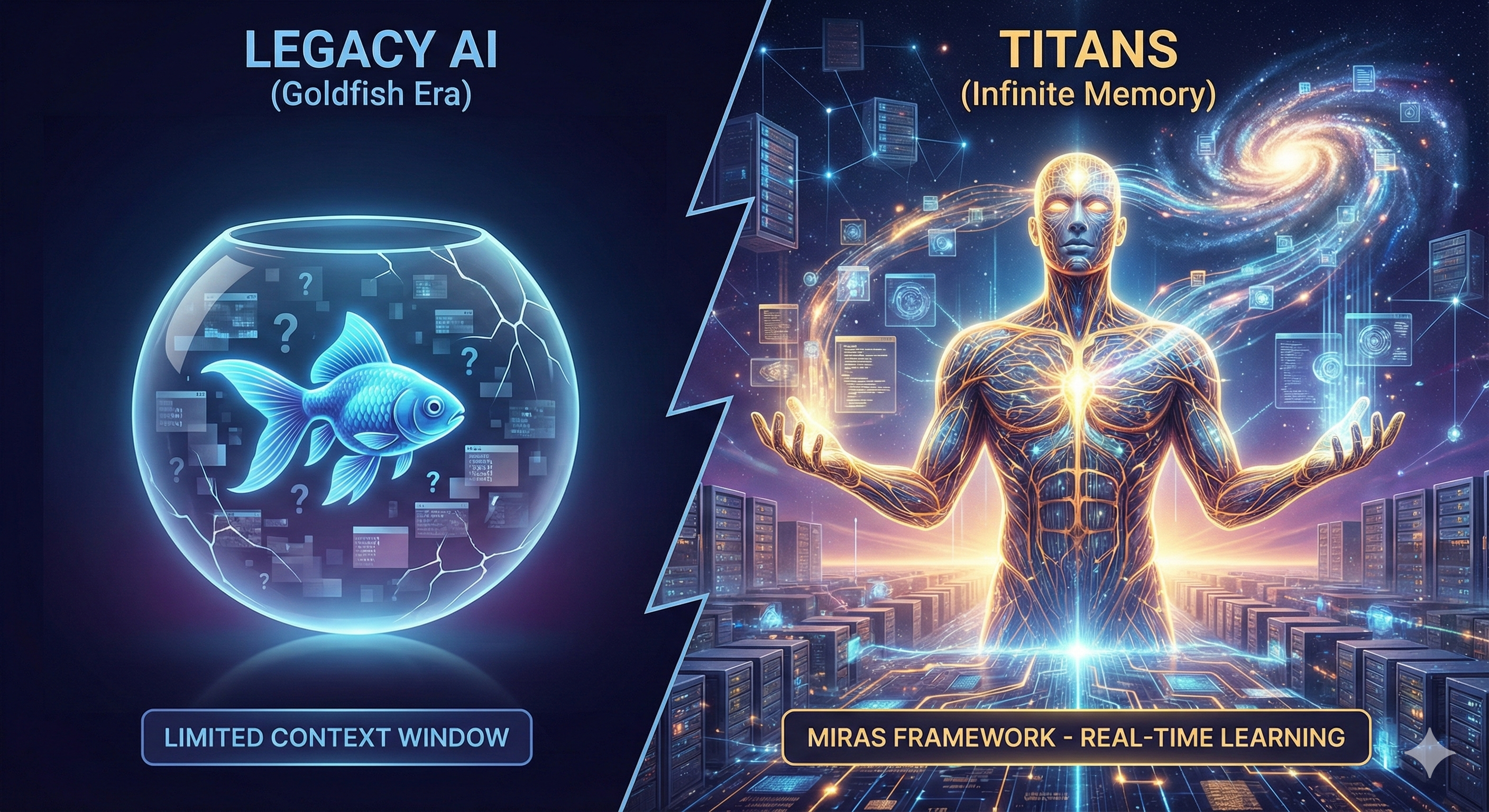 Titans uses a deep neural network that updates itself in real-time.
278. Anomaly Detection from Fetal ECG — A Case Study of IOT Anomaly Detection using GAN
 In this blog, we discuss about the role of Variation Auto Encoder in detecting anomalies from fetal ECG signals.
279. Unleashing the Power of Julia: Deep Learning Capabilities Explored Through 5 Case Studies
 If you really want to discover the power of Julia, check out this article. Code simplicity and readability are off the charts!
280. What Real Deep Learning Applied to Social Media Tells Us About the Crypto Market
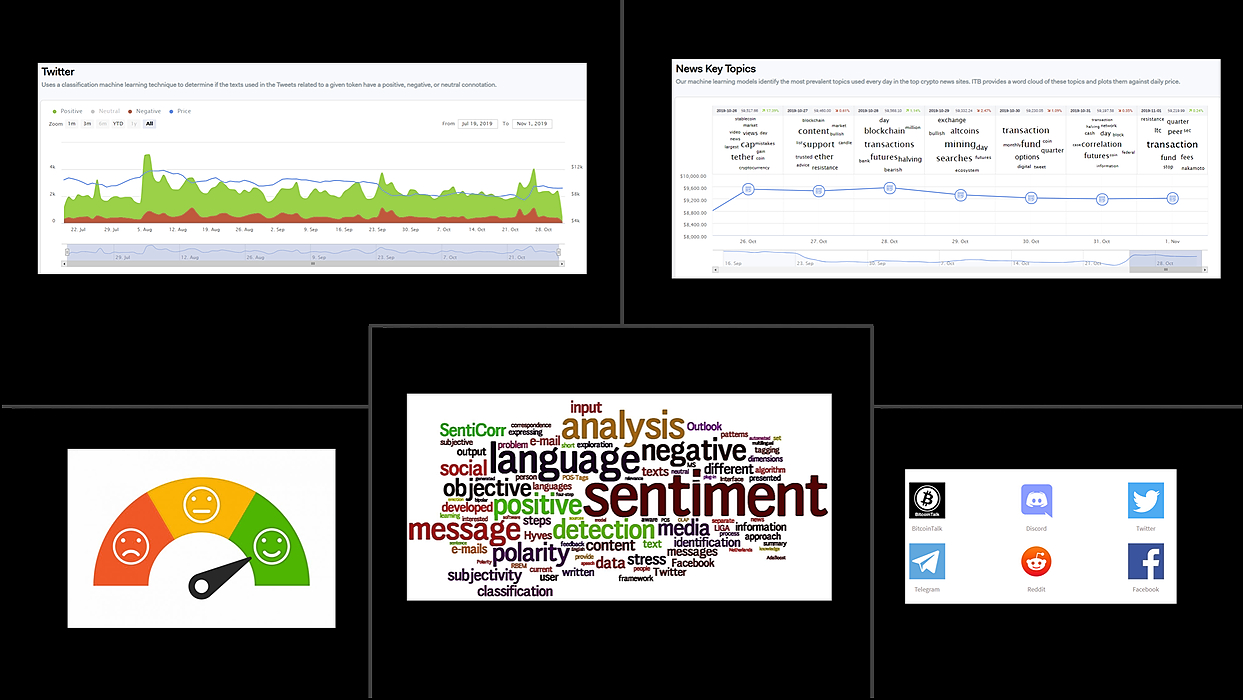 Social and news media plays a relevant role in the dissemination of information related to crypto-assets. In a nascent financial market without established disclosure mechanisms, a lot of the relevant events about crypto-assets are distributed first in news and social media channel and, not surprisingly, the market remains incredibly susceptible to those channels.
281. Unveiling the Limits of Learned Local Search Heuristics: Are You the Mightiest of the Meek?
 Dive into the challenges faced in empirically evaluating neural network-local search heuristics hybrids for combinatorial optimization.
282. Efficient Model Training in the Cloud with Kubernetes, TensorFlow, and Alluxio Open Source
 This article presents the collaboration of Alibaba, Alluxio, and Nanjing University in tackling the problem of Deep Learning model training in the cloud. Various performance bottlenecks are analyzed with detailed optimizations of each component in the architecture. This content was previously published on Alluxio's Engineering Blog, featuring Alibaba Cloud Container Service Team's case study (White Paper here). Our goal was to reduce the cost and complexity of data access for Deep Learning training in a hybrid environment, which resulted in over 40% reduction in training time and cost.
283. Lidar Annotation is All You Need
 The fusion of point cloud and image data for accurate road surface segmentation in camera images.
284. "You may also like..." How To Use Convolutional Neural Networks
 How to use a Convolutional Neural Network to suggest visually similar products, just like Amazon or Netflix use to keep you coming back for more.
285. Why and How do We Split the Dataset
 Dataset is one important part of the machine learning project. Without data, machine learning is just the machine, and learning is stripped from the title. Whic
286. How to Achieve Optimal ROI Through Process Mining
 Explore the evolution of process mining since 2011, focusing on advancements by industry leaders like Celonis and UiPath.
287. The Hitchhikers's Guide to PyTorch for Data Scientists
 PyTorch has sort of became one of the de facto standard for creating Neural Networks now, and I love its interface. Yet, it is somehow a little difficult for beginners to get a hold of.
288. Beyond TPC-H: Scaling IA2 for Real-World Database Optimization
 IA2 sets a new standard for database optimization using the TD3-TD-SWAR model, offering superior efficiency and unseen workload generalization.
289. Build a Scalable Semantic Search System with Sentence Transformers and FAISS
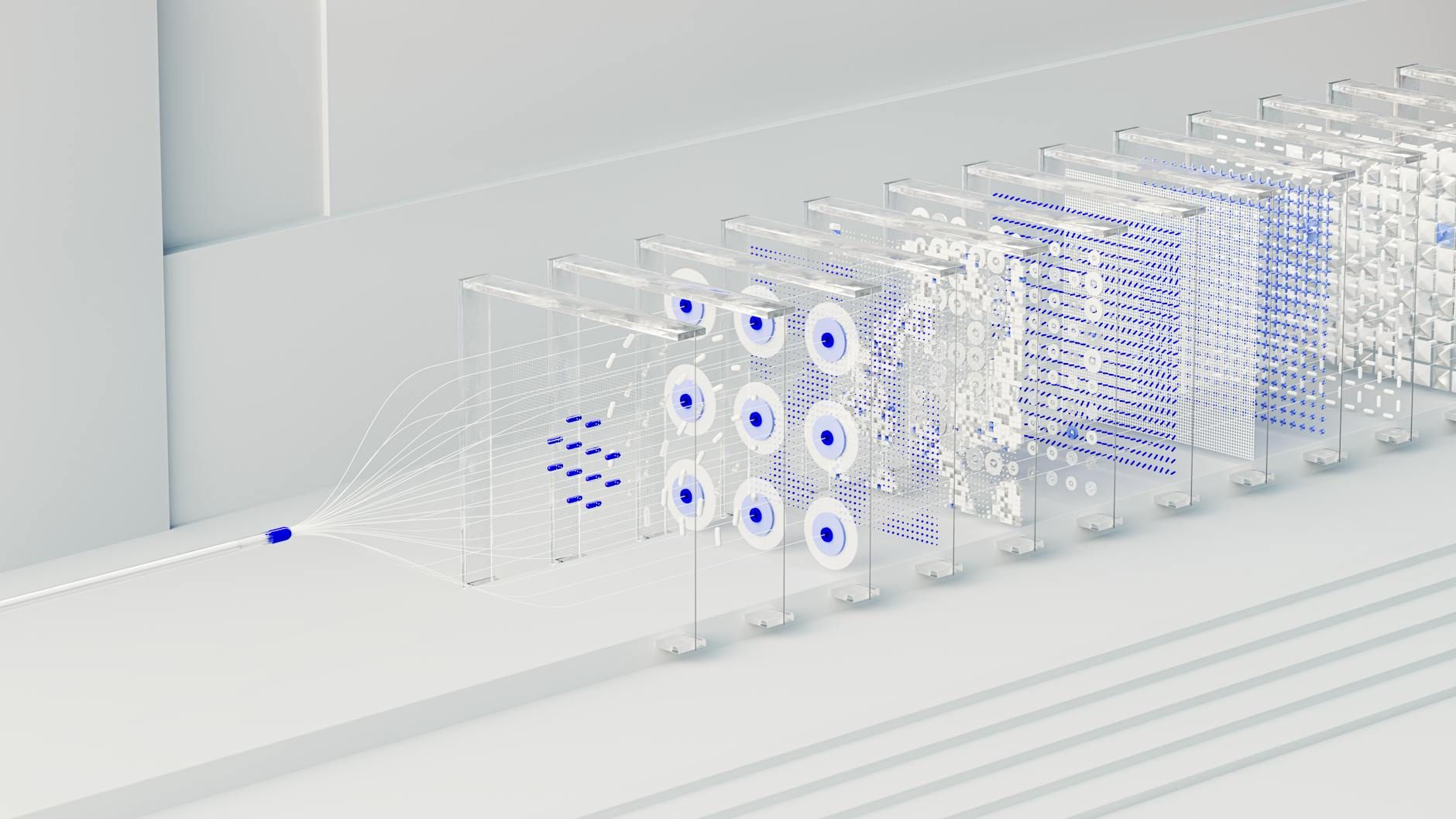 Build a lightning-fast semantic search system using Sentence Transformers and FAISS to deliver context-aware results at scale with blazing speed.
290. 10 Computer Vision Startups on Product Hunt with the Most Upvotes
 From self-driving cars and facial recognition to AI surveillance and GANs, computer vision tech has been the poster child of the AI industry in recent years. With such a collaborative global data science community, the advancements have come both from research teams, big tech, and computer vision startups alike.
291. State Space Models vs RNNs: The Evolution of Sequence Modeling
 State space models (SSMs) offer a powerful alternative to RNNs for sequence modeling, overcoming vanishing gradients and efficiency bottlenecks.
292. Training Neural Networks with Gorgonia
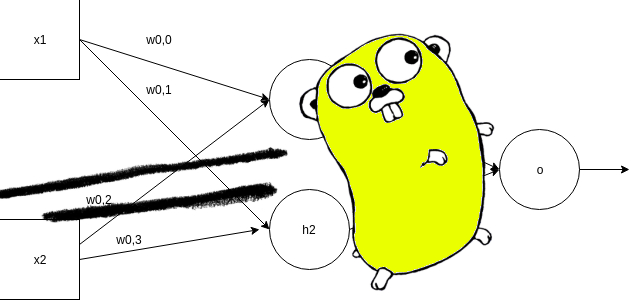 Deep learning and neural networks are very interesting subjects and Go language supports this technology using the framework Gorgonia.
293. The GPUs for Deep Learning: NVIDIA vs AWS vs Azure and More
 Take a deeper dive into what a GPU is, when you should use it or shouldn’t for Deep Learning tasks, and what is the best GPU on-premises and in the cloud in 202
294. 5 Essential Product Classification Papers for Data Scientists
 Product categorization/product classification is the organization of products into their respective departments or categories. As well, a large part of the process is the design of the product taxonomy as a whole.
295. Gemini AI by Google: Characteristics, Applications, and Industrial Influence
 Unlocking Infinite Possibilities: Explore the Future with Gemini AI. Innovation, Efficiency, and Boundless Insights Await.
296. Deep Learning From Scratch Series: A Simple Neural Network [Part 1]
 Photo from Pinterest Here -> this screenshot comes from a Martin Episode that you can watch here and get a good laugh 😂
297. A Taxonomy of Inclusiveness
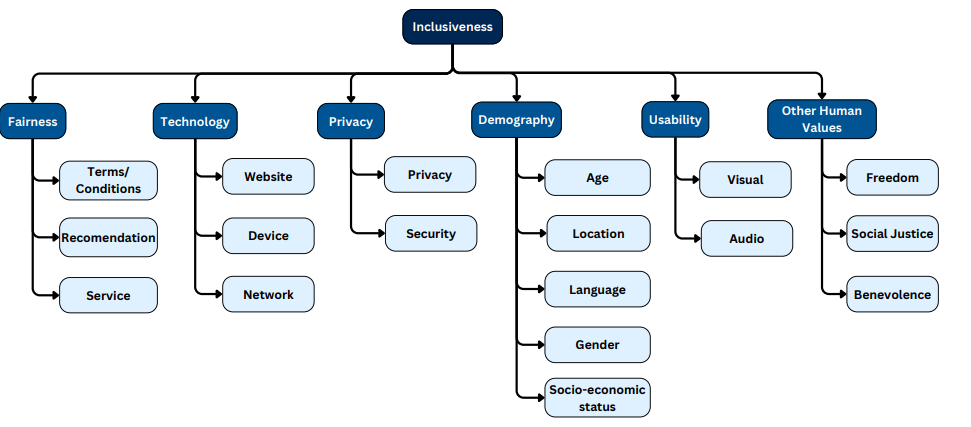 Explore inclusiveness through a taxonomy that unveils 6 major categories and associated sub-categories derived from over 1,200 user feedback posts
298. Blockchain and AI | A Disruptive Alliance
 AI and Blockchain are among some of the most influential drivers of innovation today — a natural convergence is occurring.
299. Meta's Emu: The Foundational Model for Emu Edit and Emu Video
 Meta's Emu paper unveils revolutionary image generation via quality-tuning, shifting LLMs' paradigm in AI development.
300. Enhancing Netflix's Deep Personalization: The Full Potential Of Its Current AI Recommender Systems
 Optimizing Netflix's ML ranker outcomes for a more efficient and accurate deep personalization experience of subscribers' long and short-term viewing preference
301. The Ultimate Toolbox Of ML Startups
 Setting up a good tool stack for your Machine Learning team is important to work efficiently and be able to focus on delivering results. If you work at a startup you know that setting up an environment that can grow with your team, needs of the users and rapidly evolving ML landscape is especially important.
302. Artificial Intelligence: Drawing Inspiration from Human Capabilities
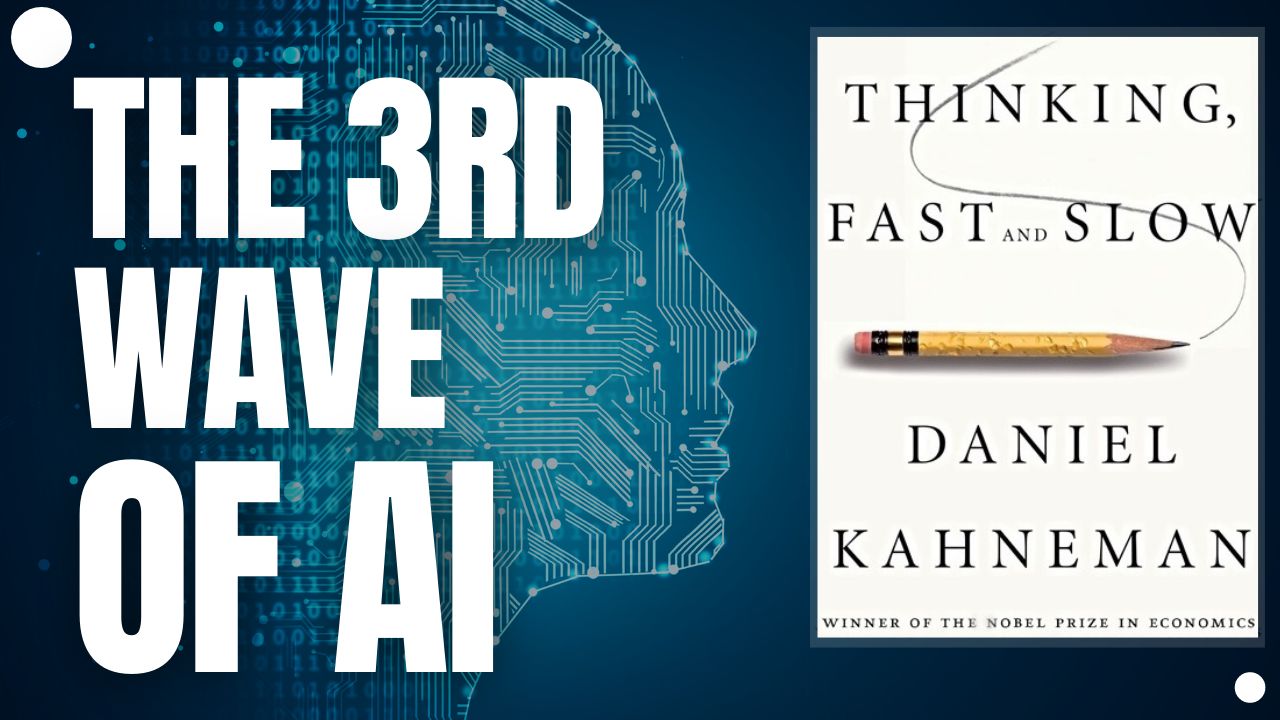 This video is both an introduction to the recent paper Thinking Fast and Slow in AI by Francesca Rossi and her team at IBM, and to Luis Lamb's most recent paper
303. On Guard Against COVID-19: AI Projects That Deserve a Shout-Out
 I've seen many blogs and articles saying the artificial intelligence (AI) will save the humankind from the 2019-nCoV (a.k.a. COVID-19) pandemic. I'm sorry for breaking it, but AI will not save us from the Coronavirus. Physical distancing and handwashing will. However, what it can help with is flattening the curve. We badly need to slow down the rate of the virus spread in each and every community to give local hospitals time to deal with both the infected patients and the capacity to handle the ever-growing loads of patients. And that's where AI can come in handy. On a global scale, effective AI and machine learning solutions for the Coronavirus timely detection and control give time to hundreds of R&D teams all over the globe working to create a vaccine against the virus.
304. 15 Must-read Machine Learning Articles for Data Scientists
 As always, the fields of deep learning and natural language processing are as busy as ever. Despite many industries being hindered by the quarantine restrictions in many countries, the machine learning industry continues to move forward.
305. Deep Lake, a Lakehouse for Deep Learning: Conclusions, Acknowledgement, and References
 Researchers introduce Deep Lake, an open-source lakehouse for deep learning, optimizing complex data storage and streaming for deep learning frameworks.
306. 3D Models at City Scale!
 Last year we saw NeRF, NeRV, and other networks able to create 3D models and small scenes from images using artificial intelligence. Now, we are taking a small step and generating a bit more complex models: whole cities. Yes, you’ve heard that right, this week’s paper is about generating city-scale 3D scenes with high-quality details at any scale. It works from satellite view to ground-level with a single model. How amazing is that?! We went from one object that looked okay to a whole city in a year! What’s next!? I can’t even imagine.
307. Robust Mask-Guided Matting: Managing Noisy Inputs and Object Versatility
 MaGGIe excels in hair rendering and instance separation on natural images, outperforming MGM and InstMatt in complex, multi-instance scenarios.
308. WTF is Deep Learning? Explanation for Non Tech People [Only Words and Pictures]
 Hello, there! In the next few minutes, we'll talk about a subject called Deep Learning. Have you heard about it?
309. What is Natural Language Processing? A Brief Overview
 Natural language processing (NLP) is a subfield of artificial intelligence. It is the ability to analyze and process a natural language.
310. Data Signals vs. Noise: Misleading Metrics and Misconceptions About Crypto-Asset Analytics
 The steady growth in the crypto-asset space has increased the need and popularity of market intelligence/analytics products. However, like any other new asset class, the methodologies and techniques to extract meaningful intelligence about crypto-assets are going to take some time to mature. Fortunately, the crypto market was born in the golden age of data science and machine learning so it has a shot at building the most sophisticated generation of market intelligence products ever seen for an asset class. Paradoxically, it seems that we prefer to remain lazy and come up with half-baked analytics that have the mathematical rigor of a fifth grade class.
311. 11 Real-World Applications of Machine Learning in Ecommerce
 In this blog, we look at 11 key use cases of machine learning in ecommerce that are currently taking the cake.
312. Artificial Intelligence: Time to Terminate the Terminator Tale?
 With outdated dystopian movies like Terminator making headlines for possibly predicting the future and with companies like Google already releasing Artificial Intelligence (AI) tools and bots, is it time to rethink the Terminator narrative. As we move towards a world that is increasingly digitized, we must work to truly understand what it means to have and use AI.
313. Deep Lake, a Lakehouse for Deep Learning: Performance Benchmarks
 Researchers introduce Deep Lake, an open-source lakehouse for deep learning, optimizing complex data storage and streaming for deep learning frameworks.
314. 59 Stories To Learn About Tensorflow
 Learn everything you need to know about Tensorflow via these 59 free HackerNoon stories.
315. From Fixed Labels to Prompts: How Vision-Language Models Are Re-Wiring Object Detection
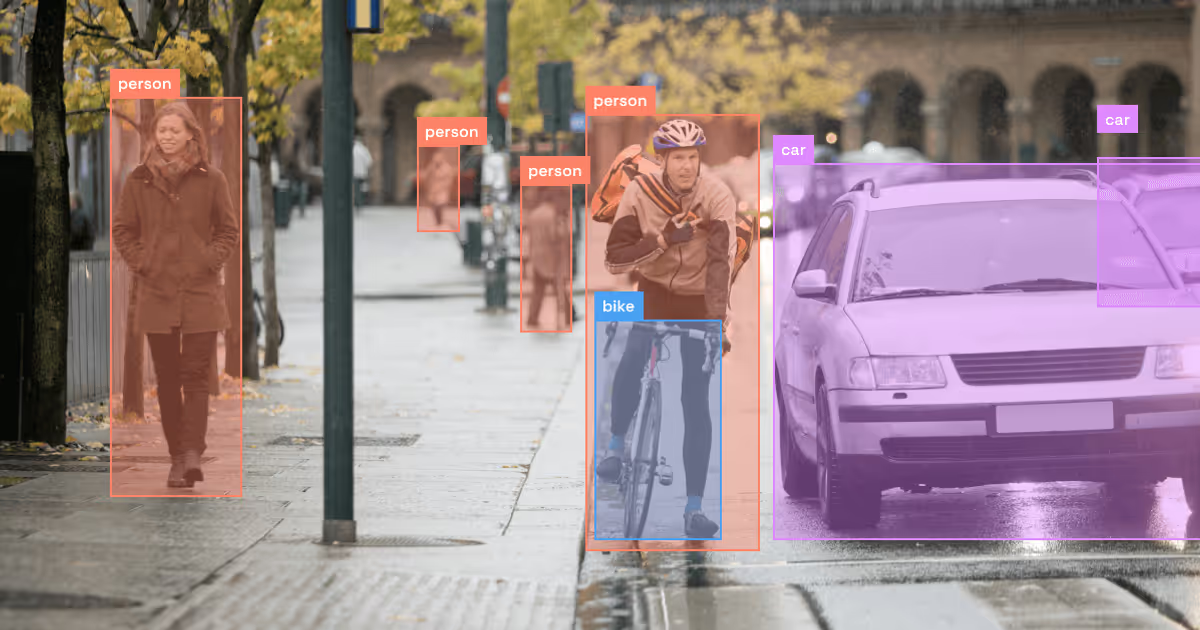 How open-vocabulary vision-language object detectors overcome closed-set limits, with VOC/COCO/LVIS benchmarks and a hybrid recipe for fast edge deployment.
316. Last Week in AI
 Every week, my team at Invector Labs publishes a newsletter to track the most recent developments in AI research and technology. You can find this week’s issue below. You can sign up for it using this link. Please do so, our guys worked really hard on this.
317. Mamba Outperforms HyenaDNA in DNA Sequence Modeling
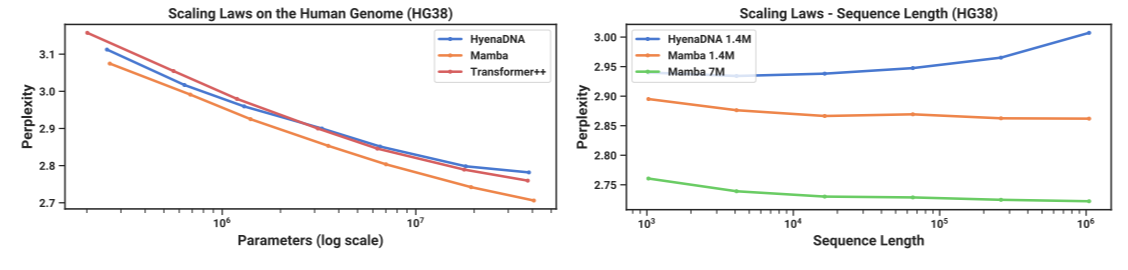 Mamba excels in DNA modeling, outperforming HyenaDNA and Transformer++ in scaling laws for model size and context length.
318. An Intro to Edge Computer Vision: Technologies, Applications, Use Cases and Key Models
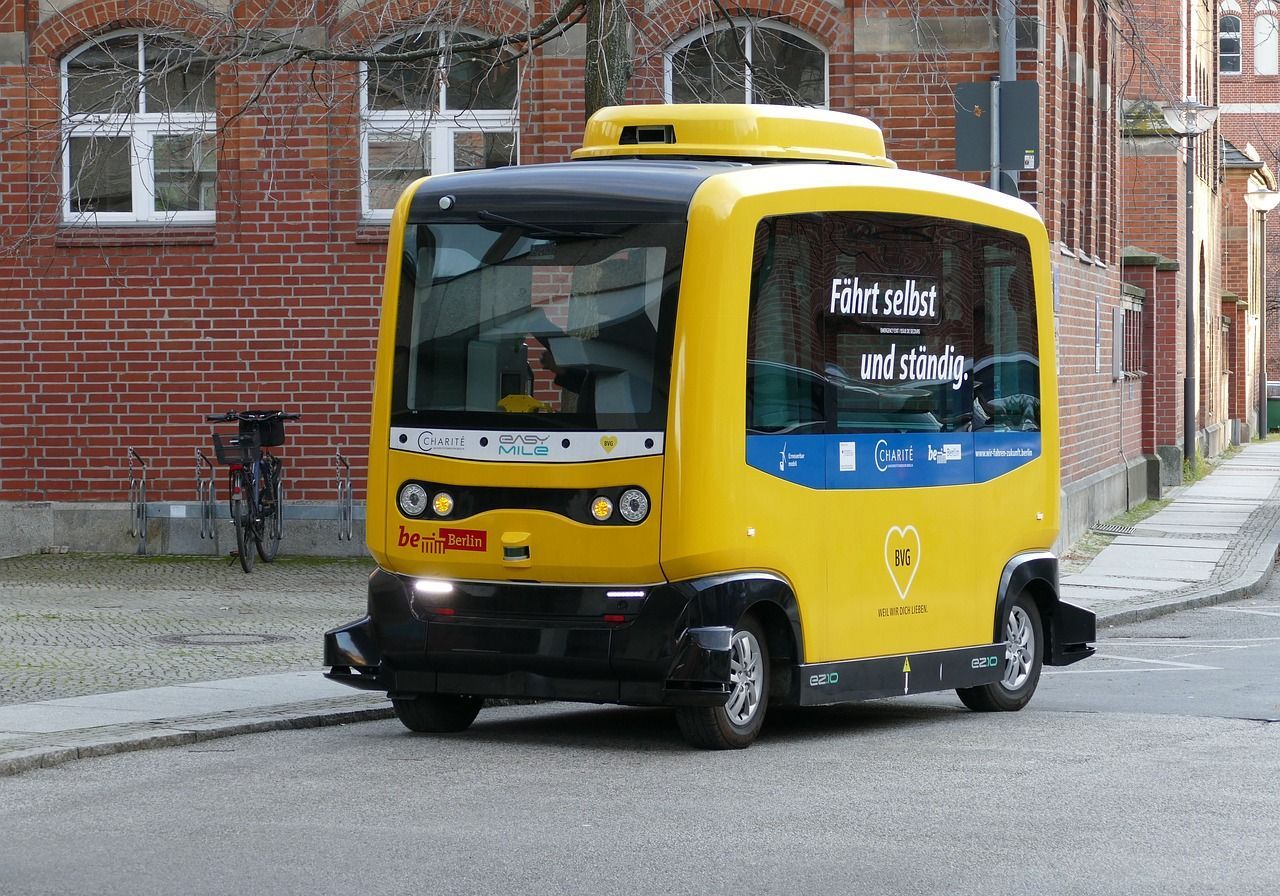 introduction to computer vision technologies, applications, use cases and key models.
319. RG-LRU: A Breakthrough Recurrent Layer Redefining NLP Model Efficiency
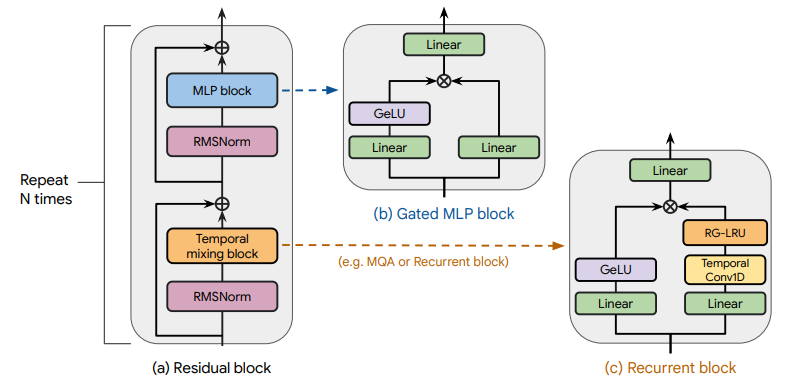 This research presents RG-LRU, a novel recurrent layer for temporal mixing, used in Hawk and Griffin models to rival Transformers in NLP efficiency.
320. Comparative Study Of Best Time-Series Models For Pandemic Response
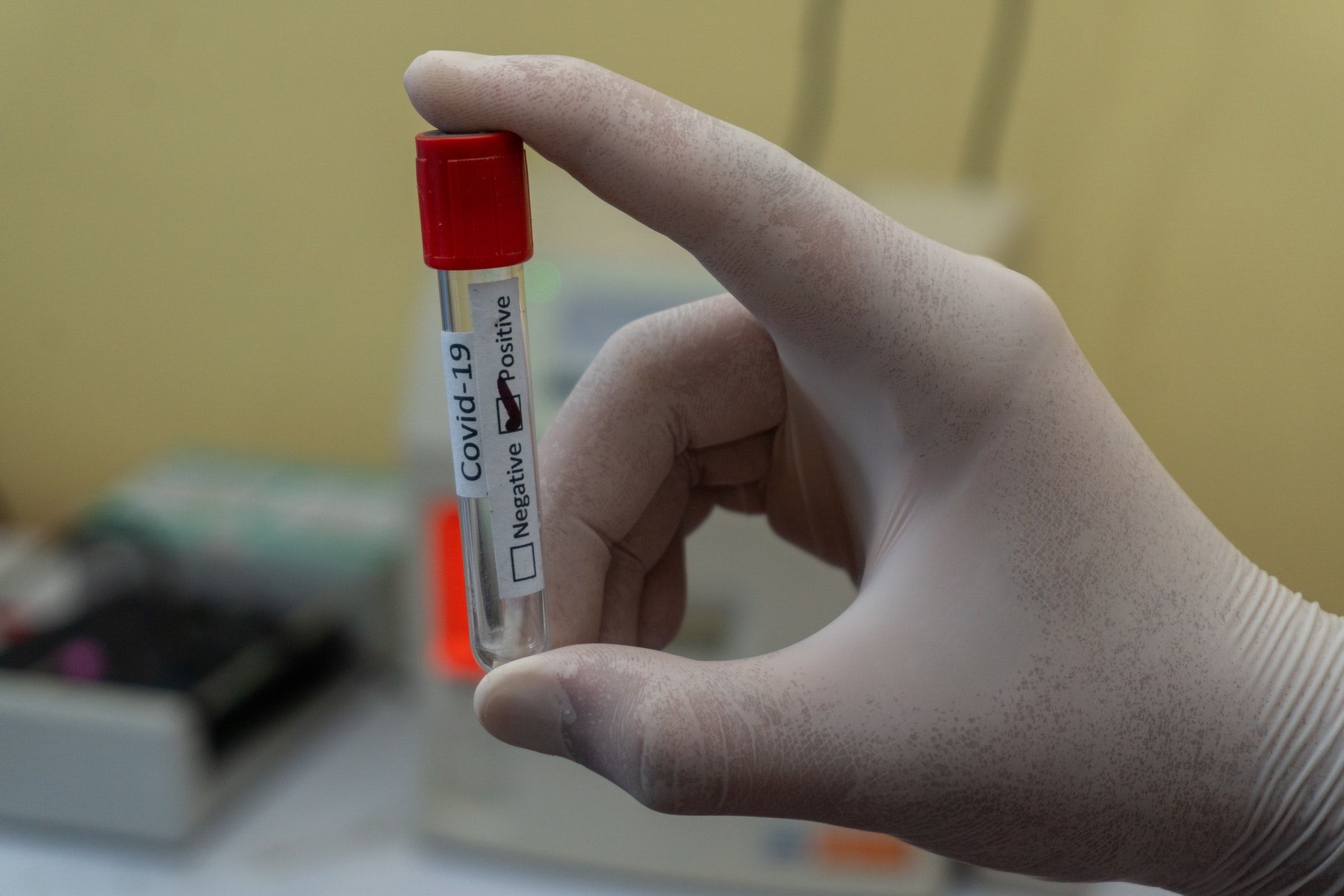 With the effect of the pandemic increasing every day and casting a vehemently toxic influence in almost all parts of the world, it becomes important how can we contain the spread of the disease. In an effort to combat the disease every country has increased not only their testing facility but also the amount of medical help and emergency and quarantine centers. Here in this blog, we try to model Single-Step Time Series Prediction, using Deep Learning Models, on the basis of Medical Information available for different states of India.
321. Our Quest To Solve Inefficient Web Traffic Monetization
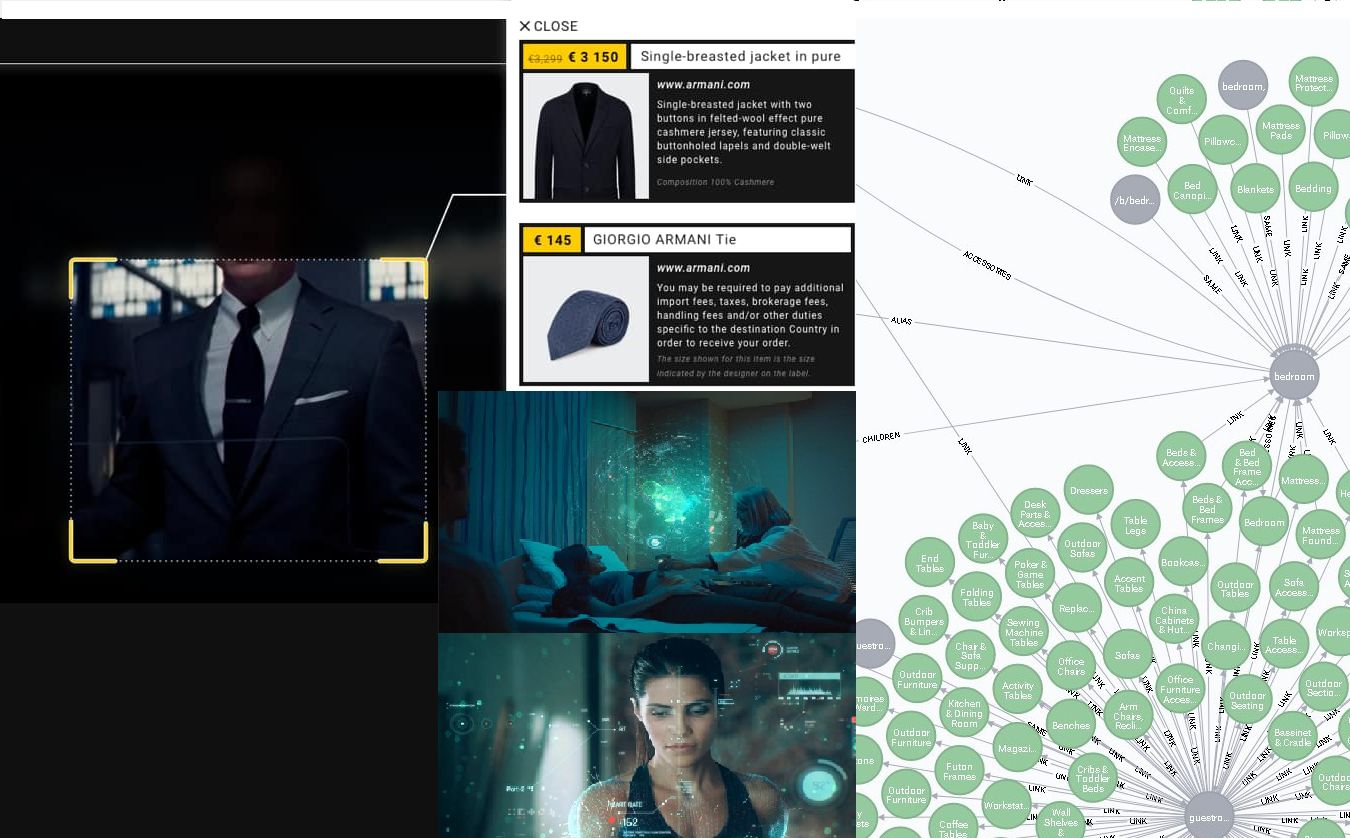 Have you heard or perhaps even tried new ways to purchase stuff you see on TV? You know, the ones that invite you to buy things you see while your favorite show is being aired? They offer you to shop through various user interaction mechanics that range from scanning a QR code shown at the corner of the TV screen to pressing a set of navigation buttons on the remote control to receive a text message with a link to the product. What a maze, I have to say.
322. Artificial Intelligence Business Opportunities: 10 Steps to Implement
 Much like the rest of the world, Artificial Intelligence (A.I) has a 1% problem. Creating a smart algorithm is not yet a given for many entrepreneurs - why not?
323. Hyperbolic Geometry in Kuramoto Ensembles: Conformal Barycenters and Gradient Flows
 Learn about Watanabe-Strogatz dynamics, conformal barycenters, and gradient flows in the unit disc.
324. Activate: Beast Mode
 There’s an astronomical difference between simply writing code and being a great developer.
325. Enhancing Digital Security with AI Image and Video Detectors
 Discover how AI image and video detectors enhance digital security by recognizing and analyzing visual content to prevent threats and ensure safety.
326. Toon Filters And Video Transformation in EbSynth [Part 2]

327. Deep Lake, a Lakehouse for Deep Learning: Tensor Storage Format
 Researchers introduce Deep Lake, an open-source lakehouse for deep learning, optimizing complex data storage and streaming for deep learning frameworks.
328. 320 Stories To Learn About Deep Learning
 Learn everything you need to know about Deep Learning via these 320 free HackerNoon stories.
329. Join the $100,000 Kaggle Competition to Revolutionize Education
 Parents and teachers have known for centuries that the best
education is delivered one-on-one by an experienced educator. But that is
expensive, labor intensive and cannot scale.
Parents and teachers have known for centuries that the best
education is delivered one-on-one by an experienced educator. But that is
expensive, labor intensive and cannot scale.
330. Beyond Pretty Videos: 5 Surprising Ideas Behind PAN, The AI That Simulates Reality
 PAN is a new AI model that uses a Large Language Model as its autoregressive world model to predict the future, solving rapid time decay with a novel approach.
331. MLLM Adapters: Review of VPGs and Multimodal Fusion
 Reviews state-of-the-art MLLMs. Highlights the challenge of expanding current models beyond the simple one-to-one image text relationship.
332. How State Space Models Improve AI Sequence Modeling Efficiency
 Explore state space models (SSMs), their structured architecture, and innovations like H3, Hyena, and RWKV that revolutionize AI sequence modeling efficiency.
333. NVIDIA ADA: Train Your GAN With 1/10th of the Data
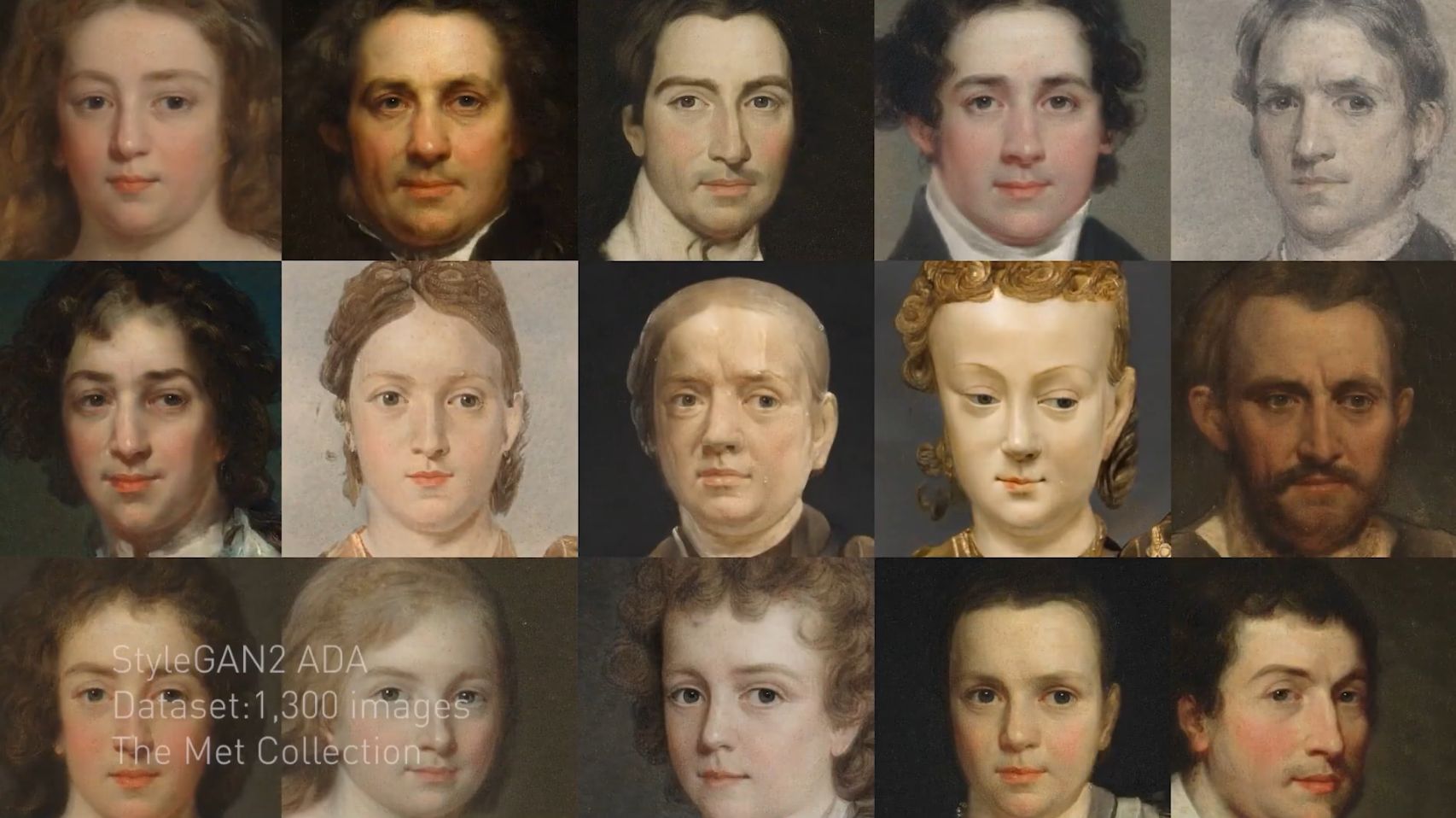 With this new training method developed by NVIDIA, you can train a powerful generative model with one-tenth of the images! Making possible many applications tha
334. How Artificial Intelligence Is Reshaping the IT Industry
 Artificial Intelligence has powerfully penetrated the way we live. It doesn’t only change the way we work but also reshaped how we used to live. Speaking of AI, it is one of the most interesting technologies that we’ve ever encountered.
335. Why Deep Learning Is Still Too Difficult
 While deep learning has great potential, building practical applications powered by deep learning remains to be too expensive and too difficult for many organizations. In this article, we will describe some of the challenges to broader adoption of deep learning. We will also explain how those challenges differ from those of traditional machine learning systems, and the path forward to making deep learning more widely accessible.
336. 214 Stories To Learn About Computer Vision
 Learn everything you need to know about Computer Vision via these 214 free HackerNoon stories.
337. Four Key Trends in Theoretical Machine Learning (2026)
 Explore the four research pillars reshaping theoretical ML: control theory, probabilistic modeling, geometric ML, and physics-informed algorithms.
338. The Challenges of Running Computer Vision on the Edge
 Artificial intelligence (AI) is the field of making computers able to act intelligently, to make decisions in real environments that will have favorable outcomes.
339. Deep Lake, a Lakehouse for Deep Learning: Deep Lake System Overview
 Researchers introduce Deep Lake, an open-source lakehouse for deep learning, optimizing complex data storage and streaming for deep learning frameworks.
340. Top 25 Publications About AI You Have To Read
 Hey there Noonies! Hope the afternoon is going great with lots of code and coffee. Even I was just sitting by the window enjoying rain when suddenly the sky turned dark and I wanted to switch on the light to read my book better, but the switch is on the other side of the room! So, I just said, Hey Alexa, switch on the lights, and voila! After a while I switched on my TV and there it was, Gracie, helping out the covid patients and our front line superheroes amidst the pandemic. From a light switch to a pandemic, seems like artificial intelligence is slowly winning the world. Well, if you wanna join the race, here you go with the top stories on Artificial Intelligence on Hacker Noon.
341. Top Tips For Competing in a Kaggle Competition
 Hi, my name is Prashant Kikani and in this blog post, I share some tricks and tips to compete in Kaggle competitions and some code snippets which help in achieving results in limited resources. Here is my Kaggle profile.
342. IA2 Preprocessing: Establishing the Foundation for Index Selection
 The IA2 preprocessing phase uses a workload model and index candidates enumerator to create accurate state representations and action spaces.
343. 6 GAN Architectures Every Data Scientist Should Know
 Source: neptune.ai
344. Vector Search in Databases: FOSDEM's Presentation on Manticore Vector Search
 The latest in vector search for databases from FOSDEM, highlighting advancements, challenges, and future directions.
345. Neural Entity Linking and How JPMorgan Chase Plans to Use it
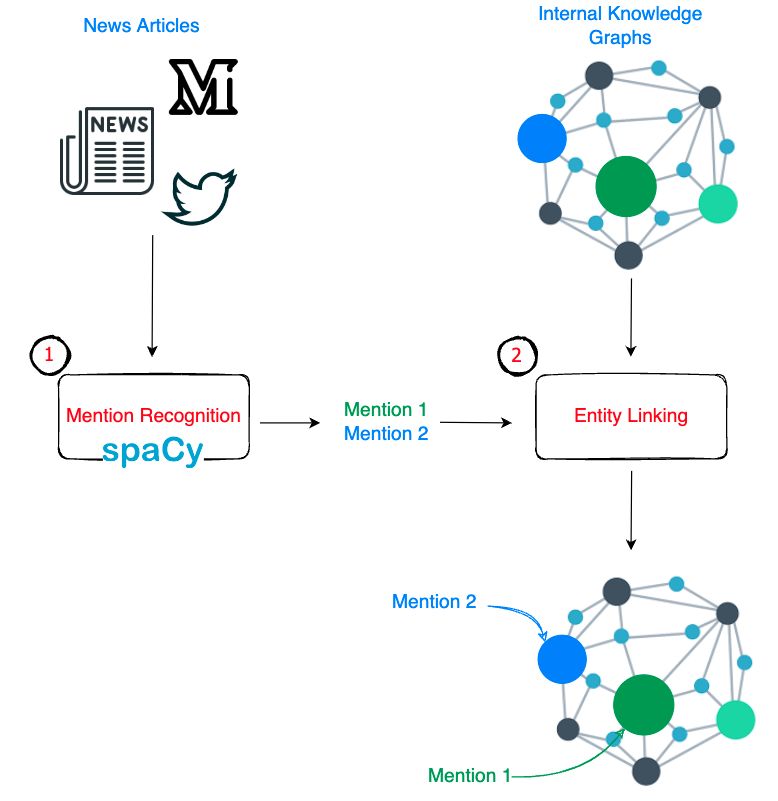 This article summarizes the problem statement, solution, and other key technical components of the paper: End-to-End Neural Entity Linking in JP Morgan Chase
346. Insights from a DeepMind Researcher Turned Startup Founder
 An interview with an ex-deepmind and ex-microsoft that started his own startup
347. Beyond Preprocessing: Sequential Indexing and Temporal Consistency in IA2
 IA2 uses the TD3-TD-SWAR algorithm to adaptively mask irrelevant indexes, ensuring robust performance optimization for both familiar and unseen workloads.
348. The Screen Is the API
 llms.txt maps content for reading, but automation demands action. Computer-use agents operating directly on screens are the real universal interface.
349. BSGAL: Gradient-Based Screening for Long-Tailed Perception Tasks
 Proposes BSGAL, a gradient-based method for effective screening and utilization of generated data to improve downstream perception tasks.
350. How To Identify Trees with Deep Learning
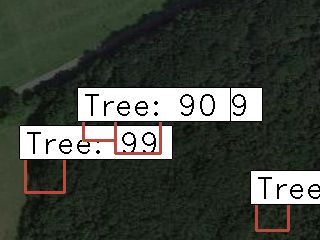 Idea / inspiration
351. Deep Learning at Alibaba Cloud with Alluxio: How To Run PyTorch on HDFS
 This tutorial shows how Alibaba Cloud Container team runs PyTorch on HDFS using Alluxio under Kubernetes environment. The original Chinese article was published on Alibaba Cloud's engineering blog, then translated and published on Alluxio's Engineering Blog
352. Checking If Your Headline A Clickbait: A How-To Guide
 For those who don’t know what that is… It is basically a magical tool that allows anyone to take existing AI models and train them for their own data, however, small the dataset maybe. Sounds good, right?
353. Unseen Workload Optimization: The Two-Phase IA2 Approach
 IA2 uses a two-phase framework to generate states and action pools from workloads, enabling RL agents to make sequential index selection decisions.
354. Edge Devices: What Are They and How Do They Work?
 In this paper, we revisit this hot topic from the standpoint of boosting sensing devices, considering the practice of many sensing domains.
355. QLoRA: Fine-Tuning Your LLMs With a Single GPU
 QLoRA is the first paper that showed we can train LLMs on a single GPU. This article explains the approach of QLoRA in simple terms
356. A Simplified State Space Model Architecture
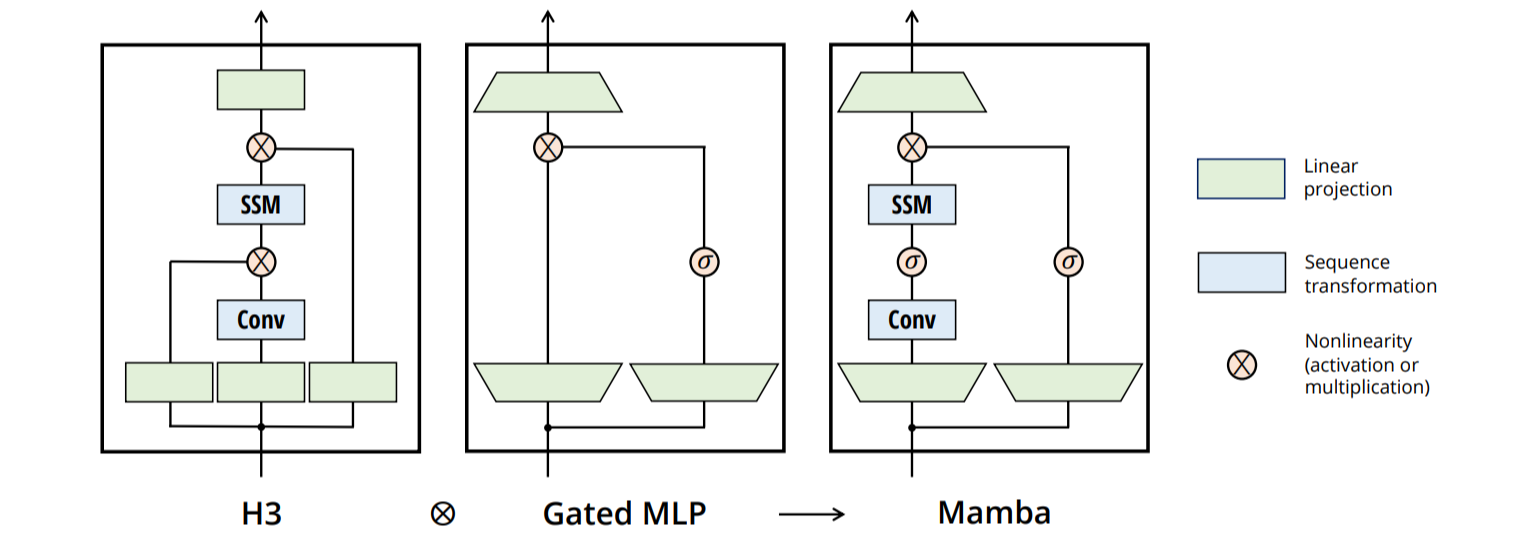 Explore the simplified state space model (SSM) architecture that combines linear attention and MLP components into a unified block.
357. The Art of Transformers: How AI Intuitively Summarizes Business Papers Using NLP
 “I don’t want a full paper, just give me a concise summary of it”. Who hasn't found themselves in this situation, at least once? Sound familiar?
358. 5 ML Security Challenges Demanding our Unwavering Attention
 As per Gartner, almost 80 percent of every emerging technology will have Artificial Intelligence as the backbone by the end of 2021. Building secure software is a no mean feat. Amid the lingering cybersecurity threats and the potential challenges posed by the endpoint inadequacies, the focus is continuously shifting towards machine learning and the relevant AI implementations for strengthening the existing app and software security standards.
359. Improving Training Stability in Deep Transformers: Pre-LN vs. Post-LN Blocks
 Discover how Pre-LN transformer blocks improve training stability and signal propagation in deep learning models.
360. Swarms on Manifolds for Deep Learning: Training Kuramoto Models and Trajectory Learning
 Discover parameter estimation for wrapped Cauchy and von Mises distributions in trajectory learning.
361. Facial Recognition On Drone
 A facial recognition demonstration using Keras, Tensorflow, python and the drone Tello, from DJI.
362. Machine Learning in Java: Getting Started with DeepLearning4J, Tribuo, and Smile
 Learn how to build machine learning models in Java using DeepLearning4J, Tribuo, and Smile.
363. Worst-Case Portfolio Optimization & Hyperbolic Graph Clustering
 Learn about worst-case portfolio optimization under market crash scenarios and LSEnet, a deep graph clustering model utilizing Lorentz hyperbolic space
364. Hate Speech Detection in Algerian Dialect Using Deep Learning: Background
 In this paper, we proposed a complete end-to-end natural language processing (NLP) approach for hate speech detection in the Algerian dialect.
365. Building a Production-Ready Traffic Violation Detection System with YOLOv8 and DeepSORT
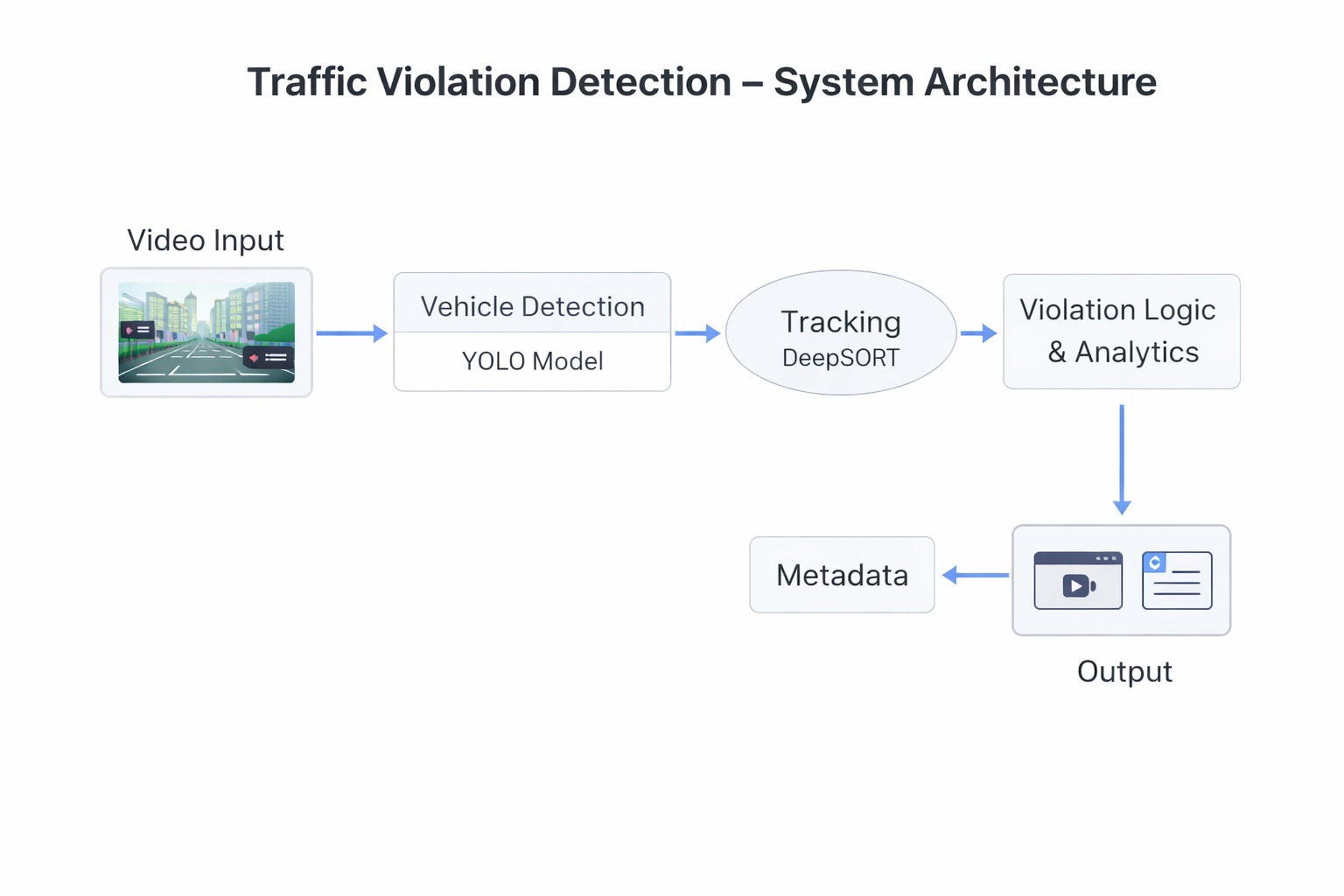 How I built a production-ready traffic violation detection system using YOLOv8, DeepSORT, OpenCV, and hybrid ML pipelines.
366. MaGGIe Architecture Deep Dive: Mask Guidance and Sparse Refinement
 Explores MaGGIe's architecture, featuring mask guidance embeddings, progressive refinement (PRM), and bidirectional matte fusion for consistent video results.
367. A Self-supervised Attention Mechanism To Help With Dense Optical Flow Estimation
 Multi-object Tracking using self-supervised deep learning
368. Introduction to My Computer Vision Project: ArtLine
 ArtLine is based on Deep-Learning algorithms that will take your image input and transform it into a line art. I started this project as fun project but was excited to see how it turned out. The results from this model are so good that it is almost equal to the line art by an artist.
369. Hyperbolic Space Statistical Models: Geometric Deep Learning & Inference
 Discover how statistical models over hyperbolic spaces enable inference, sampling, and density estimation in Geometric Deep Learning
370. Out with Transformers? Mamba’s Selective SSMs Make Their Case
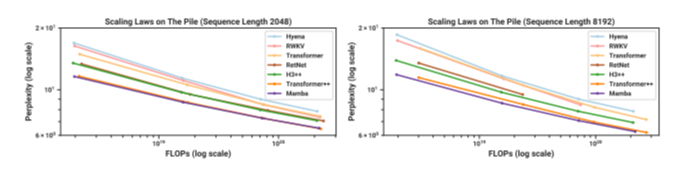 Mamba, a selective SSM, is benchmarked across synthetic tasks, language modeling, DNA sequence classification, and speech generation.
371. Optimizing Novel Class Discovery with NCD Spectral Clustering and k-means
 Explore new methods in Novel Class Discovery (NCD) with enhanced k-means and Spectral Clustering techniques.
372. Last Week in AI
 Every week, my team at Invector Labs publishes a newsletter to track the most recent developments in AI research and technology. You can find this week’s issue below. You can sign up for it using this link. Please do so, our guys worked really hard on this.
373. Top 5 Jaw-Dropping Applications of Deep Learning in Healthcare Sectors
 In the real-world clinical environment, deep learning is steadily finding its way into innovative technologies and tools.
374. Technical Details: BSGAL Training, Swin-L Backbone, and Dynamic Threshold Strategy
 Details BSGAL's implementation on the LVIS dataset using CenterNet2 with ResNet-50/Swin-L backbones.
375. Formalizing Generative Active Learning for Instance Segmentation
 Proposes BSGAL, a Generative Active Learning algorithm that uses gradient cache to filter unlimited synthetic data.
376. Adaptive Graph Neural Networks for Cosmological Data Generalization: Abstract and Intro
 Deep learning meets cosmological data with Domain Adaptive Graph Neural Networks for robust parameter extraction.
377. Deceptive Doppelgangers: How Deepfakes Caused a Scam of HK $200 Million
 Deceptive Doppelgangers: How Deepfakes Caused a Scam of HK $200 Million
378. Jina, a Deep Learning-Powered Search Framework, Can Help You Build Your Neural Search
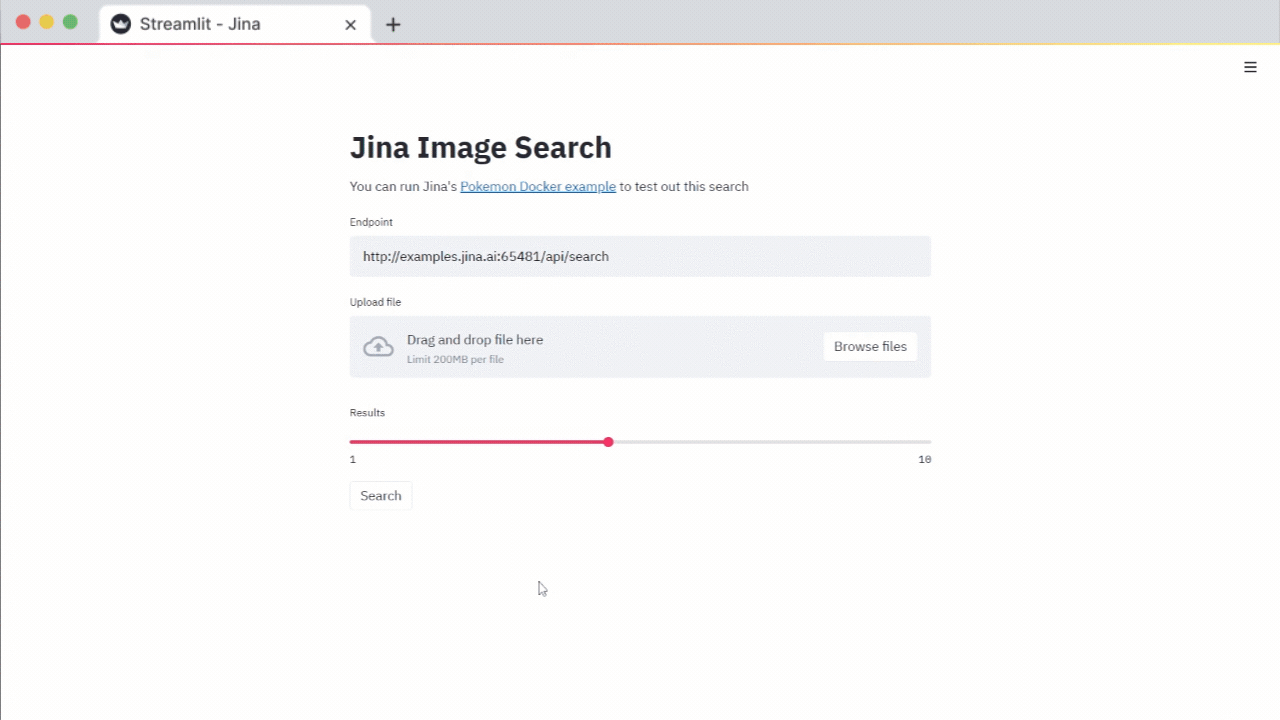 Use Jina to search text or images with the power of deep learning.
379. Introducing aasaan.ai: No-Code Yelp Sentiment Classification
 Introduction
380. MIVPG and Instance Correlation: Enhanced Multi-Instance Learning
 MIVPG uses a Correlated Self-Attention (CSA) module to unveil instance correlation, fulfilling all MIL properties while outperforming Q-Former.
381. Why Deep Learning is not Enough for Video Content Analysis
 Deep Learning gets a ton of traction from technology enthusiasts. But can it match the effectiveness standards that the public hold it to?
382. How To Creat an Audible Object Detector [DIY Tutorial]
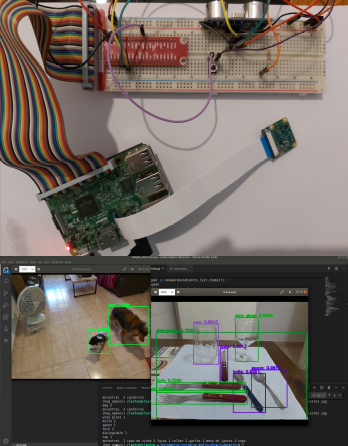 For people with vision problems.
383. PostgreSQL & HypoPG: The Experimental Foundation of IA2 Index Selection
 IA2 demonstrates significant database optimization on TPC-H benchmarks using PostgreSQL and HypoPG, achieving superior end-to-end runtime gains.
384. AI Rewind: A Year of Amazing Machine Learning Papers
 A curated list of the latest breakthroughs in AI by release date with a clear video explanation, link to a more in-depth article, and code.
385. AI Hotspots Across the US: Where AI Pros Are Thriving
 Whether you used GPS to get to work or added a recommended add-on item to your online shopping cart, AI has likely touched your life in one way or another this very day. But does the increasing presence of AI in our day-to-day actually benefit us in more than just adding convenience to our lives? For tech pros, the answer is likely yes.
386. Video Instance Matting: Comparing Temporal Consistency and Detail Preservation
 MaGGIe balances temporal consistency and detail preservation, outperforming SparseMat in accuracy and matching InstMatt's high-fidelity output
387. Building Open-Set 3D Representation: Feature Fusion and Geometric-Semantic Merging
 O3D-SIM is built by projecting 2D masks and embeddings to 3D, using DBSCAN for initial refinement.
388. How AI is Learning to Read DNA and Sound
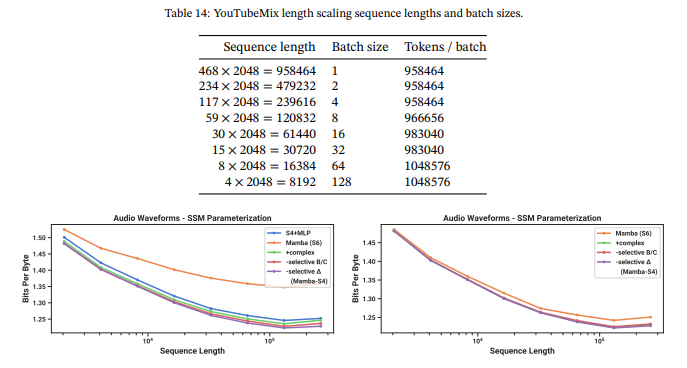 Explore how Transformer++, Mamba, and HyenaDNA scale in DNA and audio modeling.
389. Why Scaling Mamba Beyond Small Models Could Lead to New Challenges
 Mamba introduces transformative concepts in language modeling with its selective SSMs, but the scaling of these models faces engineering challenges.
390. Ways To Overcome Linguistic Barriers with Language Technologies
 COVID-19 has impacted every other industry and has made people adopt newer norms. The traditional translation industry is no different. Several disruptions have been introduced to keep things moving, thanks to Big data and machine translation technologies that have enabled the world to do business as usual.
391. Adaptive Graph Neural Networks for Cosmological Data Generalization: Acknowledgements and Disclosure
 Deep learning meets cosmological data with Domain Adaptive Graph Neural Networks for robust parameter extraction.
392. What are Adversarial AI Attacks and How Do We Combat Them?
 Deep learning models are capable of performing on par with, if not exceeding, human levels, at a variety of different tasks and objectives.
393. Efficient Detection of Defects in Magnetic Labyrinthine Patterns: Conclusion and References
 TM-CNN combines template matching and CNN to efficiently detect defects in magnetic labyrinthine patterns, reducing manual annotations and improving accuracy.
394. Exploring T5 Model : Text to Text Transfer Transformer Model
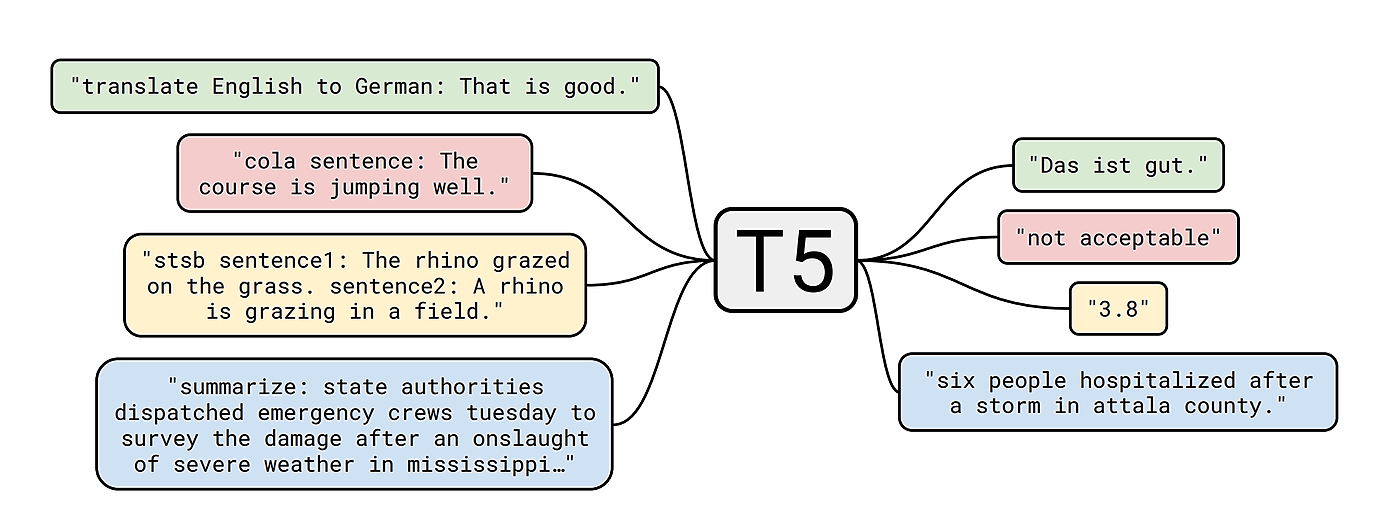 Recent years have seen a plethora of pre-trained models such as ULMFiT, BERT, GPT, etc being open-sourced to the NLP community. Given the size of such humungous models, it's nearly impossible to train such networks from scratch considering the amount of data and computation that is required. This is where a new learning paradigm "Transfer Learning" kicks in. Transfer learning is a research problem in machine learning that focuses on storing knowledge gained while solving one problem and applying it to a different but related problem.
395. The Training Technique That Teaches AI to Think, Not Memorize
 Inductive scratchpads enable transformers to effectively generalize algorithmic reasoning, which overcomes the local reasoning barrier.
396. Mapping Lorentz Decision Boundaries to the Poincaré Ball
 Learn how to transform soft-margin constraints into polynomial form using Taylor expansion and map Lorentz manifold lines to Poincaré ball arcs.
397. Synthesizing Multi-Instance Human Matting Data with MaskRCNN and BG20K
 MaGGIe introduces the I-HIM50K and M-HIM2K datasets, featuring over 180,000 synthesized human masks to evaluate instance matting robustness.
398. MIL Perspective: Analyzing Q-Former as a Multi-Head Mechanism
 Proves Q-Former is a Multi-Head MIL module due to permutation invariance in its cross-attention.
399. 2020 World University Ranking: AI Safety
 This Top 10 ranking is produced by Dr. Roman V. Yampolskiy (University of Louisville) and is based solely on his biased opinion. (To reduce bias University of Louisville is Not Ranked) To a certain degree the ranking is also based on perceived reputation, Google scholar listings under AI Safety, quality and quantity of papers, Google search rankings, impact of publications and number of scholars working in the area full time. Many other universities do work on AI Safety but are not ranked this year. By definition the list excludes all industry labs.
400. The 2021 AI Rewind: HackerNoon Edition
 A curated list of the latest breakthroughs in AI and Data Science by release date with a clear video explanation
401. 3D Mapping Initialization: Using RGB-D Images and Camera Parameters
 O3D-SIM creation starts with capturing posed RGB-D images and camera parameters.
402. From Issac Asimov to Decalogue
 You shall have no other programmers but me.
403. Evaluating Visual Adapters: MIVPG Performance on Single and Multi-Image Inputs
 Details MIVPG experiments across single- and multi-image scenarios. Model uses frozen LLM and Visual Encoder, updating only the MIVPG for efficiency.
404. Why You Should Run Multiple Applications on the Same GPU (and Why it's so Difficult)
 While GPUs are being used more and more, many users encounter the problem of not utilizing them properly.
405. MaGGIe Training Setup: High-Performance Human Instance Matting with A100 GPUs
 MaGGIe ensures feature temporal consistency in videos using bidirectional Conv-GRU. It uses AdamW optimization and curriculum learning on A100 GPU
406. Spotting Monster Shrines and Finding Lost Treasures: 5 Genuinely Cool AI Projects
 Finally, we’ve invented the sci-fi technology of the future! And what do we do? Make tech support chatbots and check insurance claims…
407. Visual Prompt Generators (VPGs): Encoding Images to LLM Tokens
 Explains how MLLMs use VPGs and cross-attention with learnable query embeddings to extract essential visual tokens from image patches for LLM input.
408. The Noonification: What Is E-Waste Hacking? (4/27/2024)
 4/27/2024: Top 5 stories on the HackerNoon homepage!
409. Solution To Value Agregation
 A Solution to the Multi-Agent Value Alignment Problem
410. LSTM Based Word Detectors
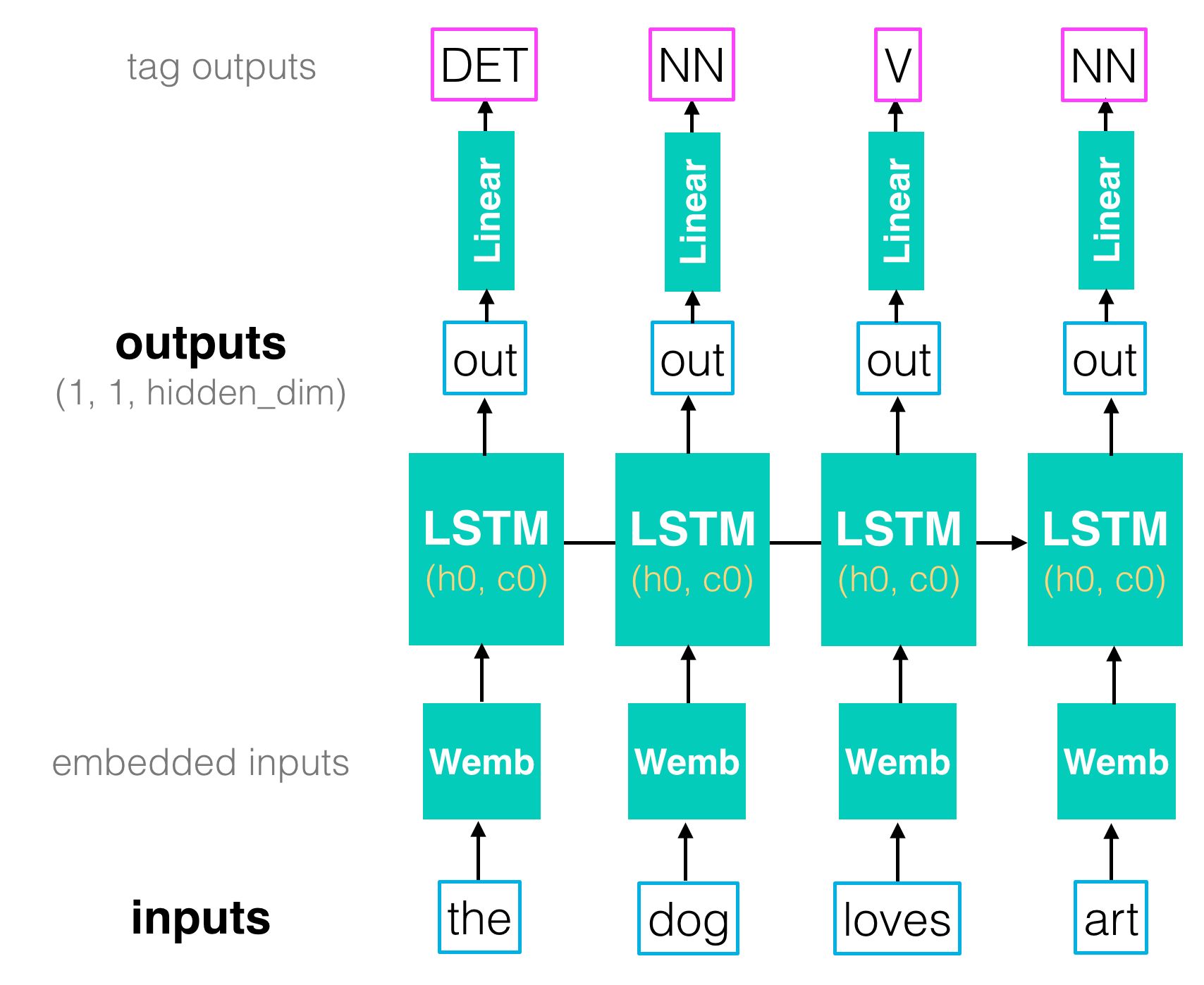 This article aims to provide the basics of LSTMs (Long Short Term Memory) and implements a word detector using the architecture.
411. The Crucial Role of Machine Learning in Cybersecurity
 In 2019, more than 627 million online records were comprised due to hacking and other types of cyber attacks. This is a pretty staggering number to anyone who has made an online transaction, but the amount of attacks that were stopped is much higher, so it’s worth some optimism. As COVID-19 has pushed many companies into the remote work world, online transactions and records are growing exponentially, and most experts believe that remote work will continue to be very popular even after stay-at-home orders get lifted and life goes back to some form of normal.
412. Research from Apple and EPFL Explains Why AI Models Can’t Truly “Reason” Yet
 Even with a "agnostic scratchpad," transformers are unable to learn high-locality tasks unless the scratchpad is led explicitly.
413. What Makes AI Smarter? Inside the Training of Language Models
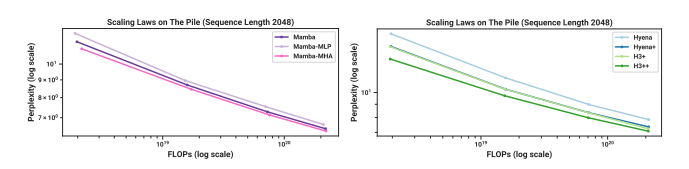 How do Transformer++, H3++, and Mamba models compare in language modeling?
414. Analyzing Learned Heuristics for Max-Cut Optimization
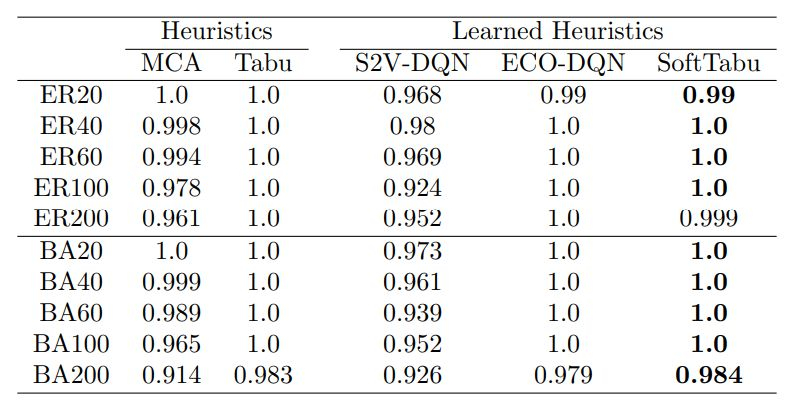 Explore a detailed analysis of learned heuristics versus traditional algorithms in Max-Cut optimization.
415. Classify Handwritten Digits using Deep learning with Tensorflow

416. When AI Learns to See the Unknown: Wrapping Up the OW‑VISCap Study
 Masked attention and contrastive loss improve caption accuracy and reduce overlapping predictions.
417. Document Classification Process: 7 Pragmatic Approaches For Small Datasets
 Document or text classification is one of the predominant tasks in Natural language processing. It has many applications including news type classification, spam filtering, toxic comment identification, etc.
418. Probabilistic Learning on Spheres: von Mises-Fisher, Spherical Cauchy, and Bingham Distributions
 Explore statistical models for spheres in Machine Learning. Learn about vMF, Bingham, and Poisson kernel distributions for unsupervised learning and RL.
419. Understanding the Local Reasoning Barrier in Transformer Models
 High data distribution locality restrictions make it difficult for transformers to learn tasks that require global thinking.
420. How We Automate 80-100% of Media Workflows with Cognitive Computing
 Here's how you can use cognitive computing to automate media & entertainment workflows and stramline video production.
421. Reducing TPC-H Workload Runtime by 40% with IA2 Deep Reinforcement Learning
 IA2 uses the TD3-TD-SWAR model and DRL to optimize index selection, reducing TPC-H workload runtime by 40% via adaptive action masking.
422. Semantic Geometry Completion and SLAM Integration in 3D Mapping
 Reviews 3D reconstruction, including self-supervised, SLAM, and NeRF methods. Our approach uses open-set 2D instance segmentation and RGB-D back-projection
423. See, Track, Describe: How OW‑VISCap Lets AI Tell the Story Behind Every Frame
 This article introduces OW‑VISCap, a unified framework for open‑world video instance segmentation and object‑centric captioning.
424. Is Subjective Beauty Something We Can Model with AI?
 This AI reads your brain to generate personally attractive faces. It generates images containing optimal values for personal attractive features.
425. Geometric Deep Learning: Swarming Dynamics on Lie Groups and Spheres
 Kuramoto models and swarming dynamics offer a powerful framework for Machine Learning over non-Euclidean data, Lie groups, and manifolds.
426. Matting Robustness: MaGGIe Performance Across Varying Mask Qualities
 MaGGIe demonstrates superior quantitative performance on HIM2K and M-HIM2K, outperforming MGM-style refinement with its sparse guided progressive refinement.
427. Efficient Transformers for Astronomical Images: Deconvolution and Denoising Unleashed
 Restormer’s transformer architecture powerfully restores HST images, combining deconvolution and denoising for JWST-level clarity using transfer learning.
428. An Overview of the Data-Loader Landscape: Numerical Results Cont.
 In this paper, researchers highlight dataloaders as key to improving ML training, comparing libraries for functionality, usability, and performance.
429. Sentiment Analysis using Deep Learning techniques with India Elections 2019 — A Case study
 Predict BJP Congress Sentiment using Deep Learning
430. Weight Distribution Estimation in Lower-Limb Exoskeletons via Deep Learning: Conclusion
 Explore deep learning for real-time weight distribution estimation in lower-limb exoskeletons, enhancing control without additional sensors.
431. Active Learning and Data Influence: Core Concepts and Evolution
 Highlights the novelty of applying these methods to generated data in complex instance segmentation.
432. The Overview of Prospective DL Algorithms: Ready-to-Use Solutions and Predictions for Future
 A field that is bringing alot of commotion and noise is Artificial Intelligence. But something that really fascinates me is a subset of that field known as Artificial General Intelligence (AGI) or the holy grail of Artificial Intelligence.
433. MaGGIe Roadmap: Overcoming Data Generalization in Matting Models
 MaGGIe improves accuracy and efficiency in instance matting via transformer attention and sparse convolution, with future goals in weakly-supervised learning.
434. RNN Models Hawk and Griffin: Transforming NLP Efficiency and Scaling
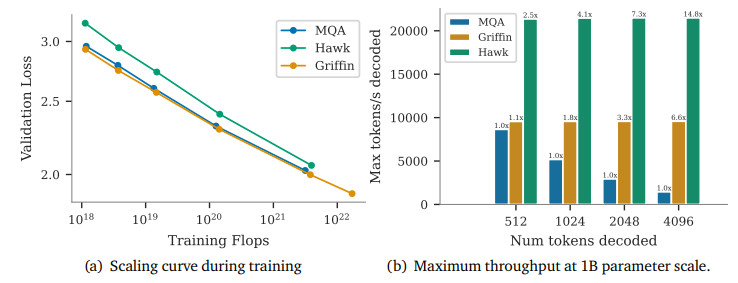 This research introduces Hawk and Griffin, RNN-based models that rival Transformers in efficiency, scaling, and long-sequence NLP tasks.
435. How the Retail Industry is Implementing Machine Learning and Deep Learning
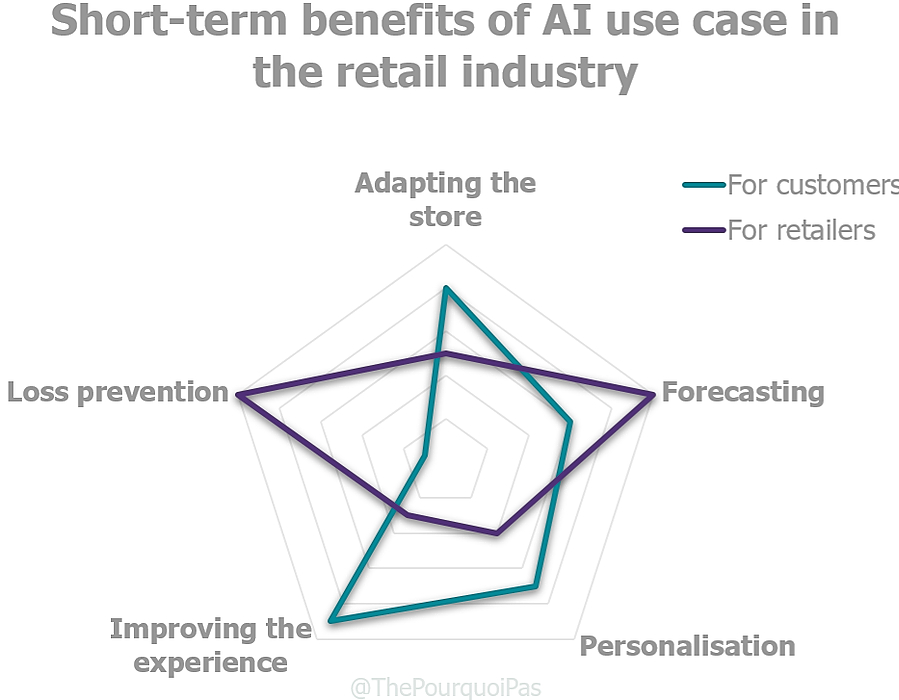 Stores are changing. We see it happening before our eyes, even if we don’t always realize it. Little by little, they are becoming just one extra step in an increasingly complex customer journey. Thanks to digitalisation and retail automation, the store is no longer an end in itself, but a mean of serving the needs of the brand at large. The quality of the experience, a feeling of belonging and recognition, the comfort of the purchase… all these parameters now matter as much as sales per square meter, and must therefore submit themselves to the optimizations prescribed by Data Science and its “intelligent algorithms” (aka artificial Intelligence in the form of machine learning and deep learning).
436. Video Data Synthesis: Categorizing Matting Difficulty by Instance Overlap
 MaGGIe utilizes the V-HIM2K5 and V-HIM60 datasets, categorizing video instance matting into three difficulty levels based on occlusion and overlap.
437. Multimodal Fusion: MIVPG's Hierarchical MIL Approach for Multi-Image Samples
 Details MIVPG's hierarchical approach to MIL for multi-image samples. It treats both image patches and whole images as 'instances' for feature aggregation
438. Teaching AI to See and Speak: Inside the OW‑VISCap Approach
 This article outlines the OW‑VISCap framework, which jointly detects, segments, and captions both seen and unseen objects within a video.
439. 6 Deep Learning Techniques for Stronger Cybersecurity
 To help with the same, some experts have advised about the usage of deep learnings for Cybersecurity. Deep Learning is a crucial part of Machine Learning
440. Probabilistic ML: Natural Gradients and Statistical Manifolds Explained
 Explore the role of Fisher information, KL divergence, and natural gradients in optimizing probability distributions for Deep Learning.
441. Understanding Factors Affecting Neural Network Performance in Diffusion Prediction
 Explore the impact of loss functions and data set sizes on neural network performance in diffusion prediction models.
442. Data Strategy for MaGGIe: Bridging the Gap in Matting Resources
 To address the lack of public task-specific data, MaGGIe utilizes synthesized training sets from instance-agnostic sources for robust evaluation
443. Predictive Process Monitoring Using Graph Neural Networks
 Using a modular Graph Transformer, PGTNet converts event logs into graphs with rich edge traits and uses regression to forecast process completion times.
444. How AI Chooses What Information Matters Most
 Selection mechanisms in AI redefine gating, hypernetworks, and data dependence, powering structured state space models (SSMs) like Mamba.
445. Enhancing Long-Tailed Segmentation with Gradient Cache and BSGAL
 Proposes BSGAL, a Generative Active Learning algorithm that uses gradient cache to filter unlimited synthetic data for long-tailed instance segmentation.
446. How AI Detects the Undetectable: Deep Learning for Anomaly Detection in Usage-Based Billing
 AI-driven deep learning transforms anomaly detection in usage-based billing, uncovering patterns invisible to traditional systems.
447. Deep Lake, a Lakehouse for Deep Learning: Abstract and Intro
 Researchers introduce Deep Lake, an open-source lakehouse for deep learning, optimizing complex data storage and streaming for deep learning frameworks.
448. Multiple Instance Learning: Review of Instance and Embedding Level Approaches
 Reviews Multiple Instance Learning, contrasting instance-level and embedding-level approaches, while focusing on neural network pooling methods.
449. Creating a Dataset Sucks. Here's What I've Learned to Make it a Little Bit Easier
 Multiple models trained on your data perform surprisingly poorly, despite having decent metrics on the validation set. The code seems fine, so you decide to take a closer look at your training data. You check a random sample - the label is wrong. So is the next. Your stomach sinks and you start looking through your data in batches*. Thirty minutes later, you realize that x% of your data is incorrect.
450. Overcoming Training Costs in Index Advising: The Need for IA2
 Current RL-based index selection methods like SWIRL support multi-attribute indexes but face high training costs and complex pruning rules.
451. Deep Lake, a Lakehouse for Deep Learning: Machine Learning Use Cases
 Researchers introduce Deep Lake, an open-source lakehouse for deep learning, optimizing complex data storage and streaming for deep learning frameworks.
452. Experiments and Evaluation: Benchmarking OW‑VISCap Across Open‑World Video Tasks
 This article evaluates OW‑VISCap on open‑ and closed‑world segmentation and dense video object captioning, setting new benchmarks on multiple datasets.
453. Deep Learning via Continuous-Time Systems: Neural ODEs and Normalizing Flows Explained
 Learn how Neural ODEs and Normalizing Flows revolutionize Deep Learning by framing machine learning tasks as continuous-time optimal control problems.
454. The AI Industry's Obsession With Transformers Might Finally Be Waning
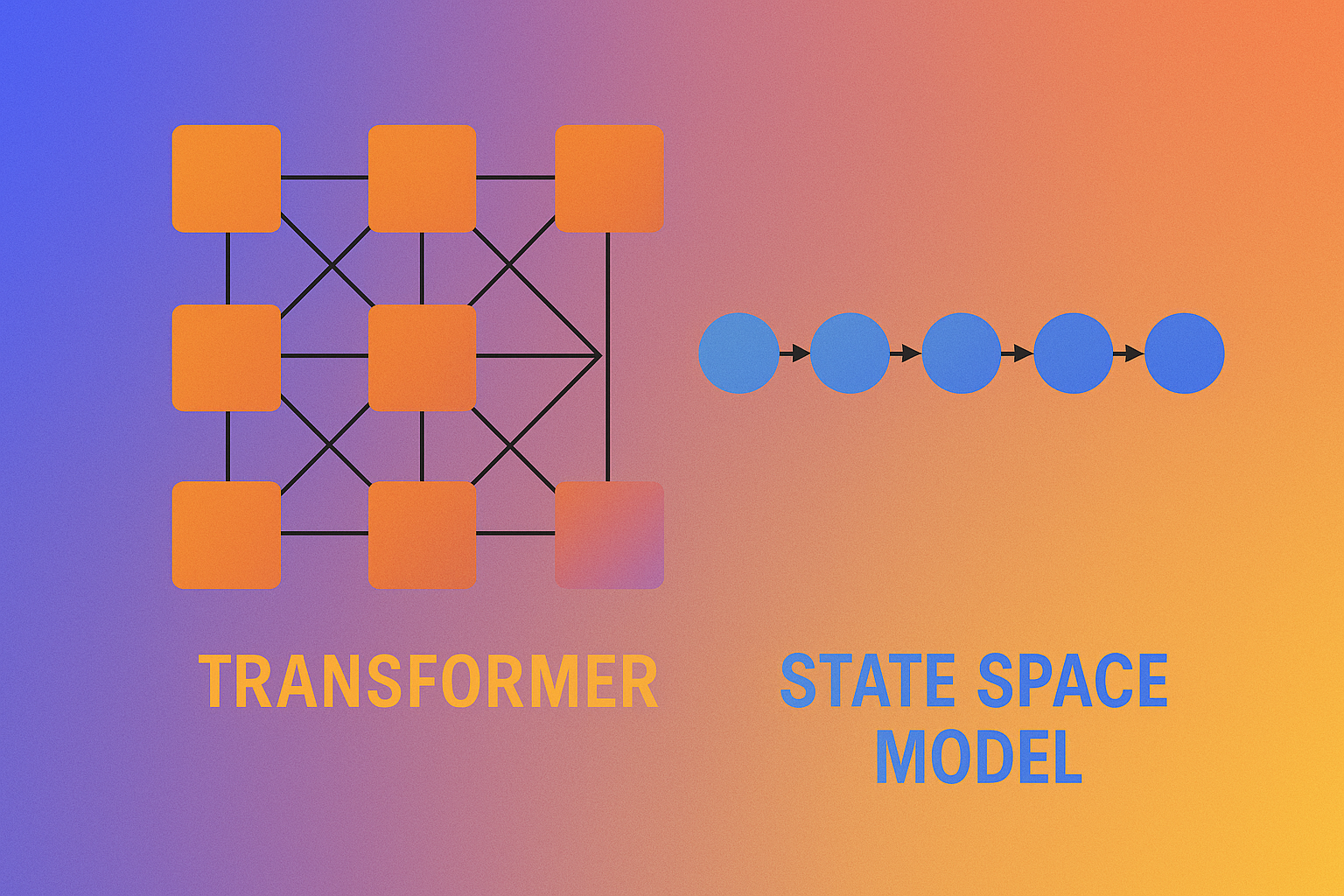 Newer versions such as Mamba of State Space Models (SSMs) appear to be winning some favor.
455. AI Breakthrough Sharpens Telescope Images-Astronomy’s Next Big Leap
 Applies efficient Transformers to restore and enhance astronomical images, matching JWST quality and outperforming traditional methods in precision.
456. AI and Signal Processing Unite to Diagnose Machine Faults Faster
 Discover ClassBD: A novel AI-based framework integrating blind deconvolution with deep learning for accurate bearing fault diagnosis under heavy noise.
457. A Simple Introduction to Edge AI
 Edge AI starts with edge computing. Also called edge processing, edge computing is a network technology that positions servers locally near devices. This helps to reduce system processing load and resolve data transmission delays. These processes are performed at the location where the sensor or device generates the data, also called the edge.
458. Learn About Google DeepMind –
 DeepMind may allude to two things: the innovation behind Google’s man-made reasoning (AI) venture, and the organization that is liable for it. The organization DeepMind is an auxiliary of Alphabet, the parent organization of Google.
459. The Kuramoto Model: Synchronization and Dynamics of Coupled Oscillators
 Explore the Kuramoto model, the 1975 paradigm for synchronization phenomena in ensembles of coupled phase oscillators and their ODE dynamics.
460. Optimizing Video Matting: Curriculum Learning and Motion Blur Augmentation
 MaGGIe achieves feature temporal consistency in videos using bidirectional Conv-GRU. It utilizes A100 GPUs and AdamW optimization for robust results.
461. Mamba’s Performance in DNA, Audio, and Speed Benchmarks
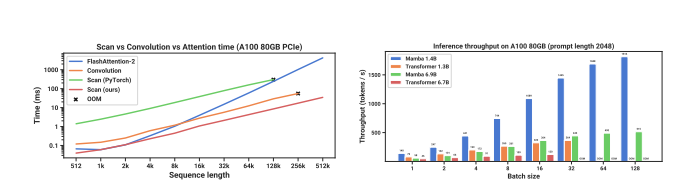 Mamba, a selective SSM model, outperforms HyenaDNA in long-sequence DNA modeling, excels in speech generation benchmarks, and delivers superior efficiency
462. LinkedIn Feed Evolution: More Granular and Powerful Machine Learning, Humans Still in the Loop
 LinkedIn is a case study in terms of how its newsfeed has evolved over the years. Recently, a major update was rolled out; here's how it works
463. The Inevitable Symbiosis of Cybersecurity and AI
 While improvements in AI and Deep Learning move forward at an ever increasingly rapid rate, people have started to ask questions. Questions about jobs being made obsolete, questions about the inherent biases programmed into the neural networks, questions about whether or not AI will eventually consider humans as dead-weight and unnecessary to achieve the goals they've been tasked programmed with.
464. 278 Stories To Learn About Machine Learning
 Learn everything you need to know about Machine Learning via these 278 free HackerNoon stories.
465. ControlNet: Changing The Image Generation Game with Precise Spatial Control
 Models like GPT-4V would not have been possible without the idea of ControlNet
466. Consensus Algorithms on Manifolds: Stiefel, Siegel, and Kuramoto Dynamics
 Explore consensus algorithms on Stiefel manifolds and Siegel domains. Learn how Kuramoto models act as continuous-time algorithms to minimize disagreement.
467. Mamba: A Generalized Sequence Model Backbone for AI
 Mamba introduces a selection mechanism to structured state space models (SSMs), achieving state-of-the-art results in genomics, audio, and sequence modeling.
468. Assessing the Justification for Integrating Deep Learning in Combinatorial Optimization
 Explore the intersection of combinatorial optimization and machine learning through a comprehensive evaluation of integrated heuristics.
469. Deep Geometrized Cartoon Line Inbetweening: Conclusion and References
 AnimeInbet: A novel approach for inbetweening line drawings using geometric graphs, enhancing detail preservation with the MixamoLine240 dataset.
470. Synthesizing Images of Marine Plastic Using Deep Convolutional Generative Adversarial Networks
 A generative approach towards synthesizing images of marine plastic using DCGANs
471. Will Deepfakes Be Part of Our Lives?
 I was receiving a particular forwarded meme of a famous Hollywood actor over WhatsApp from so many of my contacts since last a few days. This one might have gone viral. It superimposes the actor’s face on the body of Superhero Hulk and makes him do some nasty stuffs. Oh! Quite ridiculous but people are liking it. The video was made with extreme perfection and the finishing touch was superb. I came to know later on that it was made by an internet user only.
472. Quantitative Evaluation of O3D-SIM: Success Rate on Matterport3D VLN Tasks
 Quantitatively evaluates O3D-SIM using the Matterport3D dataset and Success Rate metric in the Habitat simulator
473. MIVPG on E-commerce: Multi-Image/Multi-Patch Aggregation for Captioning
 MIVPG uses hierarchical MIL to outperform patch concatenation and single-image baselines, proving CSA is key for correlation.
474. Evolution of Index Selection: From Traditional Greedy Approaches to IA2
 Traditional index selection methods, from greedy approaches to the Extend algorithm, struggle with index interdependencies and large candidate spaces.
475. MaGGIe Architecture: Efficient Mask-Guided Instance Matting
 MaGGIe introduces an efficient framework using Cross-Attention, Self-Attention, and Sparse Convolutions for mask-guided instance matting, ensuring high accuracy
476. TryOnDiffusion: A Tale of Two UNets: Experiments
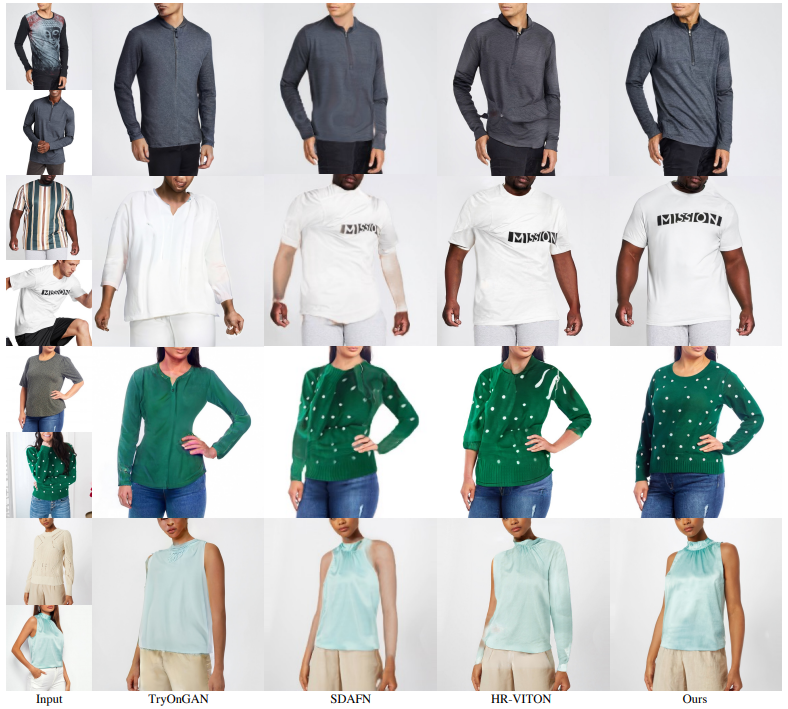 Explore a comprehensive evaluation of TryOnDiffusion through extensive experiments, comparing it to other methods.
477. Introducing ML News
 I know.
478. Tell If Your SMS is Spam
 Introduction
479. Hardware-aware Algorithm For Selective SSMs
 Linear Attention and long-context models are reshaping AI's handling of sequence data.
480. Hawk and Griffin: Efficient RNN Models Redefining AI Performance
 This research introduces Hawk and Griffin models, efficient RNN alternatives to Transformers, with reduced latency and strong long-sequence performance.
481. Semantic Instance Extraction: CLIP and DINO Features for 3D Mapping
 Details the O3D-SIM pipeline for VLN. It extracts open-set semantic instance information (masks, CLIP/DINO features) from RGB-D images
482. Online vs. Offline Active Learning: Performance Comparison Across Iterations
 These ablation studies BSGAL's key hyperparameters: momentum coefficient and contribution threshold. It also compares online vs. offline learning performance
483. Skimming Articles is Killing My Deep Learning
 Using quick AI-generated summaries is killing my ability to understand complex topics.
484. Deep Lake, a Lakehouse for Deep Learning: Discussion and Limitations
 Researchers introduce Deep Lake, an open-source lakehouse for deep learning, optimizing complex data storage and streaming for deep learning frameworks.
485. Reinforcement Learning: 'Practice Makes a Machine Perfect'
 Reinforcement learning is the fastest growing branches of machine learning. Embark your RL journey by getting a soft introduction to reinforcement learning now.
486. Supervised Learning for Swarms on Manifolds: Training Kuramoto Networks and Stochastic Optimization
 Explore Maximum Likelihood, Score Matching, and Evolutionary Optimization (CMA ES) on manifolds.
487. Non-Trivial Temporal Patterns in Two-Population Kuramoto Ensembles
 Learn about global coupling dynamics, inter-ensemble interactions, and the complex synchronization of phase oscillators.
488. MaGGIe: Achieving Temporal Consistency in Video Instance Matting
 MaGGIe is an efficient framework for multi-instance human matting using sparse convolution and transformer attention to ensure temporal consistency in videos.
489. DIY Fake News Detector: Unmask misinformation with Recurrent Neural Networks
 Explore the power of RNNs in fake news detection, from data preprocessing to model evaluation, showcasing their potential to combat misinformation.
490. Simplifying Transformer Models for Faster Training and Better Performance
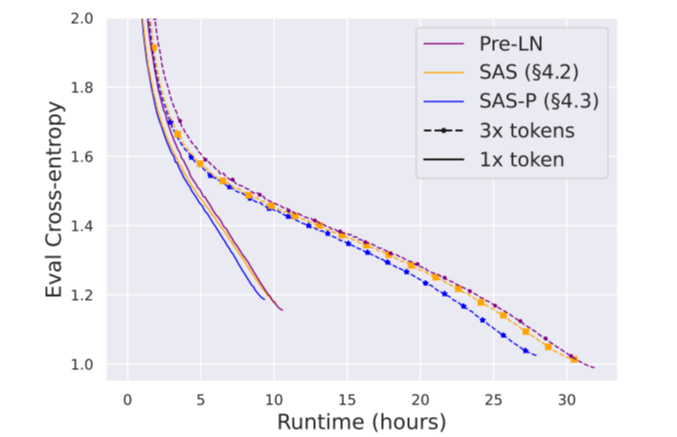 Simplifying transformer models by removing unnecessary components boosts training speed and reduces parameters, enhancing performance and efficiency.
491. MaGGIe's Coarse Alpha Matte Prediction: Temporal Feature Aggregation
 MaGGIe ensures temporal consistency in video matting using bidirectional Conv-GRU to fuse feature maps and predict coarse alpha mattes
492. The Future of Rail Sustainability: Nampalli’s Deep Learning Approach to Energy Efficiency
 Rama Chandra Rao Nampalli uses AI and deep learning to optimize rail electrification, reduce energy use, and advance sustainable railway systems.
493. How to Get Started With AI in 2021 and Keep Up with Latest Innovations in ML
 How to start machine learning & Ways to keep up with the latest developments in Machine Learning.
494. Cutting-Edge Techniques That Speed Up AI Without Extra Costs
 Learn how new techniques make AI models faster, smarter, and more efficient by reducing memory use and speeding up training.
495. Building Machine Learning Models With TensorFlow
 In this article, I will share with you some useful tips and guidelines that you can use to better build better deep learning models.
496. Beyond Adversarial Training: A Robust Counterpart Approach to HSVM
 The Robust HSVM manages data uncertainty structures using robust counterpart formulations and SDP relaxation for stable non-convex optimization.
497. Mathematics of Differential Machine Learning in Derivative Pricing and Hedging: Choice of Basis
 Drawing from Barron, Hornik, and Telgarsky, it proves neural networks yield superior efficiency in higher‑dimensional pricing tasks.
498. Multi-Token Prediction: Mastering Algorithmic Reasoning with Enhanced Resource Use
 Discover how multi-token prediction improves LLM algorithmic reasoning, potentially by learning to allocate computational resources more efficiently
499. The Machine Learning Stack Is Being Rebuilt From Scratch Here's What Developers Need to Know in 2026
 From foundation models to agentic pipelines - 6 machine learning trends developers must understand to build reliable AI systems in 2026.
500. Overcoming Locality in Auto-Regressive Transformers
 Using specific focus masks, researchers created inductive scratchpads that let Transformers acquire recursive reasoning, allowing for length generalizations.
Thank you for checking out the 500 most read blog posts about Deep Learning on HackerNoon.
Visit the /Learn Repo to find the most read blog posts about any technology.