

Let's learn about Mobile Development via these 95 free blog posts. They are ordered by HackerNoon reader engagement data. Visit the Learn Repo or LearnRepo.com to find the most read blog posts about any technology.
Mobile development is the process of creating software applications that run on mobile devices like smartphones and tablets. It is critical for reaching users on their preferred devices and delivering accessible, on-the-go digital experiences.
1. 7 Color Pattern Trends in Mobile App Design
 You must have heard the words like trends of color schemes/patterns in mobile app development and designing because mobile phones are the best and most convenient way to connect yourself to the digital world.
2. Building a Music Streaming App using React Native

3. How to Disable Screenshots and Recording in iOS Apps
 Thanks to the mobile era we have mobile apps for everything these days. Every business from a barbers shop to huge retailers has apps so that they can be closer to their customers.
4. Mobile Application Security: Best Practices for App Developers
 The success of an app highly depends on its security. Users want safe app environments where they can interact with each other. Therefore, developers need to deliver digital solutions with app security in mind.
5. How to Sign Android APKs with Apache Cordova: A Brief Guide
 A short article on how to easily and correctly sign your Cordova Android APK.
6. How to Implement Video Ads in React Native Apps
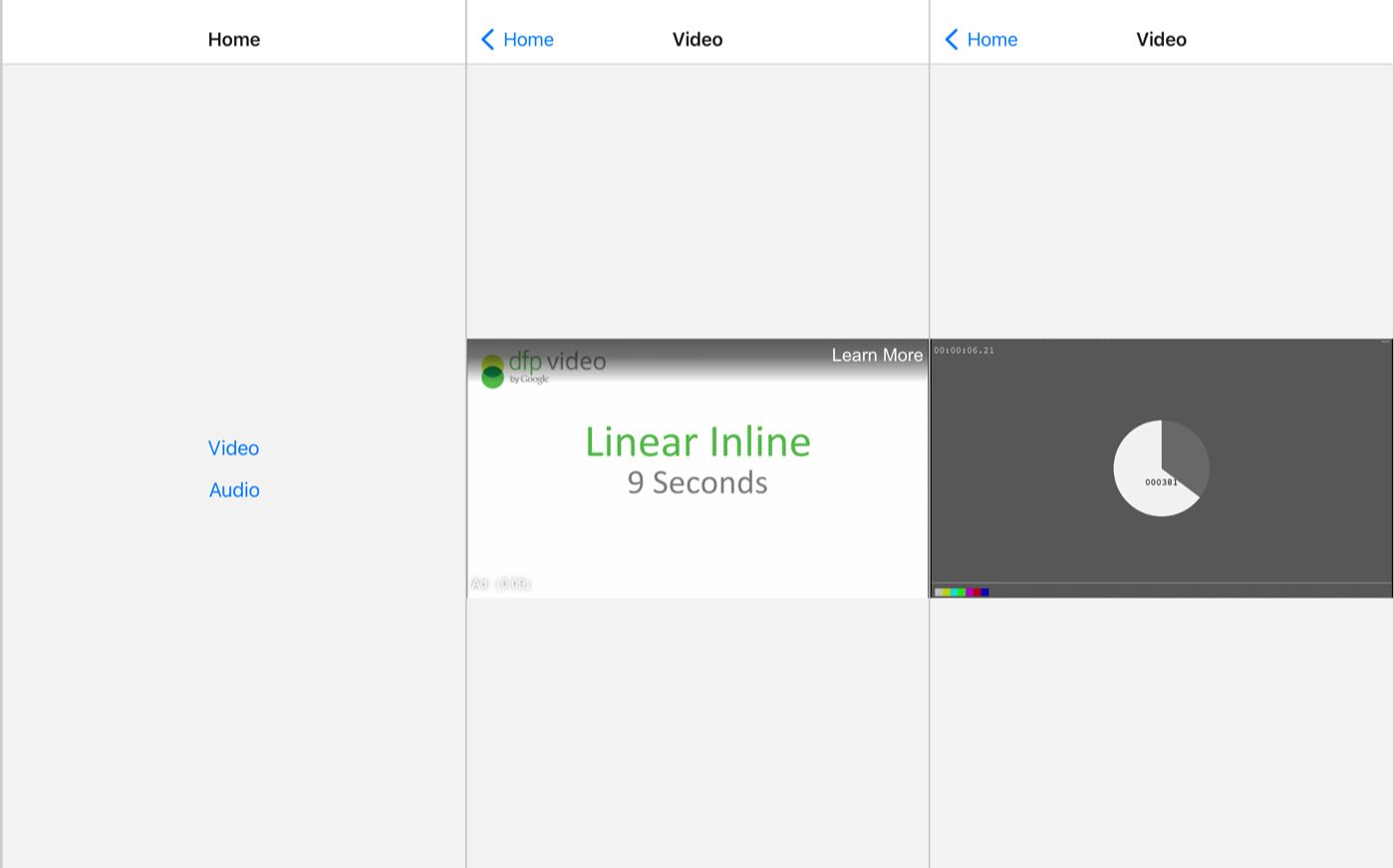 A guide on how to add inline video ads to your react native iOS app
7. React Native Vs Ionic Vs Xamarin [A Comparison]
 It is not wrong if we say that we are living on our mobile phone screens and our world has been succumbed within mobile phone applications. There is a huge development market for smart phone application development. There have been popular mobile applications generating revenue cycles that are hard to ignore. Some of the popular mobile phone applications in the running are: Facebook, Instagram, Pinterest, Snapchat, etc.
8. Top 5 React Native Starter Kits to Try | Review Guide 2021
 Top 5 React Native starter kits with all ready-to-use components to build your first mobile app faster.
9. How to Rollback to An Older Version of an App Without Building from Sources
 In today's blog post, we'll delve into an essential aspect of the mobile application realm: Testing Older Production Versions of an App.
10. A Hidden Problem in Jetpack Compose TextField Max Length
 Jetpack Compose TextField max length works internally. The difference lies in how TextField state changes are applied.
11. Jetpack Compose Memory Leaks: A Reference-Graph Deep Dive
 Jetpack Compose memory leaks are usually reference leaks. Learn the top leak patterns, why they happen, and how to fix them.
12. The Top JavaScript Reporting Tools
 Explore the top JavaScript reporting tools and their notable features for your applications in this review of leading options.
13. Creating Custom React Native Templates: A Step-by-Step Guide
 Learn to create custom React Native templates for efficient, error-free, and streamlined mobile app development.
14. How to Use an EEG Band and a Mobile App to Access Your Brain
 You can learn how you can get access to your brain from your app for the price of a mid-level mobile phone by buying an EEG band.
15. Artificial Intelligence in Mobile App Development in 2020
 This is today's reality: Artificial intelligence has already made a lot of buzz in the mobile app development industry. More cheap and available screens, easy real-time access to the data robust analysis tools have become even more powerful - all of this is already a normal part of our daily routine in society.
16. ADB: What Developers Need to Know
 This article explains what adb is, what you can do with it and how it works in-depth.
17. 8 iOS Courses That Will Take You From Newbie to Pro: 2020 Edition
 Is learning to code on your bucket list for this year? Well here are all the courses you need to get started on your journey to the App Store!
18. How To Build WordPress App with React Native Part #5: Home Screen
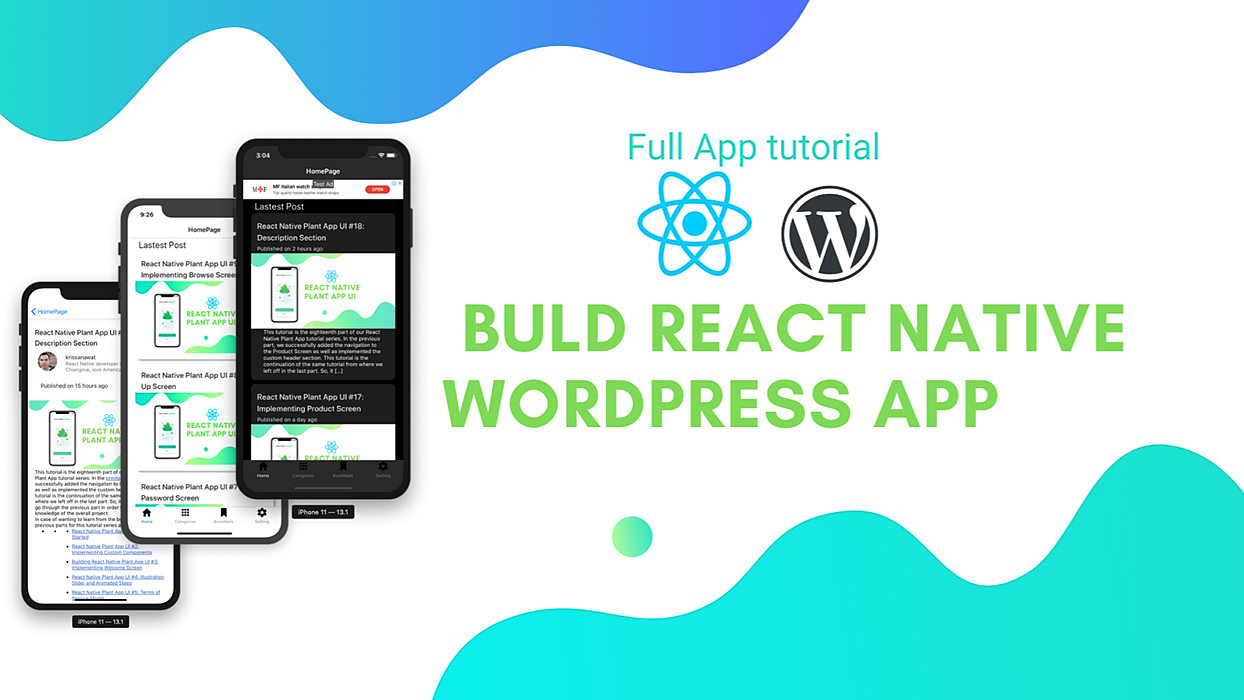 This series intends to show how I build an app to serve content from my WordPress blog by using react-native. Since my blog is talking about react-native, the series and the articles are interconnected. We will learn how to set-up many packages that make our lives comfortable and learn how to deal with WordPress APIs. Here, the most prominent features talked about in the book are the dark theme, offline mode, infinite scroll and many more. You can discover much more in this series. this inspiration to do this tutorial series came from the React Native App Templates from instamobile
19. Android: An Effective Approach to Building Caches
 Enhancing App Performance with Data Caching: A Step-by-Step Guide for Implementing Runtime and Persistent Cache in Your Android App
20. The Top WinForms UI Controls
 Explore the top WinForms UI controls and their notable features for your applications in this review of leading options.
21. Responsive Web Design: Understand And Apply It Once And For All
 As a Microverse student for one month, I realized that my first clone webpages didn’t have a responsive layout. I was using pixels in the Navbars, percentages in one section and rem in another, I didn’t have a rule or a standard procedure. The goal was to make it look like the original webpage IN MY SCREEN.
As I advanced through the course, I learned that these units made all the difference to the webpage’s response in different screen sizes. My code reviewers would tell me to adjust my webpage because it looked different when they were viewing it.
When I started having these issues, I made a lot of research on the subject, but I was still a little confused about it. This article’s goal is to create a simple and direct rule to achieve the required responsiveness any developer needs in their code.
22. Setting Up Auth0 Authentication with Expo Router: A Complete Guide
 Setting Up Auth0 Authentication with Expo Router: A Complete Guide
23. How to Implement a Simple Video Calling Feature Using the ZEGOCLOUD Video API
 This article describes what is the video API? How does the video API ensure smooth transmission of audio and video?
24. Celebrating 10 Years of War Robots and Reflecting From A Technical Perspective
 In this post, we look at the technical side of War Robots over 10 years: the cool stuff, the problems, the experiments, remastering the game, and more!
25. I Built a 100x Faster Android Automation Tool Because AI Agents Deserve Better
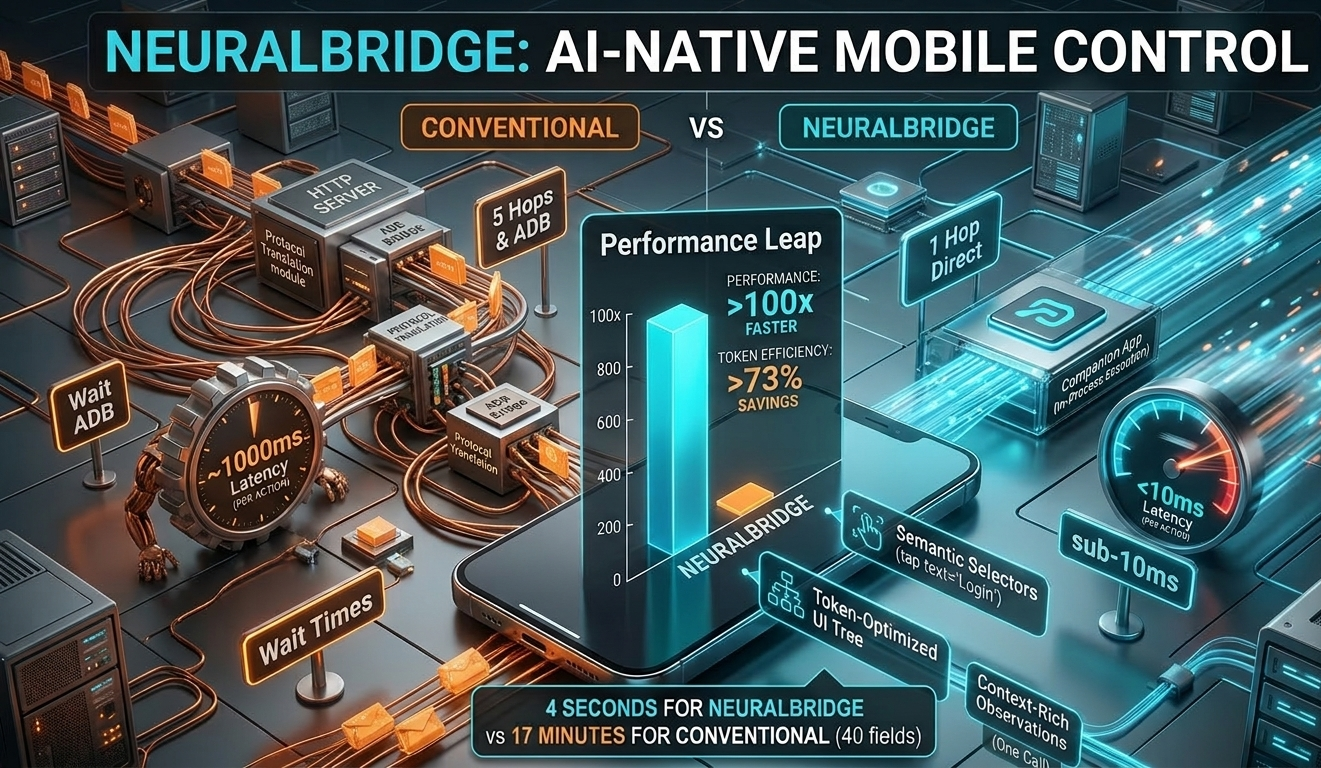 NeuralBridge is an open-source Android app that gives AI agents sub-10ms device control — 100x faster than conventional tools. No root. No middleware.
26. Old is Gold: Save and Rollback to Previous App Versions on the AppStore
 In this article, I will share a method for revering to previous app versions that does not depend on developer builds.
27. Turn your Web App into a Mobile App
 Read the article and make a final decision about whether you really need to convert web apps into mobile apps. If yes - learn how!
28. Tips, Tricks and Tools for Mobile App Development
 Developing an application may seem a piece of cake for pros, but newbies need online guides to help them get from A to Z with their app development project.
29. 5 Mobile App Development Trends That Will Dominate in 2022
 What are top five mobile development trends to watch out? Read to find out and prepare!
30. Unit Testing Vs. Integration Testing In Android
 Android development has witnessed massive growth in all these years, and any developer who’s worth his salt will thoroughly test his products before launching them into the market. While having a conversation about testing in Android, we often hear two forms of tests doing the rounds — Unit Test and Integration Test.
31. How to Add Contact Recommendations to VK Messenger
 Here's how I managed to increase the user engagement of VK Messenger by adding a block of recommendations for contacts.
32. How to Develop Mobile Apps Using ARKit

33. Top 10 Open Source iOS Libraries Every Developer Should Replace in 2024
 Replace these 10 legacy libraries with cutting-edge solutions to revitalize your development process.
34. Data Can Help You: How Technologies Fight Mental Health Issues
 Medical technologies are not limited to remote examinations, robotic surgical controllers and diagnostic algorithms. Today they transform mental health domain, specifically, work methods with patients and the doctor’s role.
35. How to Add a Voice Assistant to your Mobile App?
 Don’t you think that a great many mobile apps would be a lot more convenient if they had voice control? And I don’t mean chatting with a banking bot. In most cases, voice navigation or a conversational form-filling is just enough.
36. How To Build WordPress App with React Native Part #17: Fixing react-native-render-html
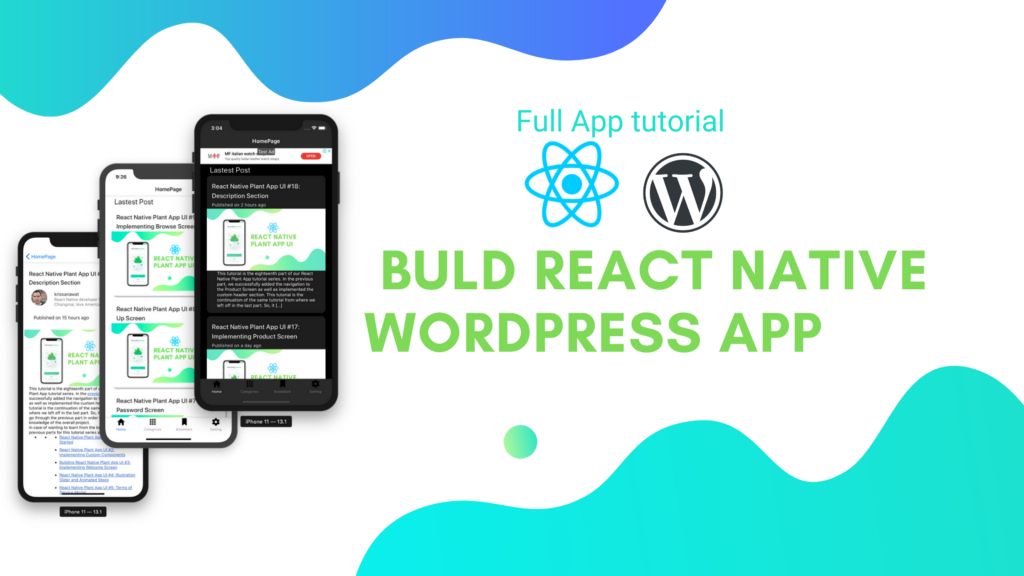 This series intends to show how I build app to serve content from my WordPress blog by using react native. Since, my blog is talking about react-native, the series and the articles are interconnected. We will learn how to set-up many packages that make our lives comfortable and learn how to deal with WordPress APIs. Here, the most prominent features talked about in the book are the dark theme , offline mode, infinite scroll and many more. You can discover much more in this series.this inspiration to do this tutorial series came from the React Native App Templates from instamobile
37. Top Five Frameworks For Hybrid App Development
 Whenever the company decides to make a mobile application, the most important they are looking for efficient ways to implement the idea.
38. Hope Is Not a Strategy in Fintech
 The shift from mid-level to senior engineering thinking happens when you stop asking “will this work?”
39. Airbnb UI Clone with React Native Part #3 : Home View Around The World Section
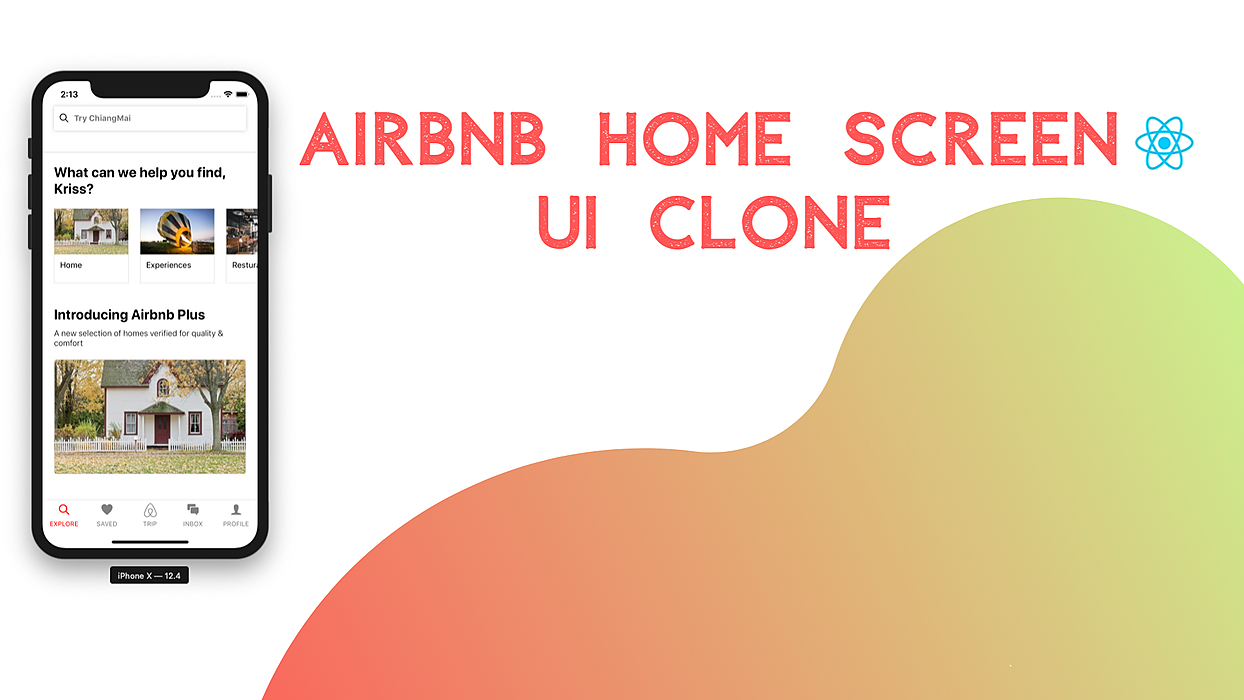 This tutorial is the third part of our Airbnb Home Screen UI clone using React Native. In the previous part, we successfully implemented the Category and Airbnb plus sections. This tutorial is the continuation of the same tutorial from where we left off in the last part. So, it is recommended to go through the previous parts for better understanding and insight into the overall project.
40. My Roadmap For Making a Popular Workout App From Scratch
 First, welcome to my series of “My Roadmap For Making a Popular Workout App”. I will share with you my trip to make my workout app into a popular mobile app.
41. Cross-selling in eCommerce Matters: A Technical Guide for Upselling Online
 Cross-selling and upselling are key areas to focus on with an eCommerce business, and this article will teach you how to implement upselling on your storefront.
42. The Video Surveillance Trends Disrupting The Tech Industry
 With the rise of IP hardware and advanced AI technology, proactive networks can be intelligently designed and easily implemented across premises.
43. Wealth Is Moving Beyond London, New York, and Zurich
 Wealth is shifting from London and New York to smaller hubs like Belize and Panama in search of efficiency, flexibility, and functional governance.
44. Churn Isn’t One Problem—It’s Four

45. How To Build WordPress App with React Native Part #7: Pull to Refresh and Infinite Scroll
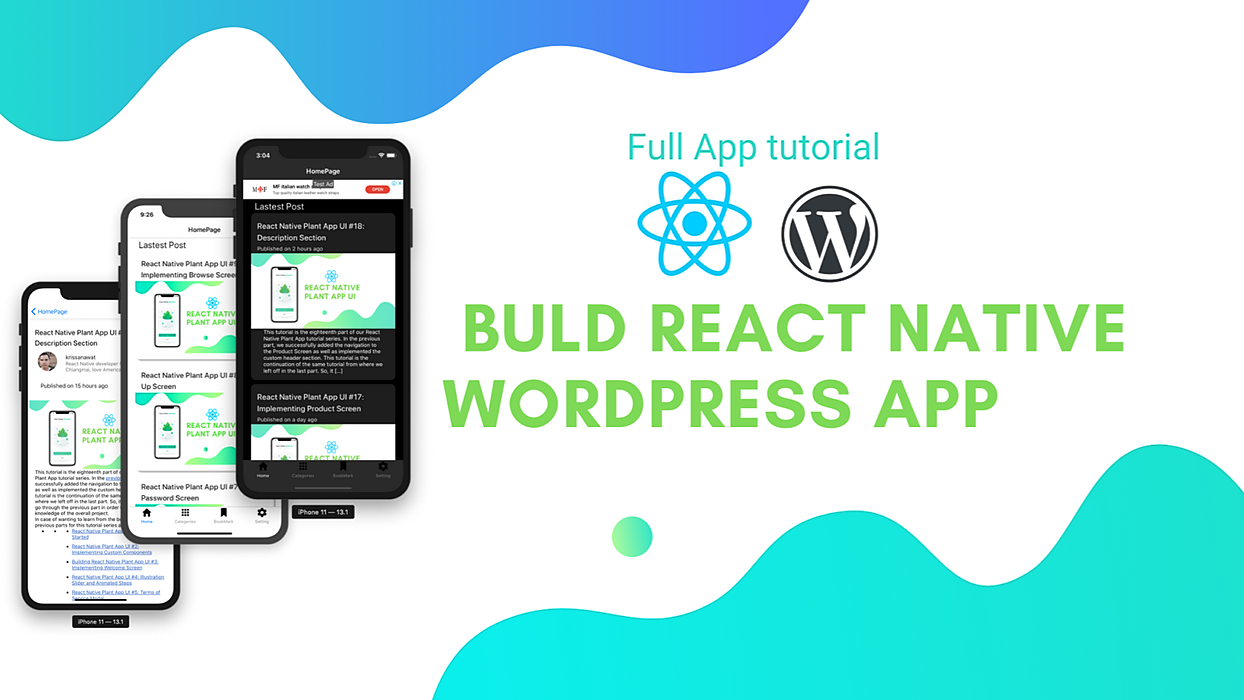 Here, we are going to implement pull to refresh which will refresh and make API call again to refresh the posts in the Home screen list. Also, we are going to add the Infinite scroll to the bottom of Home screen. The infinite scroll will trigger the request to server which will load more articles into the list.
46. How To Build WordPress App with React Native Part#15: Forwarding Message to Inbox
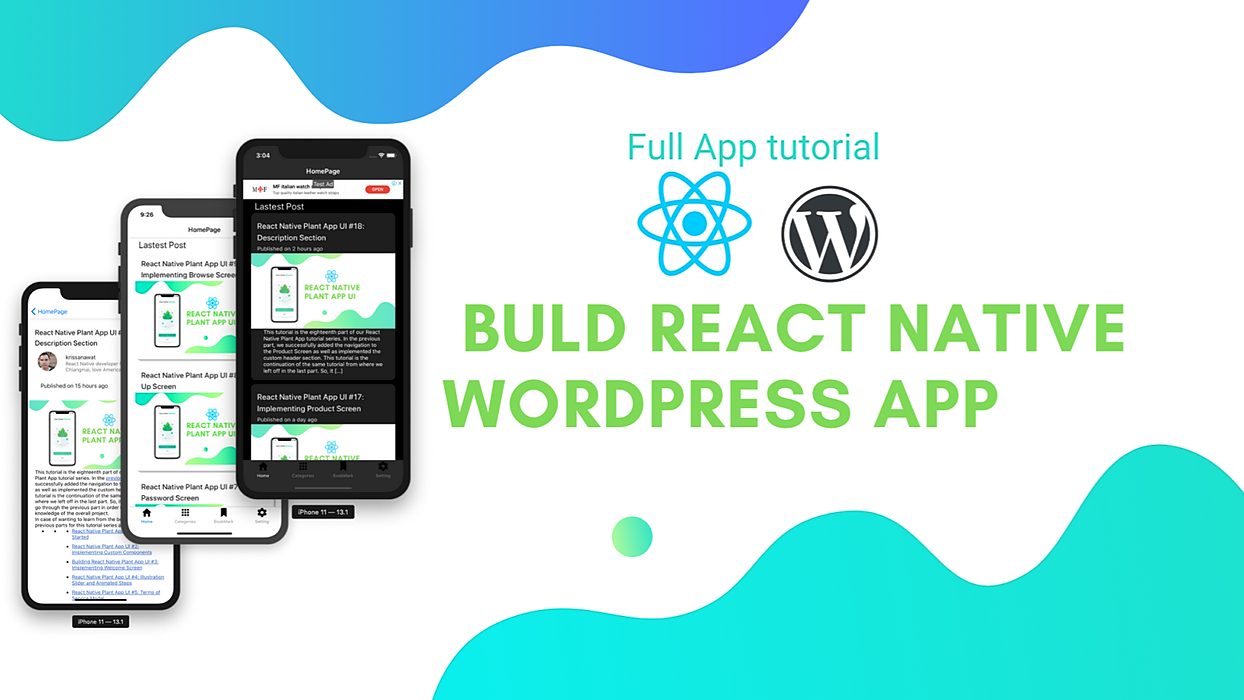 This series intends to show how I build an app to serve content from my WordPress blog by using react-native. Since my blog is talking about react-native, the series and the articles are interconnected. We will learn how to set-up many packages that make our lives comfortable and learn how to deal with WordPress APIs. Here, the most prominent features talked about in the book are the dark theme, offline mode, infinite scroll and many more. You can discover much more in this series. this inspiration to do this tutorial series came from the React Native App Templates from instamobile
47. How To Build WordPress Client App with React Native Part #20: Saving Data to Cache
 This series intends to show how I build an app to serve content from my WordPress blog by using react-native. Since my blog is talking about react-native, the series and the articles are interconnected. We will learn how to set-up many packages that make our lives comfortable and learn how to deal with WordPress APIs. Here, the most prominent features talked about in the book are the dark theme, offline mode, infinite scroll and many more. You can discover much more in this series. this inspiration to do this tutorial series came from the React Native App Templates from instamobile
48. How To Build WordPress App with React Native Part #10: Save Bookmark Feature
 We are going to learn how to bookmark the articles so that we can easily access them in our Bookmark screen later. The process is simple. We are going to save post id to Asyncstorage from the SinglePost screen and then fetch the articles on the bookmark screen. Here, we are going to add the bookmark icon to the SinglePost screen and configure its functionality.
49. Tencent’s Tiny Translator: How HY-MT1.5-1.8B Competes With Big Translation APIs
 Meet Tencent’s HY-MT1.5-1.8B: a compact translation model built for speed, edge deployment, and surprisingly strong quality.
50. How To Build WordPress Client App with React Native Part #13: Configuring Firebase Database
 In this chapter, we are going to implement the Contact screen. This screen is specially for contacting the developer and writer of articles. The users can use it to send a personal message to the developer. For the implementation, we are going to use two main packages. One is tcomb-form-native and the other is react-native-firebase. The tcomb package is to handle the form validation. And, react-native-firebase to connect react native app to real time firebase database.
51. Mastering Exposure Points for Accurate Mobile A/B Testing
 Learn why exposure points can make or break your mobile A/B tests, common pitfalls to avoid, and practical tips to improve your app experimentation results.
52. How To Build WordPress App with React Native Part #19: Offline Notifications
 Here, we are going to integrate the offline mode to the app. This feature is very handy when we are out of connection and we can still access some of the features in the app. Here, we are just going to notify the network status and cache the data using react-native-NetInfo package. Caching will help to pull the data from the AsyncStorage during the offline mode.so this app inspired from React native template from instamobile
53. You Don't Need NPM Libraries To Handle Mobile Events
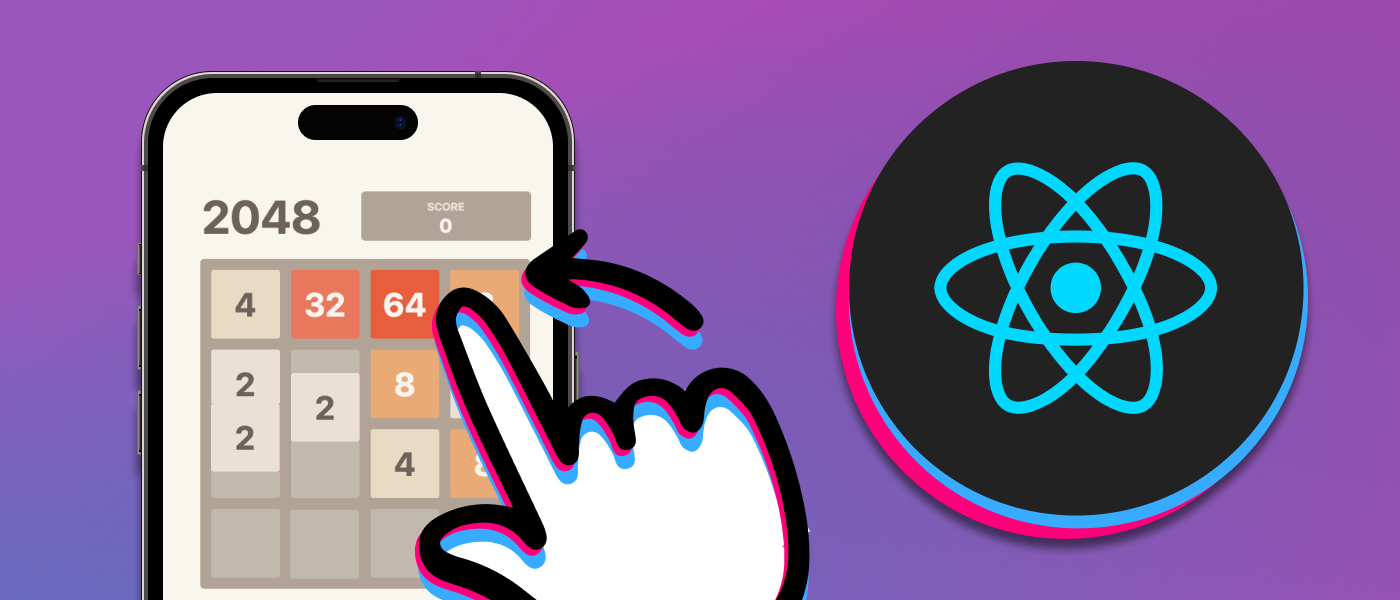 A popular NPM library for handling mobile touch events called hammerjs is downloaded 1.4 M times per week but it wasn’t updated since the last 8 years.
54. What the Strangler Fig Pattern Teaches Us About Modernizing Legacy Software
 See how software teams use the Strangler Fig Pattern to modernize legacy systems through gradual migration, lower risk, and faster wins.
55. How to Accelerate Mobile App Development
 Modern mobile products are the quintessence of the founders’ vision and actual market needs. To be successful, a mobile application needs to continually evolve in order to keep pace with changing market conditions. However, not every approach to application development can ensure such success.
56. Live Sports Betting In a Mobile World
 “In-play is just an incredibly engaging experience. It’s incumbent upon the existing operators to create really exciting new markets to engage the customer.” – Seth Young, Chief Innovations Officer at PointsBet.
57. How To Build WordPress App with React Native Part #6 : Html renderer
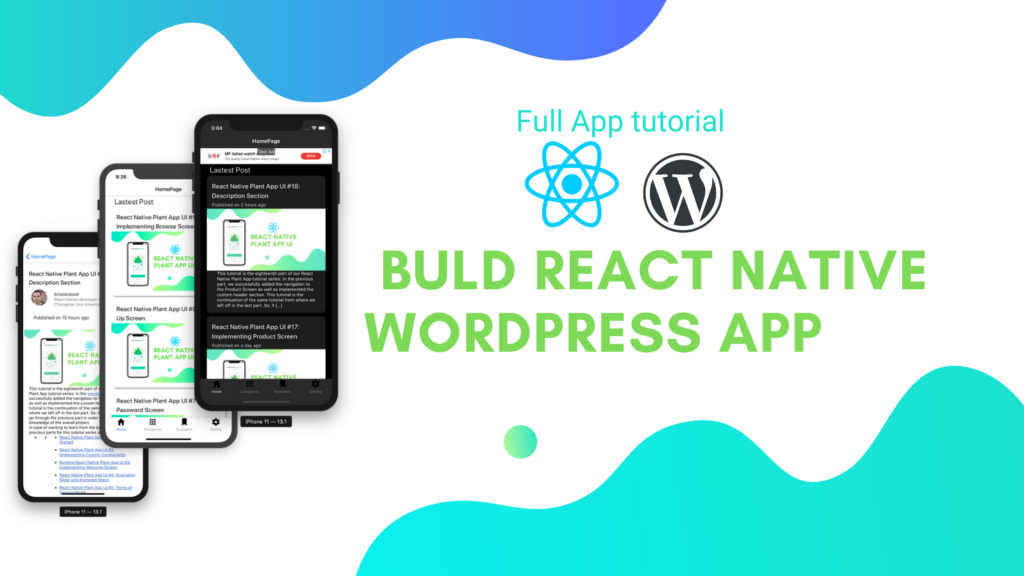 Now, we need to display the excerpt of the overall post on the list. For that, we are going to make use of components from the react-native-render-html package. And, we need to display the published date of the article as well. For that, we are going to make use of the moment package which provides the moment.js configurations. In order to use these packages, we need to install them first. For that, we need to use the command from the following code snippet:
58. Meet the Programmer: Inside the Career Path of a Mobile Software Engineer
 An interview with a senior mobile software engineer discussing Android development, cross-platform frameworks, architecture, and solving real business problems.
59. How To Build WordPress Client App with React Native Part #8: SinglePost View
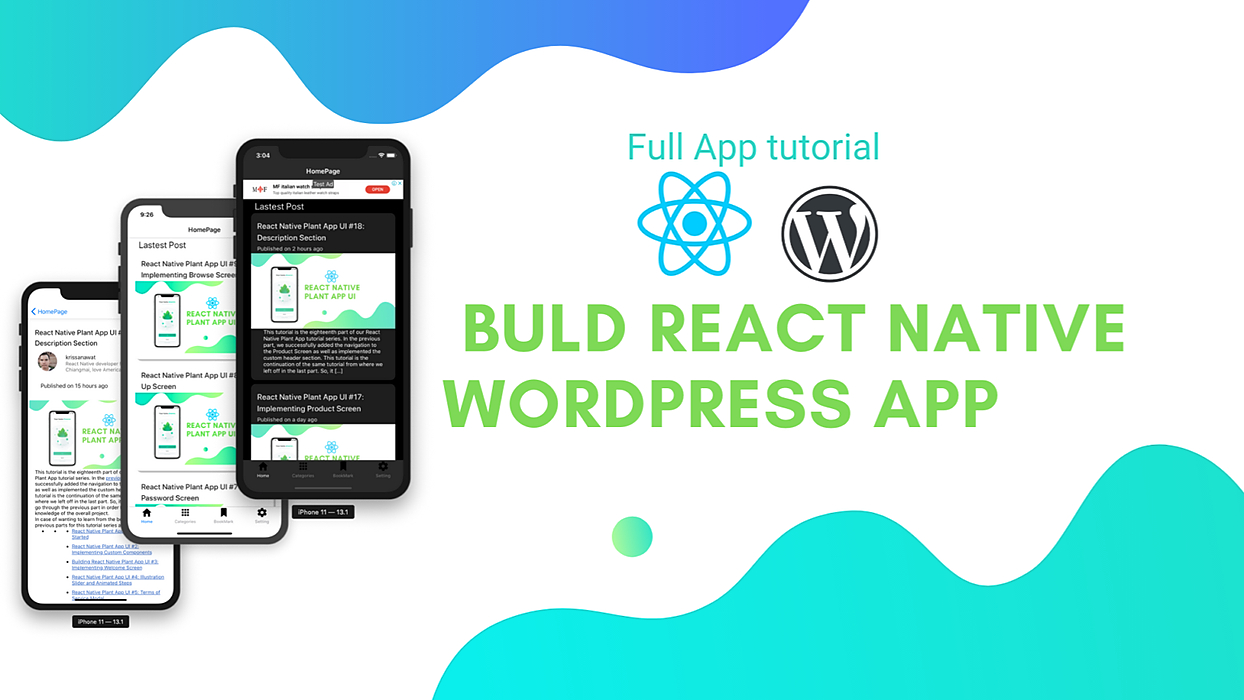 Since we have the list of articles in the Home Screen, we need to display full articles as well. For that, we are going to create the SinglePost screen which will display the overall article. Here, we will learn how to fetch a single article from the WordPress API.
60. How to Add Annotation, Redact, and Form Editor Tools to a JavaScript PDF Viewer
 Learn how to add Annotation, redact, and form editor tools to a JavaScript PDF viewer. See more from Document Solutions today.
61. The Hidden Tax That Slows Every Product Team

62. How To Build WordPress App with React Native Part #16: Adding Dark Mode
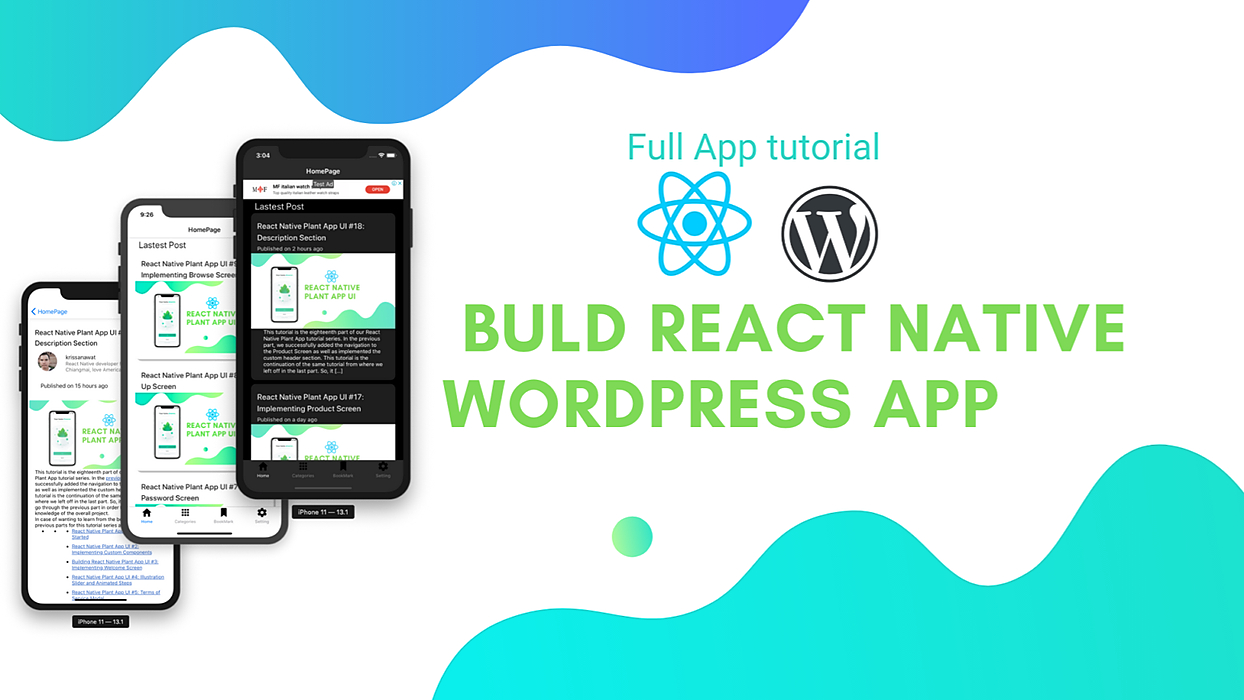 This series intends to show how I build an app to serve content from my WordPress blog by using react-native. Since my blog is talking about react-native, the series and the articles are interconnected. We will learn how to set-up many packages that make our lives comfortable and learn how to deal with WordPress APIs. Here, the most prominent features talked about in the book are the dark theme, offline mode, infinite scroll and many more. You can discover much more in this series. this inspiration to do this tutorial series came from the React Native App Templates from instamobile
63. How To Build WordPress Client App with React Native Part #9: implement simple share
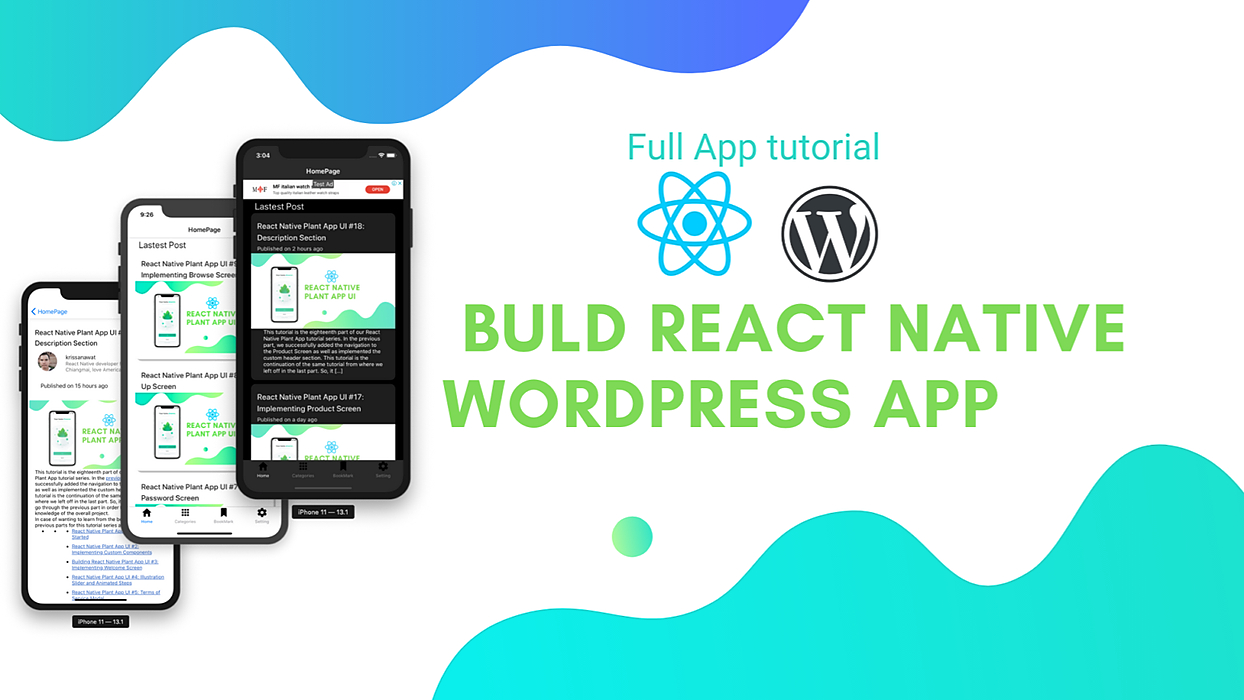 Here, we are going to add the share button and implement its feature as well. The feature makes the article sharable to the social media accounts when pressing the share button. For that, we are going to make use of the Share component from the react-native package.
64. The Brainrot-ification of Mobile Game Economy Design

65. Here's Why Polyglots Have an Advantage
 If your company needed a real-time service tomorrow, could you evaluate Go versus Node.js versus Elixir objectively? Or would you default to what you know?
66. Mobile App Development Jobs Trending in 2019
 Motorola cut the cord when it placed the first handheld mobile phone call over 40 years ago. Ever since, the race for smarter mobile development lives on.
67. Mobile App Debugging in 2023: Top 3 Tools
 Mobile debugging requires reliable tools, especially in production. In this article, I discuss ELK, Sentry, and Jaeger as the best mobile debugging tools.
68. What is Mobile-First Design and Why You Should Care About It

69. 8 Things to Have An Upper Hand on Before Developing Your 1st Android App
 Living in a digital-only era, we use our phones while in the office, on the streets, in our cars, at home, while we’re eating, relaxing in the bed, and even while bathing. There are 99.9% chances that you might be reading this from your smartphone right now. Are you?
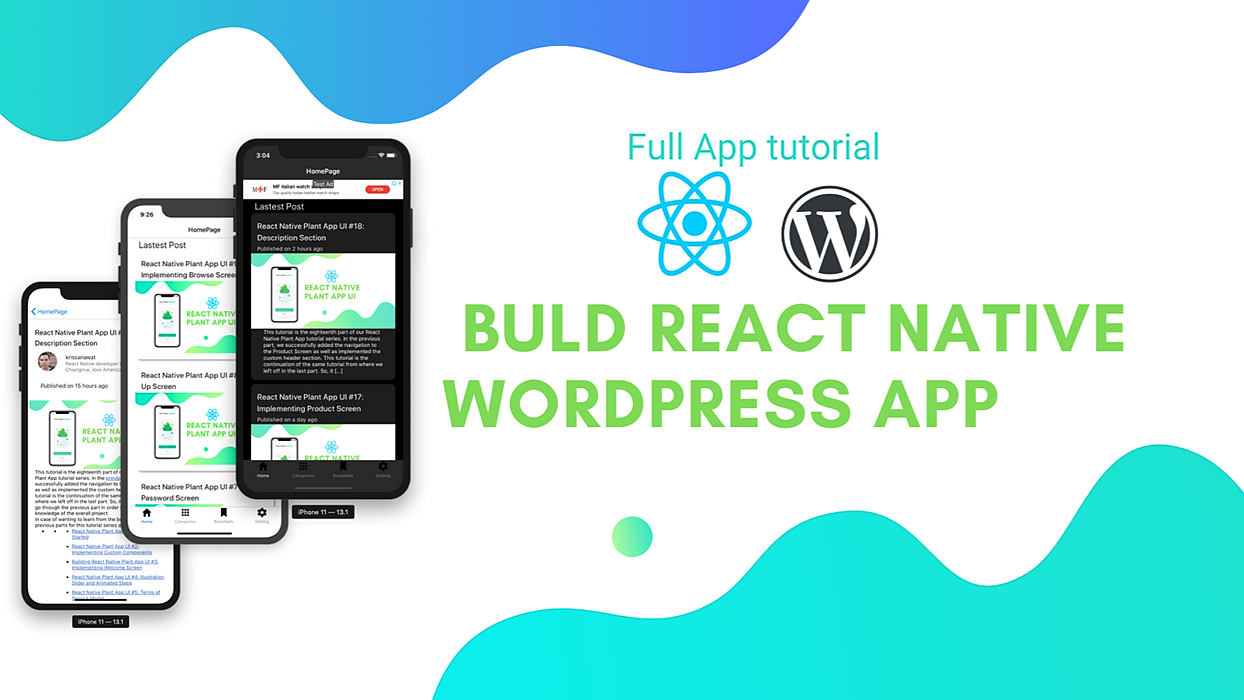
70. How To Build WordPress App with React Native Part #18: Changing Theme Functionality
71. How To Build WordPress Client App with React Native Part #12: Creating Categories Screen
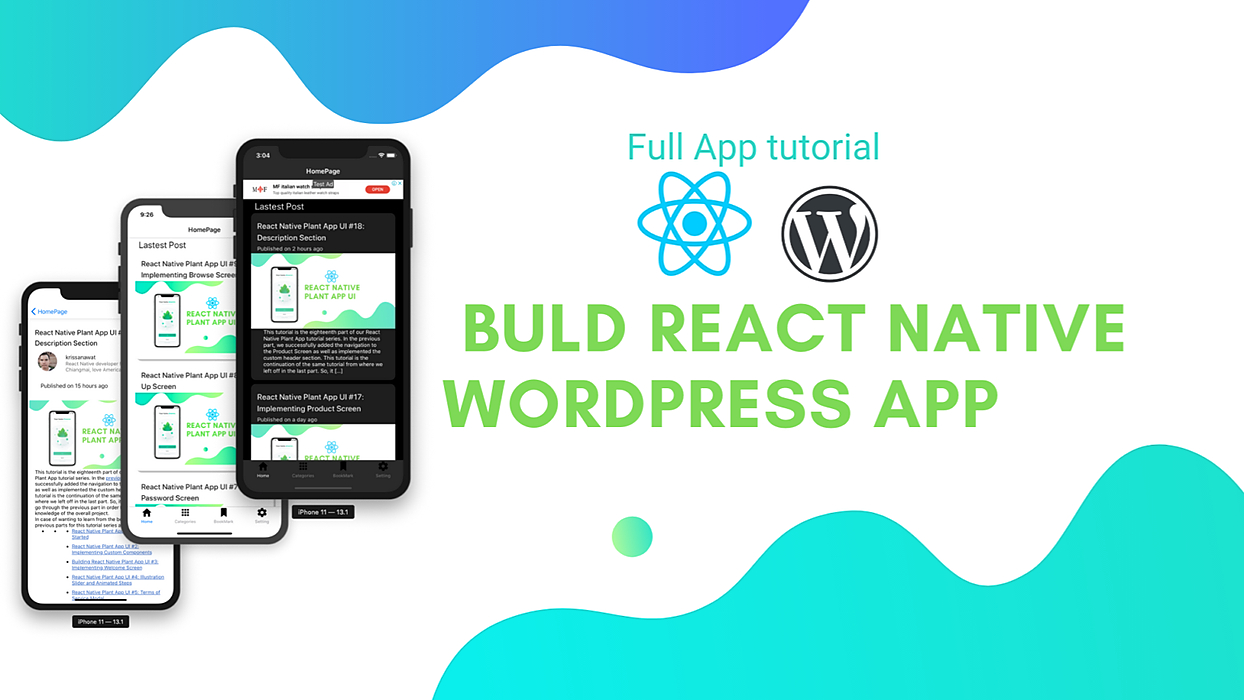 Here, we are going to implement the Categories screen. This screen will contain the list of categories related to the article posts. And on clicking on these categories, we will navigate to the posts which are based on that respective category.
72. Why I Only Design Mobile Apps for One Type of Client Now
 After 23 failed apps, I now only design mobile products that belong on mobile: simple, focused, and built for real people in real moments.
73. Building a Kotlin Mobile App with the Salesforce SDK - Part 1
 Nowadays, users expect mobile apps to act as counterparts to the websites and platforms they use on the web.
74. Let’s be Real: Your Business Should Embrace Mobile App Development
 The statistics tell the story: Gartner says this is the year our culture will go “mobile first.”
75. How To Build WordPress Client App with React Native Part #14: Implementing Settings Screen
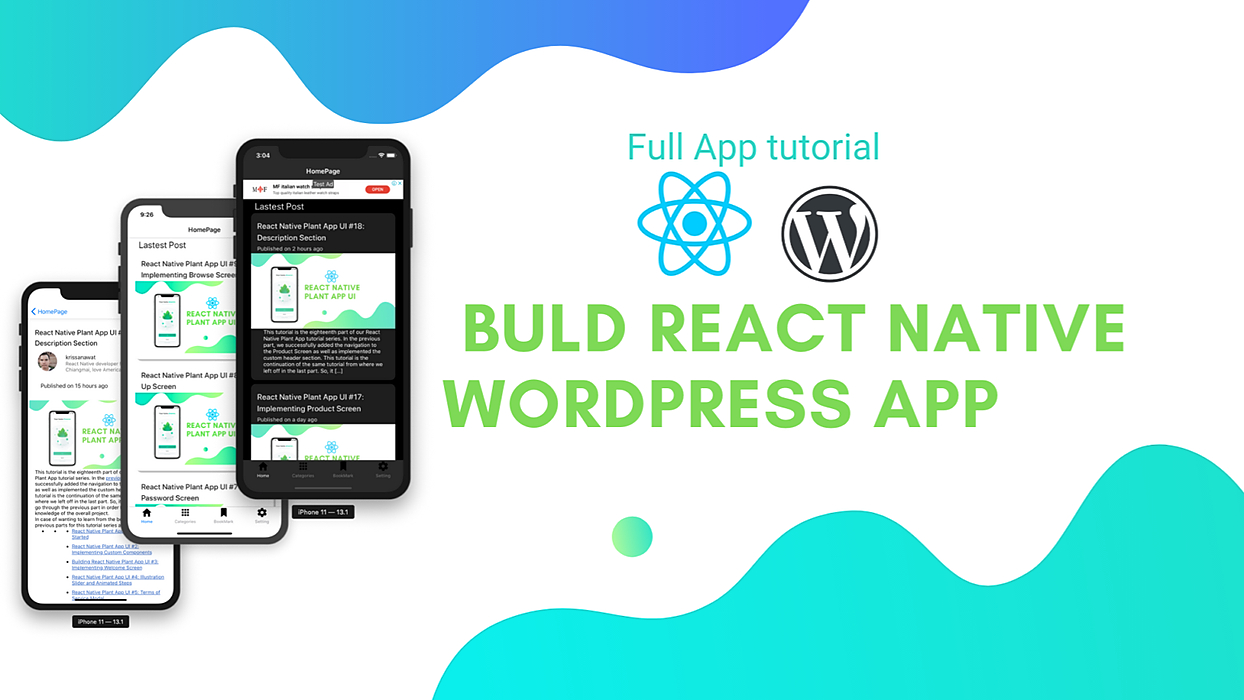 Now, we need to goto Setting.js file and implement a Contact menu option UI in order to navigate to the Contact screen. For that, we need to use the code from the following code snippet in the Setting.js file:
76. Introducing the World’s First Mobile DevOps Assessment: MODAS
 The world’s first Mobile DevOps, Performance, Productivity, and Maturity Assessment.
77. How to Ask Users for App Ratings and Open Google Play Store (React Native)
 User ratings are very valuable to business as they play a crucial part in people's purchasing decisions; be it restaurants, movie tickets or in the current context, our react native app. You must have seen prompts when you are surfing through any android app or playing games, that ask you to rate the app in google play store.
78. A New AI Approach to Surgical Navigation Skips Reconstruction
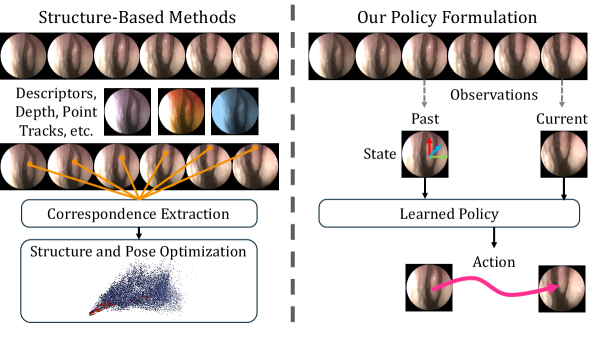 This is a Plain English Papers summary of a research paper called Investigating a Policy-Based Formulation for Endoscopic Camera Pose Recovery [https://www.a...
79. Bonsai-8B-gguf Shrinks an 8B Model to Just 1.15 GB
 This is a simplified guide to an AI model called Bonsai-8B-gguf [https://www.aimodels.fyi/models/huggingFace/bonsai-8b-gguf-prism-ml?utm_source=hackernoon&ut...
80. Launch Readiness Matters More Than Code
 Launch day reveals what you should have built. Launch readiness is everything else.
81. The Technological Relevance of the iPhone X Design
 Despite the covid19-pandemic sending the world into frenzy, the new iPhone 12 might just bring some good news for the Apple loyalists and even the company in general. Although a lot has been speculated regarding the design and the innovations surrounding the same, we will take some time out to discuss the technological relevance of the inclusions.
82. The Million-Dollar Bug: The Lessons That It Taught Me
 What would happen if the “impossible” bug in your architecture actually occurred?
83. Subscription Revenue Playbook, Part 5: Checkout Pages

84. The July Tech Stories That Dominated Our Mobile Newsfeeds
 Hi everyone! I'm Irina Heinz, Content Strategist at Checkaso, and I've compiled some major stories of the month for you. Well, I mean news. If there will be enough likes, shares, and views, we'll keep it up. Okay then, what all the buzz in mobile is about in July?
85. What It Takes to Design for 5 Million Crypto Users
 How I redesigned Merlin by VALK for the Ledger Live integration - two audiences, two design systems, and a compressed timeline....
86. Build Real-Time Creative Tools with Flux-2-Fast

87. Dotting the I's and Crossing the T's of OWASP Top 10 for Mobile Devs (Part 1)
 Explore how the OWASP Top 10 security risks specifically apply to mobile app development, and learn how to protect your apps from vulnerabilities.
88. The Real Reason Big Companies Spend $10M+ on Checkout

89. The Real Cost of White-Label UX
 What breaks when your fintech design system grows from 7 clients to 70+ institutions fast - tokens, variants, documentation, and saying no....
90. Breaking the Perception–Reasoning Tradeoff in Vision-Language Models

<h2>The efficiency paradox that rewrites multimodal AI</h2> <p>Vision-language models face a cruel choice. Stay small and efficient, and you sacrifice reasoning capability. Scale to hundreds of billions of parameters, and you handle complex visual tasks effortlessly but burn enormous computational resources. The field has accepted this tradeoff as inevitable, like two ends of a rope you can only hold one end of at a time.</p> <p>STEP3-VL-10B breaks this assumption by asking a different question: what if the bottleneck isn't model size at all, but how the model allocates its thinking?</p> <p>A 10 billion parameter model that rivals systems 10 to 20 times larger sounds like marketing. The paper proves it's architecture. The approach combines three strategic choices made in sequence: unfrozen joint pre-training of vision and language components on 1.2 trillion multimodal tokens, over 1000 iterations of reinforcement learning that teaches the model to reason more efficiently, and a test-time reasoning method called Parallel Coordinated Reasoning that generates multiple interpretations of an image before synthesizing a final answer. The results are striking. STEP3-VL-10B reaches 92.2% on MMBench, 80.11% on MMMU, 94.43% on AIME2025, and 75.95% on MathVision, matching or exceeding models like GLM-4.6V-106B, Qwen3-VL-235B, and proprietary systems like Gemini 2.5 Pro.</p> <p>But the real insight runs deeper than benchmark numbers. This work demonstrates that reasoning ability comes from multiple sources, and parameter count is only one of them. That realization changes what's possible for efficient AI.</p> <h2>Teaching vision and language to grow up together</h2> <p>Traditional vision-language models treat perception and language as separate problems that happen to live in the same system. A frozen Perception Encoder extracts visual features. A language model interprets those features. They've never learned to understand each other.</p> <p>STEP3-VL-10B starts differently. During pre-training, both the Perception Encoder and the Qwen3-8B language decoder receive gradients simultaneously. They co-evolve across 1.2 trillion multimodal tokens. The Perception Encoder learns what patterns the language model actually cares about understanding. The language model learns what kinds of visual information matter for reasoning.</p> <p>This sounds like a small change. It's not. Consider how humans learn language and visual understanding. You don't learn to recognize objects in isolation, then separately learn to talk about them. You learn them together, each informing the other. When you learn the word "bridge," you simultaneously understand what bridges look like, why they matter structurally, and how to reason about them. That integration is what STEP3-VL-10B captures at scale.</p> <p>The scale matters too. 1.2 trillion tokens is large enough that both components can specialize meaningfully while still learning deep interdependencies. Too small, and emergent reasoning patterns never develop. Too large without the right architecture, and you're wasting compute. This number reflects the point where the two components have learned to cooperate fully.</p> <p>The foundation established during pre-training is silent and invisible in benchmarks. You won't see a paper that says "unfrozen pre-training alone gave us 2% on MMBench." But without this step, the rest of the approach doesn't work. The model needs to enter RL training already understanding vision and language as integrated domains, not after-the-fact combinations.</p> <h2>Learning to reason through structured iteration</h2> <p>Pre-training establishes foundations. Reinforcement learning teaches strategy. The paper implements what it calls RLVR (Reinforcement Learning with Vision-Reasoning), running over 1000 iterations where the model generates multiple candidate reasoning chains for visual problems, receives rewards based on reasoning quality and correctness, and updates its weights to prefer better patterns.</p> <p>What happens during this process is revealing. Figure 2 shows two curves that initially seem contradictory. The reward curve climbs steadily without saturating, indicating the model keeps finding room for improvement. Simultaneously, the average number of tokens generated initially spikes then decreases back toward baseline levels. This isn't a sign of failure or saturation. It's the opposite. The model is learning to reason more efficiently, achieving the same quality of reasoning in fewer tokens.</p> <p><a href="https://arxiv.org/html/2601.09668/x4.png"><img src="https://arxiv.org/html/2601.09668/x4.png" alt="Performance trends showing reward increasing while token count decreases" /></a><br/><em>Performance trends showing reward increasing while token count decreases</em></p> <p><em>RLVR dynamics: reward continuously improves (left) while the model learns to reason more concisely, reducing rollout tokens after initial exploration (right).</em></p> <p>This pattern indicates genuine learning, not mere memorization or output inflation. The model isn't cheating by making longer outputs to seem smarter. It's developing better internal representations of visual reasoning. Early RL iterations teach basic structured thinking. Later iterations refine edge cases and teach multi-step integration across multiple hypotheses.</p> <p>Figure 3 tracks this progress on representative benchmarks. Metrics on reasoning tasks (the kind where visual hypothesis exploration matters most) and perception tasks (the kind where all models converge to similar performance) both show the same pattern: rapid initial growth followed by steady improvement that mirrors the reward dynamics.</p> <p><a href="https://arxiv.org/html/2601.09668/x5.png"><img src="https://arxiv.org/html/2601.09668/x5.png" alt="Benchmark performance over RL iterations" /></a><br/><em>Benchmark performance over RL iterations</em></p> <p><em>Performance gains during RLVR track reward improvements: rapid initial growth followed by steady gains, indicating sustained learning rather than saturation.</em></p> <p>The convergence between reward trends and benchmark trends confirms something important. The RL procedure isn't optimizing for gaming metrics or statistical artifacts. It's genuinely teaching the model better reasoning behavior, and that behavior transfers directly to standard benchmarks. This is crucial for believing that the approach will generalize beyond the specific tasks used during training.</p> <h2>Why test-time scaling beats parameter scaling</h2> <p>Here's where the conceptual breakthrough becomes concrete. Instead of scaling the model by making it larger, STEP3-VL-10B scales it at inference time through Parallel Coordinated Reasoning.</p> <p>The mechanism is elegant. For a complex visual reasoning task, the model doesn't generate one answer. It generates multiple competing interpretations of the visual input. For a diagram, it might ask: what if the key relationship is spatial? What if it's conceptual? What if these elements are functionally connected rather than physically arranged? Each interpretation proceeds through independent reasoning chains. Then the model synthesizes across these chains, considering how different interpretations support or contradict each other, arriving at a final answer that integrates multiple hypotheses.</p> <p>The term "Parallel Coordinated" captures both elements. The reasoning chains run in parallel, making efficient use of compute. But they coordinate, with the model tracking how different interpretations relate to each other. The final answer emerges from synthesis, not from selecting the loudest individual chain.</p> <p>Figure 1 illustrates the consequence. STEP3-VL-10B bridges a gap that previous models couldn't cross. On pure perception tasks, where extracting visual information is straightforward, all models converge to similar performance. The curve flattens. But on complex reasoning tasks, where multiple interpretations are possible and need reconciliation, larger models normally pull away dramatically. STEP3-VL-10B with PaCoRe doesn't follow that pattern. Its performance on reasoning tasks rises alongside the perception baseline, breaking the historical correlation between reasoning difficulty and model size.</p> <p><a href="https://arxiv.org/html/2601.09668/x3.png"><img src="https://arxiv.org/html/2601.09668/x3.png" alt="Comparison showing Step3-VL-10B bridging perception and reasoning gaps" /></a><br/><em>Comparison showing Step3-VL-10B bridging perception and reasoning gaps</em></p> <p><em>STEP3-VL-10B with PaCoRe achieves frontier performance on both perception and reasoning tasks, bridging the traditional efficiency-capability gap.</em></p> <p>This test-time scaling trades compute at inference for parameters in training. For many real-world applications, this is a profound advantage. You're spending inference tokens (generated at runtime) instead of training-time parameters. A batch processing system can spend more compute on a single request to get better accuracy. An interactive system can dial down test-time reasoning if latency becomes critical. An on-device application gets a model 10x smaller than the alternative while maintaining comparable reasoning capability. The flexibility is as valuable as the benchmark numbers.</p> <p>This approach connects to broader work on test-time scaling across the field. OpenAI's o1 model and Anthropic's extended thinking both explore similar territory for language reasoning. STEP3-VL-10B demonstrates that the principle isn't language-specific. Multimodal systems can benefit equally from allocating more compute to test-time reasoning, particularly when visual interpretation ambiguity is involved.</p> <h2>Where the model actually excels</h2> <p>The benchmark results reveal something important: the approach's strengths are concentrated where reasoning matters most.</p> <p>On MMBench (92.2%) and MMMU (80.11%), STEP3-VL-10B performs competitively but not dramatically ahead of the largest models. These benchmarks test perception and basic understanding. Multiple visual interpretations don't help much when the task is straightforward pattern recognition. The model shines on tasks where it needs to explore hypotheses.</p> <p>Look at AIME2025 (94.43%), a competition mathematics benchmark that requires integrating visual information, problem setup, and multi-step reasoning. The model doesn't just extract numbers from diagrams; it interprets spatial relationships, reasons through constraints, and verifies answers against the original problem. MathVision (75.95%), focused specifically on visual mathematics and geometry, shows similar strength. These tasks demand the kind of hypothesis exploration that PaCoRe provides.</p> <p>The split between perception and reasoning isn't accidental. It reveals the architecture's actual operating principle. When visual tasks are straightforward, you don't need multiple interpretations. When they require reasoning through ambiguity or multi-step inference, exploring alternative interpretations becomes powerful. The model learned to allocate its test-time reasoning where it's most valuable.</p> <p>This specificity matters for practitioners considering deployment. STEP3-VL-10B is exceptional for applications with complex visual reasoning: mathematics and geometry, engineering diagram analysis, scientific image interpretation, medical imaging in domains requiring reasoning about relationships rather than classification. For tasks where perception dominates and reasoning is minimal, a smaller model might suffice.</p> <h2>What the approach can't do (yet)</h2> <p>Every elegant solution has boundaries. Understanding them prevents misuse and clarifies where different approaches remain necessary.</p> <p>Latency becomes a constraint when test-time reasoning is needed. Parallel Coordinated Reasoning works by generating multiple reasoning paths. A system requiring sub-100-millisecond response times can't afford this exploration. Real-time interactive applications, mobile interfaces with strict latency budgets, and streaming systems where decisions must be made instantly need different architectures or models optimized for speed over reasoning quality.</p> <p>The language backbone, borrowed from Qwen3-8B, becomes a limitation for tasks with minimal visual content or requiring extensive reasoning over pure language. A problem involving a single small diagram and 50 pages of text might not benefit from STEP3-VL-10B's strengths. Large language models with stronger language modeling components would perform better. The model was optimized for vision-language integration, not language-heavy tasks.</p> <p>Domain specialization matters too. The training emphasized visual reasoning across diverse domains. Specialized fields requiring deeply specific language knowledge (legal document understanding with minimal images, scientific text with citation-heavy reasoning, domain-specific jargon) might see better results from models trained specifically for those domains. STEP3-VL-10B's strength is breadth; specialized applications might trade some breadth for depth elsewhere.</p> <p>These limitations aren't failures. They're the natural boundaries of an approach optimized for specific tradeoffs. A smaller, faster model for latency-critical applications. A larger language backbone for language-heavy reasoning. These coexist with STEP3-VL-10B in a broader toolkit rather than being replaced by it.</p> <h2>The research reproducibility layer</h2> <p>The paper releases the full model suite open-source. This is more than a nice addition to the research narrative; it's a statement about how knowledge should move in fast-moving fields.</p> <p>Open release means researchers can use STEP3-VL-10B directly, fine-tune it for specific domains, and study what actually drives its performance rather than inferring from published claims. Training details sufficient for reproduction are included, though not every step-by-step training configuration. The benchmark evaluation procedures are documented clearly enough that future work can claim improvements with confidence rather than uncertainty about whether they used the same setup.</p> <p>This matters because multimodal AI is moving fast. When models are proprietary and benchmarked behind those companies' methodologies, research gets gated. One group's research direction becomes the constraint for a thousand other researchers trying to build on it. Open models and reproducible baselines accelerate progress across the field. They also build trust in claims. When someone says "our new method beats STEP3-VL-10B," the community can verify whether that's true, whether they're testing the same way, and whether the comparison is fair.</p> <p>The release also matters for practitioners. A frontier-performing open model at 10 billion parameters is genuinely valuable for on-device inference, cost-effective deployment, and experimentation in resource-constrained settings. Organizations can use this as a baseline, fine-tune it for their domains, and maintain control over their systems rather than relying on proprietary APIs.</p> <h2>Reframing how multimodal AI scales</h2> <p>STEP3-VL-10B is a specific model. It's also a proof of concept that challenges how the field thinks about scaling multimodal systems.</p> <p>The traditional frame went like this: larger model equals smarter model, so efficiency means making models smaller while accepting capability reductions. The new frame this work enables is more nuanced. Reasoning capability comes from four sources: parameter count, pre-training scale, post-training refinement through RL, and test-time compute allocation. The optimal mix depends on the application. A research system where latency doesn't matter might push hard on test-time compute. A mobile application might minimize both parameter count and test-time reasoning. An on-device system might increase parameter count slightly to reduce test-time overhead.</p> <p>This shift isn't theoretical. Major AI labs are already exploring test-time scaling for language reasoning. OpenAI's o1 model represents a massive commitment to test-time compute. Anthropic's extended thinking explores similar scaling. STEP3-VL-10B shows this principle works equally well for multimodal systems, where visual ambiguity and interpretation complexity create natural opportunities for hypothesis exploration.</p> <p>The practical implications cascade outward. Future multimodal systems might look less like "bigger models" and more like "smarter inference procedures." A 10 billion parameter model becomes competitive with 100 billion parameter models through better reasoning allocation, not through different training data or longer training. This opens possibilities for cost-effective scaling, edge deployment that maintains frontier reasoning capability, and flexible systems where you can trade inference cost for quality per request.</p> <p>The field is learning that the frontier of multimodal AI doesn't need to be a frontier of model size. It can be a frontier of architectural innovation, test-time reasoning, and thoughtful resource allocation. STEP3-VL-10B demonstrates that this isn't a small efficiency gain at the margins. It's a fundamental rethinking of how to build capable systems that competes directly with massive parameter-scaling approaches.</p>
<hr/><p><strong>Original post:</strong> <a href="https://www.aimodels.fyi/papers/arxiv/step3-vl-10b-technical-report?utm_source=hackernoon&utm_medium=referral">Read on AIModels.fyi</a></p>
91. A beginner's guide to the Hy-embodied-0.5 model by Tencent on Huggingface
 This is a simplified guide to an AI model called HY-Embodied-0.5 [https://www.aimodels.fyi/models/huggingFace/hy-embodied-0.5-tencent?utm_source=hackernoon&u...
92. Why Hits Feel Different Now: Mobile Chases TikTok, Console Chases Community

93. Retention Hacks Don’t Beat Reality

94. SaaS-pocalypse Part 3: Which SaaS Moats Survive AI?
 AI is reshaping SaaS moats fast. See which of Helmer’s 7 powers are eroding, strengthening, or shifting in the AI era.
95. Liquid AI’s 450M Vision Model Balances Speed and Smarts
 This is a simplified guide to an AI model called LFM2.5-VL-450M [https://www.aimodels.fyi/models/huggingFace/lfm2.5-vl-450m-liquidai?utm_source=hackernoon&ut...
Thank you for checking out the 95 most read blog posts about Mobile Development on HackerNoon.
Visit the /Learn Repo to find the most read blog posts about any technology.