

Let's learn about Dotnet Core via these 91 free blog posts. They are ordered by HackerNoon reader engagement data. Visit the Learn Repo or LearnRepo.com to find the most read blog posts about any technology.
.NET Core is an open-source, cross-platform framework for building modern, cloud-based, internet-connected applications. It matters for its versatility in creating robust applications across Windows, macOS, and Linux, offering high performance and developer productivity.
1. Overloading Vs. Overriding in C#
 Method overloading and overriding are two common forms of polymorphism ( the ability for a method or class to have multiple forms) in C# that are often confused because of their similar sounding names. In this article, we show the difference between the two with some practical code examples.
2. How to Set up a Formatting Standard in Your Code Editor (And Why You Should!)
 In this post I'll show how to maintain a standard for everyone who works in the code, no matter the editor used.
3. Top 25 C# Programming Tips
 Hi everyone! There is a lot of information about different C# features. About various life hacks and best practices in this language.
I want to tell you about equally useful, but less popular tips for working with this language.
Hi everyone! There is a lot of information about different C# features. About various life hacks and best practices in this language.
I want to tell you about equally useful, but less popular tips for working with this language.
4. How to Call a Stored Procedure Using Dapper in C#
 Dapper is a popular and easy-to-use object-relational mapping (ORM) tool for .NET developers. It is lightweight, fast, and provides a simple way to execute SQL
5. Are Implicit Operators a Path to Clean Code or a Buggy Nightmare?
 Implicit operators are a C# feature that can make our code more readable and expressive. But beware! Misuse can backfire and cause a great deal of headaches!
6. How to Fix Error CS0246: "Type or namespace not found" in .NET Core
 Diving into error CS0246 - type or namespace could not be found, what it means, why it happens, and how to solve it.
7. How to Query Multiple Results with Dapper ORM Efficiently
 Dapper is a powerful and lightweight Object-Relational Mapping (ORM) tool for C#. It is designed to be simple and fast, allowing developers to execute SQL query
8. How to use Azure Functions Core Tools to create a local.settings.json file and run Functions locally
 We use Azure Function Core Tools to create a local.settings.json file and import our Function settings to that file so we can run our Functions locally.
9. A Guide to Running ASP.NET Core & SQL Server from Docker
 I've recently gotten into using Docker in my development cycle and I'm really enjoying how much of a wonderful tool it is. One thing that always used to be a pain was setting up a development server to run SQL Server. Now with Docker, I can just spin up a Docker container and I instantly have a SQL Server ready to go.
10. How To Write Decoupled Code with MediatR: The Mediator Pattern
 I recently wrote a blog post introducing some of my favourite NuGet packages: My Top 4 NuGet Packages for ASP.NET Core. In that post, I briefly introduced a package called MediatR. Today, I will dedicate this post to revisiting MediatR in further detail.
11. Why do you need JWT in your ASP.NET Core project?
 The story is about how to create a Web API to generate JWT and then use it for authorization in the CRUD Web API.
12. Build and Deploy a Blazor App Without Touching a Windows Machine
 Do you want to try out Blazor, but you're not a Windows person? Strictly a Linux developer? You're in luck. One of the goals of .NET Core is to be cross-platform, so today we'll see just how "cross-platform" it really is with Blazor, Microsoft's hot new front end development project.
13. How to Code a Blog With ASP.NET Core and C#
 Learning by doing
14. Don't Let Your .NET Applications Fail: Resiliency with Polly
 One aspect of application development that is often overlooked, especially by beginner developers is application resilience.
15. How to Implement a Generic Interface in a Non-generic Class in C#
 This article explains how to create generic interfaces of type T.
16. C# 8.0 Indices and Ranges
 Compared to other languages, C# was way behind in capabilities to handle data efficiently. Well, those days are over now. Microsoft just improved the C# syntax, making it easier for developers to manage data in arrays.
17. Exploring Async Laziness in C#: Balancing Power with Responsibility
 In C#, how can we balance asynchrony and laziness? Is there such a thing as async lazy? Let's explore our options built into dotnet!
18. How to Achieve Immutable DTOs With C#
 The story is about how to implement immutable DTOs with C#, both with the older method and with the newer 9 record reference type that recently came out
19. Exploring the Potential of Bioinformatics with C#
 In this article, we'll examine how to apply bioinformatics and C# coding to effectively deal with biological information.
20. A Guide to Using MongoDB Database in a ASP NET Core Web API Application
 When you think about database providers for ASP NET Core apps, you probably think about Entity Framework Core (EF Core), which handles interacting with SQL databases. But what about the NoSQL options? A popular option for NoSQL is MongoDB. So in this article we're going to learn how to create a simple ASP NET Core CRUD API using MongoDB as the database provider.
21. EF Core Migrations: A Step-by-Step Guide to Get Started
 Entity Framework Core (EF Core) is an object-relational mapping (ORM) framework that allows developers to interact with databases using .NET objects. One of the
22. How to Handle Configuration for Multiple Environments in Console App Service?
 How I automated the process of service deployment for a console application after issues caused due to multiple configuration environments.
23. What is New in .NET 5
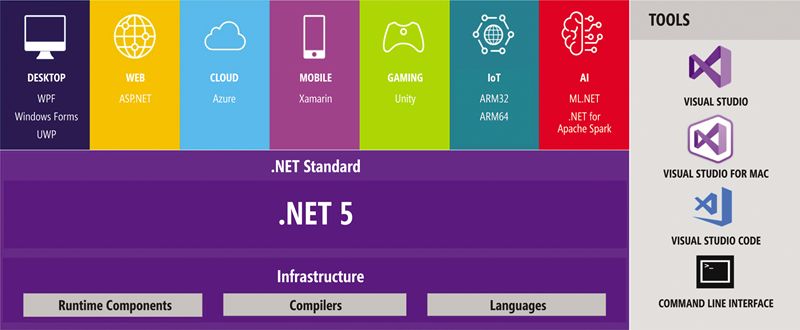 .NET 5.0 was officially released this week, bringing with it a range of improvements to the .NET ecosystem. Like many .NET developers, I was quick to download it and give it a test run. This article discusses some of the most exciting new features in .NET 5.
24. Exploring the Practical Applications of Reflection in C#
 Reflection makes a lot of confusion for the C# developers when it comes to the question of the real-life practical use of it. This article shows how to do that.
25. How To Optimize Background Tasks Using Hangfire and ASP.NET Core
 Hangfire is a .NET library that makes it really easy to adding background tasks to your .NET app. It supports one-off "fire and forget" tasks, as well as scheduling recurring tasks. On top of that it supports persistence, so all of your tasks will continue to exist even after restarting your app.
26. How to Tame the “Async Void” in C#
 Most intermediate dotnet devs writing async await code in C# will come across async void at some point. Here's a creative solution for avoiding the headaches.
27. How to Use Azure Functions to Build a QR Code Generator
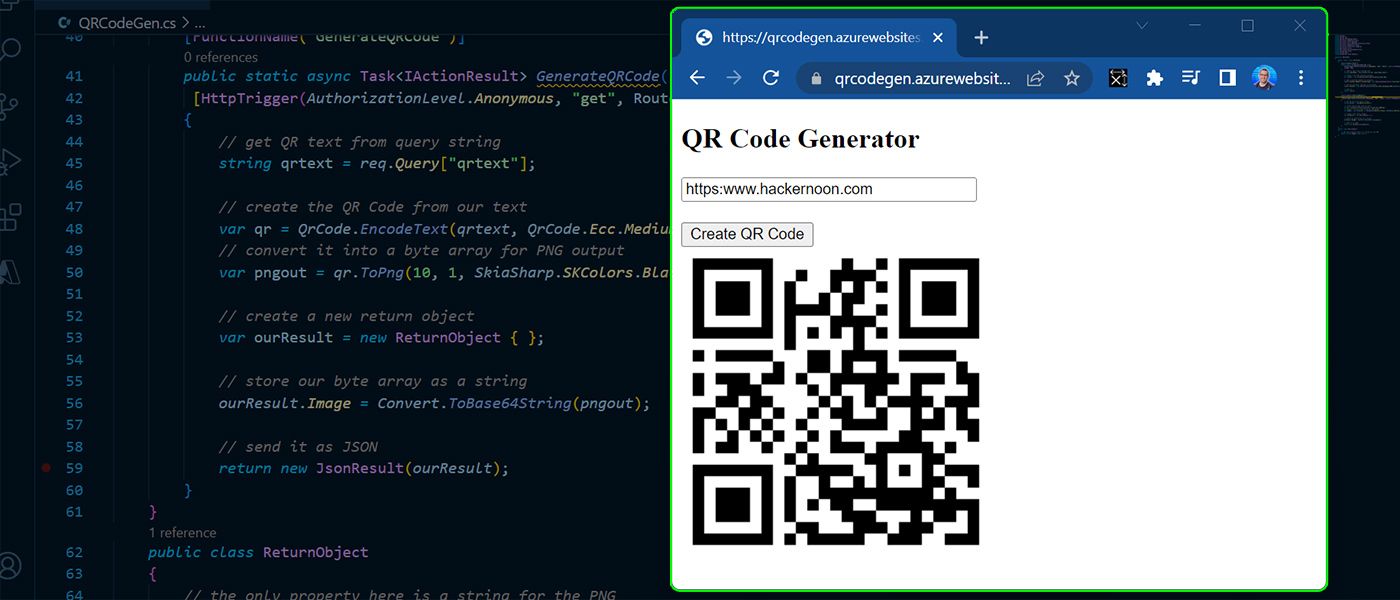 How to build a fun QR code project and learn about Azure Functions at the same time. Using the latest .NET technologies.
28. Building An Electron App with .Net, JS, HTML and CSS
 .NET has two big desktop technologies. They are WinForms and WPF. But we live in a WEB world and we have many tools to create great UI using CSS and JavaScript.
29. How Lazy Loading Works in EF 8 Preview Release
 Entity Framework (EF) is an object-relational mapper (ORM) that provides a set of tools to work with databases in an object-oriented way.
30. The Battle Continues Between Dapper and EF Core
 Dapper and EF Core are popular .NET libraries for data access and management. Both have strengths and weaknesses, and the choice will depend on the project's sp
31. What's Pattern Matching in C# 8.0?

32. Accessing the Record Type in C# for Earlier .NET Versions
 Are you stuck on earlier versions of .NET but want to get your hands on the hot new record types? Fear not! Check out this simple solution to simplify things!
33. How to Add GraphQL Wrapper Over REST API
 How to add GraphQL wrapper along with swagger documentation in ASP.Net C# using NSwag tool
34. Implement a Singleton DBManager in ASP.NET Core and C#
 This article talks about the singleton Design Pattern, why it is important
and then demonstrates how to build a singleton DBManager.
This article talks about the singleton Design Pattern, why it is important
and then demonstrates how to build a singleton DBManager.
35. Spotting and Preventing Formatting Errors in Your Code
 In this post I'll show how to use Roslyn Analyzers with C# to enforce some standards of code quality and code style on your code.
36. Understanding Tasks, BackgroundWorkers, and Threads
 In C# we have access to Tasks, Threads, or BackgroundWorkers. In this article, we will explore how each one operates at a high level.
37. Exercises on Dependency Injection in ASP.NET: Introduction
 In this post, we will do some exercises to go over the basics of DI (Dependency Injection) in ASP.NET.
38. How to Build a Web App with ASP NET Core and Vue
 In this article, I will teach you the basics of making your own web app, by creating a checklist app. ASP NET Core will be used to create a CRUD API and Vue will be used to create the frontend UI. Using the knowledge gained here, you should be able to apply it to start making your own web apps. You can find the complete solution in the GitHub repository.
39. Choosing the Best Logging Approach: ILogger, ILogger<T>, ILoggerFactory, and ILoggerProvider
 The article explores the different logging options available in C#: ILogger, ILoggerFactory, and ILoggerProvider. By understanding their characteristics
40. Higher Order Functions in C#: A Practical Example
 If you have been programming for any length of time, you may well have come across higher-order functions but may not have fully appreciated them.
41. .NET 9: LINQ Enhancements: A Detailed Introduction
 In the latest release of .NET 9, several enhancements have been introduced to LINQ, providing developers with more powerful and efficient ways to work with data
42. How to Create a Dependency Aggregate Class to Manage DI: Clearly Exemplified
 Dependency injection (DI) is a wonderful thing. Simply add your dependency as a parameter to the constructor (most commonly) of your class, register it with you DI container, and away you go - the DI container will manage the rest. Some of the key benefits of DI are: greater testability, greater maintainability, and greater reusability.
43. How to Build The Flames Love Calculator Game in C#
 Discover the true spark of your love with this fun and romantic game! Enter your name and the name of your partner, and let Flame Game do the rest.
44. Authentication in Web Apps: Connecting Auth0, ASP.NET Core and Nuxt.js
 User authentication and authorization can be difficult and time consuming. Getting it wrong can also have disastrous consequences, such as malicious users accessing and stealing personal or sensitive information from your app.
45. .NET Authentication Security Notes
 In this article, we discuss how to protect users' authentication and session in .net, as well as Identity Server configuration.
46. Converting .NET Framework to .NET Core: Steps and Key Points You Should Know
 Wondering how to move the .NET Framework app to .NET Core fast and effectively? This ultimate guide describes all ins and outs of the migration process!
47. What's Coming in C# 9.0 [Preview of Features]
 In past five years, Microsoft had made a rapid enhancements in C# by introducing a plenty major features with every new version, As planed, C# 9.0 will be officially released with .NET 5 on November 2020. So we will dive into C# 9.0 new features that released on 20 may 2020 as a Preview.
48. Exploring the .NET Core and Python Union
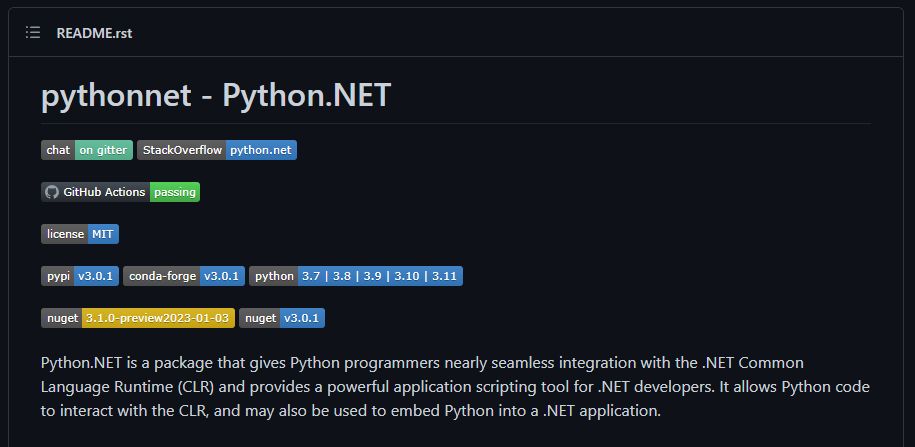 Here's a simple solution for being able to call Python code from your C# applications!
49. Should i Build An Analyzer for C# or .NET?
 edit: Unlike the conclusion of the post below, I based the analyzer on C# CaaS and not .NET IL. Its now available to use https://devsnicket.com/eunice/#csharp. The latter doesn't preserve the order of members of a class either in the dll or pdb. Although, after looking at some open source C# projects, this capability wasn't used by default.
50. How to Use the Builder Pattern in C#
 According to Gang of Four, a creational pattern “Builder” allows to separate and reuse a specific method to build something.
51. How to Use the Iterator Pattern in C#
 According to Gang of Four, the iterator pattern provides a process to obtain the aggregator object without knowing its implementation.
52. What is a Façade Design Pattern?
 Use the facade design pattern to simplify the interaction between subsystems. It provides a single entry point to a subsystem,
53. How To Master Plugin Architecture in ASP.NET Core
 For this post, we'll delve into plugin architecture, exploring how they can be leveraged in ASP.NET Core to create more flexible and maintainable applications.
54. C# Collection Expressions and Collection Initializers
 See code examples for C# collection initializers and collection expressions! Compare and contrast the readability of these different examples.
55. Exception Handling: Breaking Free From Exceptions, A New Way Forward
 Exceptions and exception handling are a core part of C# and many other programming languages. But what If we didn't need to be throwing them? Let's see how!
56. A Beginner's Guide to the CQRS Pattern in C# and Clean Architecture
 Discover how implementing the CQRS pattern in C# with Clean Architecture can revolutionize your software development process.
57. What You Need to Know About the Unit in Work in C#
 The Unit of Work design pattern is a software design pattern that is widely used in software development. It is a way to group database-related operations
58. What You Didn’t Know About Task EventHandlers
 If you're writing asynchronous code in C# and using EventHandlers, odds are you've had issues with exceptions. Task EventHandlers might be consideration!
59. Who Wins The Battle Between .Net Core and .Net Frameworks in 2022?
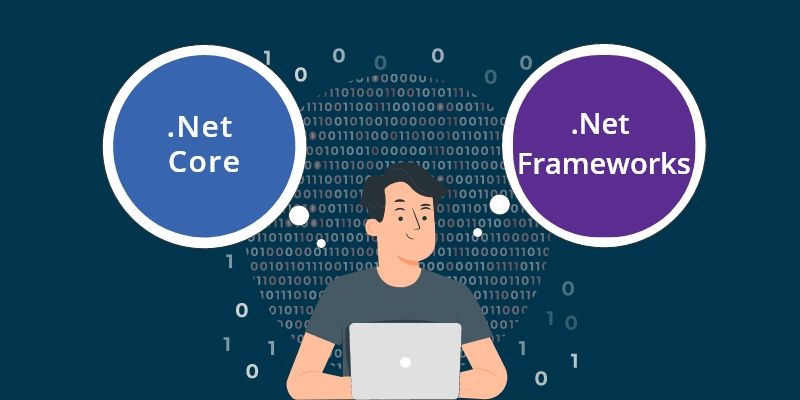 Entrepreneurs and startups are always confused about choosing between .Net Core vs .Net Framework due to their high functionalities and popularity.
60. An Introduction to F# as Microsoft's / .NET's Answer to a Functional-First Programming Language
 Recently I've been learning how to write code in F#. For those who haven't heard of it, F# is Microsoft's/.NET's answer to a functional-first programming language. My motivation was to learn a functional programming language that would make coding for scientific computing and data analysis more expressive, concise, and maintainable, all while fitting seamlessly into the .NET ecosystem that I already know and love. F# fits that bill perfectly.
61. A Guide to Using Scoped Services Inside Singletons
 Disclaimer
62. 10-Day .Net Aspire Challenge: Day 1 - An Introduction to .Net Aspire
 Step-by-step guide on how to use the .Net Aspire framework in Visual Studio.
63. Writing Multithread Code with Task Parallel Library (TPL)
 I am a big fan of executing multi-threads in an application, and it is interesting to see how quickly parallelism can solve a complex query.
64. The 30-Day .NET Challenge, Day 1: Boolean Expressions
 Dive in to master Boolean expressions for precise C# coding, ensuring your apps handle user data flawlessly! 🚀
65. How to Transform Your C# Code With the Command Design Pattern
 Command Design Pattern is one of the behavioural design patterns used to encapsulate a request as an object, thus enabling to parameterize clients with differen
66. The 30-Day .NET Challenge - Day 24: How to Avoid Exceptions in Flow Control
 Learn to enhance your C# code’s performance and readability by avoiding exceptions for flow control. Discover a better approach using TryParse.
67. C# 8.0 Nullable Reference Types Are Here
 C# 8.0 just rolled out with plenty of new features. One of the most important is the support of nullable reference types (NRT). A bunch of words that don't seem to explain what it does. I mean, aren't all types (except value types) already nullable?
68. How to Create a Blazor Component Without Lifecycle Methods
 In this blog post, I am going to share how I created a Blazor component without life-cycle methods and razor file syntax. We could also say this as class only component approach but without life-cycle methods. Many of them might knew this way of component rendering, but I felt like sharing this would help other folks who doesn’t know. I found this approach after going through various components used in Blazor source code.
69. Using GitHub Actions To Publish NuGet Packages [A Step-by-Step Guide]

70. The 10-Day .Net Aspire Challenge - Day 3: Add PGSQL Component
 .Net Aspire framework is used to develop cloud and production-ready distributed applications. It consists of components to handle cloud-native concerns such as
71. How to Create Multi-Container Applications With Docker Compose and C#
 Creating a multi-container application can be daunting, but Docker Compose and C# can make it much more straightforward. This article will walk us through the s
72. 5 Tips to Improve Your Productivity in C# 8.0

73. What to be Wary of With Iterators and Collections in C#
 Which approach is better: an iterator or a materialized collection? In this article we explore common pitfalls with BOTH of these different approaches!
74. Authentication And Authorization In .NET 5: How It Works
 In my 11 years as a developer, I have seen so many API's that have major security flaws. They either lack proper authentication or authorisation or both.
75. Visual Studio Code: A Look at Microsoft's Open Source Offering
 It seems crazy that Microsoft has a done a complete one-eighty of their position on open-source software. Learn how VS Code works.
76. LINQ Query: Benefits of Deferred Execution
 If you've spent much time around C# and .NET, it's likely that you will have come across LINQ (Language-Integrated Query), which allows you to use a range of powerful querying capabilities directly in the C# language.
77. Pattern Matching in C# for Complex Scenarios: An Extension on Property Patterns
 The article describes how pattern matching effectively utilises and processes data in forms not part of the primary system.
78. How a .NET Core Migration Saved Us $428/mo and Boosted Performance
 We achieved these results through .NET to .NET Core migration. The need emerged while we have been supporting a complex KnockoutJS-based web application.
79. An Easy Guide to Learn EF Core Migrations
 Entity Framework Core (EF Core) is an object-relational mapping (ORM) framework that allows developers to interact with databases using .NET objects. One of the
80. How to Avoid Code Smells - A NDepend Tutorial
 .NET developers can evaluate and visualize the codebase using the robust static analysis tool NDepend. It aids programmers in understanding the quality and main
81. The 30-Day .NET Challenge, Day 9: Null Safety
 The article demonstrates the use of null-state analysis to remove compiler warnings of “check code for null safety”.
82. Essential Guide to Running Nuxt from an ASP.NET Core Web Application
 It is becoming a common pattern to see websites and web apps written as a front end single page application (SPA) connected to a backend API. For this reason, the Visual Studio provides a several project templates for getting up and going with a Web API + SPA project.
83. Why You Should Start With a Red Test in Test-Driven Development
 The significance of staring with a red test in test-driven development. Start with the red test to spot mistakes in a test
84. The 30-Day .NET Challenge Day 12: Azure Functions
 Azure Functions are serverless applications on Microsoft Azure Cloud Platform without worrying about the infrastructure to run it. It’s very similar to the lamb
85. Don't Get Bitten by Hidden Bugs: Test Driven Development (TDD) and AAA Testing via xUnit
 Test Driven Development (TDD) is a software development cycle that focusses on describing the behaviour of your code first using tests
86. The 30-Day .NET Challenge Day 2: Variable Scope & Logic Control
 Code blocks in programming are essential for grouping code lines and controlling variable accessibility in C#
87. Azure App Configuration for Advanced Feature Flag Management in ASP.NET Core
 Learn how to use Feature Flags in ASP.NET Core apps and read values from Azure App Configuration.
88. The 30-Day .NET Challenge Day 3: Switch Constructs
 The switch statements are available for creating branching logic, each offering distinct advantages based on readability and maintenance.
89. The 30-Day .NET Challenge Day 5: While & Do-While Statements
 The do-while and while statements provide control over code execution flow by repeating a block of code until a condition is satisfied.
90. Using Codeship to Deploy a Dotnet app on Oracle Kubernetes

91. EasyTdd 0.5.0: Streamlining Mocking with Incremental FluentMock and Other Updates
 EasyTdd 0.5.0 introduces Incremental FluentMock—streamlining .NET mocking with less boilerplate, intuitive setups, and improved test case generation.
Thank you for checking out the 91 most read blog posts about Dotnet Core on HackerNoon.
Visit the /Learn Repo to find the most read blog posts about any technology.