

Let's learn about Aspnetcore via these 72 free blog posts. They are ordered by HackerNoon reader engagement data. Visit the Learn Repo or LearnRepo.com to find the most read blog posts about any technology.
ASP.NET Core is a free, open-source web framework from Microsoft for building modern, cloud-based, internet-connected applications on Windows, macOS, and Linux. It enables developers to create high-performance web APIs and web UIs with full control over the development environment.
1. ASP.NET Core — How to use Dependency Injection in Entity Framework Core
 <strong>ASP.NET Core</strong> has an excellent <strong>Dependency Injection</strong> feature through which this framework provides you with an object of any class that you want. So you don’t have to manually create the class object in your code.
2. ASP.NET Core Razor Pages Vs MVC: Which Will Create Better Web Apps in 2018?
 <em>Brace yourself because this is going to be a lengthy but informative article!</em>
3. A Step-by-Step Guide to Migrating a Project from ASP.NET MVC to ASP.NET Core
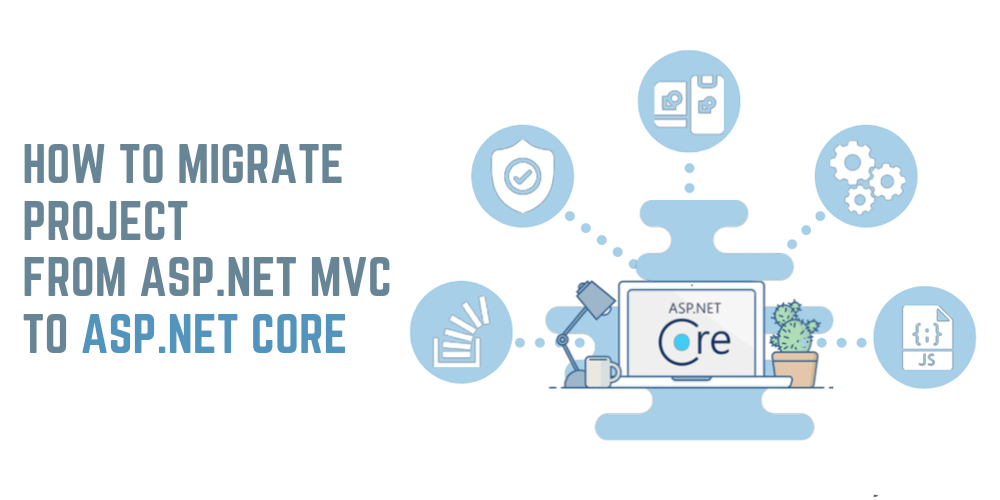 Step-by-step guide
4. How to Set up a Formatting Standard in Your Code Editor (And Why You Should!)
 In this post I'll show how to maintain a standard for everyone who works in the code, no matter the editor used.
5. Integrating Logging Using NLog in ASP.NET Core 3.0 Web App
 NLog: It is an open source logging framework that provides a great flexibility and configurable options to log the insights of your application. It allows to select multiple targets like database, cloud services, files, console, etc. at the same time so that user don’t have to maintain different configurations in code. This is the most widely used logging framework out there.
6. Integrating Logging Using NLog in ASP.NET Core 3.0 Web App
 NLog: It is an open source logging framework that provides a great flexibility and configurable options to log the insights of your application. It allows to select multiple targets like database, cloud services, files, console, etc. at the same time so that user don’t have to maintain different configurations in code. This is the most widely used logging framework out there.
7. A Guide to Running ASP.NET Core & SQL Server from Docker
 I've recently gotten into using Docker in my development cycle and I'm really enjoying how much of a wonderful tool it is. One thing that always used to be a pain was setting up a development server to run SQL Server. Now with Docker, I can just spin up a Docker container and I instantly have a SQL Server ready to go.
8. How To Write Decoupled Code with MediatR: The Mediator Pattern
 I recently wrote a blog post introducing some of my favourite NuGet packages: My Top 4 NuGet Packages for ASP.NET Core. In that post, I briefly introduced a package called MediatR. Today, I will dedicate this post to revisiting MediatR in further detail.
9. Why do you need JWT in your ASP.NET Core project?
 The story is about how to create a Web API to generate JWT and then use it for authorization in the CRUD Web API.
10. Build A React/Vue + .NET Core Micro-frontend with dotNetify
 More than two years ago I wrote the following in my debut Medium article:
11. Fixing Logging Issues In ASP.NET: TelemetryClient Vs. ILogger
 TelemetryClient vs ILogger or how to improve logging experience in C# ASP.NET for Application Insights
12. JavaScript Interop and ASP.NET Core Blazor
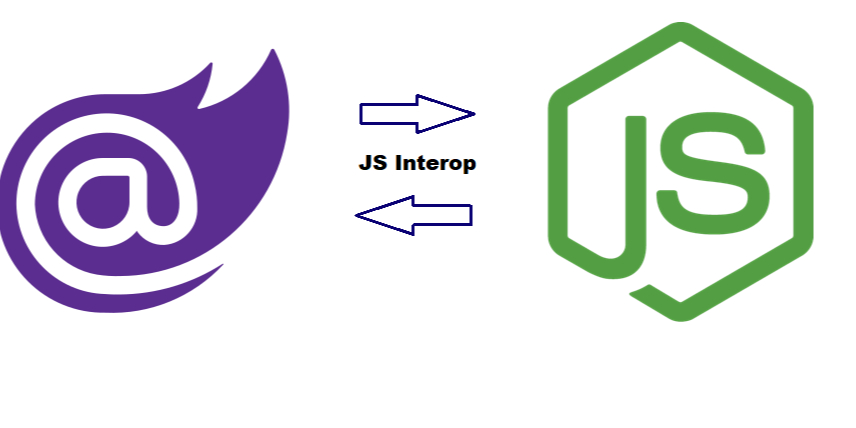 Blazor is here, Will JavaScript be dead? I would say that the answer is NO at-least for now.
13. Don't Let Your .NET Applications Fail: Resiliency with Polly
 One aspect of application development that is often overlooked, especially by beginner developers is application resilience.
14. How to Add Payment Method onto Your Website
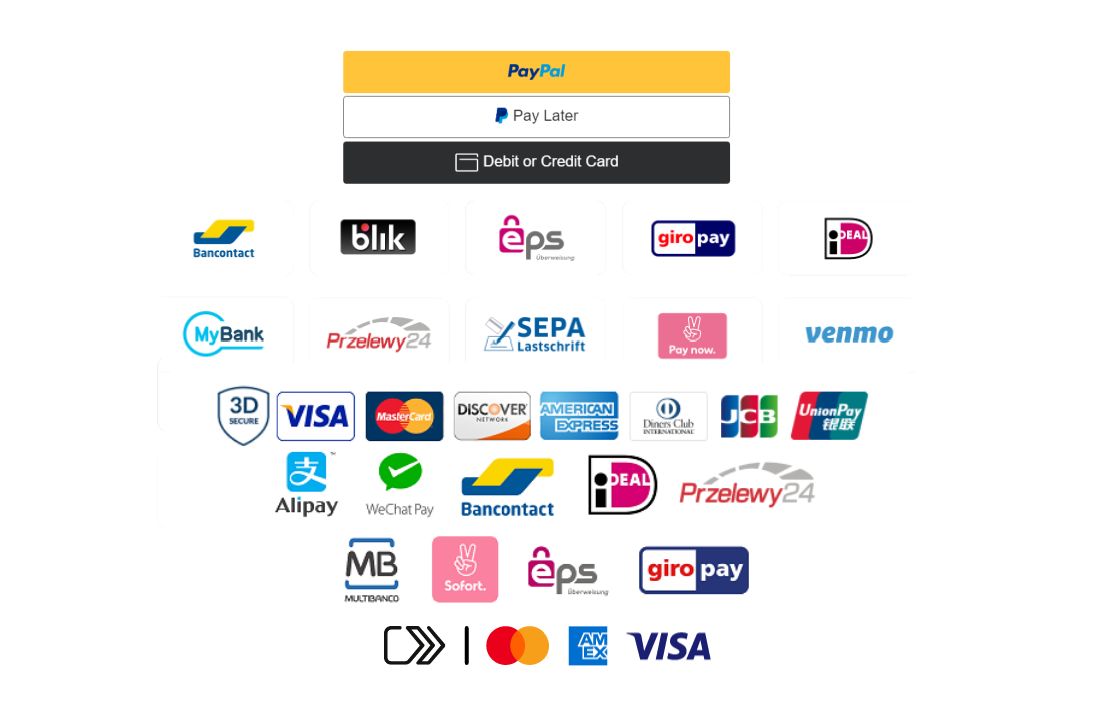 When customers shop online, they often enter their credit information into a secure payment gateway. This protects the customer and the business.
15. C# 8.0 Indices and Ranges
 Compared to other languages, C# was way behind in capabilities to handle data efficiently. Well, those days are over now. Microsoft just improved the C# syntax, making it easier for developers to manage data in arrays.
16. The Differences Between Blazor WebAssembly And Blazor Server
 If you are aware of the latest developments in .NET for the last couple of years, you must have heard the buzzword ‘Blazor’ quite often. It is a revolutionary client-end User Interface framework developed by Microsoft’s mighty ASP.NET Expert team.
17. Building Microservice Architecture With ASP.NET Core
 In this article, we provide you with an introduction to designing and maintaining microservices-based applications using ASP.NET Core.
18. ASP.Net Core Blazor Hosting Models
 It is very glad to see that the web technology is improvising day by day. One such notable improvement is the introduction of WebAssembly and direct usage of them in evergreen browsers.
19. How To Optimize Background Tasks Using Hangfire and ASP.NET Core
 Hangfire is a .NET library that makes it really easy to adding background tasks to your .NET app. It supports one-off "fire and forget" tasks, as well as scheduling recurring tasks. On top of that it supports persistence, so all of your tasks will continue to exist even after restarting your app.
20. What's Pattern Matching in C# 8.0?

21. How to Add GraphQL Wrapper Over REST API
 How to add GraphQL wrapper along with swagger documentation in ASP.Net C# using NSwag tool
22. MudBlazor List Items: How To Create Killer Blazor List Views
 See how you can use MudBlazor list items to make awesome GUIs! Properly leverage the MustList and MudListItem controls to get custom user interfaces!
23. Building an ASP.NET Core MVC 6.0 Report Viewer Application
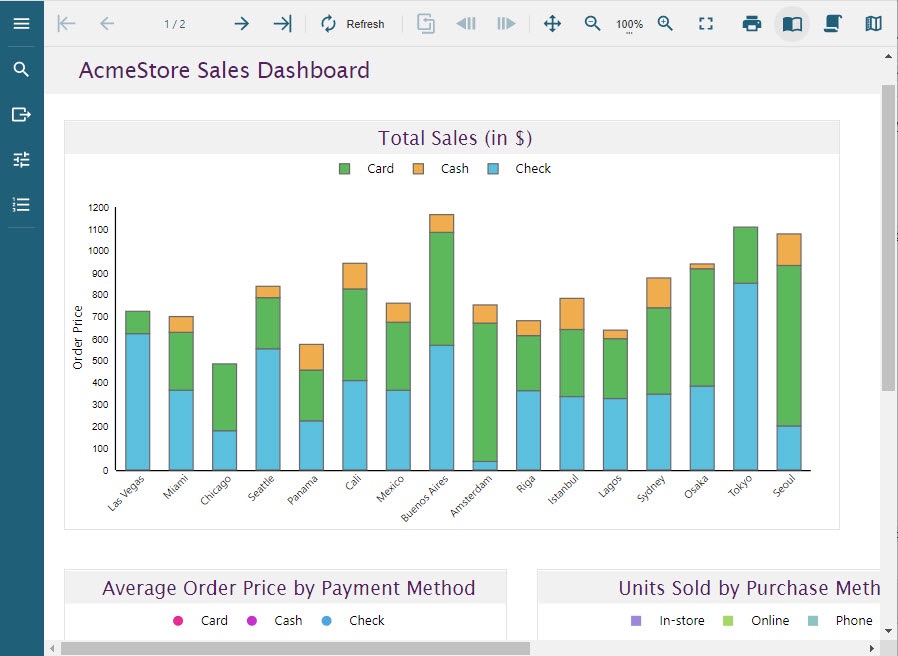 This article will guide you through an example of how you can implement our JSViewer web report viewer to create an ASP.NET 6.0 (or ASP.NET Core) report viewer
24. Using MediatR with Clean Architecture in C# to Build for Flexibility
 Learn how to optimize your C# application development with Clean Architecture and MediatR.
25. How to Build a Web App with ASP NET Core and Vue
 In this article, I will teach you the basics of making your own web app, by creating a checklist app. ASP NET Core will be used to create a CRUD API and Vue will be used to create the frontend UI. Using the knowledge gained here, you should be able to apply it to start making your own web apps. You can find the complete solution in the GitHub repository.
26. The Top 4 Nuget Packages According to This Software Developer
 Software development is a complex task and as a developer you gain nothing from "reinventing the wheel". I'm a firm believer that you should make your life as easy as possible as a developer, by using tried and tested packages where possible; it will take so much headache out of your development experience.
27. Choosing the Best Logging Approach: ILogger, ILogger<T>, ILoggerFactory, and ILoggerProvider
 The article explores the different logging options available in C#: ILogger, ILoggerFactory, and ILoggerProvider. By understanding their characteristics
28. .NET 9: LINQ Enhancements: A Detailed Introduction
 In the latest release of .NET 9, several enhancements have been introduced to LINQ, providing developers with more powerful and efficient ways to work with data
29. The 30-Day .NET Challenge - Day 22: Use Array Pool
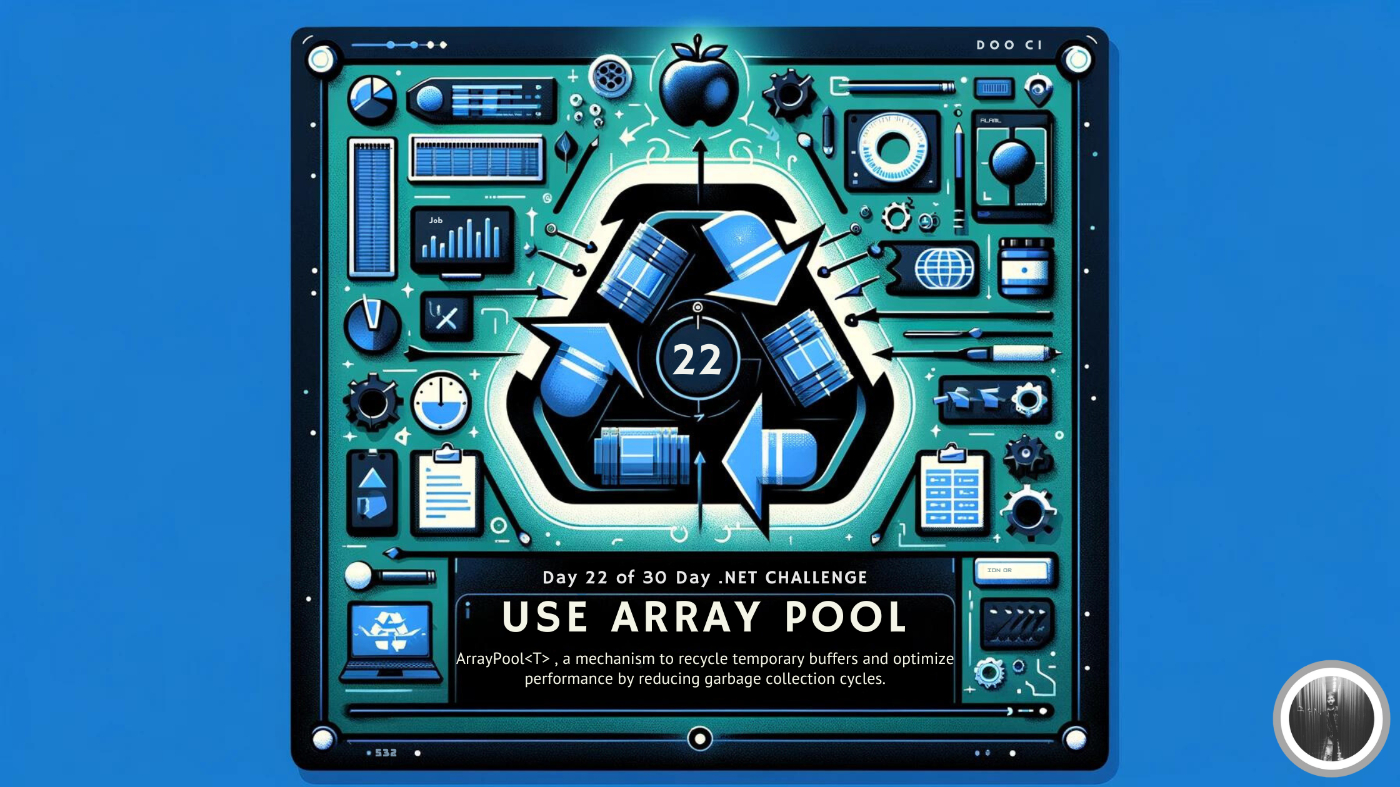 ArrayPool is a mechanism to recycle temporary buffers and optimize performance by reducing garbage collection cycles. It is part of the System.Buffers namespace
30. Using Hangfire to Execute Background Processing in ASP.Net
 Default Hangfire design sets up for native environment as. Hangfire is an open-source library to schedule and execute background jobs in ASP.NET applications.
31. How to Use the Builder Pattern in C#
 According to Gang of Four, a creational pattern “Builder” allows to separate and reuse a specific method to build something.
32. Mastering Response Compression Middleware in ASP.NET Core
 Learn how to use response compression in ASP.NET Core for improved performance and faster load times with this comprehensive guide.
33. How to Use the Iterator Pattern in C#
 According to Gang of Four, the iterator pattern provides a process to obtain the aggregator object without knowing its implementation.
34. What is a Façade Design Pattern?
 Use the facade design pattern to simplify the interaction between subsystems. It provides a single entry point to a subsystem,
35. How To Migrate from .NET Core 2.2 to .NET Core 3.1: Real Life Project
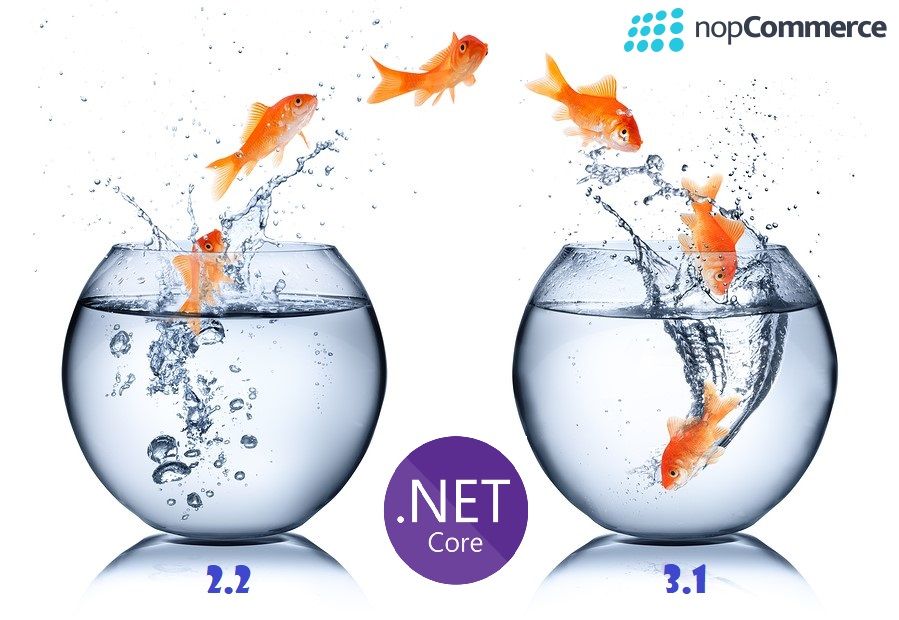 Introduction
36. How To Master Plugin Architecture in ASP.NET Core
 For this post, we'll delve into plugin architecture, exploring how they can be leveraged in ASP.NET Core to create more flexible and maintainable applications.
37. Using Azure SignalR Service In DotNetify
 How dotNetify implemented horizontal scaling of SignalR apps with proxy instead of a backplane.
38. Blazor Render Mode – How To Avoid Dependency Injection Woes
 Running into issues with your Blazor render mode? In my case, I didn't even know it was breaking my dependency injection AND my event handlers. My error though!
39. A Cleaner Logging Pipeline: Serilog Filtering and Daily Reporting for .NET Apps
 A practical guide to configuring Serilog in .NET 10, filtering noisy logs, and generating daily transaction reports from SQL or NDJSON files.
40. 30-Day .NET Challenge - Day 17: What Is the Interlocked Class Tool?
 The .Net provide a powerful tool called the “Interlocked” class for all atomic operations through which developers can reduce contention and improve the perform
41. Who Wins The Battle Between .Net Core and .Net Frameworks in 2022?
 Entrepreneurs and startups are always confused about choosing between .Net Core vs .Net Framework due to their high functionalities and popularity.
42. A Guide to Using Scoped Services Inside Singletons
 Disclaimer
43. Writing Multithread Code with Task Parallel Library (TPL)
 I am a big fan of executing multi-threads in an application, and it is interesting to see how quickly parallelism can solve a complex query.
44. The 30-Day .NET Challenge, Day 1: Boolean Expressions
 Dive in to master Boolean expressions for precise C# coding, ensuring your apps handle user data flawlessly! 🚀
45. How to Use Stackalloc: Day 28 of 30-Day .NET Challenge
 Learn to enhance your performance with stackalloc in C#. Discover a better approach on Day 28 of our 30-Day .NET Challenge.
46. The 30-Day .NET Challenge - Day 24: How to Avoid Exceptions in Flow Control
 Learn to enhance your C# code’s performance and readability by avoiding exceptions for flow control. Discover a better approach using TryParse.
47. C# 8.0 Nullable Reference Types Are Here
 C# 8.0 just rolled out with plenty of new features. One of the most important is the support of nullable reference types (NRT). A bunch of words that don't seem to explain what it does. I mean, aren't all types (except value types) already nullable?
48. What You Need to Know to Use xUnit in ASP.NET Core
 Learn how to effectively utilize xUnit for testing ASP.NET Core applications, ensuring product quality and reliability.
49. Using the WebApplicationFactory in ASP.NET Core for Testing
 Explore the power of WebApplicationFactory in ASP.NET Core testing to ensure code quality and prevent issues.
50. 10 Days of .Net Aspire: Day 4 — Using Oracle Component in Visual Studio
 Learn how to use the .Net Aspire Oracle component in Visual Studio.
51. 5 Tips to Improve Your Productivity in C# 8.0

52. Avoid This Debugging Nightmare Using Autofac In ASP NET Core
 Learn how to use Autofac in ASP NET Core applications with only a couple of lines of code! Avoid this common problem when setting up dependency injection.
53. Pattern Matching in C# for Complex Scenarios: An Extension on Property Patterns
 The article describes how pattern matching effectively utilises and processes data in forms not part of the primary system.
54. The 30-Day .NET Challenge Day 15: Lazy Initialization
 Developers often make objects instantiated as soon as the application starts or when a class is instantiated, regardless of whether they are immediately needed
55. A Beginner's Guide to Testcontainers in ASP.NET Core
 Use Testcontainers in ASP.NET Core testing to get better coverage! Learn how to simulate dependencies, test in parallel, and integrate with CI/CD tools!
56. The 30-Day .NET Challenge Day 13: ConfigureAwait(false)
 The article demonstrates the use of ConfigureAwait(false) efficiently to add deadlock-free asynchronous code. The method mitigates the risk of deadlocks
57. The 30-Day .NET Challenge - Day 20: Task vs. ValueTask
 Heap allocations aren’t entirely bad but when an object is allocated on a heap it contributes to the garbage collection cycles which in turn reduces overall app
58. Secure .NET 6/7 Applications with Built-In Security Features
 To assist developers in designing safe applications, the most recent version of the.NET platform, .NET 6, has various built-in security capabilities.
59. PHP vs. ASP.NET: Determining Which Stack to Use For Your Next Project
 The ultimate goal of the web development project is to build feature-rich web applications or corporate websites but which is better?
60. The 30-Day .NET Challenge - Day 21: StringComparison
 The article demonstrates the importance of using StringComparison options for efficient string comparison in.NET. How you compare strings can significantly impa
61. Essential Guide to Running Nuxt from an ASP.NET Core Web Application
 It is becoming a common pattern to see websites and web apps written as a front end single page application (SPA) connected to a backend API. For this reason, the Visual Studio provides a several project templates for getting up and going with a Web API + SPA project.
62. The 30-Day .NET Challenge—Day 19: Stack vs. Heap Allocation
 The article demonstrates the idea of memory allocations to be used for vibrant and high-performance applications.
63. The 30-Day .NET Challenge Day 6: String built-in Methods
 Day 6 of 30-Day .NET Challenge: String built-in Methods
64. The Noonification: Why do you need JWT in your ASP.NET Core project? (2/13/2024)
 2/13/2024: Top 5 stories on the HackerNoon homepage!
65. The 30-Day .NET Challenge Day 12: Azure Functions
 Azure Functions are serverless applications on Microsoft Azure Cloud Platform without worrying about the infrastructure to run it. It’s very similar to the lamb
66. Azure App Configuration for Advanced Feature Flag Management in ASP.NET Core
 Learn how to use Feature Flags in ASP.NET Core apps and read values from Azure App Configuration.
67. The 10-Day .Net Aspire Challenge - Day 8: Azure Queue Storage
 Step-by-step guide on how to use the .Net Aspire Azure Queue Storage component in Visual Studio.
68. Understanding Chain of Responsibility Pattern in C#
 According to Gang of Four, it defines a chain of responsibilities to process a request. In other words, pass the request from one object to another until an obj
69. 3 Simple Tips For Dependency Injection Using Scrutor in C#
 Discover how Scrutor enhances dependency injection in C# applications.
70. The 30-Day .NET Challenge Day 16: In-Memory Caching
 Challenges are hard when the database resides in a remote machine or experiencing heavy load. The in-memory caching acts as a better implementation to avoid per
71. The 30-Day .NET Challenge, Day 7: String Built-in Methods Part 2
 The article demonstrates the IndexOfAny() method to locate the initial occurrence of any string from a chosen array.
72. C# Sorting - A Minor Error
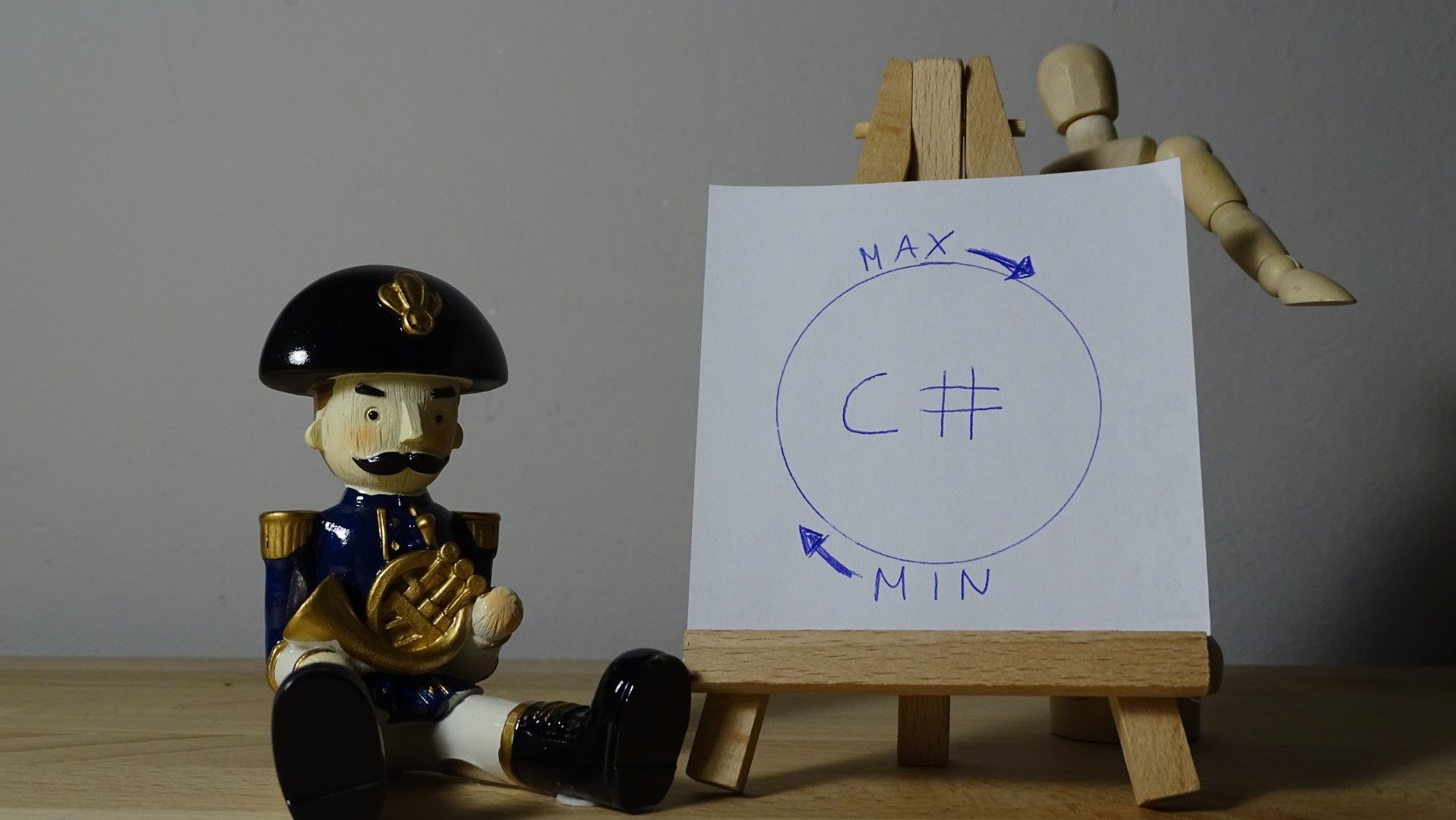 Is it true that the inverse of a negative number is always a positive number? If you think it's true, you might get a subtle error while implementing comparison
Thank you for checking out the 72 most read blog posts about Aspnetcore on HackerNoon.
Visit the /Learn Repo to find the most read blog posts about any technology.