
Let's learn about Smart Contract Security via these 57 free blog posts. They are ordered by HackerNoon reader engagement data. Visit the Learn Repo or LearnRepo.com to find the most read blog posts about any technology.
Smart contract security is the practice of identifying and mitigating vulnerabilities in self-executing contracts on a blockchain. It matters immensely as flaws can lead to significant financial losses and undermine trust in decentralized applications.
1. Hack Solidity: Reentrancy Attack
 Reentrancy attack is one of the most destructive attacks in Solidity smart contract. It occurs when a function makes an external call to another
2. How to Hack Smart Contracts: Self Destruct and Solidity
 The attacker can create a contract with a selfdestruct() function, send ether to it, call selfdestruct(target) and force ether to be sent to a target.
3. Hack Solidity: Integer Overflow and Underflow
 Overflow is a situation when uint reaches its byte size. Then the next element added will return the first variable element. This is only for <0.8 Solidity.
4. Hacking Solidity: Contracts Using tx.origin for Authorization Are Vulnerable To Phishing
 Contracts that use the tx.origin to authorize users are vulnerable to phishing attacks.
5. How $100M Got Stolen From DeFi in 2021: Price Oracle Manipulation And Flash Loan Attacks Explained
 The world witnessed some of the massive DeFi hacks in 2021 on some of the most renowned protocols like bZx, Cheese Bank, Harvest Finance, Value Defi, etc.
6. Smart Contract Security in Solidity
 A security issue in Solidity boils down to smart contracts not behaving the way they were intended to.
7. How to Solve Level 3 of the Ethernaut Game
 In level 3 you have to play a game: coin flip. To complete this level you'll need to guess the correct outcome of a coin flip 10 times in a row
8. 5 Smart Contract Auditing Courses for Mastering Web3 Security
 As the popularity of smart contracts grows, so does the need for experts to identify potential security vulnerabilities.
9. How to Solve the Ethernaut Game's Level 5: Token
 In challenge 5 you are given 20 tokens to start with and you will beat the level if you somehow manage to get your hands on any additional tokens.
10. 5 Solidity Code Smells Every Dev Should Know
 In general, I’ve found there to be 5 classes of Solidity exploits. Each exploit has a certain “code smell” associated with it.
11. How to Solve the Ethernaut Game's Level 4: Telephone
 In level 4 of the Ethernaut Game, our goal is to claim ownership of the Telephone contract.
12. How to Solve the Frontrunning Vulnerability in Smart Contracts
 This blog post describes the frontrunning vulnerability in Solidity smart contracts and how this can be prevented. Read on to find out more…
13. Prevent Smart Contract Vulnerabilities through Fuzz Testing
 A new breed of testing techniques is emerging, ones that are both affordable and accessible, Fuzzing.
14. How Did Lendf.Me Lose $25 Million to A Reentrancy Attack? [An Analysis]
 DeFi or decentralized finance is a growing sector in the blockchain and cryptocurrency space that defines an ecosystem of decentralized applications providing financial services with no governing authority.
15. How to Bypass the Integer Division Error in Smart Contracts
 This blog post describes the integer division error in Ethereum smart contracts and how this error can be prevented. Read on to know more…
16. Web3 Security Auditing Firms You Should Look For When Auditing Smart Contracts
 Firms like CertiK, Consensys Diligence, Trail of Bits, Peckshield, and Slowmist provide a range of auditing services tailored to suit the varying requirements.
17. How to Solve the First Task of the Ethernaut Game
 Claim ownership of the contract. Reduce the balance of the contract to 0.
18. Debugging Smart Contracts with Solidity Compiler: Tips and Tricks
 Learn how to debug smart contracts with Solidity compiler. Discover tips and tricks, including logs, breakpoints, assertions, debugging tools, and testing.
19. EIP-4337 Based Account Abstraction: Why It Won't Work for Institutions
 Understand why EIP-4337 based concept of Account Abstraction, turning EOA-wallets into smart contract wallets won't add value and security to Institutions. .
20. Smart Contracts Will Change the World: Here's Why
 Ethereum was launched in 2014 being the first blockchain with smart contracts. This changed the crypto industry forever. Let me explain why.
21. Inside the Governance Hack of Tornado Cash
 Read about the attack on Tornado Cash governance and understand it in the simplest form.
22. Top 10 Smart Contract Audit Companies
 Here are the top 10 providers of smart contract auditing to consider in 2022.
23. My Journey as a Smart Contract Security Researcher: First Steps with Cyfrin Updraft
 My journey with Cyfrin Updraft has already taught me invaluable lessons about what it truly means to be a security researcher in the Web3 space.
24. Balancer V2 Exploit Explained: Inside the Smart Contract Rounding Error That Cost $120M
 How a rounding bug in Balancer V2’s Composable Stable Pools led to a $120M exploit—and why continuous audits are now a DeFi must.
25. Code Is the New Law — and It Doesn’t Negotiate
 Empirical analysis of LLMs, TAPs, and smart contracts shows 100% execution under formal triggers.
26. Trader Joe’s Case Analysis: Why Multi-Auditing of DeFi Projects is Important
 Blockchain technology and smart contracts are significant innovations with huge potential, but, the technology is only as secure as the code written for it.
27. Understanding and Preventing Honeypot Attacks in Smart Contracts 🔐
 Unlock the secrets of Honeypot attacks in smart contracts and learn how attackers exploit interface vulnerabilities.
28. Ensuring Security in Smart Contract Applications: The Importance of Robust Coding Practices
 Smart Contracts are immutable, meaning they can not be changed after deployment. A free vulnerability is essential before deployment into blockchain networks.
29. Smart Contract Vulnerabilities: Understanding and Safeguarding Against delegatecall Attacks
 Delve into the world of smart contract vulnerabilities as we unravel delegatecall attacks—a persistent threat to blockchain security.
30. Secure Smart Contract Tools—An End-to-End Developer’s Guide
 Writing secure smart contracts is hard. In this article I'll look at 22 security tools from across web3 available at each stage of smart contract development.
31. Everything You Need To Know About Contract Lifecycle Management
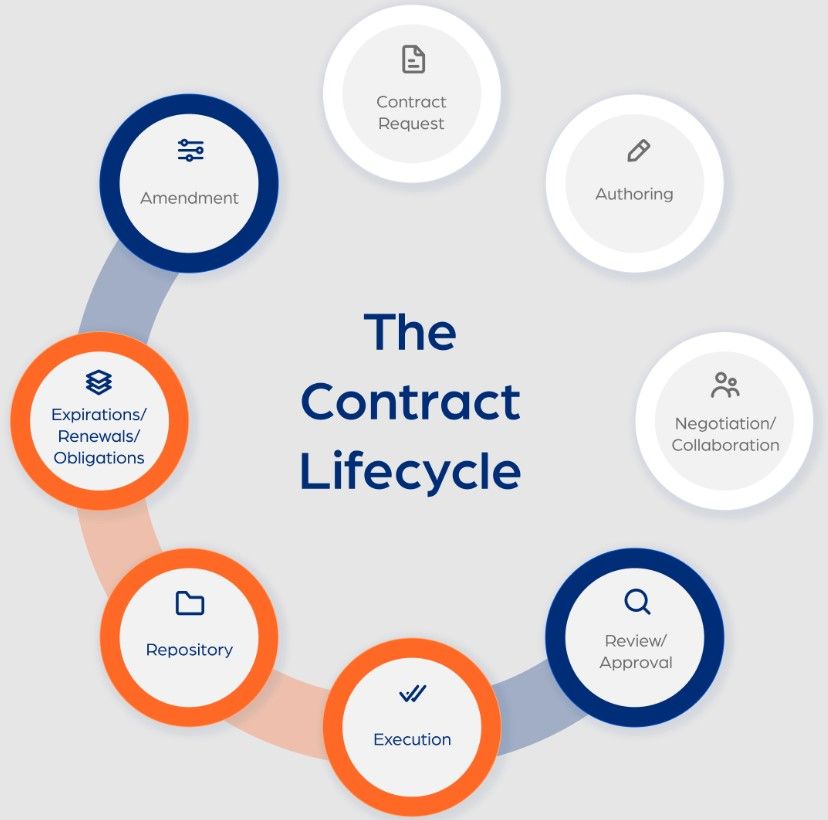 Contract lifecycle management (CLM) is a software-defined, cloud-based project and regulatory management solution to manage contracts. Read on.
32. What are the Main Security Gaps in Blockhain?
 Most people think that blockchain is completely safe and particularly difficult to hack. Let’s find out about blockchain security issues and how to fight them.
33. On Smart Contract Interoperability, Ethereum, & Crypto with Maciej Baj, t3rn CTO
 The HackerNoon podcast on Smart Contract Interoperability, Ethereum, & Crypto with Maciej Baj, t3rn CTO, hosted by Utsav Jaisval.
34. CredShields Joins Forces With Checkmarx to Bring Smart Contract Security to Enterprise AppSec
 Nearly half of the largest DeFi breaches trace back to smart contract flaws. Research indicates that up to 89% of smart contracts contain vulnerabilities.
35. How to Solve the Second Task of the Ethernaut Game
 This is the second part of my series around Ethernaut Game. In this post, we will deal with Level 2: Fallout.
36. How to Perform a Smart Contract Audit
 Perplexed about how to perform an audit for your smart contracts? This comprehensive guide will make the task easier for you! Read more.
37. Security for Decentralized Projects with Timelocks
 Timelock contracts can reduce the risk of attacks on private wallets by providing a delayed transaction feature.
38. Yul in Solidity: Potential Gas Griefing From Return Data When Transferring Ether?
 Exploring risks in Solidity transfers: Gas griefing, return data handling & mitigations in smart contracts using Yul, Vyper, and EVM.
39. The Battle Against DDoS Attacks in Decentralized Finance
 Explore how DDoS attacks threaten DeFi platforms, their devastating impact on protocols and users, and the advanced cybersecurity solutions.
40. Security Manager Design Pattern for Solidity Smart Contracts
 This is the first in a planned multi-part series in which I'll write about security topics in blockchain development from a few different angles.
41. Better Smart Contracts with Fine-Grained Permissions using Cadence
 Flow is a permissionless layer-1 blockchain built to support the high-scale use cases of games, virtual worlds, and the digital assets that power them.
42. The HackerNoon Newsletter: Building a RAG System That Runs Completely Offline (11/13/2025)
 11/13/2025: Top 5 stories on the HackerNoon homepage!
43. Scaling Off-Chain Data and Computation for Smart Contracts
 As storing information on the blockchain becomes more popular, the availability of smart contracts becomes more widespread. They behave according to established parameters, automatically letting events happen once specified conditions are met.
44. Hypernative and Flare Form Strategic Alliance to Fortify Web3 Security
 Explore the strategic partnership between Hypernative and Flare aimed at bolstering the security of the Web3 ecosystem.
45. Solidity Digest Monthly / April 2023
 The April selection of the latest news, tools and materials from the world of Solidity.
46. Smart Contracts Vs Legal Contracts: It's Complicated
 Smart contracts operate on a ‘if-then-else’ logic that does not inherently work in lockstep with the natural language of legal contracts.
47. Why Smart Contract Audits are Critical for Your Business Success
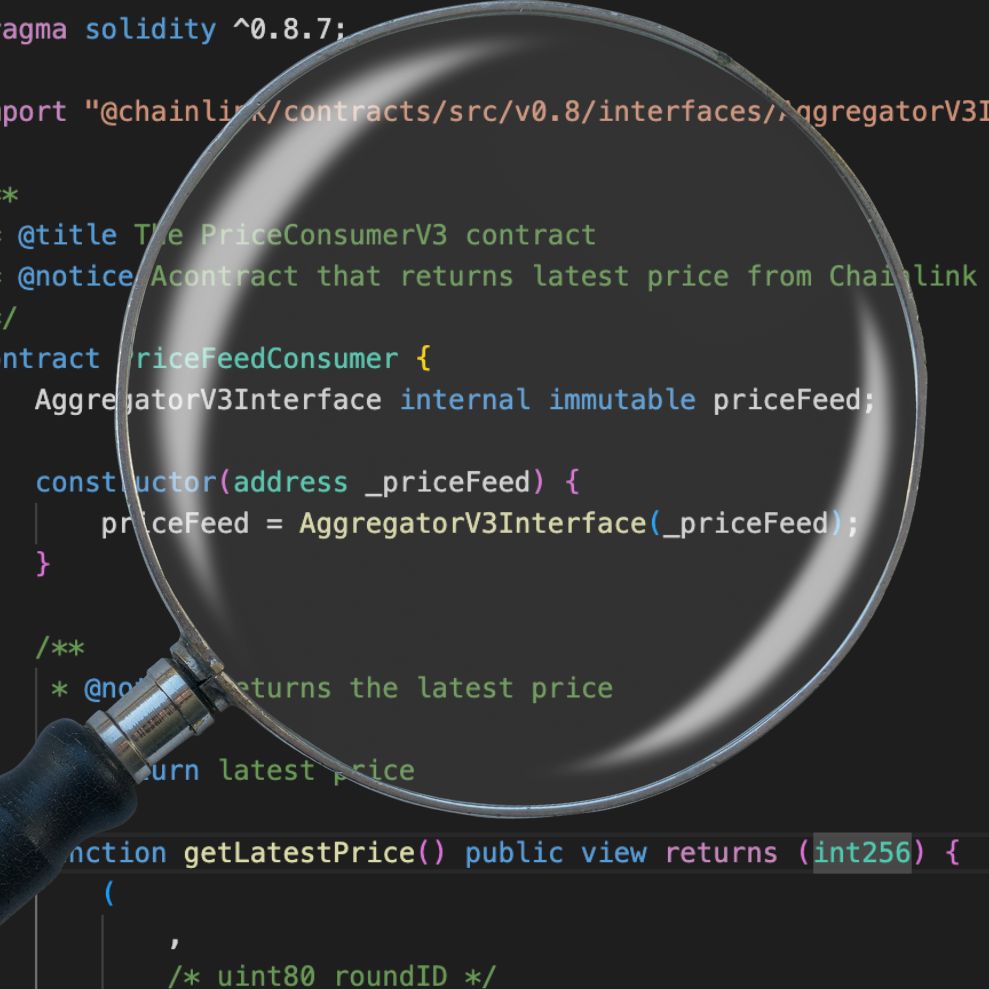 An auditor’s goal is to find as many vulnerabilities as possible and educate the client on ways to improve the security of their codebase moving forward.
48. Exploring a Web3 Smart Contract Issue: Gas Exploitation via Unchecked Loops
 In blockchain development, smart contracts may encounter serious vulnerabilities, especially when there’s a loop that iterates over data provided by users.
49. What Is a Re-Entrancy Attack in Smart Contracts, and How to Avoid It? 🛡️🔒
 In this article, I will demonstrate an example of a Re-Entrancy vulnerability and three different methods to prevent Re-Entrancy attacks.
50. Why You Should Never Store Sensitive Data in Smart Contracts 🚫🔒
 Understanding Ethereum smart contract storage: Unveiling vulnerabilities in data security & strategies for protection. 🛡️🔒📊
51. VC-Backed: Does It Equal VC-Secure?
 VC funding doesn’t guarantee security. Explore how 5 well-funded blockchain projects failed due to vulnerabilities and why audits are crucial for Web3 safety.
52. What’s So ‘Smart’ About Smart Contracts?
 Explore the transformative power of smart contracts in revolutionizing business transactions across industries.
53. Why Are Smart Contract Audits Essential For Blockchain Development
 It takes one look at the crypto market to see how unsafe smart contracts can be.
54. The Importance Of Reputation For Smart Contract Auditors
 One of the most important indicators that your smart contract auditor is reliable, diligent, effective and honest is their reputation.
55. You Should Probably Be Evaluating and Auditing Your Smart Contracts
 Explore the critical role of smart contract audits in ensuring security, mitigating risks, and navigating complexities in Web3 agreements.
56. TokenGuide: Building Security for Web3 Across All Blockchains
 TokenGuide employs a sophisticated analysis approach that combines AI with heuristic methods to scrutinize smart contracts and assess token liquidity.
57. Best Practices in Prompt Engineering for AI Agents in Solidity Smart Contract Auditing
 Learn how to use AI for smart contract audits the right way. Avoid costly mistakes with structured prompts, verification steps, and real exploit validation.
Thank you for checking out the 57 most read blog posts about Smart Contract Security on HackerNoon.
Visit the /Learn Repo to find the most read blog posts about any technology.