

Let's learn about Algorithms via these 321 free blog posts. They are ordered by HackerNoon reader engagement data. Visit the Learn Repo or LearnRepo.com to find the most read blog posts about any technology.
content
1. What does the time complexity O(log n) actually mean?
 Knowing the complexity of algorithms beforehand is one thing, and other thing is knowing the reason behind it being like that.
2. Java Algorithms: Merge k Sorted Lists (LeetCode)
 An easy approach to the hard leetcode problem Merge k Sorted Lists from that many people using Java Algorithms will need to learn in order to be effective.
3. Java Algorithms: Linked List in Binary Tree (LeetCode)
 Linked List in Binary Tree
4. Java Algorithms: Coding a Binary Tree Right Side View (LeetCode)
 In this article, you will learn how to code a Binary Tree Right side view in LeetCode.
5. How to Solve Number of Islands From Blind 75 LeetCode Questions
 We will learn how to solve "Number of Islands" from Blind 75 LeetCode Questions.
6. XOR - The magical bitwise operator
 Understanding bit manipulation provide new approaches you never knew existed to solve a particular problem. Let us do what’s necessary to start developing this bit-wise approach.
7. Clone Graph Blind75 LeetCode Problem
 Clone Graph Blind75 LeetCode Problem
8. Merge Intervals in Java Algorithms (LeetCode)
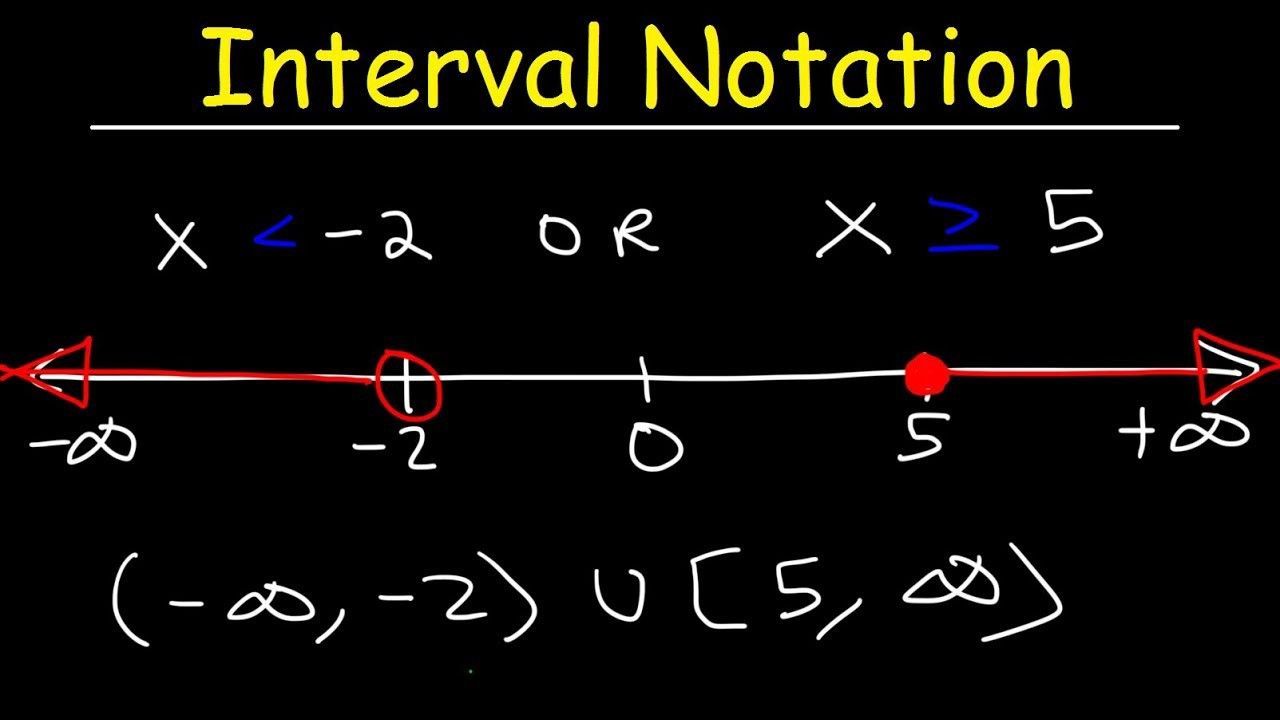 Returning an array of the non-overlapping intervals that span every input interval.
9. Gradient Descent: All You Need to Know
 What’s the one algorithm that’s used in almost every Machine Learning model? It’s <strong>Gradient Descent</strong>. There are a few variations of the algorithm but this, essentially, is how any ML model learns. Without this, ML wouldn’t be where it is right now.
10. Kadane’s Algorithm Explained with Examples
 Given an array, the algorithm to find the maximum subarray sum is called Kadane’s Algorithm.
11. Validate Binary Search Tree Blind 75 LeetCode Question
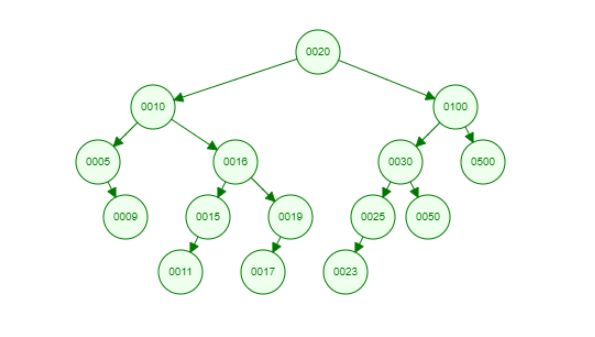 Given the root of a binary tree, determine if it is a valid binary search tree (BST
12. 30 Growth Hacking Examples to Accelerate Your Business
 Discover 30 powerful growth hacks from companies like Airbnb and Hotmail, revealing how creative strategies turned obstacles into viral success stories.
13. Calculating the Square Root of a Number using the Newton-Raphson Method [A How To Guide]

14. A Beginner's Guide to BFS and DFS in JavaScript
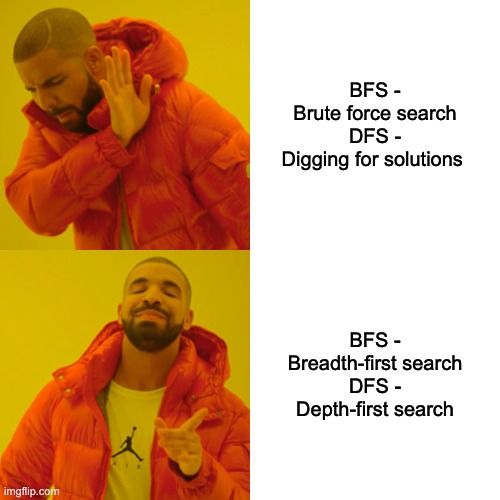 Learn BFS and DFS, powerful algorithms to traverse and search data structures. Examples and step-by-step JavaScript code included.
15. A Beginner's Guide to Data Structures and Algorithms
 Data structures and algorithms allows you to write better code, solve complex problems, and understand the inner workings of computer programs.
16. Genetic Algorithms Explained : A Python Implementation
 Genetic Algorithms , also referred to as simply “GA”, are algorithms inspired in Charles Darwin’s Natural Selection theory that aims to find optimal solutions for problems we don’t know much about. For example: How to find a given function maximum or minimum, when you cannot derivate it? It is based on three concepts: selection, reproduction, and mutation. We generate a random set of individuals, select the best ones, cross them over and finally, slightly mutate the result - over and over again until we find an acceptable solution. You can check some comparisons on other search methods on Goldberg's book.
17. Understanding Stochastic Average Gradient
 Techniques like Stochastic Gradient Descent (SGD) are designed to improve the calculation performance but at the cost of convergence accuracy.
18. Comparing Coding Platforms: LeetCode, CodeWars, CodeSignal, and HackerRank
 Exploring coding platforms: My insights and experiences shared. Discover the pros and cons of informed choices. Join me on this insightful journey!
19. Improving Testing Algorithms: Mathematical Approaches in Software Testing
 Test design, Code coverage, MC/DC, Boolean algebra, Pairwise testing, Combinatorial testing, Orthogonal arrays, System states
20. Optimizing List Manipulation: Two Pointers Technique
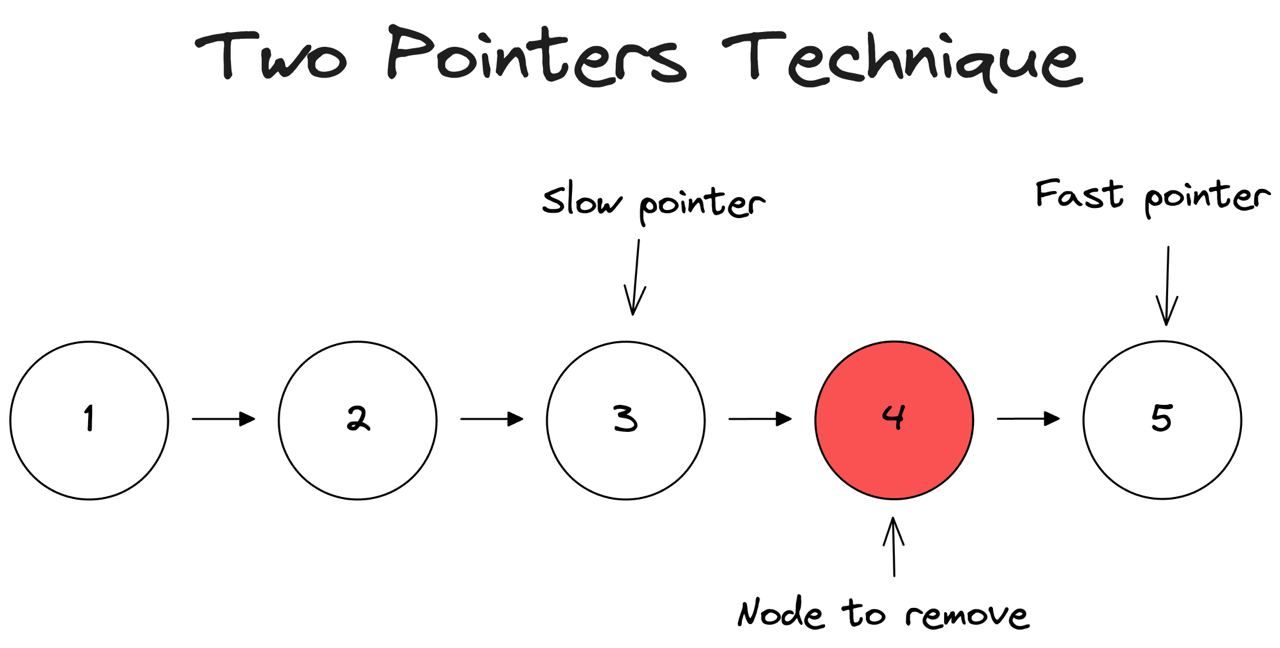 "Optimizing List Manipulation: Two Pointers Technique" explores the effective application of the two-pointer technique to efficiently manipulate lists, reducing
21. A History Of The Fat Liberation Movement Via The Lens of Social Media
 Fat Liberation is a social justice movement focused on making social policy and practice more inclusive and equitable for fat people.
22. Image Processing Algorithms: Adjusting Contrast And Image Brightness
 Let's take a look at the common approaches for implementing image contrast adjustments. We'll go over histogram stretching and histogram equalization.
23. Learning Roadmap for Data Structures and Algorithms
 We all know that Data structures and Algorithms are the backbone of every concept we use. There are many concepts involved in Data structures and algorithms (for the sake of convenience, I'll use DSA). There will be many questions for a beginner like how to start learning DSA, as there are many concepts involved and he/she might get confused at the start. In this post, we are going to see a roadmap for learning DSA, which worked out for my friends. I am not saying that this is the perfect roadmap for DSA. You can use your own plans also but this is just an idea. So let's get started.
24. Understanding the Sliding Window Pattern: Efficient Utilization Through Examples
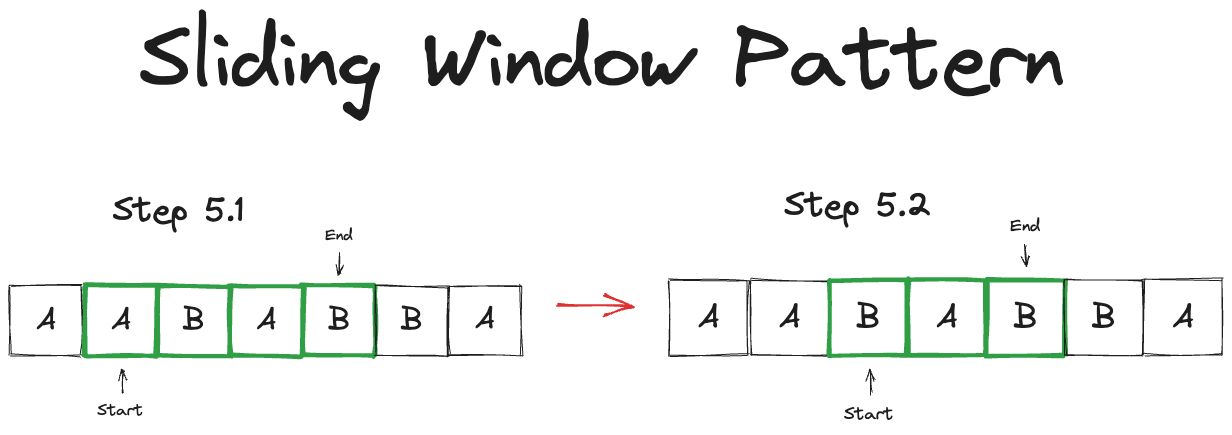 The article explores the Sliding Window pattern's efficient application through illustrative examples.
25. How To Use Debounce in Next.js
 Understanding Debounce in Next.js
26. Manacher’s Algorithm Explained— Longest Palindromic Substring
 Manacher’s Algorithm helps us find the longest palindromic substring in the given string. It optimizes over the brute force solution by using some insights into how palindromes work. How? Let’s see!
27. Top 3 Coding Challenges for Expert-Level JavaScript Developers
 Proving that you're a JavaScript Expert would probably involve a test from prospective employers. These three tests are common ones that they use for recruiting
28. Solving Balanced Parentheses Problem Using Regular Expressions

29. Can You Tell What Products On This List Are Prohibited On Amazon?
 Amazon is the largest retailer in the world, but a majority of the sales on the site come from third-party sellers. Along with toasters and mops, the site’s a target for people trying to sell dangerous and illicit products.
30. Arbitrage as a Shortest-Path Problem
 An explanation of arbitrage and a look at an efficient algorithm to find riskless instantaneous arbitrage opportunities across markets.
31. Java Algorithms: First Missing Positive (LeetCode)
 The First Missing Positive problem is an algorithm problem that requires finding the smallest positive integer that is not present in a given unsorted array of
32. A Beginner's Guide to The Big O Notation
 So for anyone studying computer science either in college, boot camps or just self-learning, there is one topic that is always a stumbling block and that is Big O Notations.
33. How to Implement Gaussian Blurs
 A Gaussian blur is applied by convolving the image with a Gaussian function. We’ll take the Gaussian function and we’ll generate an n x m matrix.
34. How to solve Unique path problem
 Dynamic programming approach.
35. Top 3 Coding Challenges for Mid-level JavaScript developers

If you have a considerable amount of experience with JavaScript, you are expected to solve complex coding challenges.
36. Machine Learning Frameworks for PHP Developers
 Most of us consider PHP is only for web apps and machine learning can't be done by web developers. Yes with PHP you can do it, even implement deep learning.
37. An Intro to Algorithms and Data Structures (Javascript Edition)
 Understanding algorithms and data structures are crucial to enhancing your performance 10x more than your peers who don't. This is because you analyze problems.
38. Understanding Basic Image Processing Algorithms [A Hands-on JavaScript Tutorial]
 We've had a lot of digital image processing tools for a long time: Photoshop, Lightroom, GIMP, PhotoScape, and many more. However, in the past few years, one became popular among non-expert users due to its easiness of use and social features: Instagram. Have you ever wondered how Instagram filters work? It is actually pretty simple matrix operations! So simple we can build our own without any external library, just pure and simple HTML + JS. Let's build one now.
39. The Big O Notation in JavaScript
 Understanding the Bachmann-Landau notation
40. How to Go From Noob to Master: Leetcode Contests
 How to Master Data Structures and Algorithms and Leetcode and Codeforces Contests for Beginners.
41. Public Key Cryptography: RSA keys

42. Empowering Newbies: Building Confidence Through 600+ LeetCode Solutions – A Guide for Beginners
 Discover valuable insights on tackling over 600 LeetCode problems. Gain practical advice and useful resources for mastering coding interviews successfully.
43. Exploring Tree Traversal in JavaScript: Inorder, Preorder, and Postorder With Examples
 Explore tree traversal methods in JavaScript: Inorder, Preorder, and Postorder. Learn their differences and how to implement them. #JavaScript #TreeTraversal
44. Backtracking LeetCode Pattern: Permutations vs Subsets in Java
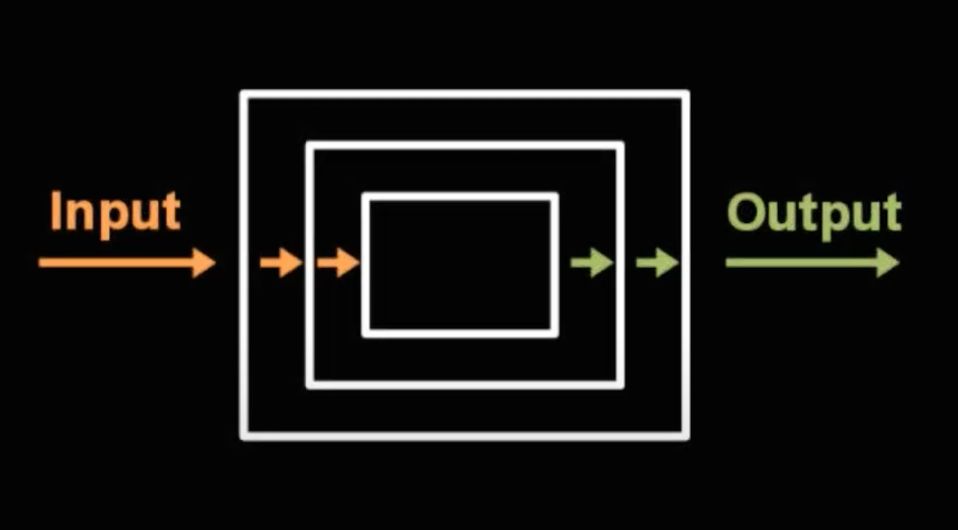 With the help of the backtracking algorithm, I will solve the permutations and subsets problems in Java that are frequently used during job interviews.
45. Building Your Own Programming Language From Scratch: Part VII - Classes
 In this part of creating your own programming language we will implement classes and at the end will write the real Stack implementation
46. Uber's Secret Algorithm to Calculate Fares
 Uber has quietly changed the way it pays drivers in several major cities across the U.S., using a new feature it’s calling “Upfront Fares.”
47. Linked List Implementation With Examples and Animation
 A linked list is one of the most basic data structures in computer science. In this article, we will go through the following topics:
48. Reinforcement Learning [Part 2]: The Q-learning Algorithm
 Learning how to find the optimal q-value can produce significant improvements in a ML-algorithm's ability to learn both in terms of speed and quality.
49. Building Your Own Programming Language From Scratch: Part II - Dijkstra's Two-Stack Algorithm
 Dijkstra's Two-Stack algorithm, lexical analysis, syntax analysis, tokens
50. Detecting Linked List Cycle. (LeetCode)
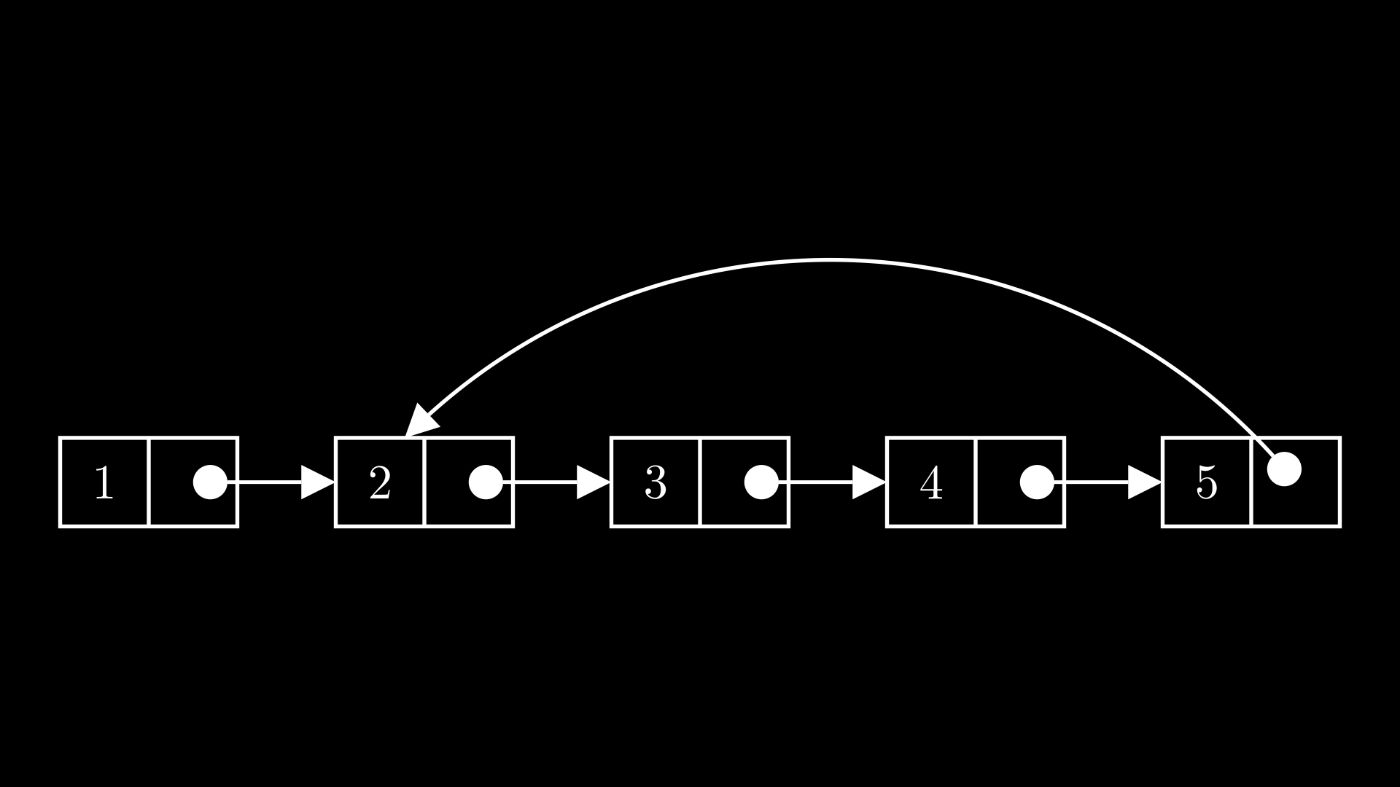 Given head, the head of a linked list, determine if the linked list has a cycle in it.
51. How LZ77 Data Compression Works
 How does the ZIP format work?
52. Divide and Conquer: Binary Search in JavaScript
 In the beginning, you will most likely try to use a brute force method to solve search problems; this is because it is the easiest and most rudimentary way to find a target. However brute force has a time cost; The Big O notation of brute force is usually and unacceptably equal to or greater than bigO(n²).
53. 30 Days DSA Interview Preparation Plan
 All data structures and algorithms concepts and solutions to various problems in Python3 stored in a structured manner to prepare for coding interviews.
54. How to Remove Duplicates in Go Slices
 Different ways to remove duplicates in slices in Go, a powerful language whose lack of tools makes learning this necessary if you want to make full use of it.
55. Unix's LZW Compression Algorithm: How Does It Work?
 We'll take a look at the algorithm behind Unix's compress utility. We'll implement Lempel Ziv Welch and learn all about it.
56. Data Structures and Algorithms: 20 Problem-Solving Techniques
 This is the article I wish I had read when I started coding. I will dive deep into 20 problem-solving techniques that you must know to excel at your next interview.
57. Simple, Battle-Tested Algorithms Still Outperform AI
 Companies burn $200B yearly on AI hype. Old algorithms still deliver trillion-dollar ROI. Discover why simple math keeps crushing AI.
58. A Beginner's Guide to the Sliding Window Algorithm with JavaScript
 Learn the basics of the Sliding Window algorithm in JavaScript. Discover how to optimize tasks with practical examples for efficient data processing.
59. All You Need to Know About Dynamic Programming
 What is dynamic programming and why should you care about it?
60. Using Weights and Biases to Perform Hyperparameter Optimization
 Hands on tutorial for hyperparameter optimization of a RandomForestClassifier for Heart Disease UCI dataset with Weights and Biases Sweeps.
61. Ace Your Coding Interviews with These Free Courses from Stanford
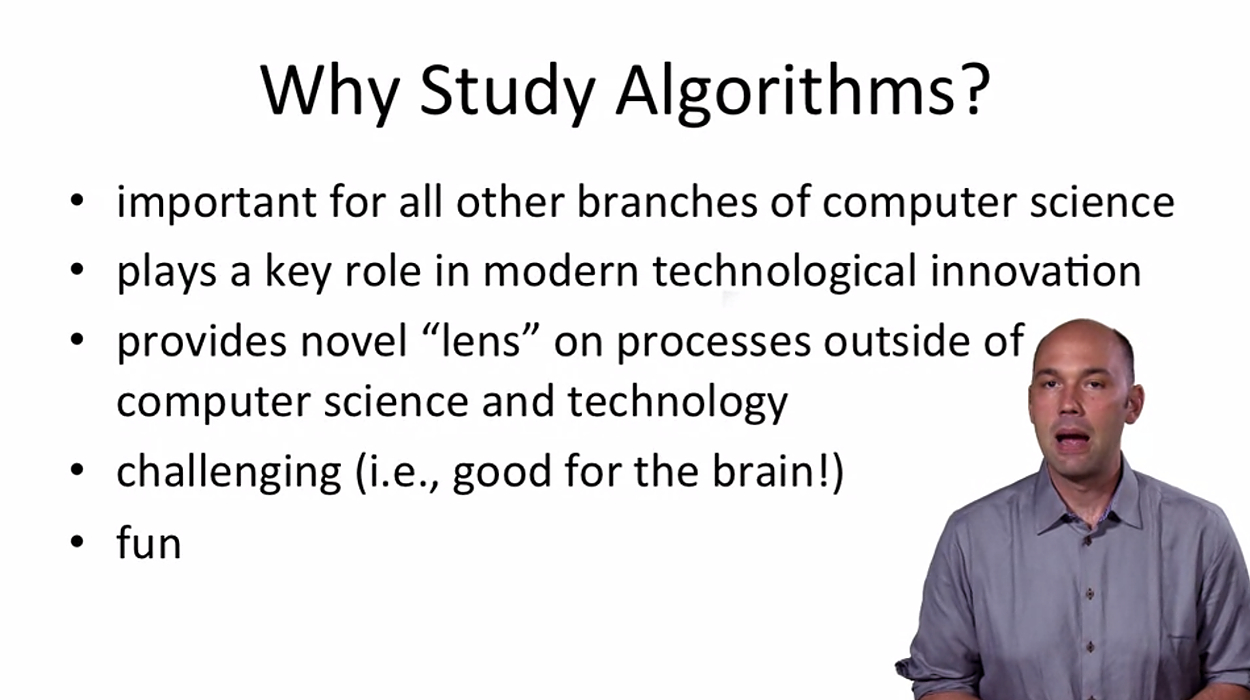 Technical interviews used to be a challenge for me. I have a bachelor’s degree in Electronics & Telecommunications and a master’s degree in Computer Science.
62. On Recursion and Trampolining
 Did you know that recursion can be optimized using a concept which works similar to the way how we jump on a trampoline.
63. Adversarial Machine Learning: A Beginner’s Guide to Adversarial Attacks and Defenses
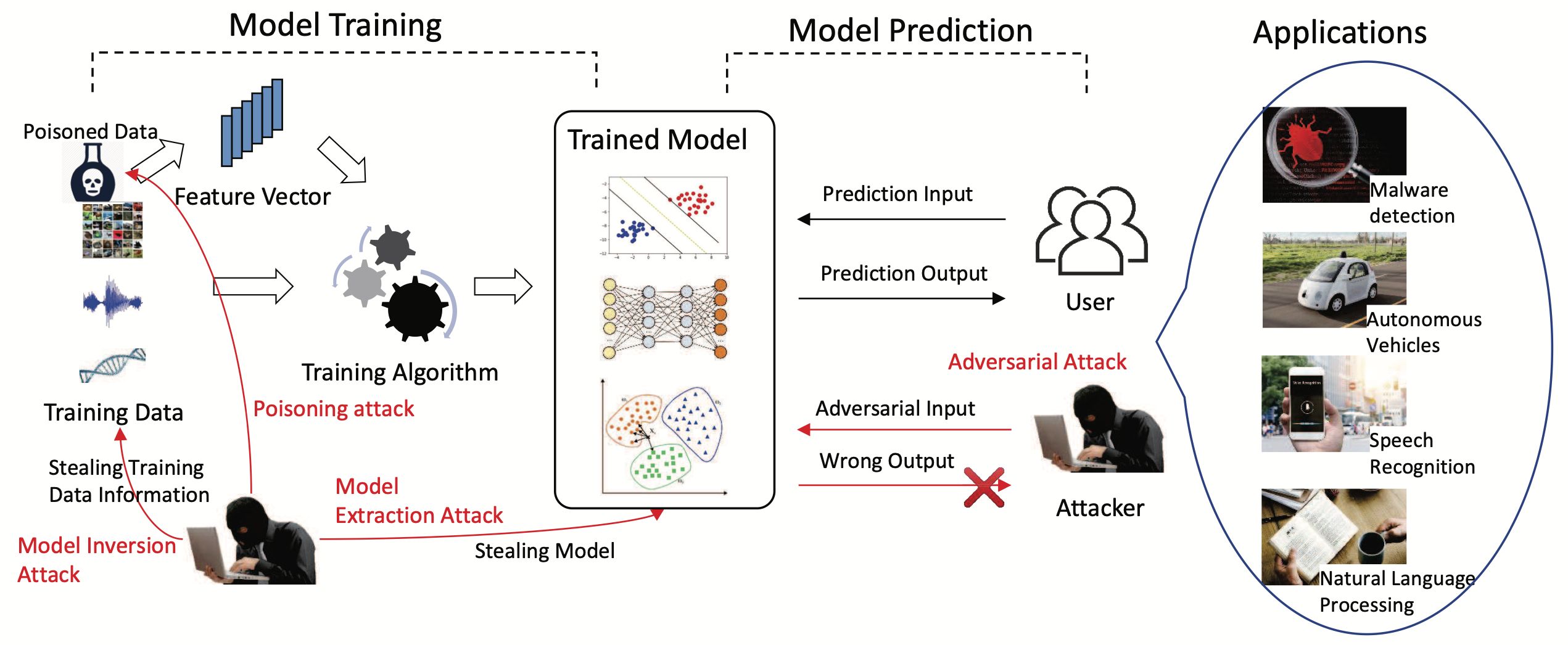 Learn what's adversarial machine learning, how adversarial attacks work, and ways to defend them.
64. Millennials Need Decentralized Social Media - Here's Why
 It’s time for decentralized social apps to take over
65. How LZ78 Compression Algorithm Works
 How does the GIF format work?
66. A Brief Intro to the GPT-3 Algorithm
 OpenAI GPT-3 is the most powerful language model. It has the capacity to generate paragraphs so naturally that they sound like a real human wrote them.
67. How To Resize an Image Correctly in JavaScript
 JavaScript implementation of so-called Seam Carving algorithm for the content-aware image resizing and objects removal. Dynamic programming approach is applied
68. How AI and Machine Learning is Impacting the Real Estate by Roy Dekel
 Artificial intelligence has become the breakout technology in the past ten years, utilizing huge amounts of computing power to learn and identify patterns in data without the guidance of humans. These algorithms can be used on nearly any problem or question, provided there is enough input data for the algorithm to process to generate realistic results. This broad generalizability means that industries that have traditionally relied on purely human-driven research and development can now harness massive amounts of data to become more efficient – and potentially more profitable.
69. Algorithms and Data Structures
 Well, this is where you are separated by the ones who are good or excellent software developers. In this case, I will tell you that at the beginning or at least in my case and I know that most of the time and for most people who I know, you will feel like an incompetent or an idiot. Basically, how is it possible that I cannot understand this and then you get frustrated.
70. Porting Scientific Algorithms from MATLAB to JavaScript
 Port MATLAB to JavaScript the right way. Use Octave for ground-truth validation, match academic references, and ship accurate scientific algorithms.
71. Explain Complex Concepts With Minimalistic Drawings With Okso.app
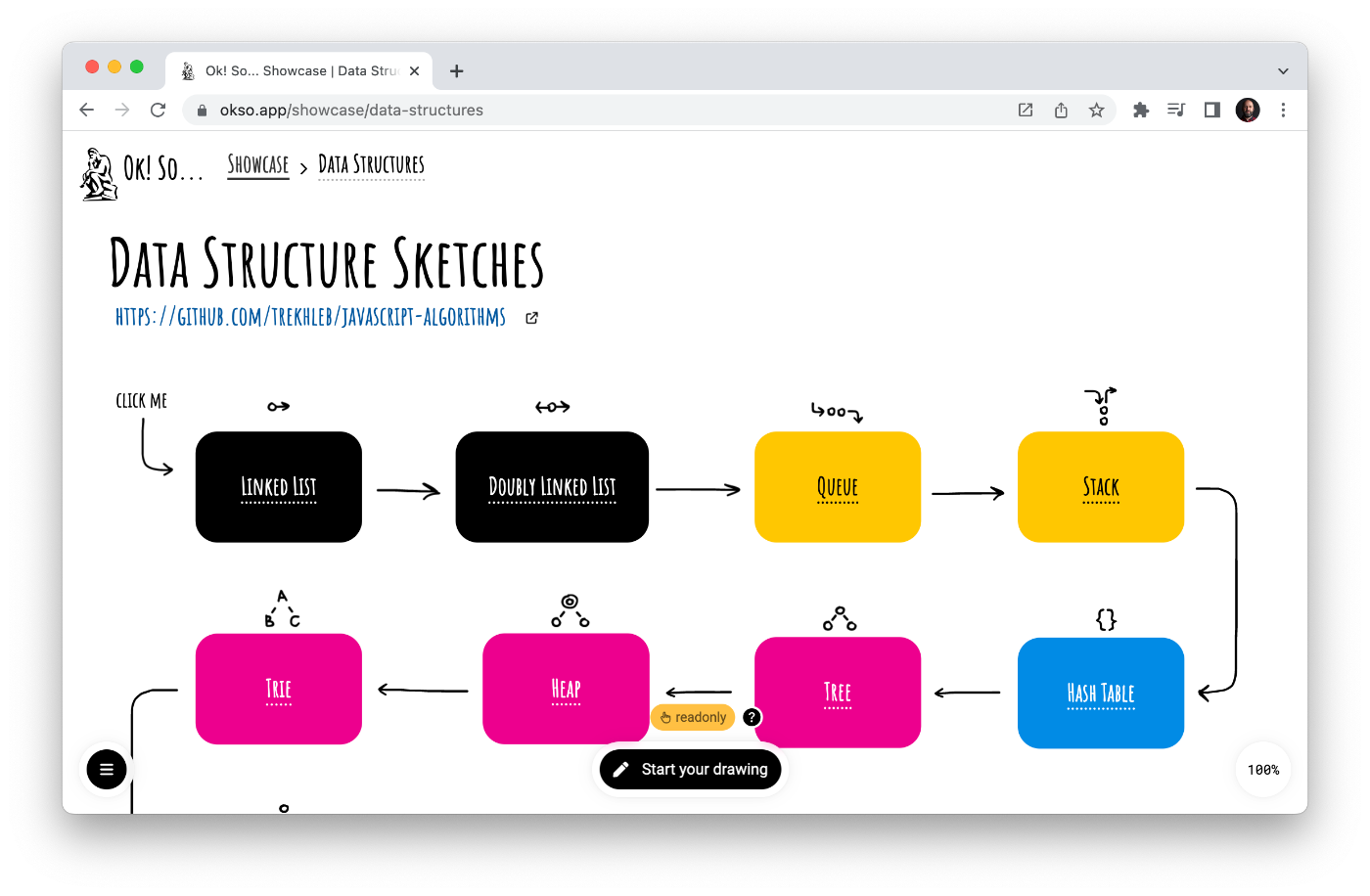 Minimalistic Data Structure Sketches
72. Must-Know Theorems for Programmers
 Programming is a complex and multifaceted field that encompasses a wide range of mathematical and computational concepts and techniques.
73. How to Prepare Yourself For Data Structures and Algorithms Interviews at FAANG
 Written By Esco Obong (@escobyte on Twitter), Senior Software Engineer @Uber, Founder of Algorythm study group on Facebook and Black Software Engineers Career Support Group on LinkedIn.
74. The Ultimate Guide to Learning Data Structures And Algorithms for Beginners
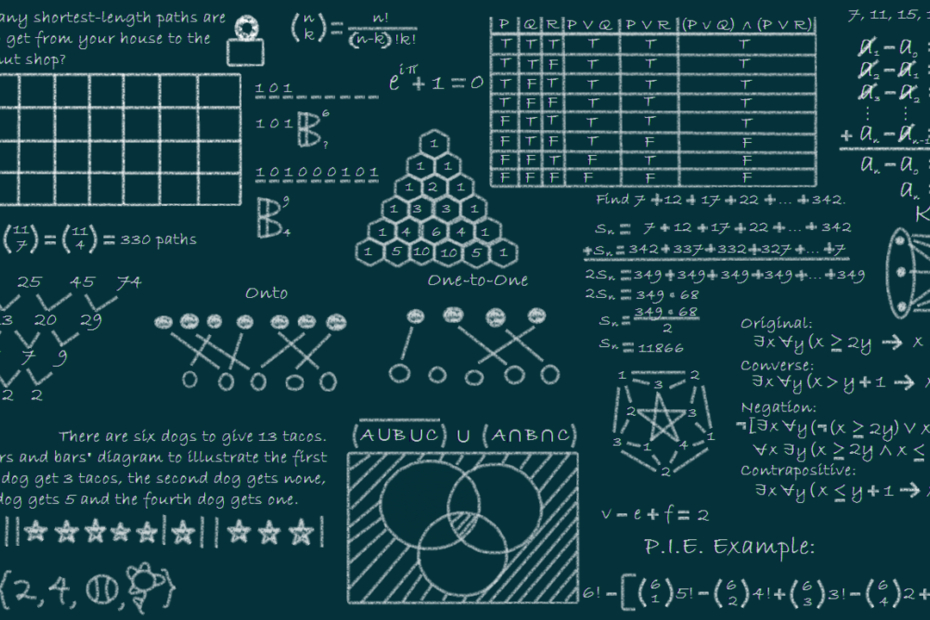 An engineer with a deep understanding of algorithms and data structures will be able to make informed design choices, and write programs that are more performant and easier to change.
75. Prefix Sums and How They Can be Used to Solve Coding Problems
 In this post, we will look at prefix sums and how they can be used to solve a common coding problem, that is, calculating the sum of an array (segment). This article will use Java for the code samples but the concept should apply to most programming languages.
76. Algorithms and Data Structures Implemented in ES6 JavaScript
 Hello Readers! I’ve launched JavaScript Algorithms and Data Structures repository on GitHub with a collection of classic algorithms and data-structures implemented in ES6 JavaScript with explanations and links to further readings and YouTube videos.
77. Optimization of Multi-Scalar Multiplication Algorithm: Sin7Y Tech Review (21)
 Let's go through the optimization of Multi-Scalar Multiplication Algorithm.
78. How to Create a Compressibility Factor Calculator in Python
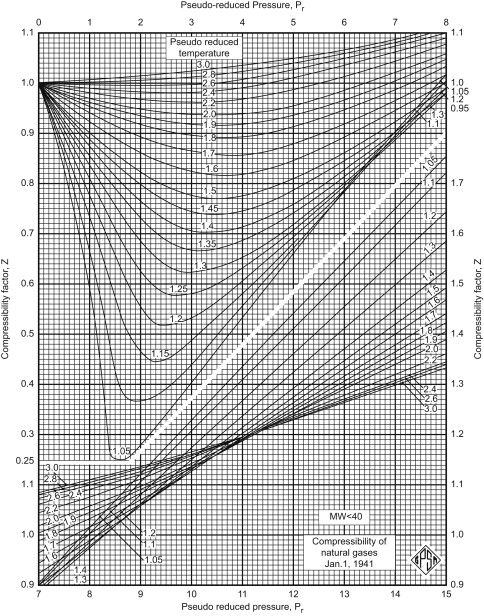 A Python program to calculate the inlet or the outlet compressibility factor for a given gas based on the Redlich-Kwong equation of state.
79. Null Cipher: A Classical Encryption Algorithm No Longer Around
 A brief history of the null cipher and its applications throughout the years.
80. Essential Algorithms: The Quick Sort
 The Quick Sort is an interesting algorithm and a favorite among software engineers, with some unique advantages and quirks worth looking into. Quick Sort can be highly efficient, often outperforming Merge Sort, although certain cases can make it behave slowly like Bubble Sort. As always, we'll jump in first with a broad-strokes overview of how this particular algorithm works before exploring the finer points about why it behaves the way it does.
81. Daily Coding Problem: Use Your Coding Skills to Check the Checkmate
 Use an algorithm to find out if the king on a chess board is on check
82. Concurrent Scalping Algo Using Async Python [A How To Guide]
 Automating My Manual Scalping Trading Strategy
83. Creating a Short Number Format Pipe Using Angular8

84. How Can Machine Learning Predict the Stock Market?
 Artificial intelligence is changing the world as we know it. Form self-driving cars to weather predictions. Now it's taking on the stock market. Here's how.
85. How to use Redis HyperLogLog
 How to use Redis HyperLogLog data structure to store millions of unique items.
86. From Reddit's "Hot" ranking algorithm to my satisfying blend of "Top Ranked" and "New"
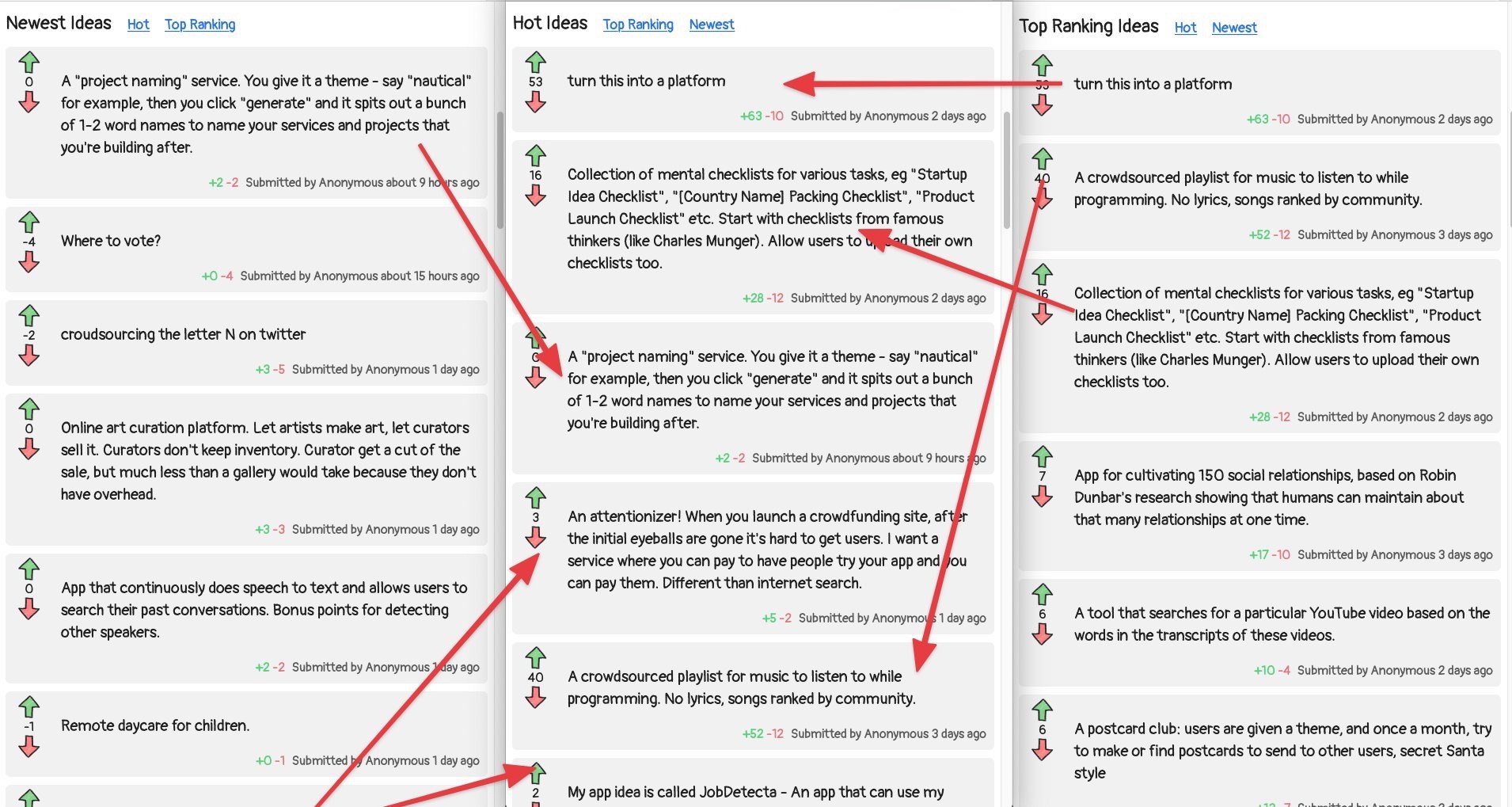 I created a site where people can vote and submit projects they want me to build. This was fine when there was only a dozen projects, but not when the list grew
87. AI for Noobs: How Amazon Alexa Works
 How Amazon Alexa AI processes and implements commands.
88. How to Select a Random Node from a Tree

89. Essential Algorithms: The Bubble Sort
 Welcome back to Essential Algorithms, where I go over the many, many different algorithms every programmer should know and understand. Today's algorithm is the dead-simple, yet terribly inefficient, Bubble Sort.
90. Bubble Sort Algorithm: How to Develop Your Computational Thinking
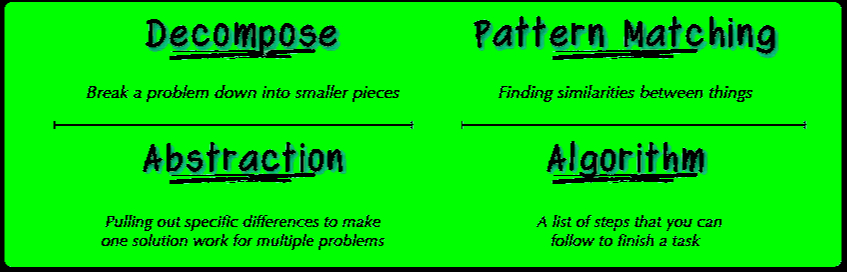 Have you ever felt overwhelmed by an algorithm problem and don't know where to start?
[91. On The Way From Sequence to
RandomAccessCollection in Swift](https://hackernoon.com/on-the-way-from-sequence-to-randomaccesscollection-in-swift)
 Evolution of computational complexity from the basic protocol Sequence to the RandomAccessCollection protocol in Swift for developers working on iOS platforms.
92. Solving Performance Issues with .filter() and .map() Used in Conjunction

93. Understanding the Basic Concepts of Heap Data Structure in GoLang
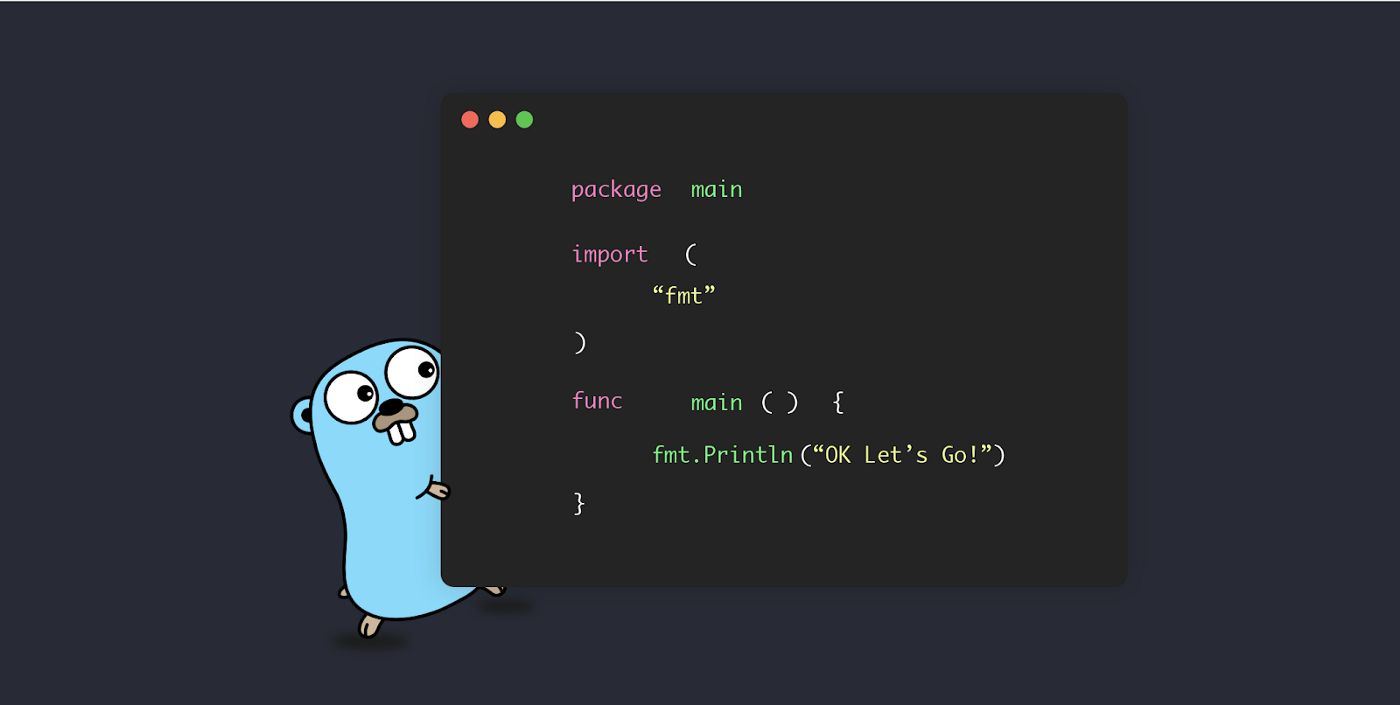 We are trying to learn the basic concepts about heaps like inserting and extracting data from heaps and also the time complexity of heaps.
94. How Shazam Works in a Nutshell
 Understanding how the Shazam software and algorithm works by looking at spectrometers, audio libraries and more to uncover what makes the app recognise music.
95. BFS, DFS, Dijkstra, and A-Star Are Basically the Same Algorithm, I'll Show You Why
 It turns out that well-known algorithms like BFS, DFS, Dijkstra, and A-Star are essentially variations of the same universal algorithm.
96. The Magic of Feedback Loops: AI Takes Over
 How did we let the algorithms take over our lives?
97. Solving the Edit Distance Problem Using The Dynamic Programming Approach
 The first question that arises when solving a problem using dynamic programming(DP) is how to figure out that DP is a way to solve it?
98. How To Search An Element In Sorted Matrix In Linear Time
 Statement
99. 154 Stories To Learn About Computer Science
 Learn everything you need to know about Computer Science via these 154 free HackerNoon stories.
100. An Intro to Shamir's Secret Sharing Cryptographic Algorithm
 Adi Shamir’s Secret Sharing is a cryptographic algorithm that allows distinct parties to jointly share ownership of a single secret by holding shares
101. A n00b's Guide To Data Structures and Algorithms
 We are going to start a series of lessons based on Data Structures and Algorithms.
102. The Ultimate Guide to Data Structures & Algorithms for Beginners
 The need of the hour, especially in the corporate world, is to find professionals who have sufficient knowledge about data structures and algorithms.
103. Fenwick Tree Explained
 Fenwick Tree is an interesting data structure that uses binary number properties to solve point update and range queries in your code in some situations.
104. Why a Quant Chooses to Work on Algorithms Instead of Startups
 Meet the Writer: Hacker Noon's Contributor Peregrine Buckler, Quant @ Dune Capital, I use math’s amongst other things to spot patterns in financial markets.
105. Probabilistic Data Structures And Algorithms In Big Data
 Probabilistic data structures allow you to conquer the beast and give you an estimated view of some data characteristics
106. What Makes TikTok so Addictive?
 The AI and algorithms inside TikTok has made it the most addictive of all the social media platforms. Leaked documents reveal the secrets to TikTok addiction.
107. Reversing a Linked List
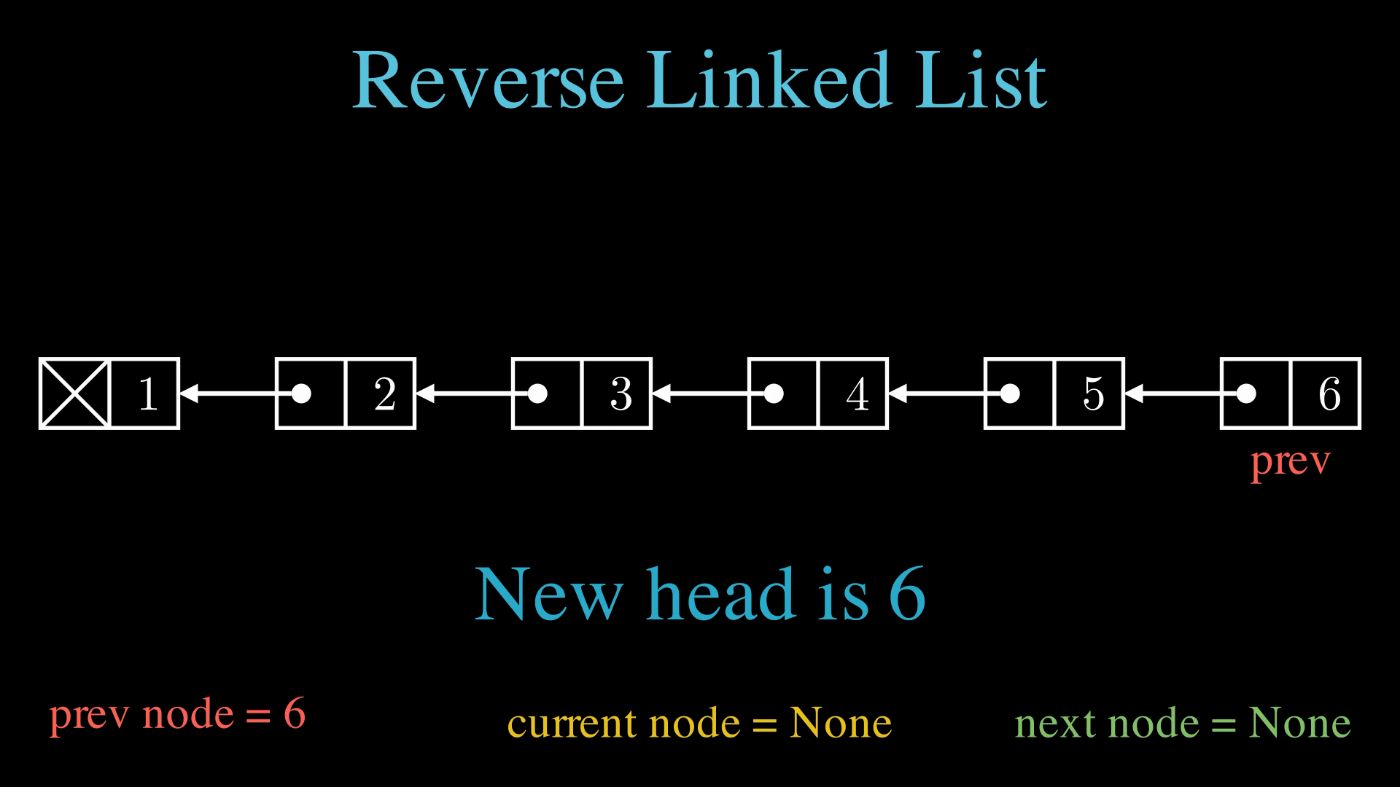 Given the head of a singly linked list, reverse the list, and return the reversed list.
108. The Algorithm for Reversing A Sentence

109. Intro to Insertion Sort Algorithm With Code Examples
 Insertion sort is a simple sorting algorithm and it is used to sort an array by iteratively inserting elements into a sorted subarray that results in a final so
110. Multiply Strings (LeetCode): An Out of the Box Solution In JavaScript
 Given two non-negative integers num1 and num2 represented as strings, return the product of num1 and num2, also represented as a string.
111. Does YouTube’s Algorithm Discriminate Against Minority Creators?
 YouTube's algorithm seems to be discriminating against BIPOC and LGBTQ content. A Supreme Court case might now end YouTube's protection against lawsuits.
112. "The Abandonment of Clean Algos is the Suicide of Mainstream Social Media" - Minds CEO Bill Ottman
 Bill Ottman is the co-creator and CEO of Minds, a free and open source social network with crypto rewards. They continue to make waves as an alternative to the incumbent social network business model of surveillance capitalism. Bill has also been a guest on the Joe Rogan podcast. Today, he kindly took the time to answer some questions for Hacker Noon.
113. Why Making LeetCode a Daily Habit Is the Key to Skill Development and Career Growth
 In this article, I want to share a great life hack on how to always stay afloat in the IT market and keep yourself in shape by spending 10-30 minutes a day
114. Algorithms And Big O Notation In An Understandable Manner
 Such scary words. It oozes math all over them…
115. Solving LeetCode Problems Using Graph Theory
 Graphs model pairwise relationships with vertices and edges.
116. 13 Ways to Traverse a Tree: Recursion vs Iteration
 To understand recursion, you must understand recursion. I will show you 13 different ways to traverse a tree to compare recursive and iterative implementations. This way, we will kill two birds with one stone: recursion and data structures and algorithms.
117. 10 Repositories that Will Transform the Way You Approach Technical Interviews
 A complete computer science study plan to become a software engineer. This GitHub repo will take you from ground level to advanced concepts.
118. The 10 Weirdest, Most Brilliant Algorithms Ever Devised and What They Actually Do
 Discover 10 unusual algorithms that defied logic, broke rules, and transformed the way we think about technology and problem-solving.
119. What is a Support Vector Machine?
 SVM works by finding a hyperplane in an N-dimensional space (N number of features) which fits to the multidimensional data while considering a margin.
120. Algorithms for Beginners: Bubble Sort in JavaScript

121. Why Algorithmic Fairness is Elusive
 In 2016, Google photos classified a picture of two African-Americans as “gorillas.” Two years later, Google had yet to do more than remove the word “gorillas” from its database of classifications. In 2016, it was shown that Amazon was disproportionately offering one-day shipping to European-American consumers. In Florida, algorithms used to recommend detention and parole decisions on the basis of risk of recidivism were shown to have a higher error rate among African-Americans, such that African-Americans were more likely to be incorrectly recommended for detention who would not go on to re-offend. When translating out of a language with gender-neutral pronouns, and into languages with gendered pronouns, Google’s word2vec neural network injects gender stereotypes into translations, such that pronouns become “he” when in conjunction with “doctor” (or “boss,” “financier,” etc.) but become “she” when translated in conjunction with “nurse” (or “homemaker,” or “nanny,” etc.).
122. A Summary and Review of The Ethical Algorithm
 A summary and review of: The Ethical Algorithm: The Science of Socially Aware Algorithm Design by Aaron Roth and Michael Kearns.
123. A Step-By-Step Look into How SHA-256 Works
 SHA-2 (Secure Hash Algorithm 2), of which SHA-256 is a part, is one of the most popular hash algorithms around.
124. Elliptic Curve Cryptography: A Basic Introduction
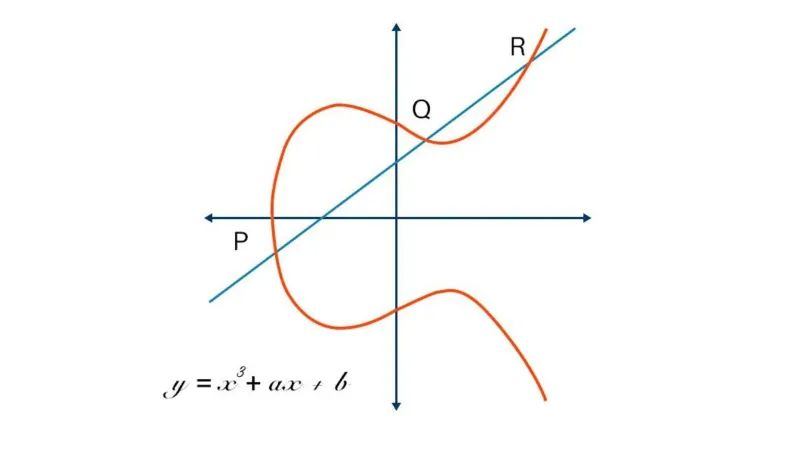 Elliptic Curve Cryptography (ECC) is a modern public-key encryption technique famous for being smaller, faster, and more efficient than incumbents.
125. A Bit of Ancient Algorithmic Magic, or Solving an Intriguing Sequence of Tasks From LeetCode
 Moreover, problems of this type often appear in interviews at major companies, and understanding the methods of their solution can be quite beneficial.
126. How to Solve 6 Dynamic Programming Problems In a Systematic Way
 In this article, I gave you an introduction to Dynamic Programming with several examples. Here I will solve 6 harder Dynamic Programming problems to show you how to approach them.
127. Essential Algorithms: The Merge Sort
 Every programmer needs to know their algorithms and data structures. When studying them, you need to be sure to understand exactly what it does, what it's time and space complexity are and why they are that way, and be able to not only code it, but perform it by hand. This is what Essential Algorithms is all about.
128. Bloom Filter Basics in Go
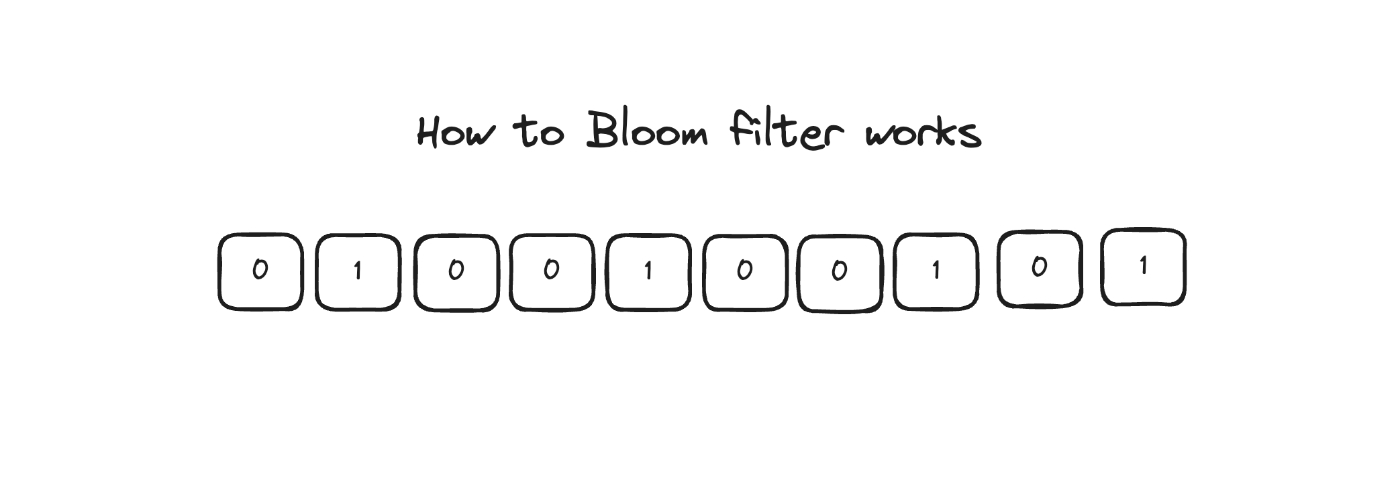 Learn about Bloom filters: memory-efficient data structures using hashing for fast set membership queries.
129. 3 Trends of the Neural Network Usage for Algorithmic Trading
 Developers of AI systems can create complex algorithms for a wide range of use cases, including in investing and trading.
130. 5 Books You Can Read to Boost Your Computer Science Knowledge
 Make use of your downtime and read something good!
131. Implementing the Weighted Random Algorithm with JavaScript
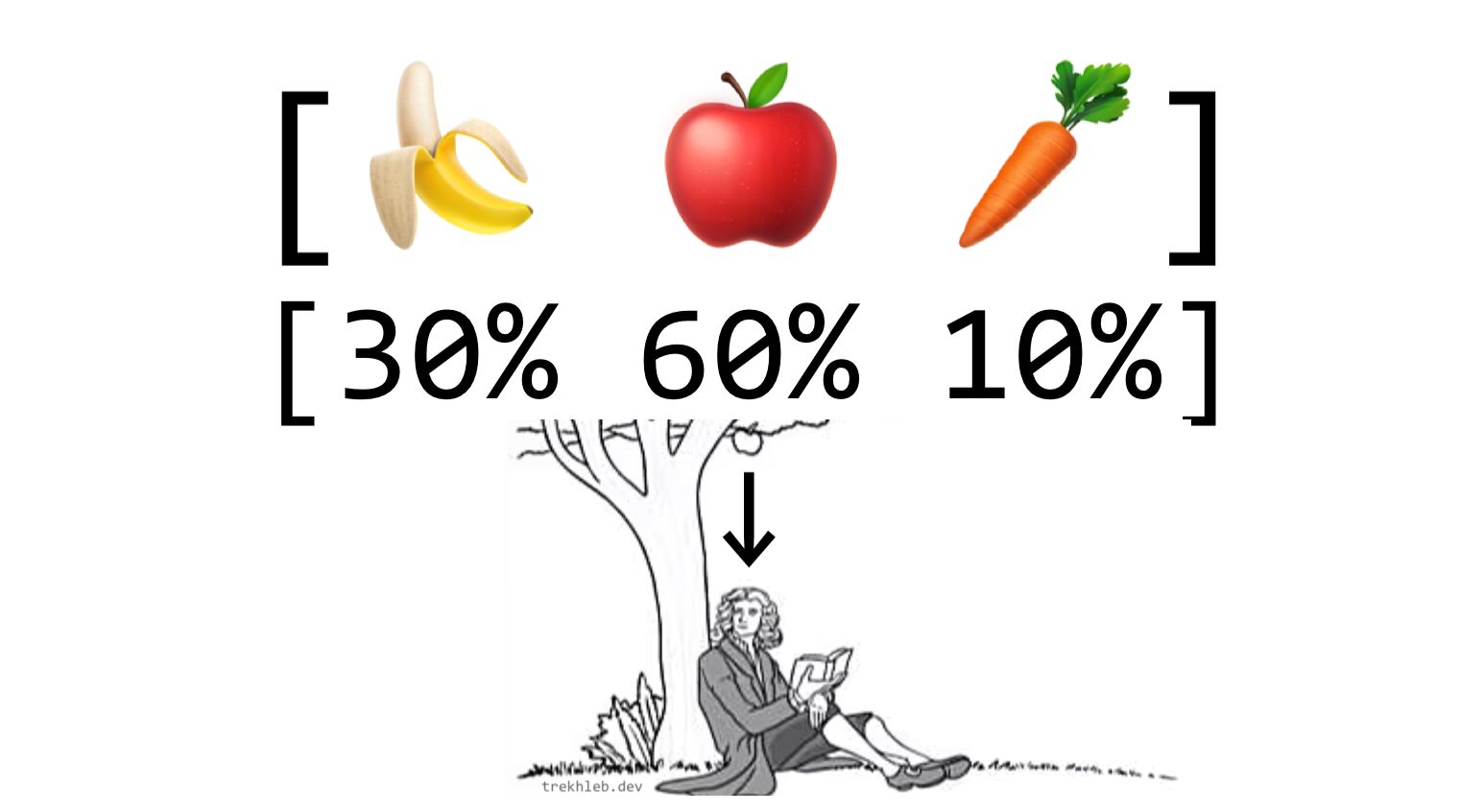 The Weighted Random algorithm is used to send HTTP requests to Nginx servers. In this article, you'll learn how the Weighted Random algorithm works.
132. How to Generate Random Numbers - A Guide to TRNGs and PRNGs
 We'll take a look at how computers generate random numbers and the limitations of pseudo-random number generators.
133. Understanding SEO Keyword Research from Steve Harvey’s Family Feud
 Keyword research is a vital part of every optimization strategy. Steve Harvey's Family Feud helps us understand why its important.
134. Graph Algorithms, Neural Networks, and Graph Databases
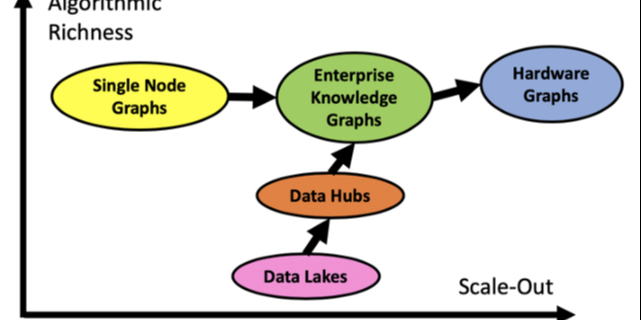 Year of the Graph Newsletter, September 2019
135. Federated Learning: A Decentralized Form of Machine Learning
 Major companies using AI and machine learning now use federated learning – a form of machine learning that trains algorithms on a distributed set of devices.
136. Essential Programming: Sorting Algorithms
 The next task in your calendar, the ranking position of your favorite sport team in the league, the contact list in your cell phone, all of these have an order. Order matters when we process information. We use order to make sense of our lives and to optimize our decisions. Imagine looking for a word in a dictionary with a mixed alphabetical order, or trying to find the cheapest product in a disordered pricing list. We order stuff to make more sound decisions (which in reality is an illusion), and this makes us more confident on the results.
137. How to Implement Predictive Maintenance in Your Business
 If you've ever had equipment break down and disrupt operations, you could benefit from predictive maintenance. Here's how to implement it in your business.
138. Visualizing the Beap: A Lesser-Known but Fascinating Heap Variant
 Beap is designed to make both insertion and search operations efficient, giving us O(√n) time complexity for both.
139. An Introduction to Backtracking in Ruby

140. Why Algos for Retail Investors Will Finally Democratize Investing in 2020
 Technology has revolutionized trading for individual investors in the early part of this century, from online trading tools to robo-advisors, to the rise of crypto and fintech applications.
141. The Pros And Cons Of Proof Of Stake Technology
 There is no doubt that proof of stake (PoS) has become a popular consensus algorithm in the cryptocurrency world.
142. Solving the All-pairs Shortest Paths Problem With the Floyd-Warshall Algorithm in C#
 Implementation of Floyd-Warshall algorithm in C# with parallelism and vectorisation.
143. Daily Coding Problem: Next Biggest Number
 Finding the next biggest value in an array of integers
144. PagedAttention: An Attention Algorithm Inspired By the Classical Virtual Memory in Operating Systems
 To address this problem, we propose PagedAttention, an attention algorithm inspired by the classical virtual memory and paging techniques in operating systems.
145. How I Made a 65% ROI with this Boeing Trading Algorithm
 Since the market crashed in March of 2020 the rebound has been swift and irrational.
146. Python Freezes Due to Poor Implementation
 Programs may freeze for many reasons, such as software and hardware problems, software bugs, and among others, inefficient algorithm implementations.
147. Prepare For Your Next Tech Interview With These 17 Data Structures and Algorithms Sites
 I've compiled some of the most useful resources for DSAs, interview practice sites, commonly asked technical questions, and sites to build practical projects.
148. Stop Feeding the Algorithm: Creative Ways to Disconnect from Data-Hungry Platforms
 Learn how to reclaim your digital privacy with practical tips to reduce tracking, resist algorithms, and disconnect from data-hungry platforms.
149. Change Your Codes Behavior By Using Bitwise Operators
 Let’s dissect a weird bit flag program that took me a second to understand. in doing so, we’ll hopefully gain a more robust understanding of how bit masks and bitwise OR logic can manipulate values effectively.
150. Decentralized Social Media: Prediction Markets VS Artificial Intelligence
 Social media is a valuable tool to express your identity. Even more so in times where social distance is the supposed new normal. But who decides the exact type of content you consume when scrolling through the news feeds of Facebook, Twitter, Reddit, or TikTok?
151. Work Smarter, Not Harder. Memoize It.
 My favorite parts of Computer Science are things that remind me of being human. Believe it or not Computers have this emergent property where as they become more complex they start to do things just like us. We touched on this when I wrote about Recursion. There I discussed how a computer function will call it self over and over until it gets the answer it wants. So very… human of it and to me this touches on problem solving. Memoization can extend this human like quality further.
152. Binary Search In Java: Examples And Interview Tips
I recommend following along with my video if you want to see some examples and hear step by step how I coded binary search in Java!
153. What To Do if Denied Housing or Apartment Due to Inaccurate Background Report
 Getty Images and Ali Wijaya
154. Skip List From Scratch: A Guide
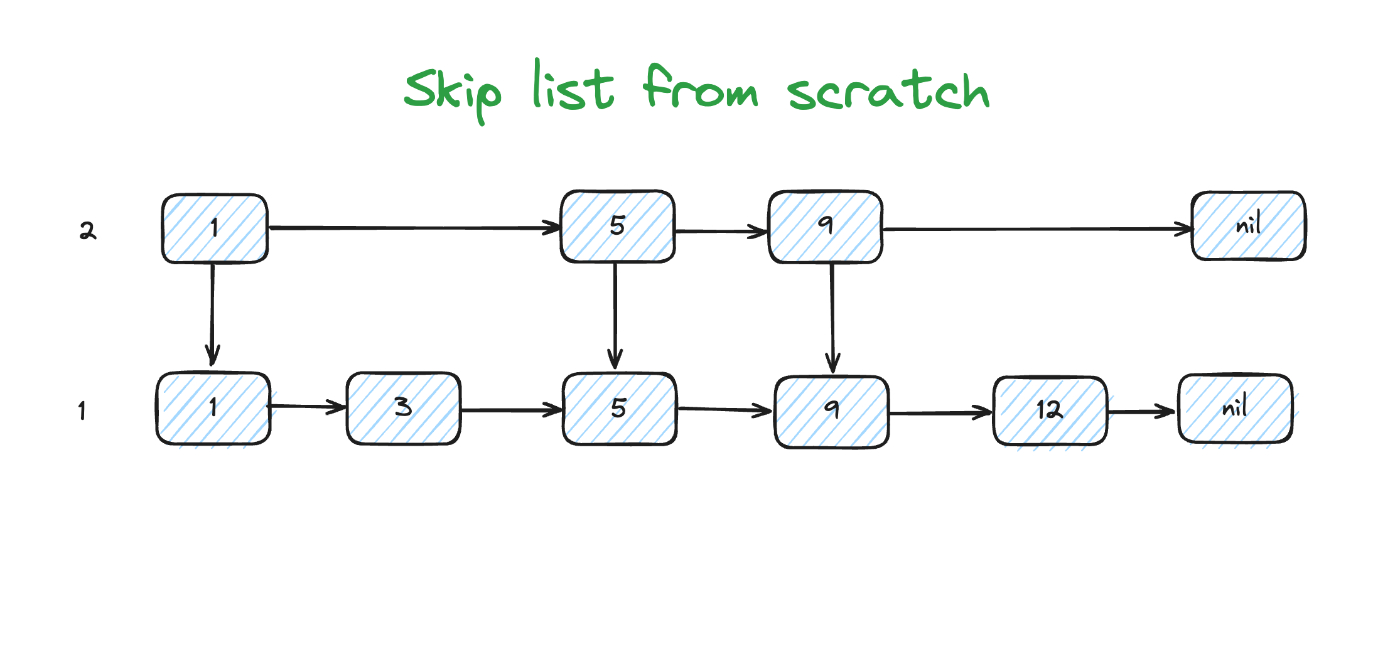 A skip list is a probabilistic data structure that serves as a dynamic set. It offers an alternative to red-black or AVL trees.
155. Useful Resources for Data Structure & Algorithm Practice
 These four resources may be useful for learning about data structures and practicing making algorithms for your advanced programming needs in your work.
156. Why Developers Should Take Coding Challenges Regularly
 First of all, let me start by saying that the ability to solve coding challenges is not a measure of how good a web developer you are, but it can show that you are a great developer and make you stand out from the crowd. Nobody needs coding challenges to create an outstanding web page using HTML, CSS (or it’s frameworks), and maybe even a little JavaScript.
157. How to Solve the Hamming Distance Problem in C++, A Google Interview Question
 In hamming distance problem, we find the number of positions where the bits are different for the given input with constant time complexity.
158. Algorithms and Society: A Not-So-Simple Discussion, In Three Parts
 Image Source: Unified Infotech
159. Finding the Middle of a Linked List (with Animated Examples)
 Detailed examples on how to return the middle node, given the head of a singly linked list.
160. Coding on Python at Home
 How many more reports can you generate? How many sales figures do you have to tally, how many charts, how many databases, how many sql queries, how many 'design' pattern to follow, how many bugs to fix etc. etc.. because you get paid for it.. Fatigue sets in , purpose of living is being questioned, and just when you are about to yell '.. to hell with all this..', your mortgage comes due, and don't look for that escape vacation because we are in a corona virus shutdown..
161. Building Your Own Programming Language From Scratch: Part IX - Hybrid Inheritance
 In this part of creating programming language, we'll implement the hybrid inheritance for the classes like in C++ and write a calculator with multiple classes
162. The Human Algorithm: Why the Internet Feels Repetitive—And How Real Writers Can Break It
 Online writing has become a synthetic echo chamber, flattened by algorithms. The solution is to rebel by writing with an authentic human voice.
163. Can AI Intentionally Lie?
 We know about AI hallucinations and mistakes, but does AI ever intentionally deceive users? Find out whether AI has the capacity to lie.
164. Understanding and Applying the Knuth-Morris-Pratt Algorithm: From String Matching to Stream Search
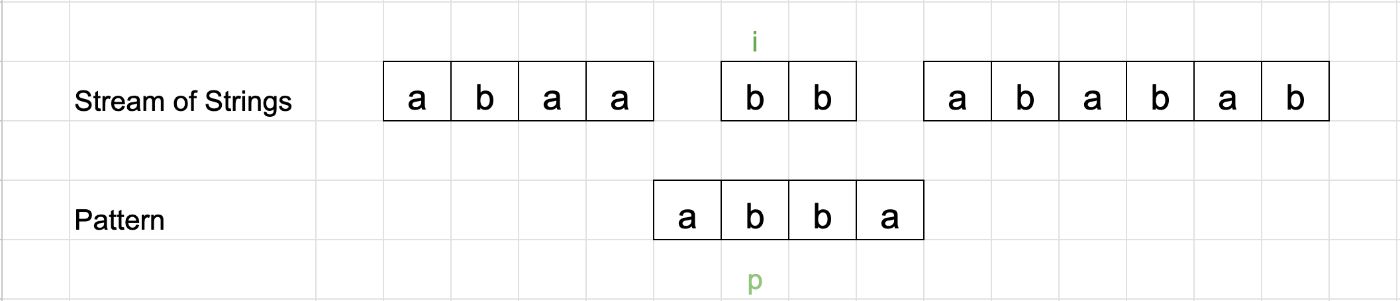 An article explaining the Knuth-Morris-Pratt Algorithm.
165. Daily Coding Problem: Minimum Coins Count
 Counting the minimum numbers of coin to reach a certain amount
166. Algorithms vs. Heuristics (with Examples)
 Algorithms and heuristics are not the same. In this post, you'll learn how to distinguish them.
167. How to Implement Heap in Data Structure
 Heap data structure is a balanced binary tree data structure where the child node is placed in comparison to the root node and then arranged accordingly.
168. Watching a War, in a Digital Age
 Watching a war in a digital age, his-story has the potential to become their-story, our-story, and humanity’s-story.
169. How to Win a Kaggle Competition: Box Office Prediction Competition
 Introduction
170. Which Candidates' Emails Go into Gmail's Primary, Promotions or Spam Inboxes?
 Google’s black box algorithm controls which political emails land in your main inbox. For 2020 presidential candidates, the differences are stark. By Adrianne Jeffries, Leon Yin, and Surya Mattu
171. How to Use the Creative Heuristic Algorithm to Generate Business Ideas
 Convert any task that requires creative problem solving into a simple, step-by-step procedure.
172. The Intuition Behind the “LIME” Concept in AI & ML
 A preambular article describing the fundamental principles & intuition behind the “LIME” concept in Artificial Intelligence & Machine learning.
173. Heap Sort Algorithm: Your Complete Implementation Guide
 Heap Sort algorithm with step-by-step Python and JavaScript implementations.
174. Do Not Fear Dynamic Programming (Part 1)
 Dyanmic Programming isn't as hard as people think. We'll break it down in this guide.
175. Is a Given Number the Power of 2?
 In this lesson, we will try to check if the given number is a power of 2. We solve this by writing an efficient algorithm that takes an optimal amount of time.
176. Online Dating From A Data Analysis Perspective: A Deep Dive
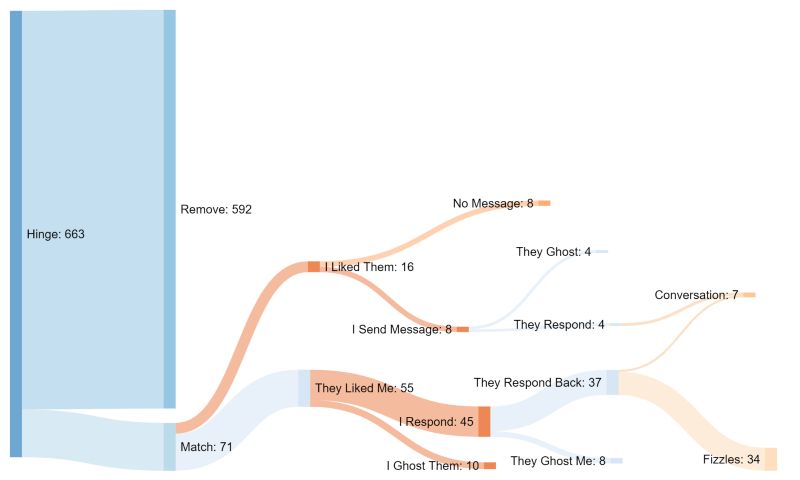 Love in the time of COVID is a… challenge, to say the least.
177. This Image is Red
 The 99% Accurate Machine Learning Algorithms You Shouldn't Buy
178. Exploring the Ironclad Encryption Standard
 A look at updated encryption standards based on strides in quantum cryptography.
179. How to Find the “Routes” of All-Pairs Shortest Paths With the Floyd-Warshall Algorithm in C#
 Implementation of Floyd-Warshall algorithm in C# with route tracking capability to reconstruct the shortest paths routes later.
180. Why Is It So Hard to Learn Basic Facts About Government Algorithms?
 It took six years, from the algorithm’s deployment in 2017 until “Inside the Suspicion Machine” published, for the public to get a full picture of how it worked
181. "The Person Who Controls the Algorithm Controls the World, Right?" Mark Cuban on the Lex Fridman Pod
 Mark Cuban is a businessman, investor, star of TV series Shark Tank, owner of Dallas Mavericks, and founder of Cost Plus Drug. Lex is not Lex Luther.
182. Apple Card "Sexism:" A Real Technical Blunder, or Dirty Marketing?
 Unless you've been living under a rock, then you probably heard all about #applecard. It's Apple's latest innovation, bringing the simplicity and design of their traditional products to the credit card space. But in the last few days, a shit storm emerged on Twitter about apparent discrimination by the Apple Card's credit worthiness algorithm.
183. 10 More Patterns to Solve 1000 More LeetCode Problems - Part II
 10 more LeetCode Patterns to solve a thousand more LeetCode problems. Part 2 of an article published sometime back.
184. Can AI Revolutionize the Efficiency of Algo Execution in Institutional Trading?
 The AI revolution in FX appears to be focused on portfolio optimization through algorithmic trading and execution.
185. Go Fast, Small, and Productive With GolangSpell
 Before reading this article, make sure you have a good understanding of basic concepts of software development as Algorithms, Object Oriented design, Domain Driven Design. These will be the building blocks to digest the contents.
186. Streamlining 3D Animation Creation via Rigging
 Creating a moveable 3D model is easier than ever using automated rigging solutions. One is illustrated in this article. Continue reading to know how it works.
187. The Big O
 The Big O is a way to measure how well your code solves a problem
188. Unveiling GitHub's Secret Blueprint—How to Handle Millions of Transactions Daily
 Learn how GitHub handles millions of transactions daily using advanced diff algorithms, scalable microservices, and efficient JavaScript code in this in-depth H
189. Using Algorithms to Limit Loss in a Market Crash
 Whether you're a retail or institutional investor, a traditional or alternative investor, you probably just lost a lot of money.
190. 87 Stories To Learn About Data Structures
 Learn everything you need to know about Data Structures via these 87 free HackerNoon stories.
191. Machine Learning: Your Ultimate Feature Selection Guide Part 1 - Filter the Most
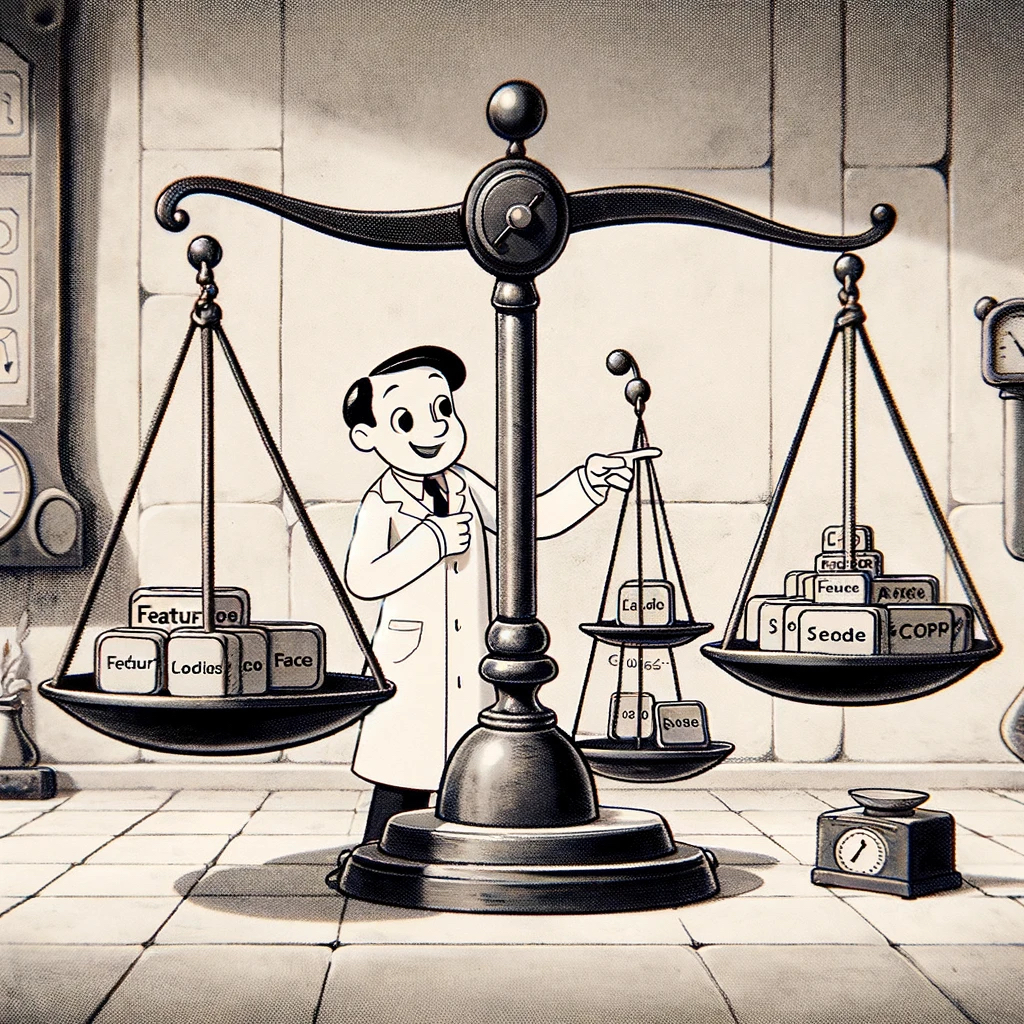 Explore key feature selection methods in machine learning, focusing on cost-effective filter methods for optimizing model performance. Stay tuned for more!
192. The "Feynman Technique" for Algorithms: How to Stop Memorizing Code and Start Building Intuition
 Why volume-based study fails, and how to use LLMs to build the mental models you're missing.
193. Introducing Apache ShardingSphere 5.2.0!
 ShardingSphere 5.2.0 is released bringing new cloud-native possibilities, elastic migration from Oracle, MySQL, and PostgreSQL, and more features & enhancements
194. Accusations Thrown at RealPage: Were They Colluding With Landlords?
 A Texas-based real estate tech company is facing a new barrage of questions about whether its software is helping landlords coordinate rental pricing...
195. What is the Bubble Sort Algorithm for Numbers?
 The Bubble Sort algorithm is a comparison-based sorting technique that repeatedly compares adjacent elements and swaps them if they are in the wrong order.
196. How to Reverse a Sentence Using Recursion in C++ and Java
 Understand how to reverse a string using recursion in C++ and Java
197. MO’s Algorithm: Efficient Way to Solve Offline Range Query Problems
 MO’s Algorithm aka Square Root Decomposition, a very efficient and easy technique to solve Range Query Problems (RQP). For MO’s Algorithm to work, the RQP has to be offline. In this post, we will understand about RQP, Offline RPQ, Naive Approach to solve RQP and an Efficient Approach using MO’s Algorithm.
What is Range Query Problem?
198. Creating a React Application to Solving Every Sudoku Puzzle
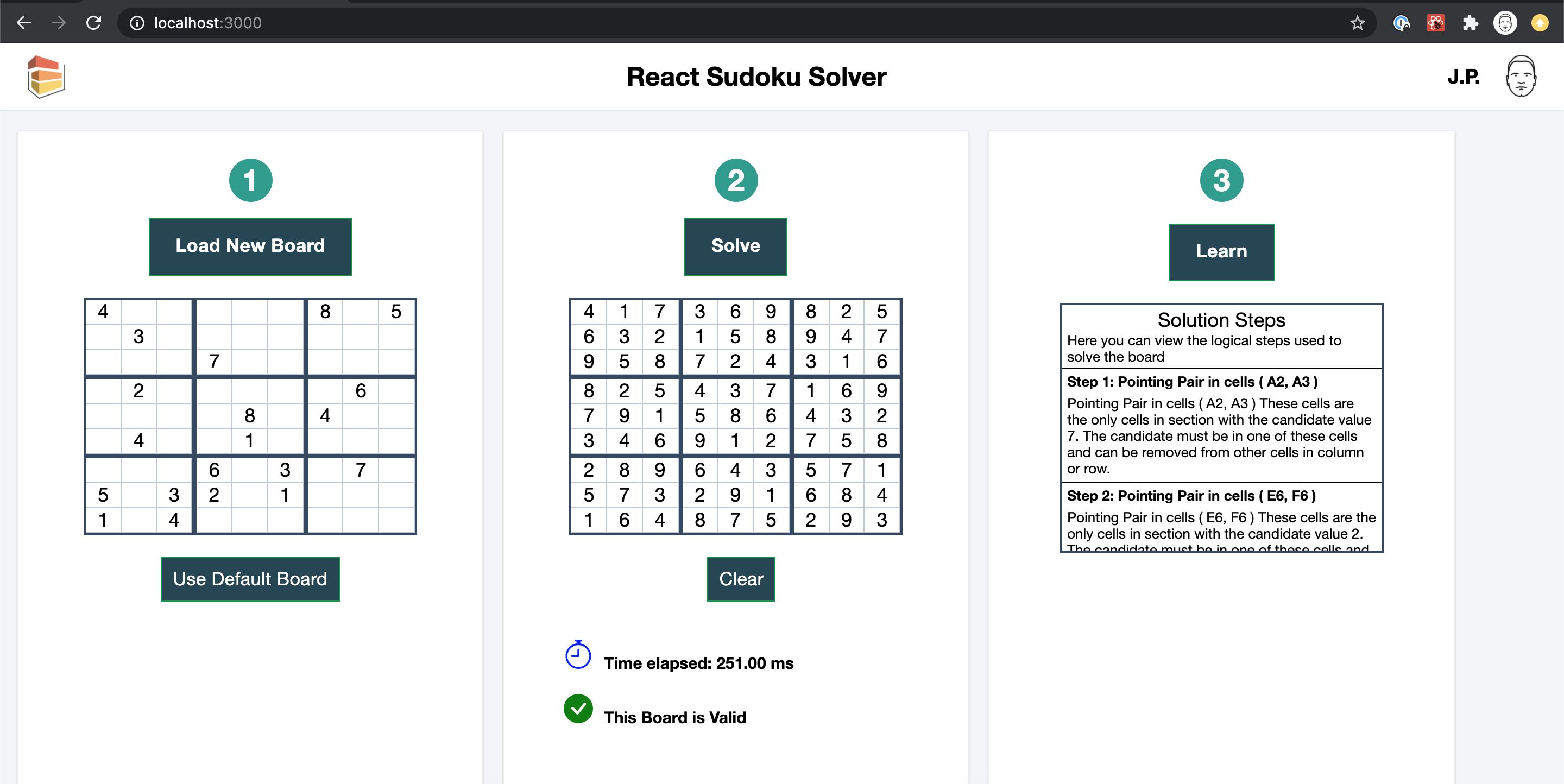 Peter Norvig, the legendary Google mogul and AI titan, wrote a python essay to solve every Sudoku puzzle 10 years ago. Back then, he may not have expected that his code will inspire so many other posts and to be ported to so many different languages. For JavaScript, the latest version of the solver that I found was einaregilsson/sudoku from 2014
199. How vLLM Implements Decoding Algorithms
 vLLM implements various decoding algorithms using three key methods: fork, append, and free.
200. Why My Code Would Take 316 Years to Execute
 I started programming about 5 years ago. Ironically, only in the last year of my computer science degree. I was also made aware of the likes of Hackerrank and Hackerearth at the same time. I remember naively brute-forcing every single problem that I would come across on these platforms and later wonder why it would give me a TLE Error.
201. SORA's Token Bonding Curve (TBC) Explained
 Here are the three main purposes of SORA's TBC and their huge positive impact on the economy.
202. Python: Comprehending A* Path Algorithms and Implementation
 The A* algorithm is one of the most effective path-finding algorithms used to find the shortest path between two points.
203. Python Deep Dives: Multiple Inheritances And Mixin Classes
 I recently revisited three old posts on Django class-based views that I wrote for this blog, updating them to Django 3.0 (you can find them here and noticed once again that the code base uses mixin classes to increase code reuse. I also realised that mixins are not very popular in Python, so I decided to explore them, brushing up my knowledge of the OOP theory in the meanwhile.
204. How to Sort Array Elements: An Essential Guide
 I want to describe a common method used to sort array elements in alphabetical and numerical order.
205. Daily Coding Problem: Building an Algorithm to Calculate Huge Factorials!
 Algorithm to calculate factorials of big numbers
206. Why Proof-of-work Will Always be an Essential Part of Ethereum
 Justin Sun highlights why proof-of-work is an essential part of Ethereum, and lends his expert insights regarding the matter.
207. JavaScript Challenges: Prime Numbers & Sophie Germain Primes
 Let's create a function that will return true if string is a prime number and return false if a number is not a prime.
208. Announcing ModelDB 2.0 release
 Since we wrote ModelDB 1.0, a pioneering model versioning system, we have learned a lot and adapting it to the evolving ecosystem became a challenge. Hence we decided to rebuild from the ground up to support a model versioning system tailored to make ML development and deployment reliable, safe, and reproducible.
209. Recursion: by Randy Taylor; While You Don't Understand Recursion, Read Recursion: by Randy Taylor
 Algorithms for beginners: fundamentals of recursion.
210. Crafting Mazes With Graph Theory
 Exploring maze generation algorithms Random Passage Carving and Graph Traversal with Spanning Tree.
211. Ants and Algorithms: 5 Solutions Inspired From Insects
 Discover how ants inspire tech technology. Explore ACO, swarm intelligence, biomimicry, and insect cyberware in this fascinating article.
212. How to Find Your Number in a Sorted List: Binary Search Explained
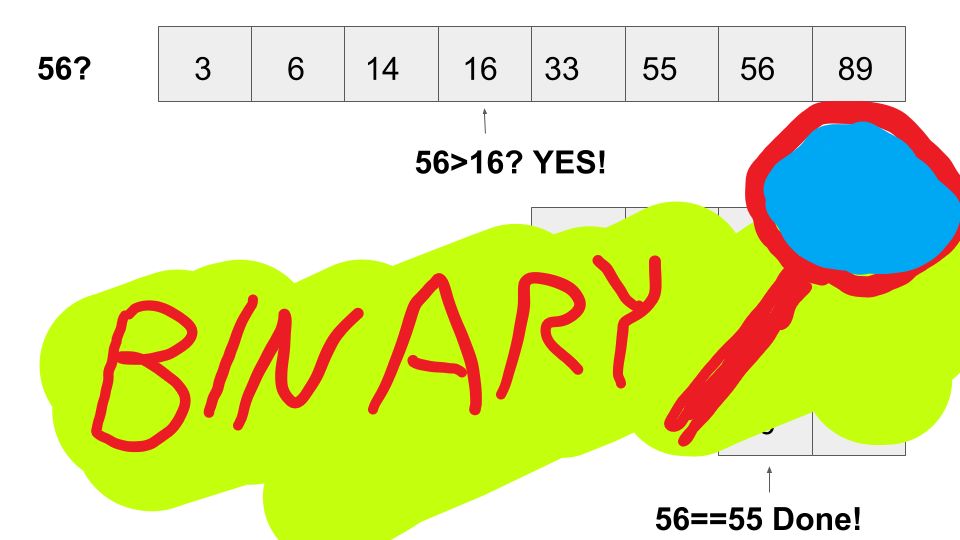 Binary search works exactly like finding a word in a dictionary.
213. When Desire Is Designed: The Hidden Politics of the Feed
 How social media feeds manufacture desire, exploit our emotions, and keep us endlessly scrolling — and what to do to reclaim freedom.
214. How I Created a Social Recommendation Network in Brazil

215. How Archethic Blockchain's Algorithm Enables Fast Interactions Between Nodes Across the Globe!
 This blockchain algorithm developed by the Archethic blockchain provides fast interaction between nodes in a decentralized network spread across the world.
216. Building Your Own Programming Language From Scratch: Part X - Exceptions Handling
 In this part of creating your programming language, we’ll implement raising exceptions with the stack trace and provide the exceptions handling in Ruby syntax
217. Beli’s Binary Search Rating System Explained
 Comparison of current rating methods popular on the web alongside a technical breakdown of a new novel rating algorithm used in the Beli App.
218. The Noonification: Coding Interview Prep: Algorithmic Puzzles and Cube Surface Mastery (2/9/2024)
 2/9/2024: Top 5 stories on the HackerNoon homepage!
219. From Chaos to Order: Achieving Understanding of Algorithms Through Visualization
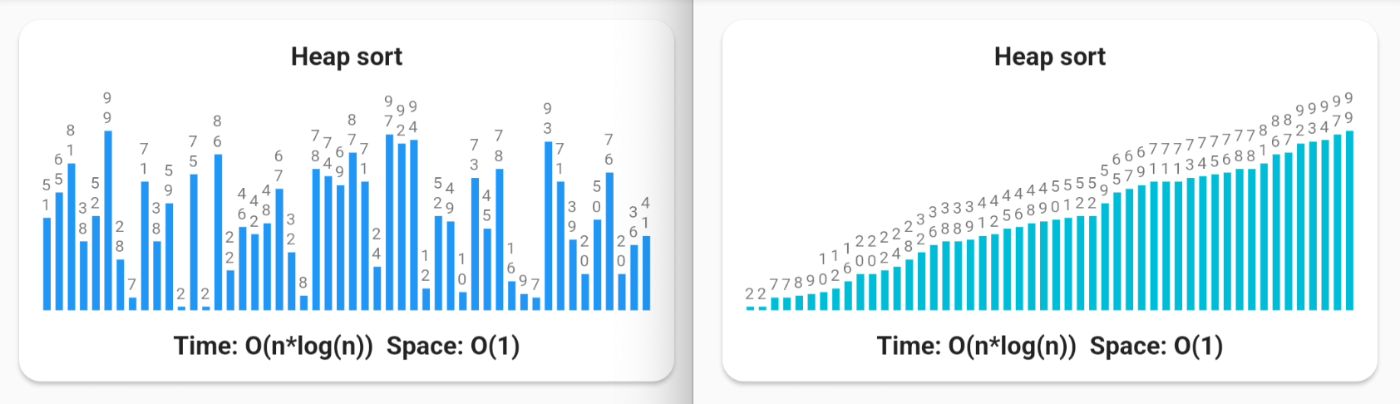 Mastering algorithms through flutter development and data visualization.
220. The 3-Step Process to Hiring a Software Engineer For Your Startup
 The standard coding interview gauges coding prowess the same way an IQ test gauges intelligence. Basically, barely at all.
221. ChatGPT and The Very Hungry Algorithm: Bedtime Stories With a Chatbot
 As ChatGPT-generated stories put my kid right to sleep, I lay awake, wide-eyed, thinking about how conflicted I felt.
222. An Intro to Merkel Tree: What is it and How Does it Work?
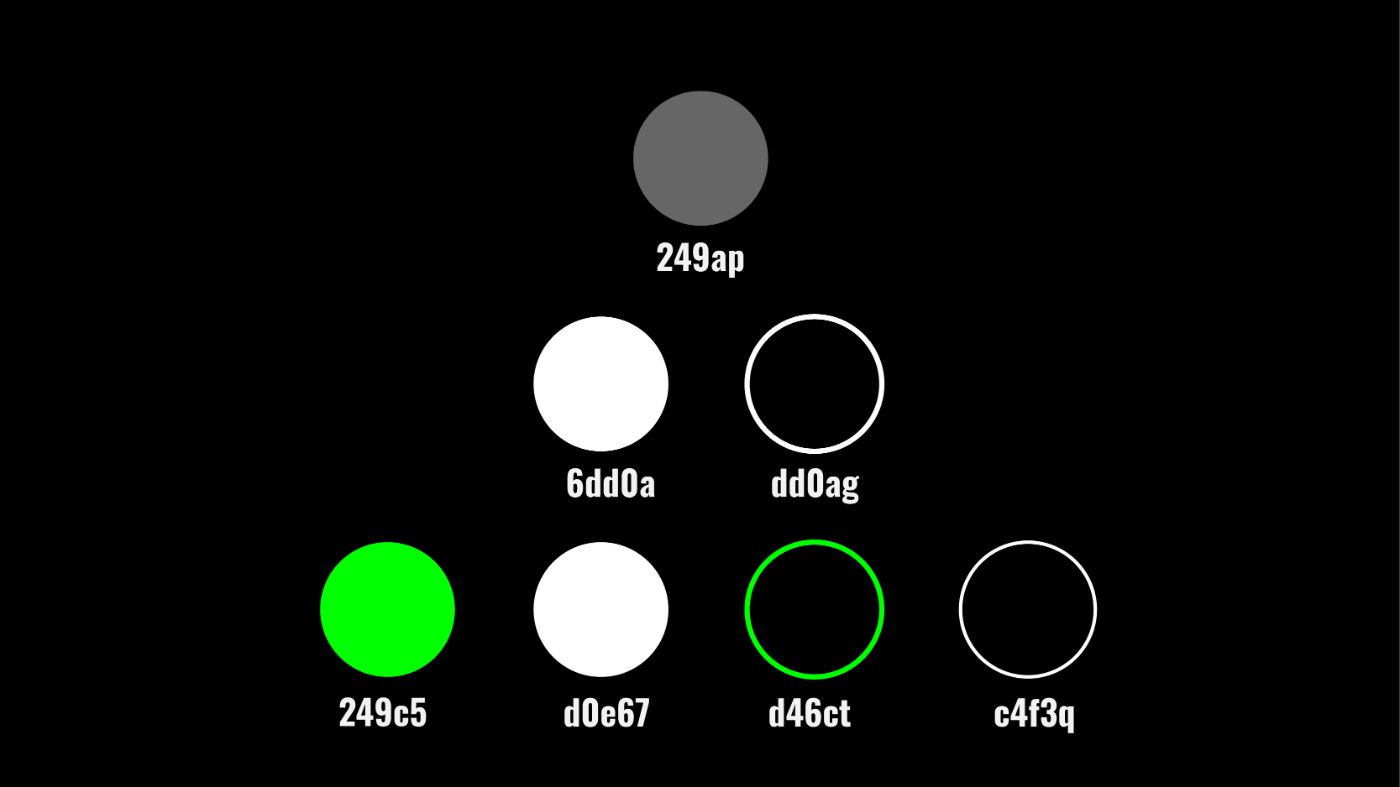 A Merkle Tree is a binary tree of hash values, where each leaf node represents a single piece of data or a hash of a piece of data.
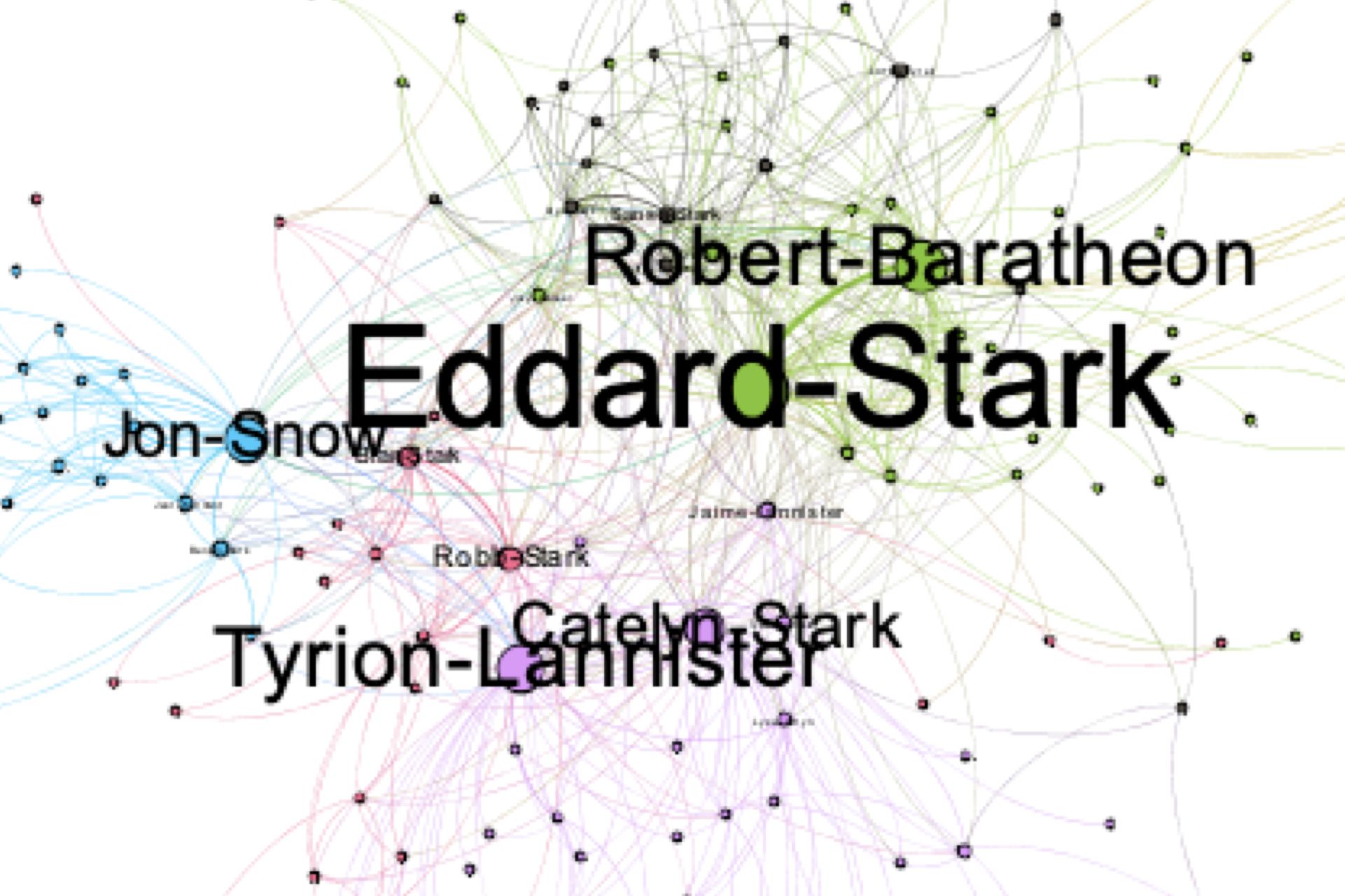
223. How to Analyze and Visualize the Game of Thrones Character Relationships
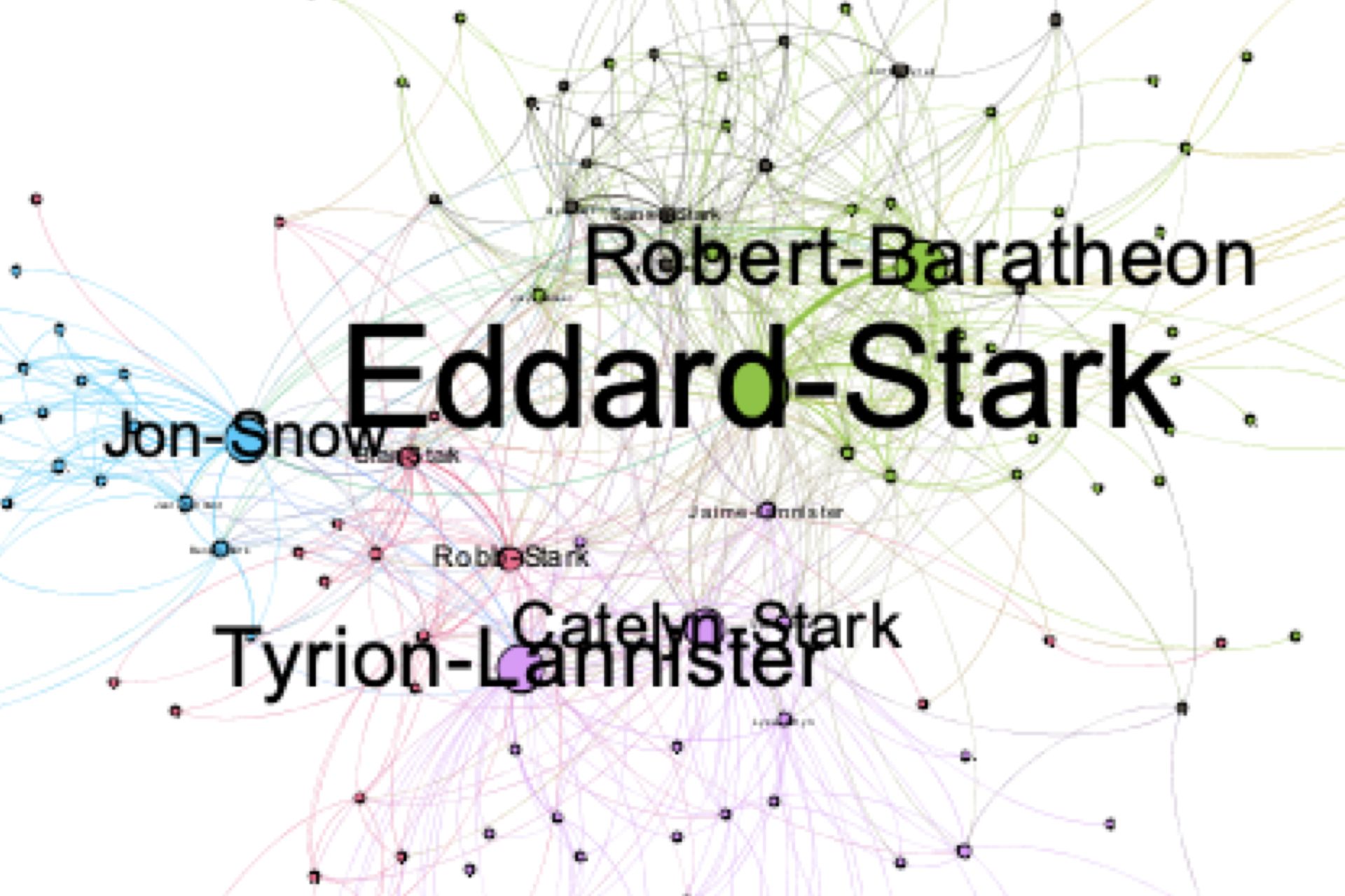 The hit series Game of Thrones by HBO is popular all over the world. Besides the unexpected plot twists and turns, the series is also known for its complex and highly intertwined character relationships. In this post, we will access the open source graph database Nebula Graph with NetworkX and visualize the complex character connections in Game of Thrones with Gephi.
224. Why Can't the United States Regulate Algorithms?
 Why is it so hard to regulate algorithms in the United States?
225. Daily Coding Problem: Computing Big Exponentials
 Calculating high exponentials with a simple algorithm
226. Implementing the Blocked Floyd-Warshall Algorithm for Solving All-pairs Shortest Path Problem in C#
 Implementation of cache-friendly Blocked Floyd-Warshall algorithm in C# (parallelism and vectorisation) coated in a basic theory behind caching and profiling.
227. Facebook: The Magic 8 Ball
 It is easier for a camel to pass through the eye of a needle than for a homo sapien to quit this junk.
228. A Group of Students Are Revolutionizing the Way You Discover What to Watch, Read, and Listen
 They’re rebuilding trust in recommendations by putting humans back at the center of culture.
229. Things You Need To Learn Before You Start Writing Code
 I'm sure you all have read a quote like this, "First solve the problem, then write the code". At first I took it lightly. I liked to follow a different approach, "Solving the problem with code". After coding for a long time, I realized the importance of solving the problem first before jumping into writing code. In this article, I will try explain why you should slow down and how to actually save your time. Also, this will make you a better programmer.
230. How To Learn Coding Basics By Creating Simple Games
 You may have been grinding all those algorithms question on various platforms for your next interview, ever wonder when can we actually use them. Well, I got to finally see them in action while creating a board game called 8 Puzzle. It is played on a 3-by-3 grid with 8 square tiles labeled 1 through 8 and a blank square. Your goal is to rearrange the tiles so that they are in order. You can check out my implementation to get a better idea here.
231. Uber and Lyft Drivers are Increasingly Victims of Carjacking
 The Markup confirmed 124 carjackings and attempted carjackings of ride-hail drivers across the country. Drivers say the companies are doing little to help.
232. Solving The Staircase Problem With Just 5 Lines
 The staircase problem is a challenging and well-studied problem that may stump beginners. However, experienced developers can solve it in just five lines.
233. Google Just Killed LeetCode: Why AlphaEvolve is the End of the "Algorithm Interview"
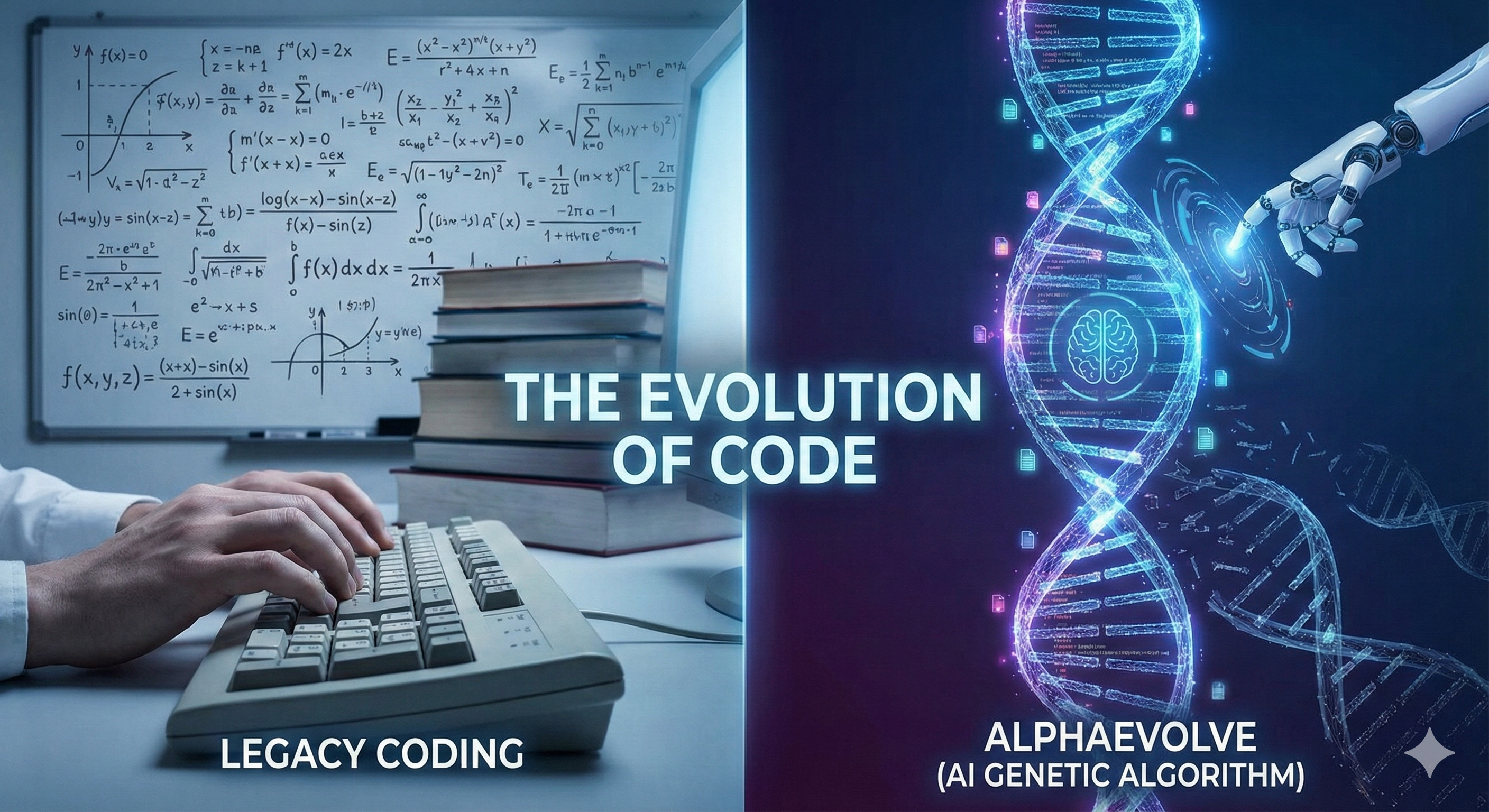 Google's AlphaEvolve is a new AI agent that breeds code like bacteria.
234. Deepfakes: Thy Expiration Date is Nigh
 Predictions that deepfake videos will keep getting better are not matched by the realities of the technology. Here's a sober look at the problems.
235. How to Check If Your Point Is Reachable: A JavaScript Algorithms Guide

236. The Quant Graveyard: What 40 Years of Strategy Testing Really Taught Me

237. Leetcode Problem Hacks: 881 Boats to Save People
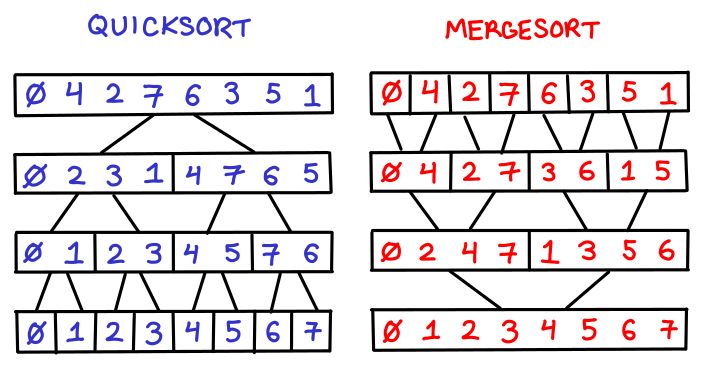 I dive into LeetCode problem: 881, Boats to Save People. I try to use Count Sort to optimize my solution.
238. The Concept of Numbers for a Y-Generation Organic Processing Unit
 Whether it's consciously or subconsciously, we use numbers every single moment of our lives. Numbers help us navigate in what we refer to as real life, as they help us set fixed determinations of concepts that are impossible to comprehend otherwise, eliminating the need for "lagging."
239. Grokking Dynamic Programming (Part 2)
 Part 2 on my series about dynamic programming problems and coding techniques to solve them.
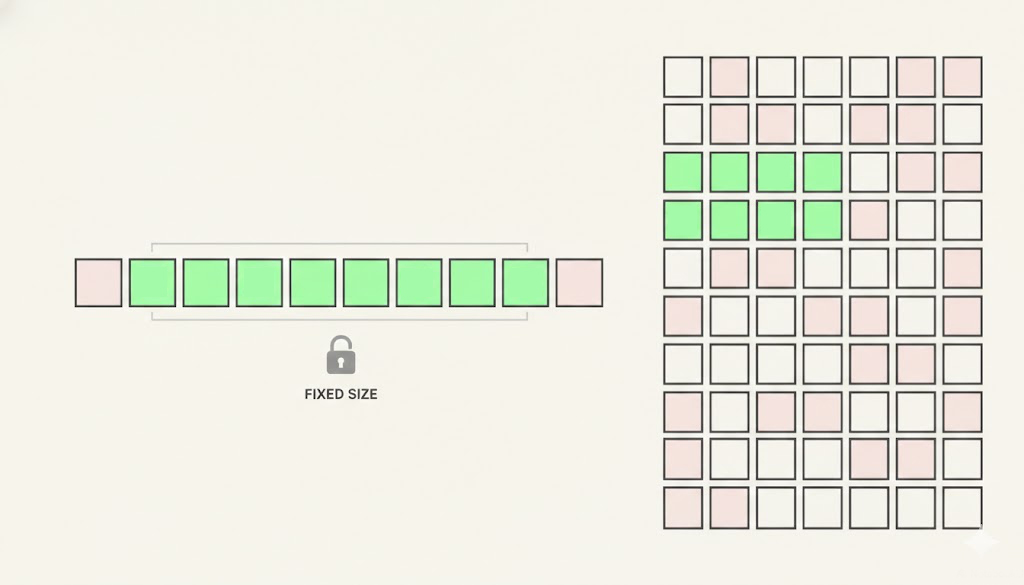
240. CPython Lists, Explained Like You’re the Interpreter
 A practical deep dive into how list works in CPython: why indexing is fast, what size vs capacity really means, and why append() is amortized O(1).
241. Proper Multithreading: Let’s Remind Ourselves What it is
 That sounds ideal, but what does it take to have real multithreading with appropriate locks and to secure your program so it can run smoothly without you worrying if you will ever get a deadlock or a race condition?
Just some locks, semaphores, and a lot of time to think it through.
That sounds ideal, but what does it take to have real multithreading with appropriate locks and to secure your program so it can run smoothly without you worrying if you will ever get a deadlock or a race condition?
Just some locks, semaphores, and a lot of time to think it through.
242. Bayan Flow Earns a 34 Proof of Usefulness Score by Building Interactive, Real-Time Visualizations
 Bayan Flow is an innovative web application designed to help computer science students learn complex algorithms.
243. "Racism and vigilantism are pervasive on safety platforms"
 In one town, police say products like Nextdoor and Ring are helping fight crime. But racism and vigilantism are pervasive on safety platforms.
244. Memory Challenges in LLM Serving: The Obstacles to Overcome
 The serving system’s throughput is memory-bound. Overcoming this memory-bound requires addressing the following challenges in memory management
245. Machine Learning Concepts In Python For your Next App
 Python can be used in machine learning, especially through using these basic machine learning concepts as building blocks for data analysis and other functions.
246. Trees: Non-Linear Data Structures for Beginners
 An overview of Trees as a data structure. A software engineer's tool. Should I use a hashmap?
247. How to Build a Versatile Traverse Function from Scratch
 Learn how to create your own traverse function in under 5 minutes.
248. What Is Dynamic Programming and Memoization?
 Learning Dynamic Programming and Memoization in Under 5 Minutes
249. Deep Vs. Shallow Copying
 Let's go back one moment. A little further down to our data structures. The dear heaps and stacks of them.Quite literally.
250. How Automated Background Checks Can Freeze Out the Wrong Renters
 Computer algorithms that scan everything from terror watch lists to eviction records spit out flawed tenant screening reports. And almost nobody is watching
251. Fullmetal Alchemist and The Philosophy of Debugging
 Finally got through all the content around the much-hyped Fullmetal Alchemist in 2020, and I was not disappointed; quite the opposite. It evokes philosophical questions on the things we do and how we do them. So naturally, with software engineering for me.
252. Overlapping Rectangles: A Daily Coding Problem
 How to calculate the area size of two overlapping rectangles with an algorithm using go.
253. Fundamentals of Data Structures [Part 1]
 A trip down memory lane avid reader. Let's take a walk through the core of it all: data structures. What are they and why are they so important? A 'hello' to a reader that might have missed our talk on Memory management, where we delved into what happens to our code in variable assignment. Do take a look, even if it's a refresher you're looking for.
254. Affective computing
 Affective computing is the study and development of systems and devices that can recognize, interpret, process, and simulate human affects.
255. Integer-Based CFG Tree Counting: What You Need to Know
 Learn how the IntegerizedStack creates simple tree-to-number bijections for logic and linguistics.
256. Meta-Learning for Reasoning: Summary of RECKONING's Superior Performance and Future Impact
 This conclusion summarizes RECKONING, a novel bi-level learning framework that robustly solves multi-hop reasoning problems
257. The Tyranny of Algorithms
 The world seems to have been taken over by the algorithm, which dictates who becomes a winner or loser in life, not based on merit, but on predecided criteria
258. Bite-Sized Tips To Make Chinese Full-Text Search
 Today I'd like to highlight the challenge of search functionality in Chinese. In this article, we will go through the main difficulties of full-text search implementation for CJK languages and how to overcome them with the help of Manticore Search.
259. This Suicide Prevention Algorithm for Military Veterans Appears to be Favoring This Specific Group
 An AI program designed to prevent suicide among U.S. military veterans prioritizes White men and ignores survivors of sexual violence
260. New Report Finds That Facebook Still Runs Discriminatory Ads
 We found discriminatory ads can still appear, despite Facebook's efforts
261. Overcoming Training Costs in Index Advising: The Need for IA2
 Current RL-based index selection methods like SWIRL support multi-attribute indexes but face high training costs and complex pruning rules.
262. Algorithmic Contract Design for Crowdsourced Ranking: Omitted Proofs From Section 2
 Find out what was missing from section 2 of our Algorithmic Contract Design Research paper.
263. Additional Information About the Algorithmic Contract Design Experiments: What You Should Know
 Algorithm 4 takes as input “comparisons”, which is a list of s sublists, each containing the returned results of the binary comparisons performed by an agent.
264. Distractor Robustness: RECKONING Significantly Outperforms FT-ICR in Reasoning Over Irrelevant Facts
 The study confirms that RECKONING's ability to disentangle relevant knowledge is maintained even when scaling the model size using GPT-2-XL-LoRA
265. "90% of software startups fail because no one wants to use them" according to Exhibia CEO Miko Lasso
 Exhibia was nominated as one of the best startups in Miami in Startups of the Year hosted by HackerNoon. This is an interview with their CEO.
266. Ablation Study Confirms Necessity of Dynamic Rates for RECKONING Performance
 This article presents an ablation study confirming that an adaptive, per-step-per-layer learning rate is essential for the RECKONING framework.
267. The Partisan Divide on Facebook Is Still Bad
 Depending on your political leaning, Facebook will show you two different perspectives on the Capitol Riot that took place on January 6, 2021.
268. The “Syntax Repair” That Turned My Algorithm Into a Liar
 An AI fixed my syntax but broke my algorithm—silently deleting half my subsets.
269. Generalization and Robustness: RECKONING Excels on Longer Reasoning Chains Unseen During Training
 RECKONING demonstrates superior generalization capacity to longer reasoning chains unseen during training
270. Why I Spent Years Writing a Children’s Book on Data Science
 I wrote a children's book on data science to inform others who have a hard time understanding data science and machine learning concepts, especially kids!
271. Peeling the Onion on AI Safety
 Examining AI safety like peeling layers off an onion.
272. Exploring Graph Traversal: From Breadth-First Search to Dijkstra's Algorithm
 In this article, the breadth-first search algorithm is explained with examples and implementations, including how it can be modified to find the shortest paths.
273. A Brief Introduction to Algorithmic Complexity
 It’s not just the running time; it’s the space usage too. We see algorithms used in pretty much every program that’s larger than a college project.
274. Don't Let Them Fool You: Manipulative Strategies Used By Big Tech Companies To Sell You Stuff
 Do you know how your apps work? Are you aware of what tech companies are doing in the back with your data? And what’s more revealing: do you know which of your action are actually influenced by those apps? When you take a trip with Uber, buy stuff on Amazon, or watch a movie on Netflix: when are you consciously deciding and when are you being heavily influenced?
275. Data Reliability in an Unreliable World
 What is common between streaming movie on Netflix, searching air ticket on Google, buying clothes on Amazon? You rely on distributed computing to do it.
276. Technical Setup for RECKONING: Inner Loop Gradient Steps, Learning Rates, and Hardware Specification
 This article outlines the implementation details for RECKONING, which uses a GPT-2-base model and runs on NVIDIA A100 GPUs.
277. Algorithmic Contract Design for Crowdsourced Ranking: Definitions You Should Know
 This paper is available on arxiv under CC 4.0 license. It is available under the terms of the Creative Commons license.
278. The Noonification: An Intro to Algorithms and Data Structures (Javascript Edition) (9/15/2022)
 9/15/2022: Top 5 stories on the Hackernoon homepage!
279. LZ-Trees: Context-Free Grammar Enumeration via Subtree Reuse
 Explore LZ-Trees, a CFG enumeration variant (Algorithm B) using LZ77 principles to reference previously generated subtrees for efficient data compression.
280. The Noonification: How to Develop a DSL in Kotlin (12/12/2023)
 12/12/2023: Top 5 stories on the HackerNoon homepage!
281. These Algorithms Were Meant to Improve the Human Condition: They Failed
 High-tech computer systems can reflect the misjudgments of the people who designed them—but this idea gets obscured
282. Knowledge Graphs Exemplify the Emphasis on Knowledge and Connections
 Towards a Knowledge Graph economy. The Year of the Graph Newsletter, Summer 2020
283. Your Load Balancer Probably Works Fine: Until the Day It Doesn't
 There's a tendency to treat load balancing as a solved problem. But you should know your traffic. Know the failure mode. Everything else is configuration.
284. Bot Creator Dembots in the Spotlight
 Demian is a bot creator for bots. He creates algorithmic trading strategies for all BOTS users to use. Today he explains how and why he does this.
285. Algorithmic Contract Design for Crowdsourced Ranking: Conclusions, Future Directions, and References
 We studied the multifaceted problem of designing a crowdsourcing mechanism that efficiently and accurately ranks a set of items using pairwise comparisons
286. Predicting Domestic Violence: How and Why Police are Looking to Algorithms for Help
 Violence at the hands of an intimate partner has affected more than 600 million women globally, according to World Health Organization estimates
287. The Efficiency of Dynamic Knowledge Encoding: RECKONING's Advantage in Multi-Question Scenarios
 This article presents a run-time analysis comparing RECKONING with In-Context Reasoning, focusing on computational efficiency
288. How Algorithms Can Potentially Raise Rent
 One of the algorithm’s developers told ProPublica that leasing agents had “too much empathy” compared to computer generated pricing.
289. Algorithmic Contract Design for Crowdsourced Ranking: What Was Left Out of Section 3
 Find out what was taken out of Section 3 of our Algorithmic Contract Design.
290. What Do Students Think of Wisconsin’s Dropout Algorithm?
 Twice a year, Wisconsin public schools receive a list of their enrolled students with the DEWS color-coded prediction next to each name...
291. Algorithmic Auditing: Can We Actually Eliminate Algorithm Bias
 Algorithmic auditing got press recently when HireVue, a popular hiring software company used by companies like Walmart and Goldman Sachs faced criticism.
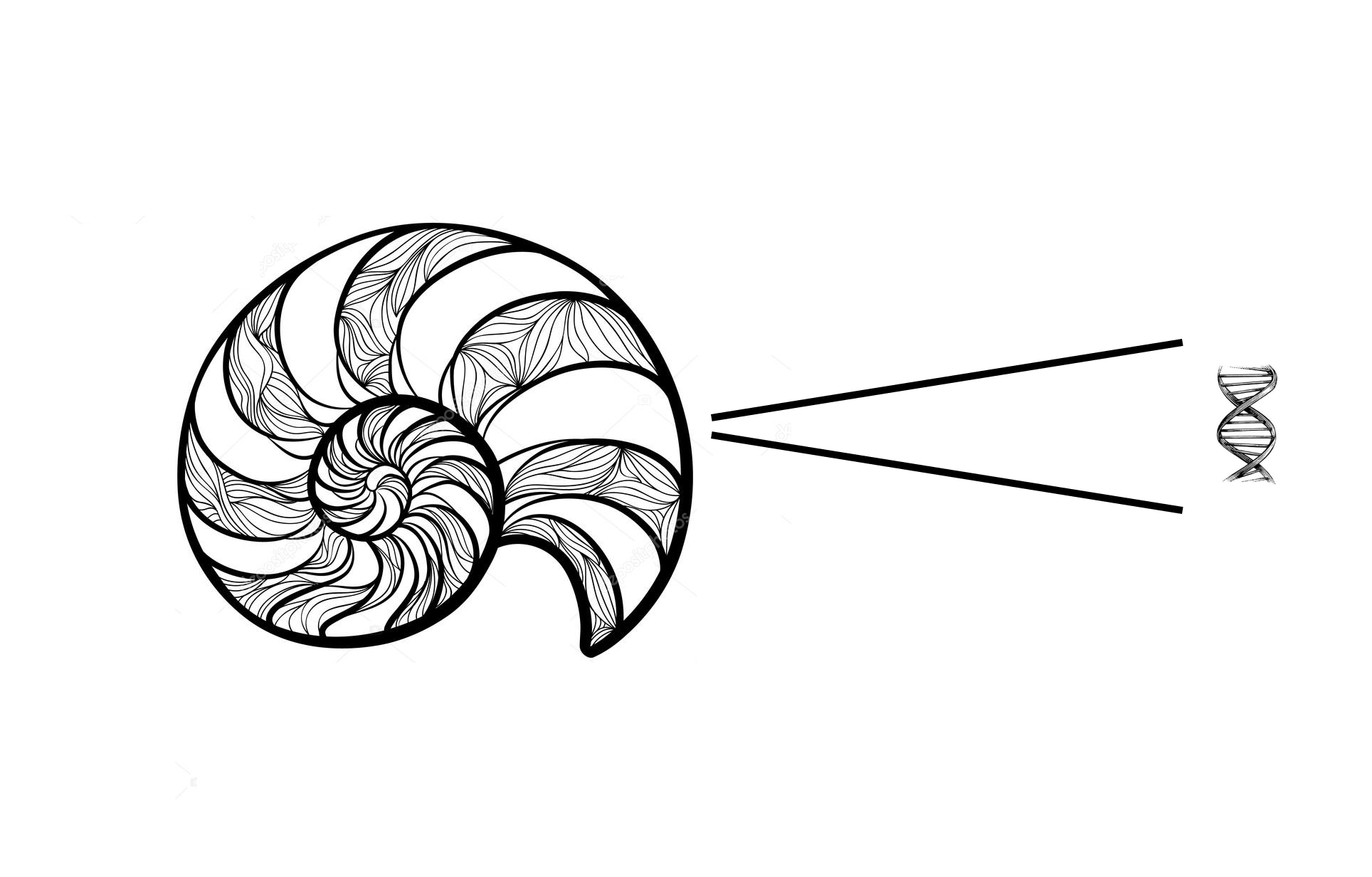
292. Where Visuals And Algorithms Collide: How Unrelated Algorithms Produce Intuitive Markings
 A nautilus seashell with a perfect spiral is the product of specific DNA that coded for its existence.
293. ScyllaDB Hits Fourth Generation with Raft, Tablets, and a Cloud-First Vision
 When ScyllaDB started, the goal was to be the fastest NoSQL database available in the market. However, raw speed does not necessarily make a good database.
294. How a small R&D team achieved great results in the Kaggle competition without using ML algorithms
 A few months ago, Navigine R&D team started participating in Indoor Location & Navigation competition from XYZ10 and Microsoft Research.
295. ShardingSphere-Proxy Front-End Protocol Troubleshooting Guide and Examples
 Case study: introducing the tools used in database protocol development with a troubleshooting guide for ShardingSphere-Proxy MySQL protocol issues.
296. Beyond Big O: Understanding Constant Time Complexity
 Understand O(1) time complexity and why constant-time operations matter for scalable systems and high-performance software.
297. Algorithmic Contract Design for Crowdsourced Ranking: A Deeper Look at Our Experiments
 In the following section, we present experiments that test our models and algorithm. We evaluate the impact of our algorithm on the principal’s utility
298. How Algorithms Respond To Video Content
 Algorithms on different social platforms rank your content and recommend users across the board if it’s something the algorithm thinks that users want to see.
299. My Journey Into Predicting States Using Emoji Observations With Viterbi Algorithm
 See the implementation of the Viterbi algorithm in Python
300. Assessing Model Performance in Secrets Detection: Accuracy, Precision And Recall
 Detecting secrets in source code is like finding needles in a haystack: there are a lot more sticks than there are needles, and you don’t know how many needles might be in the haystack. In the case of secrets detection, you don’t even know what all the needles look like!
301. Representations of Data: One Primitive Plus One Primitive Equals Linear Non-Primitives
 On our first set of data structures, we get into the definition and scope of non-primitive structures. Have a look at the previous read on The Power of Data structures in case you feel a little lost. Right off the batt, we define what it means to be a non-primitive set, and how this can be further broken down.
302. The Ghost in the Playlist
 A data scientist uncovers a massive streaming farm inflating streams for a fake artist. A story about algorithmic fraud, the creator economy, and digital theft.
303. Are You Sick of Big Brother's Search Engine Results?
 Get an expletive move on and create a search engine that gives us some sought-after results, instead of paid-for ads from nincompoops.
304. The One Thing You Didn't Know About Successful Blockchain Startups
 TL;DR: Blockchain software startups can learn a lot about growth-hacking by observing startups in other industries. One great growth tactic: build B2B...
305. Algorithmic Power: How AI Shapes What Content Survives (And Who Wins in Digital Persuasion)
 We went from SEO to GEO; algorithms defines now your credibility in your content creation journey. The way you communicate matters to AI
306. We Need to Hear Both the Good and Bad Sides of Tech - Interview with Charlie G
 An Interwith with Charlie G, the winner of “2021 HackerNoon Contributor of the Year - ALGORITHMS”.
307. Grow Your Audience With Rel=canonical
 Writing content is not enough: you can have written the best blog post of the century; it's no good if nobody sees it.
308. RECKONING Outperforms FT-ICR in Knowledge Disentanglement: Robust Fact Recovery with Distractors
 This article demonstrates RECKONING's superior ability in knowledge disentanglement, showing its multi-task version
309. Taking a Look under the Hood to See How Jest Finds Related Tests
 Learn how Jest finds related tests in an optimal way using the Breadth First Search (BFS) algorithm and how to leverage its API in your local development enviro
310. Noonie Nominee Luiz Rosa Can't Live Without PyCharm and Git
 Luiz Guilherme Fonseca Rosa from Brazil has been nominated for a 2020 Noonie as Hacker Noon Contributor of the Year - ALGORITHMS. The Noonies are Hacker Noon’s way of getting to know — from a community perspective — what matters in tech today. So, we asked our Noonie Nominees to tell us. Here’s what Luiz had to share.
311. Using the Binary Search Algorithm With Git and AWS Kinesis
 Discover how the binary search algorithm improves performance in Git and AWS Kinesis. Learn how to implement it in your own projects for better efficiency.
312. Effective Tools To Make A Great Relationships Analysis in Game of Thrones [Part 2]
 In the last post, we showed the character relationship for the Game of Thrones by using NetworkX and Gephi. In this post, we will show you how to access data in Nebula Graph by using NetworkX.
313. Understanding Search Engine Filtering of Customer Reviews
 In the digital era, you see people dropping reviews online as customers. We can even see companies seeking a platform to provide them with online reviews to boost their business. You might have heard or read about online review filters and how it might have caused frustrations or confusion. Understanding search engine filtering of customer reviews can help you minimize this vagueness.
314. Companies Have Affected Our Digital Wellbeing for Too Long: We Need More Friction in Our Algorithms
 Companies have paid lip service to our digital wellbeing for too long. Now we need to see real change.
315. Algorithms as Ammunition And the Danger of It All
 The thing about the Open Money framework is that it’s not only about money...
316. Connecting Reasoning, Model Editing, and LLM Knowledge: RECKONING's Contribution to AI Research
 This article situates RECKONING within three major research fields: Logical Reasoning, Model Editing, and Language Models as Knowledge Bases.
317. [Shower Thoughts] Why do we Need to Forecast Inventory and not Demand?
 Most companies use demand forecasting methods that are outdated 10-15 years ago: exponential smoothing, ARIMA, Moving Average, Holt-Winters method and others. Not only are they morally outdated, but they are not effective at solving the problem of inventory management for 94% of the product range and for almost all non-food products, which is proved by many scientific studies (see scientific note).
318. Controlling Program Length in Tree Diffusion: A Modified Mutation Sampling Algorithm
 This article provides a detailed breakdown of the mutation sampling algorithm for Tree-Diffusion, focusing on how to generate syntactically valid replacements.
319. The Comfort Tax. Why Users Trade Freedom for Frictionless Feeds
 Users trade agency for seamless feeds. This essay explores the “comfort tax” and why convenience, not censorship, is centralization’s strongest weapon.
320. CFG Tree Enumeration: Simple Integer-Based Bijections
 Explore the IntegerizedStack approach and the role of rule ordering in finite decoding.
321. How to Make Sense of the Bipartite Graph
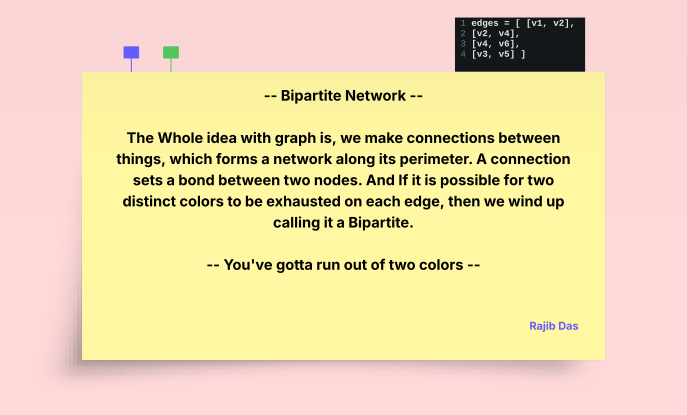 To get a glimpse of it, in today’s issue, I’d like to communicate briefly the idea of a Bipartite Graph and its implementation in a very gentle manner. Let’s go
Thank you for checking out the 321 most read blog posts about Algorithms on HackerNoon.
Visit the /Learn Repo to find the most read blog posts about any technology.