

Let's learn about Infrastructure via these 159 free blog posts. They are ordered by HackerNoon reader engagement data. Visit the Learn Repo or LearnRepo.com to find the most read blog posts about any technology.
Infrastructure refers to the fundamental facilities and systems, including hardware, software, network resources, and data centers, that support IT operations and services. Robust infrastructure is critical for the reliable performance and scalability of modern digital systems.
1. The High-Frequency Trading Developer’s Guide: Six Key Components for Low Latency and Scalability
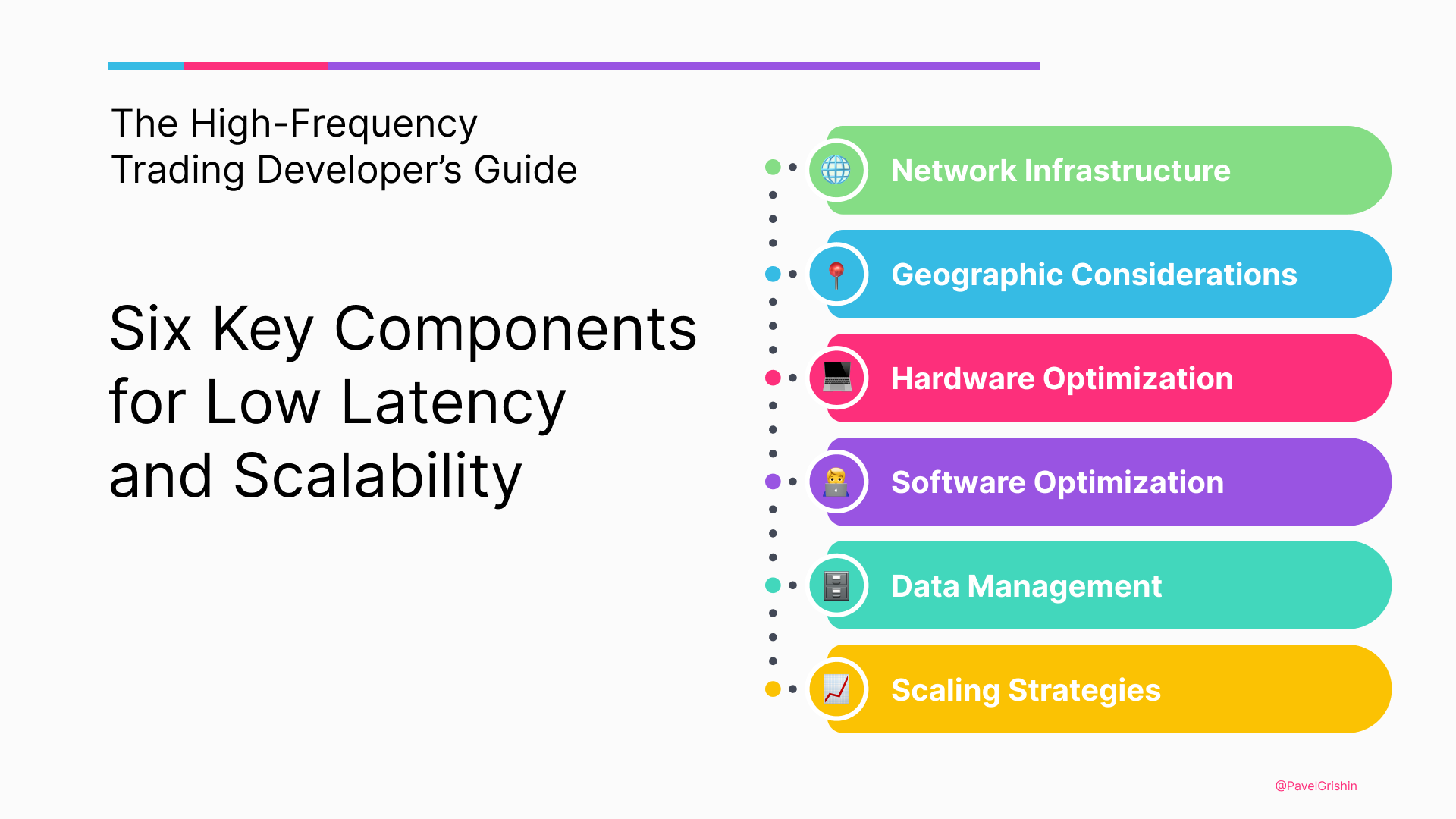 High-frequency trading (HFT) relies on complex algorithms to profit from small price discrepancies, requiring ultra-low latency and high-speed order execution.
2. Setting up Continuous PostgreSQL Backups
 This manual describes the process of setting up continuous backups for PostgreSQL databases to safeguard your data from accidental loss in an efficient way.
[3. With Cyber Threats on the Rise,
Nero Consulting Encourages Businesses to Keep Their Guard Up](https://hackernoon.com/with-cyber-threats-on-the-rise-nero-consulting-encourages-businesses-to-keep-their-guard-up)
 Nero Consulting CEO Anthony Oren has watched countless companies suffer from the lack of preventative measures to secure their systems.
4. The End of CI/CD Pipelines: The Dawn of Agentic DevOps
 GitHub's agent fixed my flaky test in 11 minutes. No human wrote code. But when it fails, instead of a stack trace, you get an outcome.
5. Faster than Linux
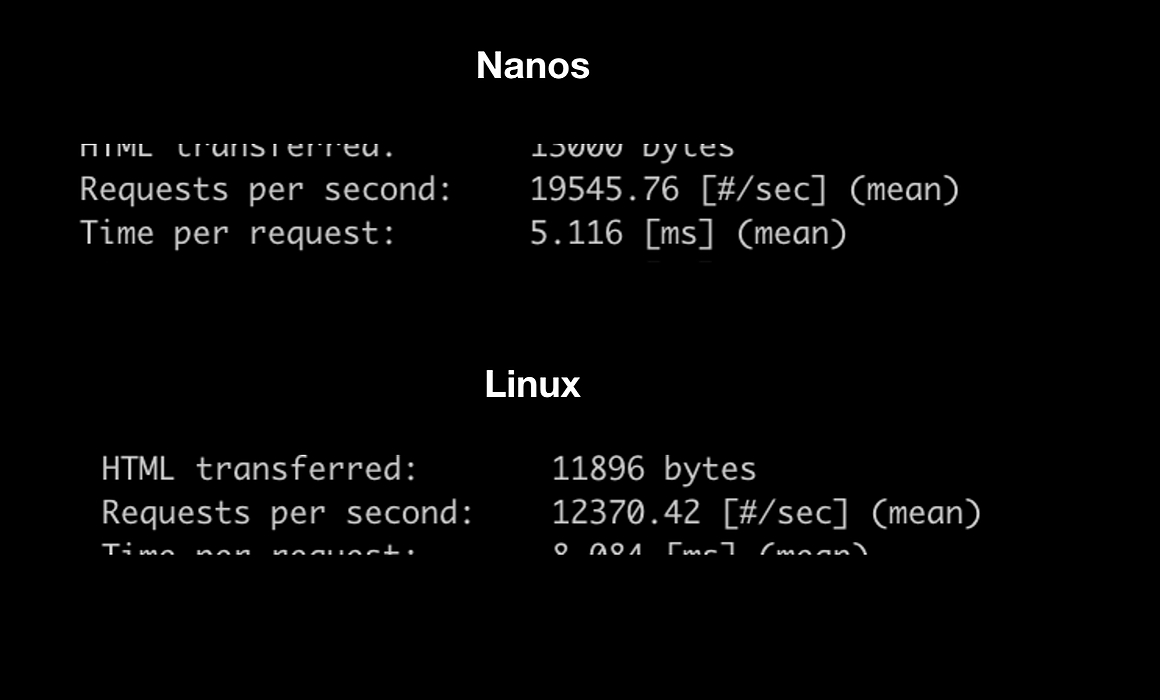 FTL usually refers to "faster than light". A theoretical particle known as a tachyon that powers certain spaceships in the Star Trek universe keeps the plot going for decades through multiple series and and movie franchises.
6. Using Browser Network Calls for Data Processing: The Search for a Dubai Chocolate Pistachio Shake
 This article will cover how I got the viral Dubai Chocolate Pistachio Shake using basic network calls and built a scalable cloud infrastructure for ML services.
7. Beyond the Hype: Real-World Challenges of DevOps in Legacy Infrastructure
 Unravel the truth beyond the hype and explore practical solutions for seamless integration in this insightful article.
8. Docker is dead. Long live the Unikernel.
 As the cloud-native ecosystem evolves, it is beginning to appear as if a challenger to containerization has emerged. In this blog post, I'm going to dive into what unikernels are, and why I think they will be the most likely candidate to replace container-based infrastructure.
9. Continuous Delivery: The Holy Grail of DevOps and Its Impact on Infrastructure Maintenance
 Learn how streamlined processes enhance efficiency and reliability in software deployment.
10. Reverse Proxying — the Backbone of Microservices Architecture
 Understand how reverse proxies powers almost every service that we use today from monolith to microservices. It is a vital piece of 21st century infrastructure!
11. Web 3.0: A Poem
 Cryptographically, the brave may not live forever,
but the cautious do not live at all.
Cryptographically, the brave may not live forever,
but the cautious do not live at all.
12. What Kubernetes Network Plugin Should You Use? A Side by Side Comparison
 Discover a comparative analysis of Kubernetes network plugins Flannel, Cilium, Calico, and Canal. Learn about their performance, security.
13. The Impact of Serverless Computing on PaaS and IaaS Adoption
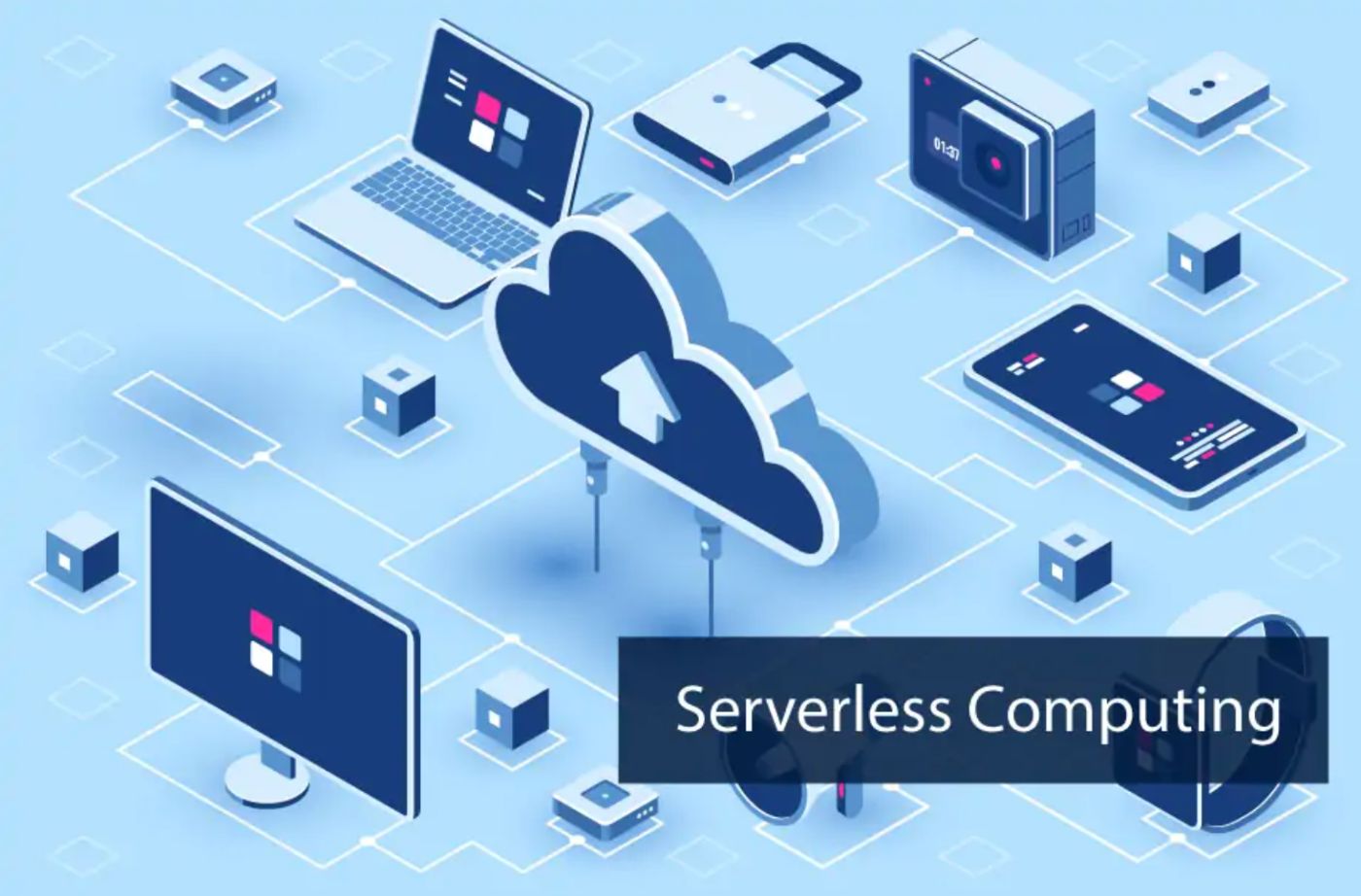 Explore how serverless computing is reshaping the landscape of Platform as a Service (PaaS) and Infrastructure as a Service (IaaS) adoption.
14. Utilizing the Elasticsearch Snapshot Module for Databackups on Azure blob Storage
 While running a self managed elasticsearch cluster like any other database, it's important to make provisions for data backups. Data backups on Elasticsearch can't be done by simply copying elasticsearch data files from one disk to another, this tutorial guides you through making the best use of the Elasticsearch snapshot module for creating cluster snapshots and leverages the Azure blob storage for securely storing your backed up data. Also besides backing up data, the snapshot api also comes in handy for migrating data from one cluster to another.
15. Why Cybersecurity for Solar Is Crucial — And Difficult
 A successful cyberattack targeting solar infrastructure could adversely impact convenience, safety and national security. Here's how to defend solar equipment.
16. DePIN Is Where Crypto Gets Real
 Learn what DePIN solves (hint: it’s centralized), what incentives it uses to scale decentralized infrastructure, and what drives transformation.
17. How to Shed Pounds Off Your Docker Image
 Checkout the best practices for making your Docker images slim and fast. Be Kubernetes ready and streamline your development process!
18. Could Capture-Resistance Liberate the Web As We Know It?
 The internet, by design, has enabled many forms of capture from data mining to market manipulation. So how do we build infrastructures which avoid capture?
19. Mapping the Internet: A Visualization of the Web
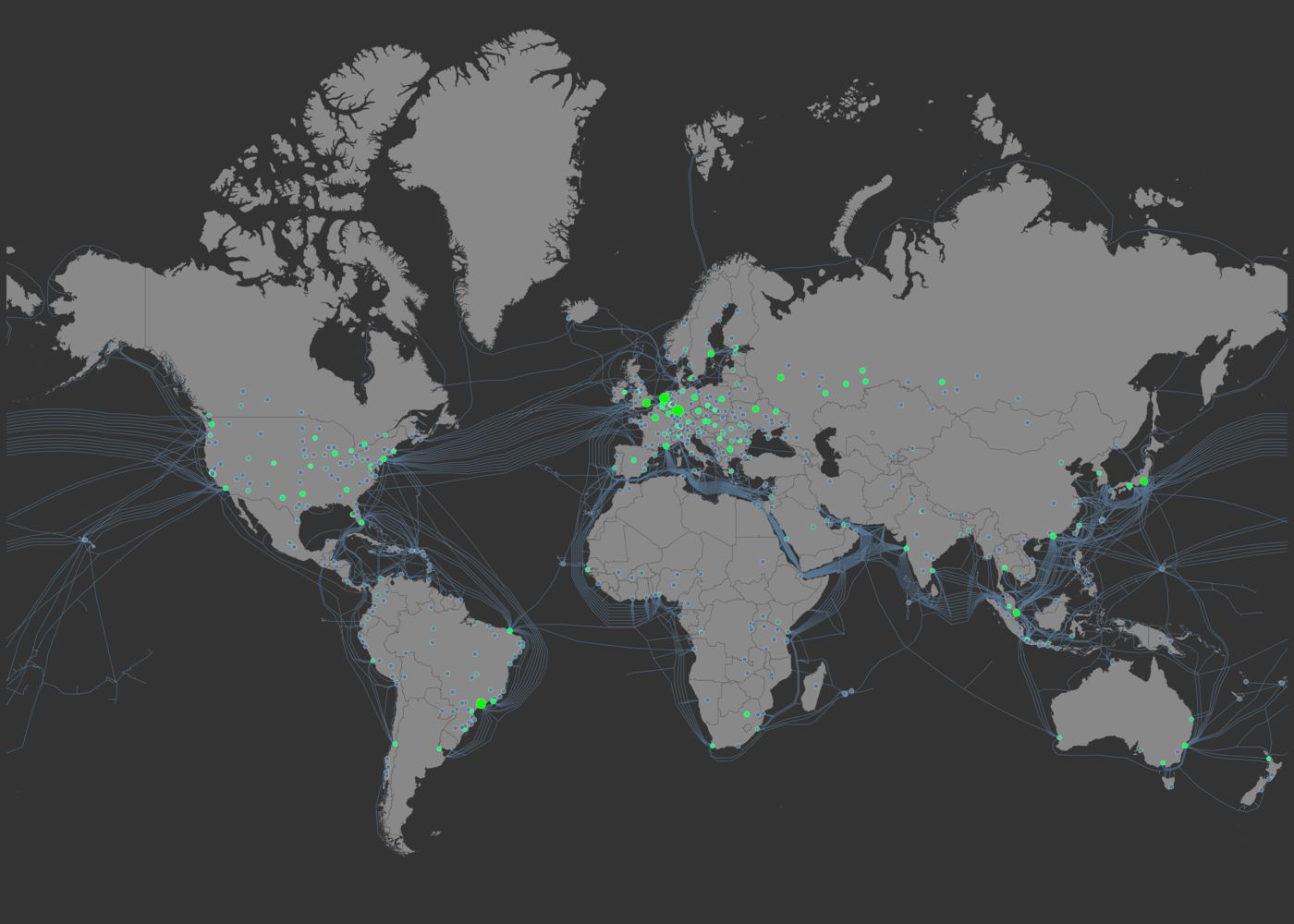 Journey into the depths of the Internet with this incredible map showcasing undersea cables and internet exchanges.
20. What DevOps for Data Really Means
 DevOps for Data is not about fixing pipelines or deploying models. It’s about designing systems that remain reliable, secure, and predictable.
21. How to Optimize IT Infrastructure: Let's go over the stages.
 The guide looks at on-premises and on-cloud IT infrastructure optimization, as well as a hybrid approach to moving from on-premises to the cloud.
22. 5 Best Low-Code Development Platforms in 2022
 What Low-Code development platform to choose in 2022?
23. Deploy Docker Using Ansible

24. Battle for Resources or the SSA Path to Kubernetes Diplomacy
 Kubernetes resource management is more than just creating, deleting, or updating objects.
25. Lessons for Improving Training Performance — Part 1
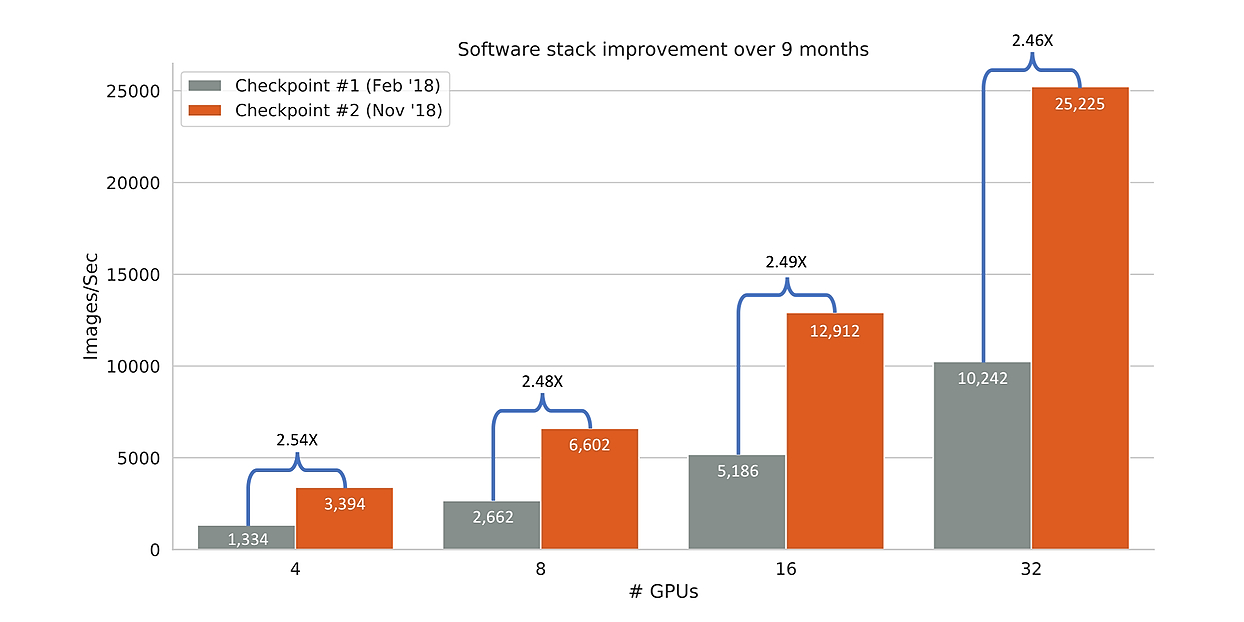 Part 1: Lower precision & larger batch size are standard now
26. Understanding Event Driven Architecture
 Event-driven architecture is a software architecture paradigm promoting the production, detection, consumption of, and reaction to events.
27. The Impact of AI on Transportation: An Interview with Sam Sklar
 Sam Sklar is a trained transportation planner and a journalist with well over a decade of experience in breaking down transportation infrastructure.
28. Check Out the Principles and Best Practices of Infrastructure as Code for 2023
 Infrastructure-as-code is a very important concept to understand in the DevOps world today.
29. Edge Computing is So Fun Part 6: Why You Need to Embrace The Open RAN Ecosystem
 To understand why embracing Open RAN should be an easy decision and get a better understanding of what is Open RAN and what are the benefits of Open RAN.
30. KubeMQ Build & Deploy Test Drive: My First Impressions
 Meta: KubeMQ, makers of the eponymous Kubernetes-native message queue, has a new web-based tool that promises to make setup a breeze. Let's try it out!
31. Quicknode: Your One-Stop Web3 Infrastructure Provider
 Quicknode: Your One-Stop Web3 Infrastructure Provider
32. Ultimate Guide To Building an Unbeatable Multi-Tenant SaaS Startup With Heroku [Part 1]
 In this multi-part series, I'll transform a new application into a multi-tenant experience running in the Heroku ecosystem. This article focuses on the object model, design, architecture, and security.
33. Developers and Cloud IaaS: Why Devs Should Set Up Their Own Cloud Infrastructure
 Why Infrastructure as a Service (IaaS) still rules, even for developers.
34. How To Adjust Size Of A Kubernetes Cluster Using Cluster Autoscaler
 Spawning an AWS EKS cluster has never been easier and options are many: CloudFormation, Terraform or CDK. For the lazy, you can even use the great CLI utility eksctl from Weavework.
35. Using a Product-Led Growth Mindset to Improve User Experience
 How changing the development mindset to a product-led-growth one can improve the user experience by focusing the thought process for the team's members.
36. The Zoom Boom's Impact on Innovation, Infrastructure, and Mental Health
 The corona virus has challenged all aspects of our lives. Healthcare not with standing, one of the biggest challenges has been in trying to keep as much of our lives as possible running as normal. Technology might already have altered the way we work, rest and play for good– but it’s been even more crucial during a period where people are working from home and avoiding large gatherings in the US and the rest of the world. In this post, we’ll look at how tech industry is rising to the corona virus challenge to keep the world moving.
37. Deploying Payment Processing Infrastructure to AWS: Corefy's Experience
 Hi all! I'm Dmytro Dziubenko, Co-founder & CTO of Corefy, a white label SaaS platform that empowers clients to launch their own payment systems in a few clicks. Our platform helps numerous payment providers and companies successfully cover all their payment acceptance needs. The key value of our platform for clients is that it eliminates the difficulties of payment provider integrations. After a single integration with us, clients get access to hundreds of ready-made integrations with PSPs and acquirers worldwide, allowing them to connect any payment method easily.
38. Reimagining OSS BSS Systems to Shape the Future of the Telecom Industry
 OSS and BSS are entities that represent the operational and business sides of the telecom respectively. They enhance the engagement with their customers.
39. The One Config to Rule Them All
 Goplicate - An epic tale about a developer trying to maintain dozens of project config files and finding the one config to bind them and rule them all.
40. Google's Jules Starts Surfacing Work on Its Own, Signaling a Shift in AI Coding Assistants
 Google is make its Jules coding agent more "proactive," allowing it to surface tasks and respond to events without being explicitly invoked by developers.
41. Smart Trains: A Long Journey to Transportation Revolution
 Smart cars might be the future, but what about high-speed smart trains?
42. 2023 Will Be the Year of Kubernetes (and Other Predictions in the Cloud and Infrastructure Industry)
 Dive into the new year’s top cloud and infra-tech trends, straight from a cloud and infrastructure technology fanatic.
43. Why do we need a through table explained with Rails?
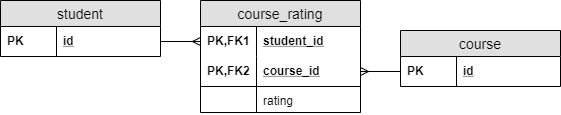 In a many to many relationship, it's just a table between the entities, but what is the purpose of this table to be between them?
44. Agentic AI and Agentic RAG: Hyped Buzzwords or Game-Changers?
 Let's dig into the new Agentic AI and Agentic RAG trends to understand what they truly are.
45. COVID-19 and the Decentralized Economy

46. What is Software-Defined Networking and Why Is It the Future of Networking Connections?
 Software-defined networking, otherwise known as SDN, is a new approach to networking that has come to be favored by experienced technology professionals.
47. How to Cash 300K Requests per Second in a High-Volume Surveillance System
 How we scaled a surveillance system to 300K RPS using eBPF as a caching layer in front of Redis — and why we rewrote parts in Rust to kill latency.
48. How To Pick The Best Tech Stack for your SaaS Startup
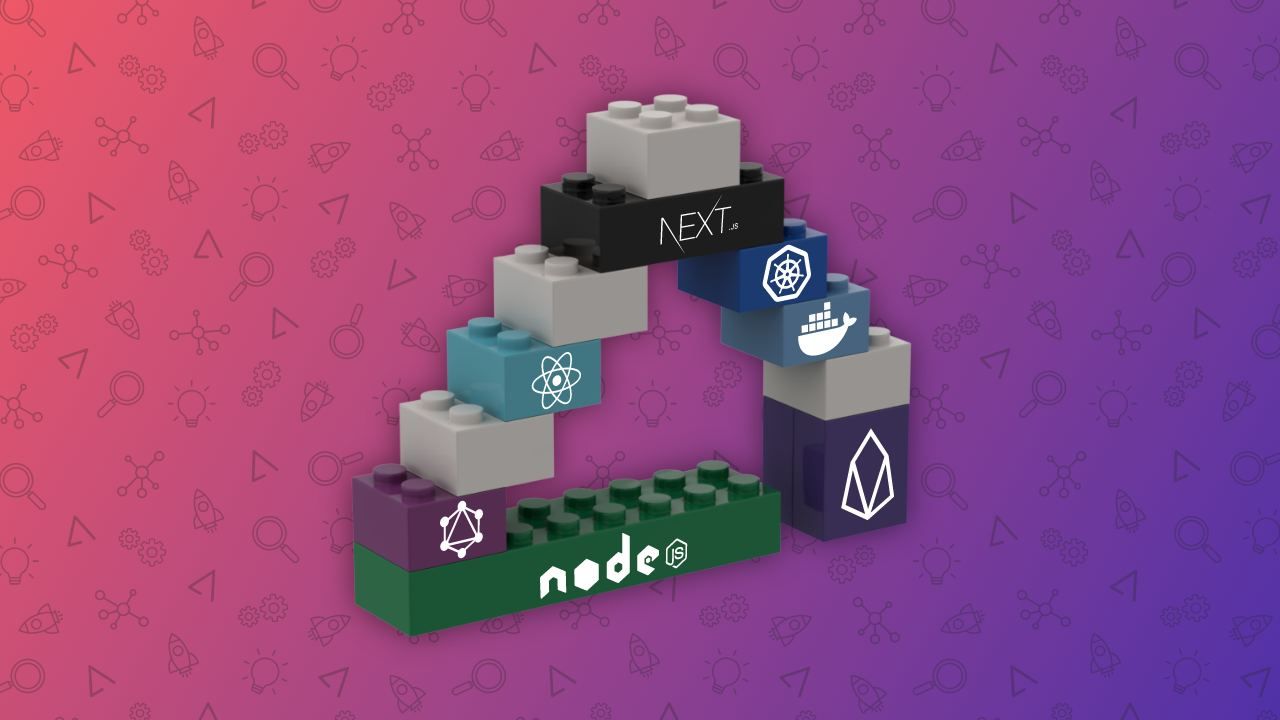 Choosing the right set of frameworks, database, front-end tools, back-end tools to build a long lasting tech stack for your SaaS
49. Beware the Real-Time Trap: Your Fresh Data Could Be Slowing Down Your Dashboards
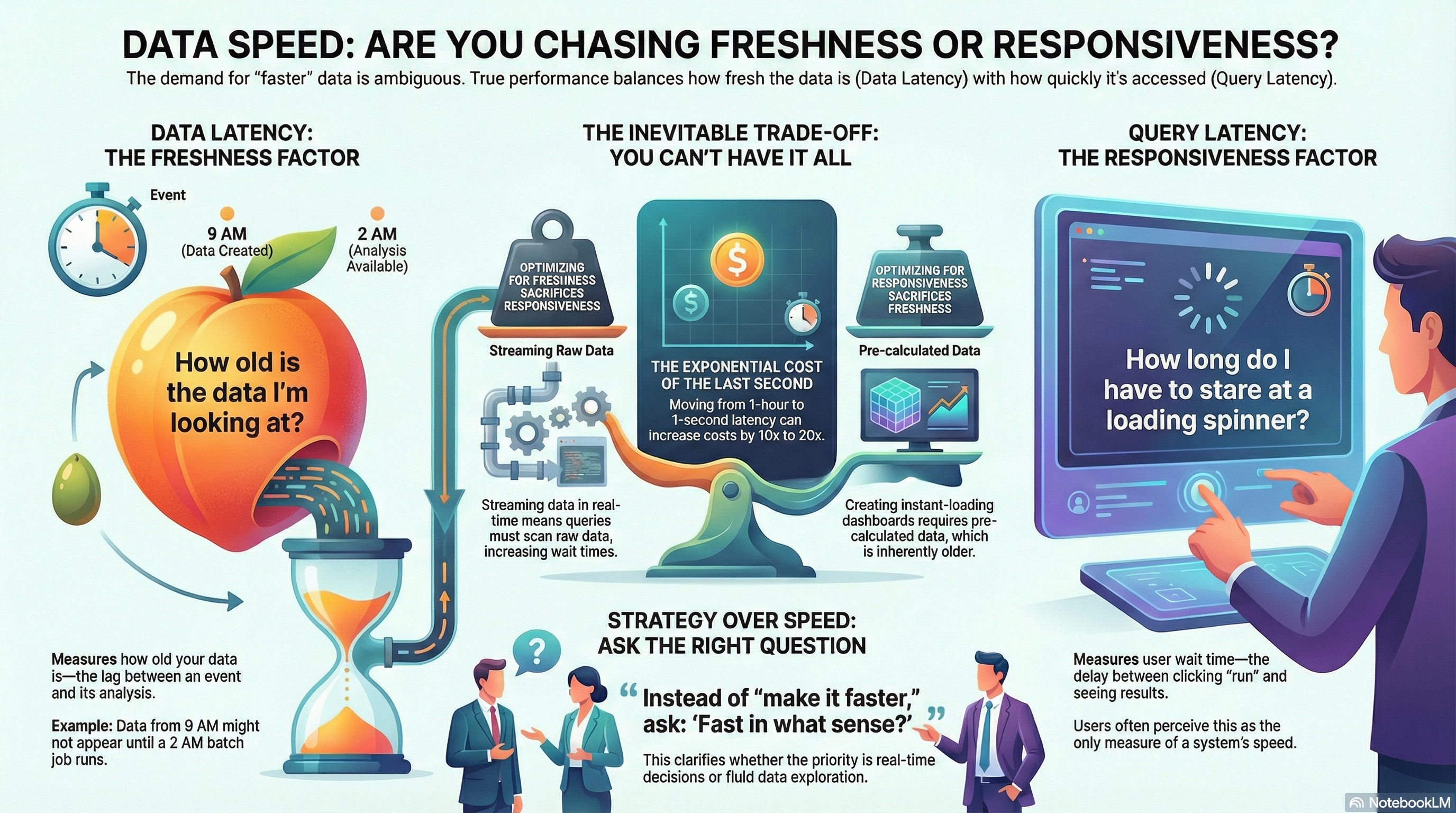 Stop chasing "speed" as a monolith. Data latency and query latency are fundamentally different problems. Optimizing for fresh data often degrades dashboard responsiveness, and vice versa. The real challenge isn't building the fastest system—it's aligning your architecture with actual business needs while managing exponential costs.
50. The Game AI Problem Computers Were Never Built to Solve
 An explainer on why brute-force AI fails at grand strategy games, and how hybrid LLM architectures enable long-horizon strategic reasoning.
51. The Collapse of the Web: The Sameness & Death of Difference in Tech
 The web isnt dying, it’s folding in on itself. From OpenAI’s quiet absorption of innovation to the rise of AI-built clones, developers now live in an era where
52. Introduction to AWS Log Insights as CloudWatch Metrics
 A step-by-step description of how to create an AWS Lambda to convert Cloudwatch LogInsights into metrics
53. Senior Engineers Know the Hardest Part Isn’t Coding
 The most expensive code I ever wrote solved the wrong problem perfectly.
54. Scaling Your DevOps Environment: Best Practices for Cloud Infrastructure Management
 We will explore advanced strategies for scaling your DevOps environment while highlighting Serverspace's seamless integration as a global provider.
55. Hope Is Not a Strategy in Fintech
 The shift from mid-level to senior engineering thinking happens when you stop asking “will this work?”
56. The Role of Advanced Digital Services and Convenient Modern Infrastructure in Transportation Systems
 Advanced digital services and modern infrastructure enable comfortable transportation systems. Learn from Pavel Krovyakov's experience.
57. What Exactly Is An “Infrastructure Provider” In Web3?
 Infrastructure providers play a key role in Web3 development. They will be the roads and highways that enable seamless Web3 communication via secure protocols.
58. Decentralization by Design: How Torram Aligns with Bitcoin’s Core Ethos
 Discover how Torram is building a Bitcoin-native, Proof-of-Stake network that brings fast, secure, and decentralized finality to the Bitcoin blockchain.
59. How Preshent Is Building the Intelligent OS for Regenerative Infrastructure with AI and Blockchain
 Learn how Preshent uses AI to automate complex regulations and blockchain to fund green energy, starting with Tribal Nations.
60. Building Scalable E-commerce Infrastructure on Magento
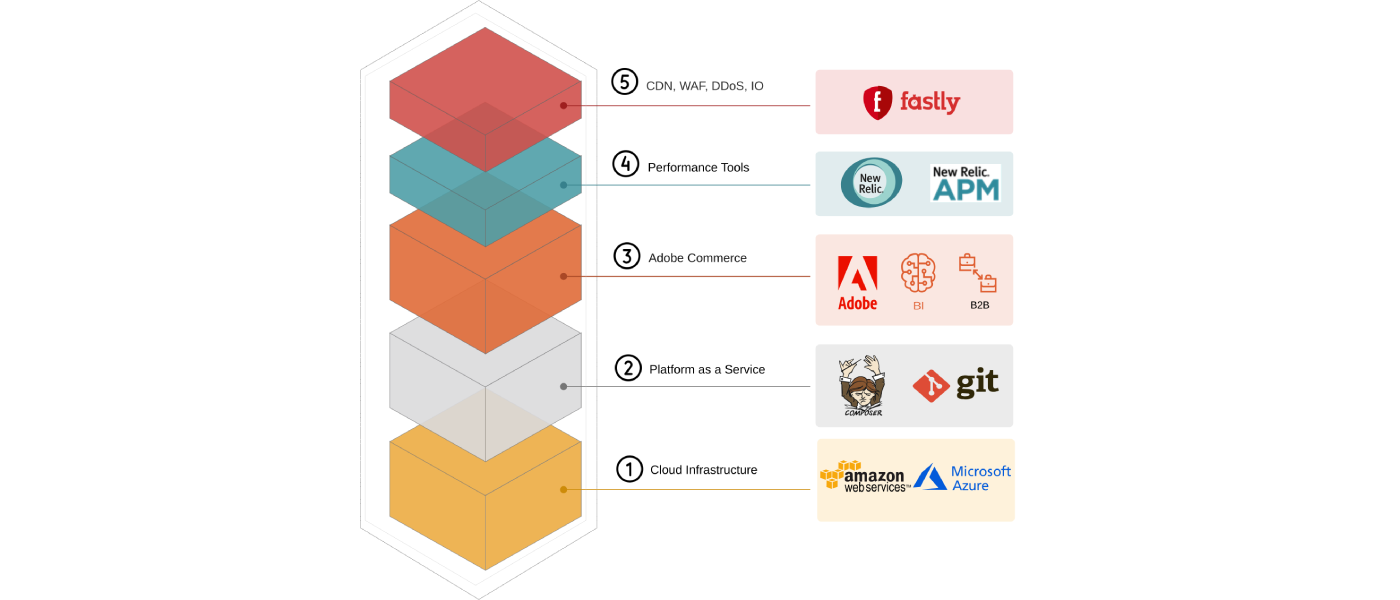 A guide to help other developers build scalable e-commerce infrastructure on Magento and avoid the pitfalls Ruroc has encountered.
61. KYVE Mainnet Goes Live on Pi Day, Opening The Doors To Truly Trustless Data In Web3
 KYVE, the decentralized data lake, mainnet officially live, opening the doors to truly Trustless data in web3.
62. Our Industrial Infrastructure Is A Ticking Time Bomb
 It took one aquarium thermometer to steal 10GB of data from a Las Vegas casino. The adapter, which lacked basic security policies, was simply not on the security staff’s priority list. It was, however, on the hackers’.
63. Best Practices of Cloud Networks Usage in Fintech
 Making good use of a could network first requires firms to consider if they would be meeting their regulatory obligations before ensuring network resilience.
64. Ten Things to Know about (Digital) China and Beyond.
 Today, there are more than 900 million Internet users in China -- about three hundred million more than Europe’s total population. It is also more than twice the total U.S. and Canadian populations combined in 2019.
65. Here's How You Can Train Any Agent Just by Talking: OpenClaw-RL Guide
 This is a Plain English Papers summary of a research paper called OpenClaw-RL: Train Any Agent Simply by Talking
66. Terraform Configuration Syntax Overview
 All you need to know to get started about Terraform Syntax.
67. Infrastructure as Code with APIs: Automating Cloud Resources the Developer Way
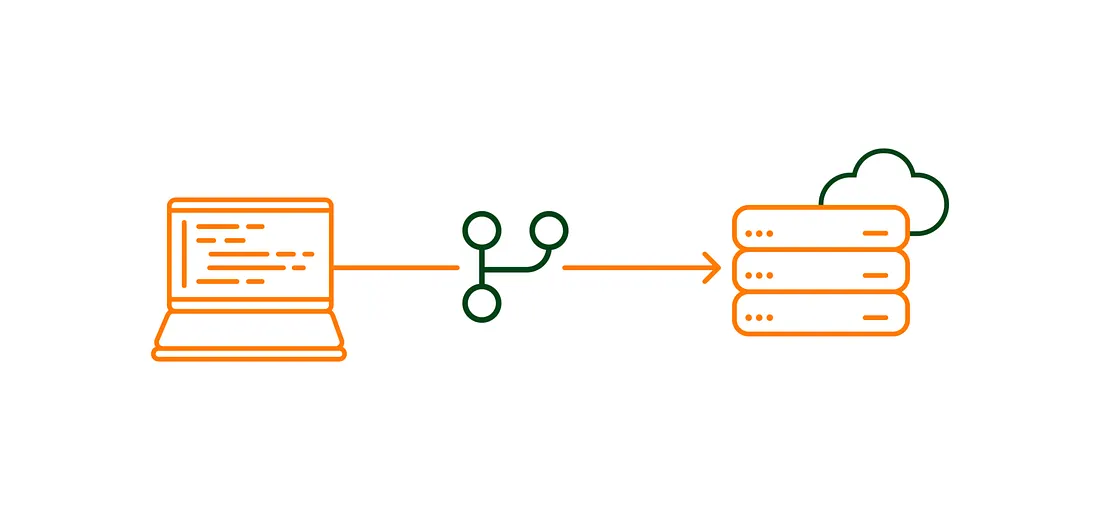 Infrastructure as Code is a way to manage cloud resources using code. Learn how to manage a PaaS using APIs.
68. The Math Trick That Lets Deep Networks Get Smarter Without Falling Apart
 This is a Plain English Papers summary of a research paper called mHC: Manifold-Constrained Hyper-Connections [https://www.aimodels.fyi/papers/arxiv/mhc-manifold-constrained-hyper-connections?utm_source=hackernoon&utm_medium=referral]. If you like these kinds of analysis, join AIModels.fyi [https://www.aimodels.fyi/?utm_source=hackernoon&utm_medium=referral] or follow us on Twitter [https://x.com/aimodelsfyi].
THE HIDDEN GENIUS BEHIND RESIDUAL CONNECTIONS
Residual connections changed deep learning fundamentally. The idea is simple: instead of each layer processing information fresh, you add the original input back to the output. So y equals f(x) plus x. This seemingly small change unlocked the ability to train networks with hundreds of layers without everything falling apart during training.
The reason this works comes down to gradient flow. When you train a neural network, you calculate gradients that tell you how to adjust each parameter. In deep networks without residual connections, these gradients either vanish to nothing or explode to infinity as they propagate backward through many layers. The identity mapping created by the residual connection gives gradients a direct highway to travel back through the network unchanged. Early layers still receive meaningful learning signals even in very deep networks.
This property made residual connections so fundamental that every major architecture built in the last decade relies on them, from Transformers to modern language models. What started as an architectural trick became a foundational principle.
WHY WIDER CONNECTIONS SEEMED LIKE AN EASY WIN
Researchers naturally asked: if one residual bypass works well, what if you created multiple bypasses with different paths? This is the idea behind Hyper-Connections, which expand the residual stream width and diversify connectivity patterns. Instead of a single connection between layers, you'd have richer networks of information flowing in parallel. The intuition seemed sound, and early work showed real performance improvements.
But this expansion came with a hidden cost. When you add multiple pathways and widen the connection space, you fundamentally change how the connections work. The function combining those paths no longer preserves the identity mapping property. You've gained architectural complexity but lost the mathematical guarantee that made residual connections stable in the first place.
This loss of the identity mapping created two serious problems. First, training became unstable. Gradients behaved erratically during backpropagation, making it difficult to scale these networks to realistic sizes. Second, moving data through those wider connections consumed substantial memory, creating computational overhead that eroded the practical benefits. The performance gains came at a cost that grew with scale.
Related work on Hyper-Connections [https://aimodels.fyi/papers/arxiv/hyper-connections?utm_source=hackernoon&utm_medium=referral] and Fractional extensions [https://aimodels.fyi/papers/arxiv/frac-connections-fractional-extension-hyper-connections?utm_source=hackernoon&utm_medium=referral] had explored these wider connection patterns, but neither addressed the fundamental flaw: the loss of the stability property that makes residual connections work.
THE MATHEMATICAL CONSTRAINT THAT FIXES EVERYTHING
This is where the paper reveals its core insight. You don't have to choose between architectural complexity and training stability. Instead, you constrain where that complexity lives.
Think of a sphere. You can move in many directions on its surface, but you're always constrained to the spherical structure itself. You haven't lost freedom, you've shaped it. The paper applies this same logic to neural network connections: allow rich, diverse hyper-connections, but only if they live on a specific manifold, a lower-dimensional mathematical surface embedded in the high-dimensional connection space.
The key is that this manifold constraint preserves the identity mapping property locally. Even though the connections are wider and more complex, the way they combine respects the fundamental principle that makes residual connections work. The hyper-connections get projected onto a manifold that includes the identity function itself. This isn't a compromise that trades away performance. It's a structural constraint that allows you to have both complexity and stability.
The mathematical elegance matters because it resolves the tension completely. You get the stability of the original residual connection design with the performance potential of the wider architecture. Training behaves properly because gradients flow through paths that respect the identity mapping property. The manifold acts as guardrails, keeping you in a learnable zone while still exploring the expanded architectural space.
MAKING IT ACTUALLY EFFICIENT
Mathematics that doesn't run efficiently is rarely useful. The paper doesn't stop at theory, it includes infrastructure optimizations that exploit the manifold structure to reduce memory overhead and computational cost.
Adding mathematical structure to a problem often enables more efficient computation. The manifold constraint provides this structure naturally. Instead of shuffling data through arbitrarily wide connections, the manifold structure allows more efficient implementations. The result is both better performance and better efficiency, which rarely coexist without engineering compromise.
This matters because it separates mHC from purely theoretical contributions. The constraint isn't a beautiful idea that only works on toy problems. It's something you could actually use when training real models with billions of parameters. The optimization work shows that the theoretical insight translates into practical advantage.
TESTING AT REAL SCALE
The paper's claims need evidence. Do the theoretical benefits actually materialize when training realistic models? The experiments test three specific questions: Does mHC maintain the performance improvements of Hyper-Connections while fixing the training instability? Does it actually scale to large models without the memory and computational overhead that plagued standard HC? How does it compare to both baseline residual connections and the wider hyper-connections it improves upon?
The experimental results show that mHC handles the complexity trade-off gracefully. Performance doesn't drop compared to HC, meaning you're not sacrificing the gains that motivated hyper-connections in the first place. Training curves show substantially smoother learning dynamics without the instability that made HC difficult to scale. Scalability improves genuinely, allowing larger models to train with the same computational resources.
These results matter because they validate the entire contribution. If mHC worked only on small networks or toy problems, it would be academically interesting but practically limited. The fact that it works at real scale demonstrates that the theoretical insight translates into something useful for the architectures that power modern AI.
WHAT THIS MEANS FOR BUILDING BETTER MODELS
The paper solves a specific technical problem, but the implications extend further. It reveals something important about how neural network architectures actually work. Residual connections succeeded not because they're the only way to build networks, but because they preserve a specific mathematical property while adding functionality. When you try to extend that design, you risk losing that property unless you're strategic about it.
This points toward a broader principle in topological architecture design, the study of how information flows through network structure. Rather than simply trying new architectures and seeing what works, you can understand the underlying principles that make architectures successful, then innovate within constraints that preserve those principles. It's the difference between trial and error and principled design.
The work on deep manifolds [https://aimodels.fyi/papers/arxiv/deep-manifold-part-2-neural-network-mathematics?utm_source=hackernoon&utm_medium=referral] and network mathematics suggests this approach scales to other architectural decisions. The lesson applies broadly: preservation and innovation coexist if you find the right constraints.
For foundational models, the giant networks that power modern AI systems, this matters deeply. These models are built on architectural principles refined over years of research. If you understand how to innovate responsibly, preserving the properties that make things work while adding new capability, you can guide the evolution of these models more effectively. You move from architecture as empirical craft toward architecture as principled design, where changes are motivated by understanding rather than just intuition.
The paper's real contribution isn't any single technical detail. It's the recognition that you don't need to choose between preserving a foundational principle and innovating beyond it. You can do both when you find the right mathematical structure. That insight will likely shape how future architectures develop.
Original post: Read on AIModels.fyi [https://www.aimodels.fyi/papers/arxiv/mhc-manifold-constrained-hyper-connections?utm_source=hackernoon&utm_medium=referral]
69. How To Manage Infrastructure With Terraform
 What is Terraform?
70. Wealth Is Moving Beyond London, New York, and Zurich
 Wealth is shifting from London and New York to smaller hubs like Belize and Panama in search of efficiency, flexibility, and functional governance.
71. Railroad Infrastructure: How Evertrak is Leading the Way with Sustainable Materials
 Railroad Infrastructure: How Evertrak is Leading the Way with Sustainable Materials
72. What Is The True Cost of Using Public APIs
 How ubiquitous are APIs in today’s development processes? Try asking an engineer how many APIs their project integrates. Most teams won’t know the answer. From analytics tools to maps and cloud hosting, modern applications use a hefty collection of internal and public APIs. Developers use these to quickly assemble applications that would otherwise take much more effort to build. However, there’s a forgotten expense not typically calculated early in a project.
73. Agentic AI Could Break the Old Rules of Job Displacement
 This is a Plain English Papers summary of a research paper called Agentic AI and Occupational Displacement: A Multi-Regional Task Exposure Analysis of Emergi...
74. The Top 5 DevOps Tools and Services to Consider as a Startup
 A collection of DevOps tools can significantly enhance your Software Development Life Cycle (SDLC) and increase engineering productivity.
75. Building Your Infrastructure With Just a Diagram
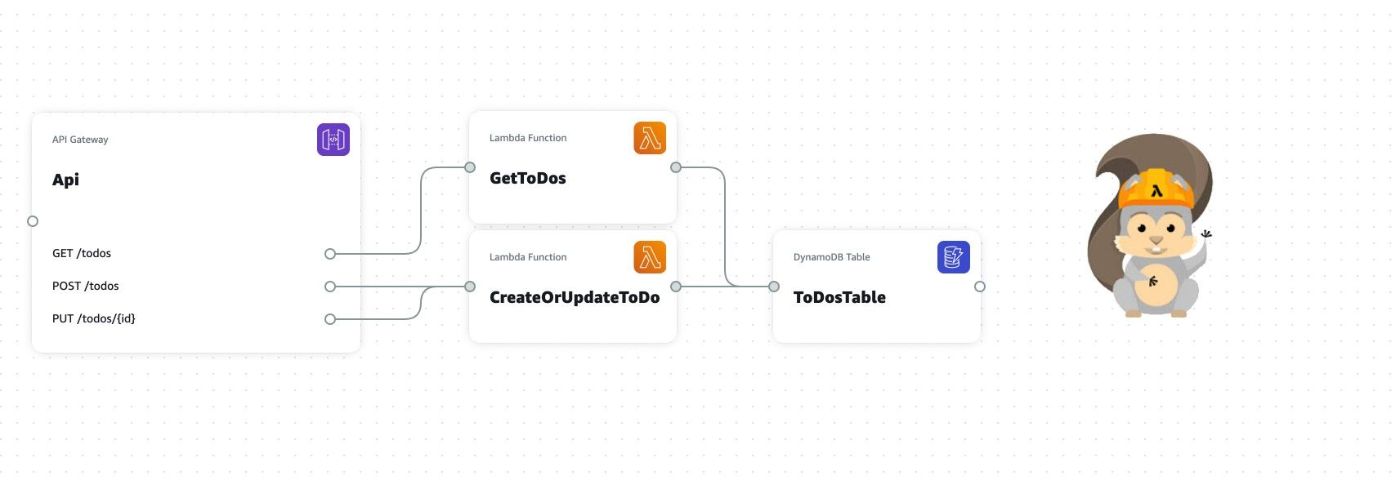 This hands-on tutorial will teach you how to create infrastructure via the AWS Application Composer Console.
76. Introducing Apron Network: A Gateway to Decentralized Infrastructure Services
 Apron Network, a project supported by the Web3 Foundation, received early grants from the Web3 Foundation.
77. Tencent’s Tiny Translator: How HY-MT1.5-1.8B Competes With Big Translation APIs
 Meet Tencent’s HY-MT1.5-1.8B: a compact translation model built for speed, edge deployment, and surprisingly strong quality.
78. Decentralized Computing & Storage vs. Legacy Cloud Solutions
 On November 11th, 2021, an Infura outage collapsed large swaths of the Ethereum ecosystem...
79. Scaling Our AWS Infrastructure

80. How Companies like Netflix Deliver Content Around the World
 Have you ever wondered how companies like Netflix or Spotify is able to delivery videos or songs to you at what seems like lightning fast speed !?
81. Improving Security in your Microservices Architecture with Istio
 Security in a microservice architecture with Istio 1.12
82. How The Hotstuff Protocol is NOT Secure?
 Each participant stores a tree of pending commands locally, in addition to the state variables viewNumber (starting at 1, stores the highest QC it voted to pre-commit), and prepareQC (starts at nil), lockedQC (starts at nil, stores the highest QC it voted to commit). When a “new-view” or round starts, a public function determines the leader from the current participants.
83. The Death of "Dumb Money": Why Stablecoins Are Finally Getting Smart
 How stablecoins evolved from static tokens to programmable assets.
84. Brave New Word: Exploring the Diverse Niches for Decentralized Physical Infrastructure Networks
 Explore how decentralized infrastructure networks (DePIN) use blockchain technology to transform industries, enhancing efficiency, security, and democratization
85. The “Best Practice” Trap
 Don’t go in with an opinion. Go in with data. Prepare one piece of evidence before you walk into the room or join the call.
86. New Spiral Cycle: Why Microservices Are Overrated
 Making out why Amazon, Netflix and others are going back to monolith
87. Improving Observability Through Service Level Metrics

88. Turns Out 30% of Your AI Model Is Just Wasted Space

89. Serbia Builds While the West Borrows
 I am currently touring industrial parks outside of Belgrade, Serbia.Here, new manufacturing facilities are rising with minimal leverage, driven by a focus on...
90. Nginx Logs - Fair Database Benchmarks
 How one test works to analyse millions of Nginx logs from a live website and what to learn from the analysis results while processing it in a timely way.
91. Navigating Startup Storms: The Crucial Role of a Product Engineer
 Explore the rollercoaster of startups, the role of a 'Product Engineer,' and crucial lessons for early-stage success.
92. Why You Should Run Multiple Applications on the Same GPU (and Why it's so Difficult)
 While GPUs are being used more and more, many users encounter the problem of not utilizing them properly.
93. Africa's Internet Evolution: From Challenges to Connectivity
 Discover in this article why Africa is the least area connected to the internet, what challenges users face and opportunities it brings for the digital economy.
94. What Happens When the Cloud Goes Down? The Hidden Fragility of Our Digital Lives
 Google's June outage exposed something terrifying: how interconnected we've become.
95. Examples of Weird Infrastructure Tests: A Thread
 Kane shows examples of the weirdest infrastructure tests.
96. The Recommendation Engine Behind Your Cart: Design, Build, Maintain
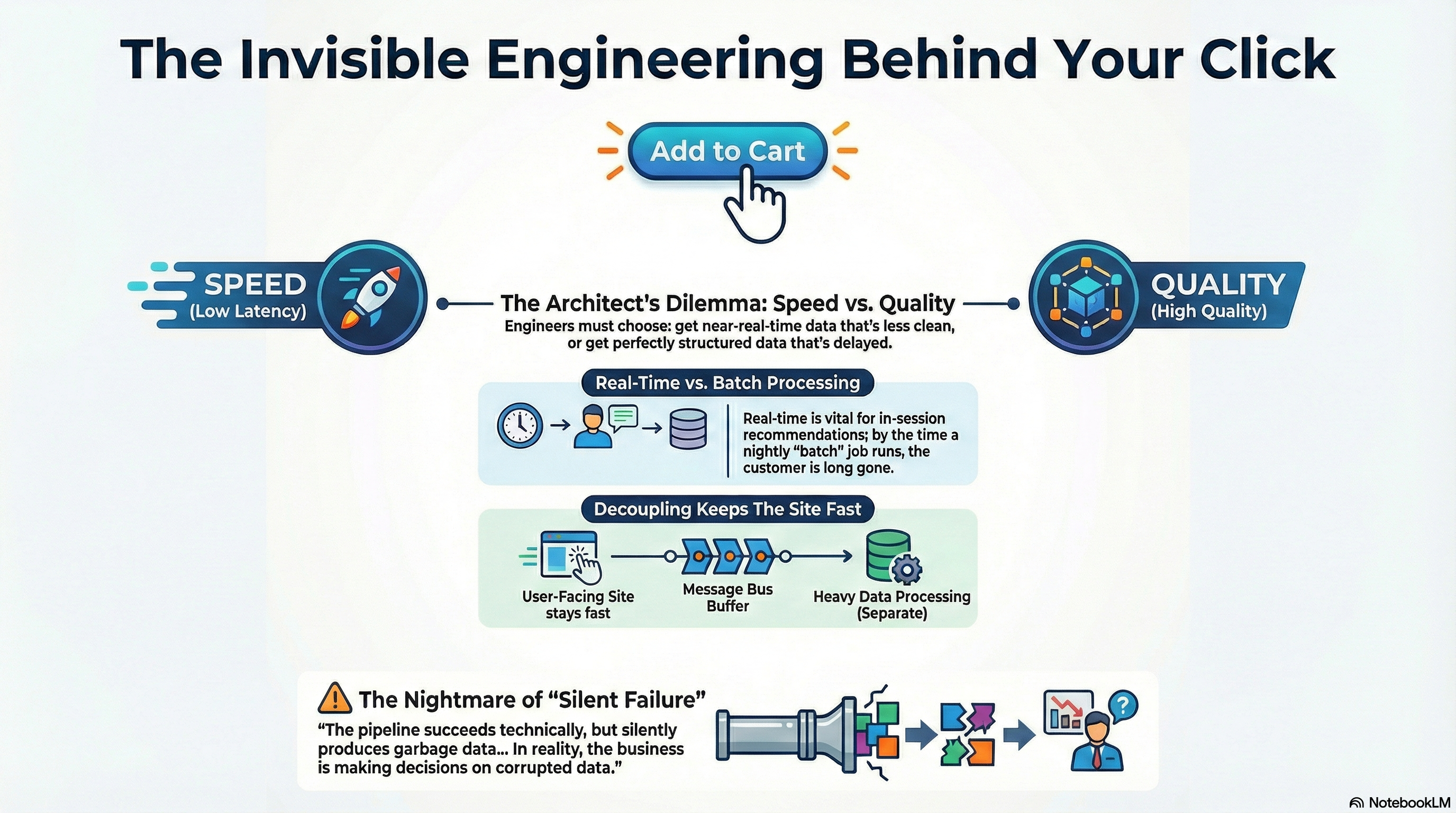 Explore pipeline design, Kafka/Kinesis decoupling, and the monitoring that prevents “green lights” from lying.
97. Subscription Growth: The Momentum You Can’t See

98. Can Large Language Models Develop Gambling Addiction?

99. How to Scale Global Infrastructure Teams
 It's early on in a products lifecycle that it begins to require a global SRE presence. Once you have gained sufficient customer traction, and if your product warrants it, you need to provide them with around the clock availability support to complete the customer support jigsaw.
100. How to Use Joblet: Secure Linux Process Execution Made Simple
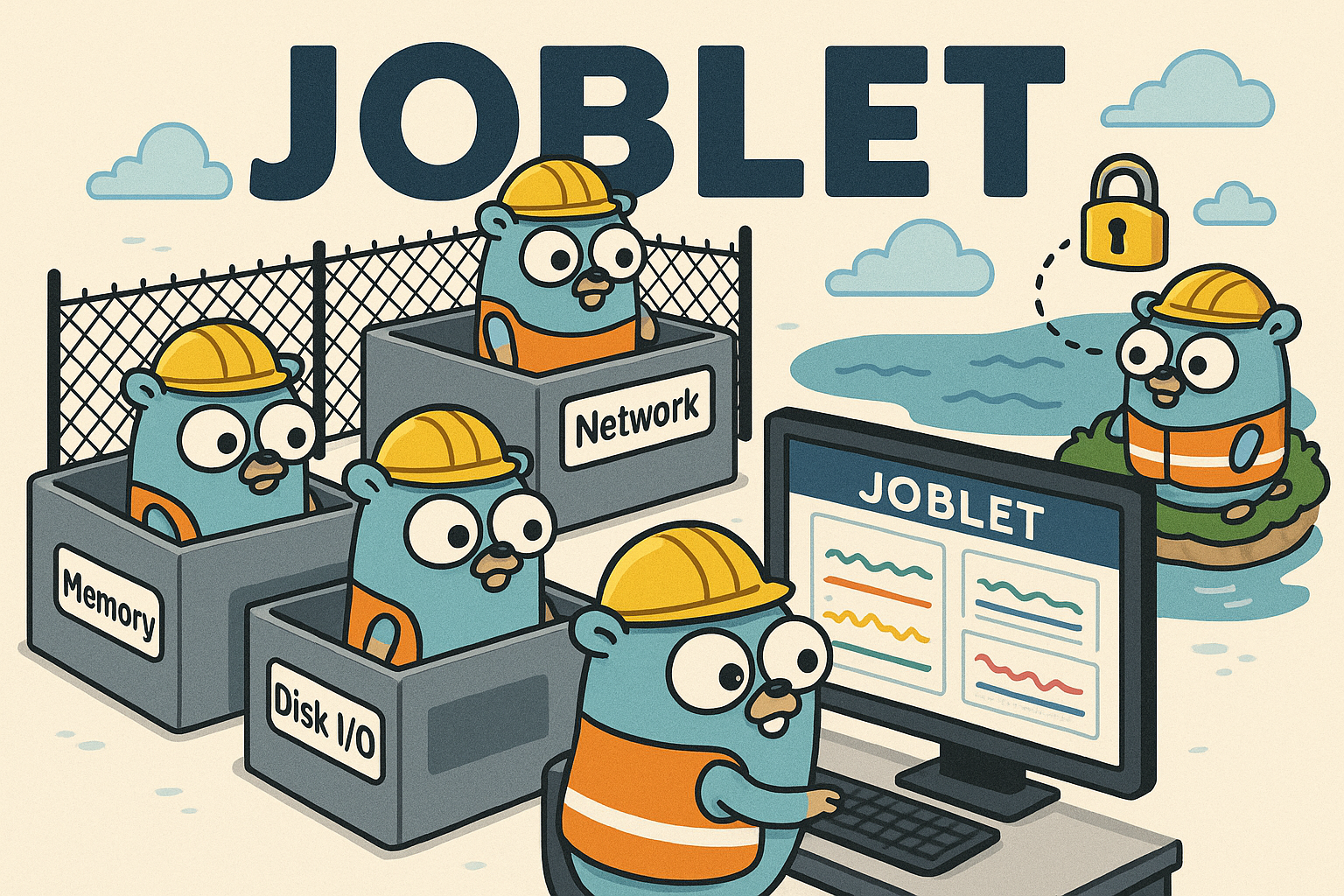 Joblet is a lightweight process isolation platform that lets you run commands and scripts in secure, resource-controlled environments.
101. Running a Global Blockchain Node Infrastructure Ecosystem: How We Do It
 Blockchain infrastructure is basically the decentralized deployment of different blockchains, and the overlay network that sits on top.
102. If You Learn to Build Scalable Applications, You Can Change Your Career
 What we're up to
103. 4 IaC Services For Your ML Infrastructure All MLOps Leaders Should Know
 Here are 4 IaC services you can use to supercharge your ML infrastructure.
104. How to Use ADK, OAuth, and Gemini Enterprise to Power Up Your Agent in Production
 The promise of AI agents is immense productivity gains. But putting them into production can be a tale of two extremes: surprisingly fast or painfully slow.
105. Omni-WorldBench Exposes the Biggest Blind Spot in AI World Modeling
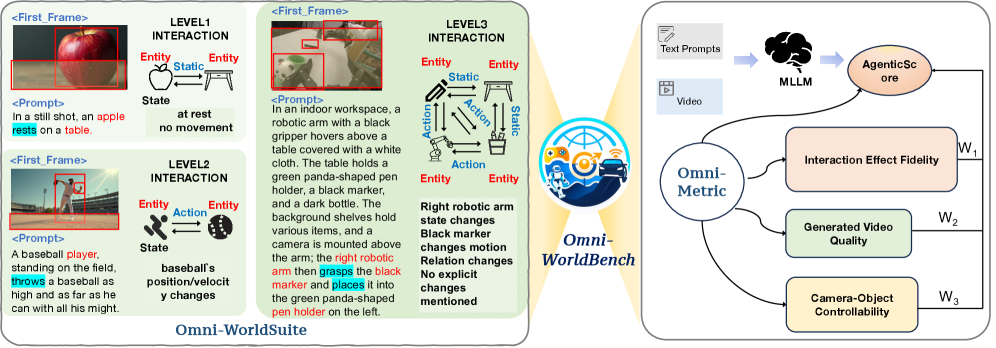 This is a Plain English Papers summary of a research paper called Omni-WorldBench: Towards a Comprehensive Interaction-Centric Evaluation for World Models [h...
106. How to Prepare Your Site for Heavy Traffic

- Monitor your infrastructure. First of all, you should know what's happening with your website. If you're experienced with Prometheus/Grafana, you could use them, but if you’re not, it's not a problem; you can use any monitoring service, such as DataDog or any other SaaS service, and set it up really quickly. If it's still hard, use pingdom or site24x7, at least to check that your website is still available.
107. Understanding the Business Valuation Logic of Apron Network
 The core of traditional business project strategy is positioning, which is the consensus of the industry. The traditional theoretical framework for positioning strategy was first proposed by Michael Porter.
108. How to Unify the Blockchain Babel With Universal Connectors
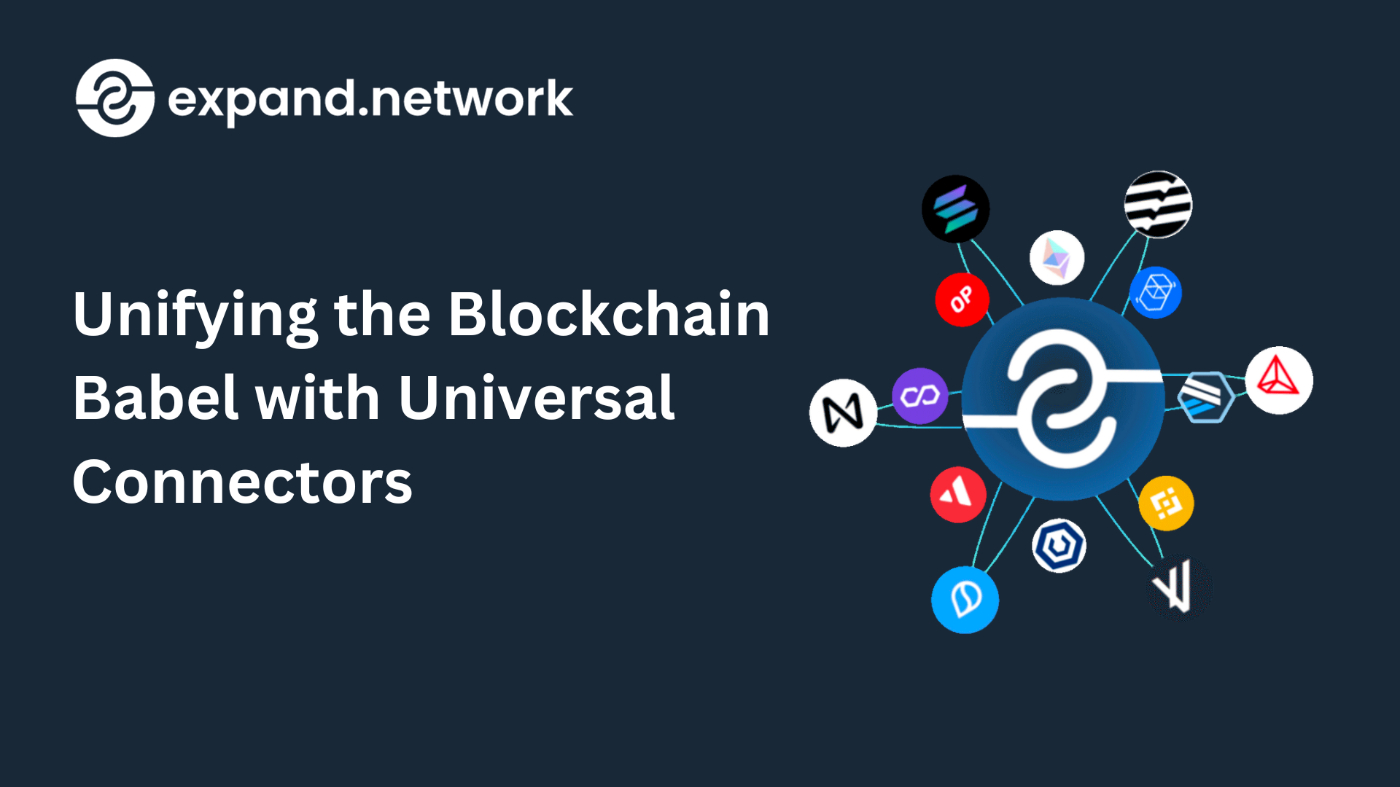 This post delves into the challenges of interoperability within the decentralized finance (DeFi) and blockchain ecosystem.
109. The U.S. Is in Desperate Need of Power Grid Modernization
 Today's U.S. power grid is vulnerable to natural disasters, cyberattacks, and technical failure. What work is being done to modernize it?
110. Andros Wong's Wonder is Providing DAOs with Technical Infrastructure
 Wonder has one key concept and it is that “the future is collaborative”
111. I Wrote an AI Survival Guide for People Afraid of Being Replaced
 Don’t Replace Me is a practical AI survival guide for workers navigating job disruption, automation risk, and the future of work.
112. The Missing Data Problem Behind Broken Computer-Use Agents
 This is a Plain English Papers summary of a research paper called CUA-Suite: Massive Human-annotated Video Demonstrations for Computer-Use Agents [https://ww...
113. The True Cost of Technical Decisions
 Outsource the plumbing. Build the magic. The senior engineer's rule for deciding what to build vs. buy—and why Uber's 2,000 microservices matter.
114. How to Handle Log Spikes Like the Pros: How Top DevOps Teams Tame Bursty Workloads
 Stay ready for traffic surges. DevOps teams use modern observability platforms to handle log spikes with elastic scaling, full ingestion, and clear insights.
115. Learn About Infrastructure as Code in 5 Minutes and Why You Should Use It
 Infrastructure as Code (IaC) is the process of managing and configuring an infrastructure using configuration files, rather than manually editing configurations
116. 4 Essential Steps To Convert a Kubernetes Fullstack App to Heroku
 In the last several years, Google’s Kubernetes project has generated huge buzz. The project has grown and evolved into a titan of the cloud infrastructure world.
117. Why 70% of Developers Don’t Trust Plugins—and How I Built a Fix

118. Serverless Benefits And Challenges: 2020 Edition
 While we know the many benefits of going serverless - reduced costs via pay-per-use pricing models, less operational burden/overhead, instant scalability, increased automation - the challenges are often not addressed as comprehensively. The understandable concerns over migrating can stop any architectural decisions and actions being made for fear of getting it wrong and not having the right resources. This article discusses the common concerns around going serverless and our advice to minimise their impact.
119. MOSS-TTS-Nano-100M Brings Multilingual Voice Cloning to CPUs
 This is a simplified guide to an AI model called MOSS-TTS-Nano-100M [https://www.aimodels.fyi/models/huggingFace/moss-tts-nano-100m-openmoss-team?utm_source=...
120. An Introduction to AWS VPC
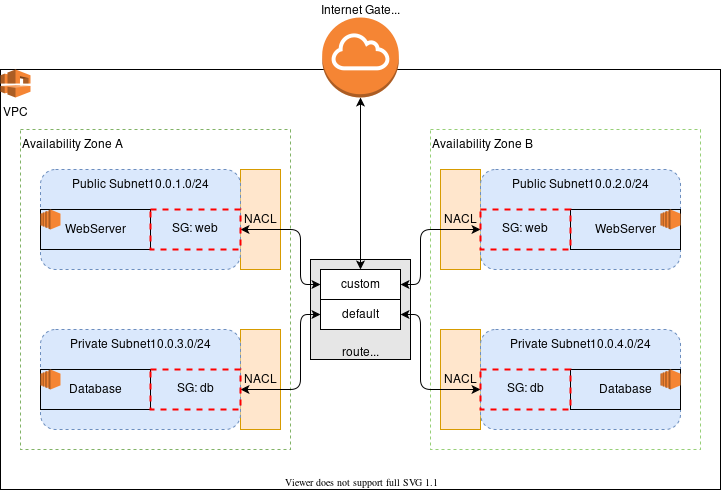 VPC is the topic that flies under the radar of many Software Developers, despite being present in every AWS account (well, maybe not for accounts created before 2009...but that's unlikely). There are a few reasons for this I can think of:
121. Cohere’s Multilingual Embedding Model for Search, Retrieval, and Recommendations
 This is a simplified guide to an AI model called Cohere-embed-multilingual-v3.0 [https://www.aimodels.fyi/models/huggingFace/cohere-embed-multilingual-v3.0-c...
122. ‘Are We Cooked?’ AI Forces a Rethink of What It Means to Be an Engineer
 As AI coding agents evolve, they are not just assisting but proactively shaping software development, prompting crucial reflections on future roles.
123. Introducing Driftctl: Your IaC Security Belt
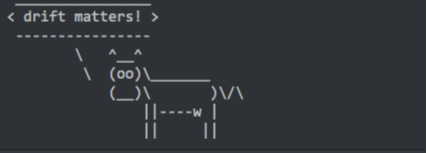 We recently released the first versions of driftctl, a new open-source project for infrastructure developers, DevOps, SRE, and cloud practitioners, with the goal of helping manage all kinds of drifts.
124. Exploring Serverless, Cloud, and On-Premises Architectures
 Differences between most used infrastructure architectures for deploying applications, Cloud, On-Premises and Serverless.
125. Learning Finance by Designing It
 8 months into designing a fintech platform with zero financial background - how domain ignorance slows you down and unexpectedly helps you....
126. What Really Happens When You Stop Posting on X for 2 Months

127. The Prompt Trap: Why Your AI Startup Is Building on Rented Land
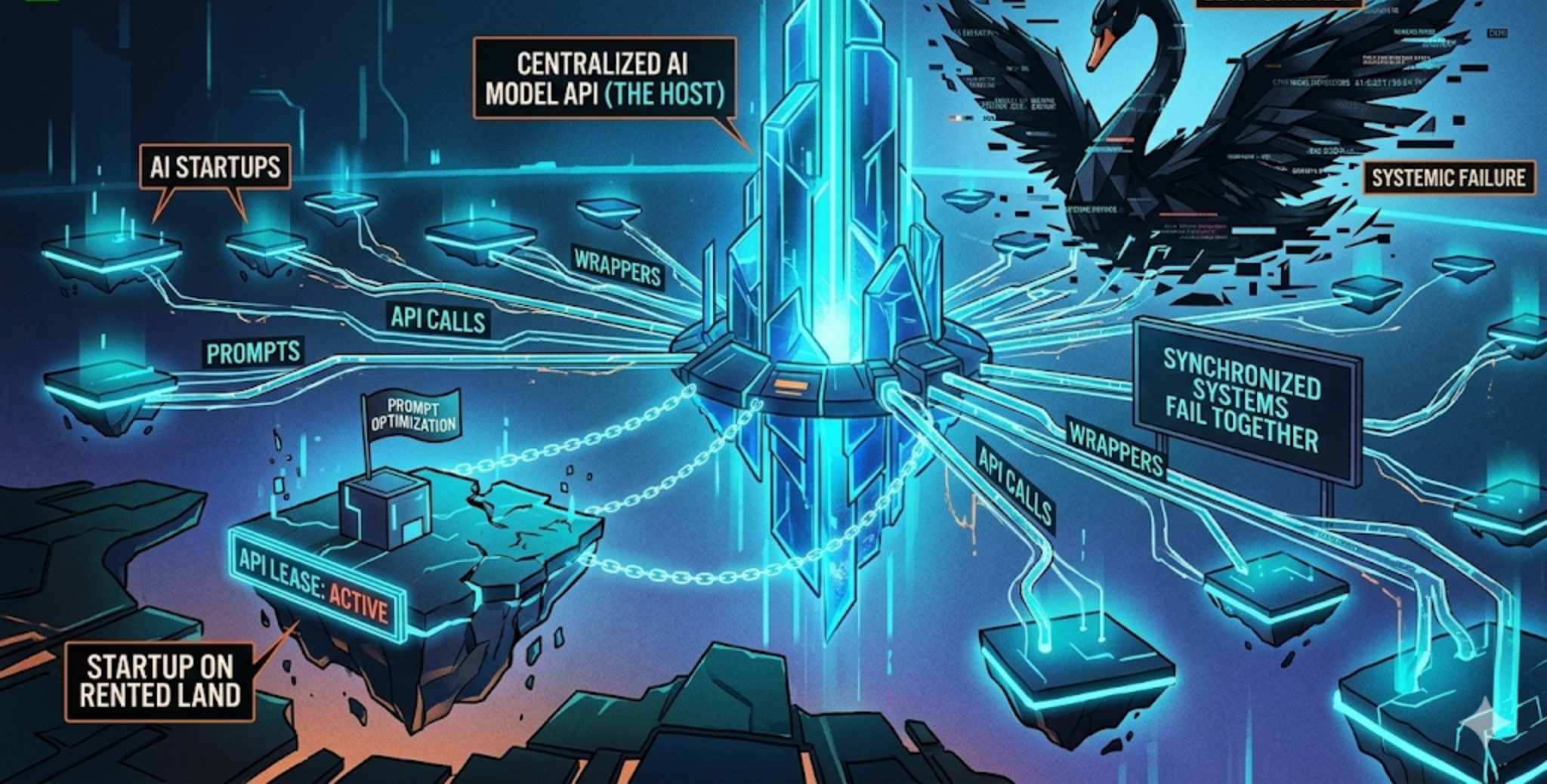 A wake-up call for AI founders: obsessing over prompts while building on someone else’s platform is a trap.
128. Ping Command Explained: How It Works and When to Use It

129. The Specialist’s Dilemma Is Breaking Scientific AI
 This is a Plain English Papers summary of a research paper called Intern-S1-Pro: Scientific Multimodal Foundation Model at Trillion Scale [https://www.aimode...
130. The Real Cost of Hiding Technical Failures From Clients
 Spinning technical failures into vague reassurances may protect appearances, but it quietly destroys client trust and weakens company culture.
131. How to Start Using Globalping Without Getting Overwhelmed

132. WildDet3D Wants to Break 3D Detection Out of the Benchmark Box
 This is a Plain English Papers summary of a research paper called WildDet3D: Scaling Promptable 3D Detection in the Wild [https://www.aimodels.fyi/papers/arx...
133. Communication Isn’t the Problem. Retrieval Is.
 Management failures are often retrieval failures: the information existed, but the system failed to surface it to the right person in time.
134. Scale Is Not a Goal: Why Most Software Architectures Are Overbuilt
 Designing for imaginary scale leads to real costs. Why pragmatic systems beat “future-proof” architectures in early products.
135. The Blockchain Infrastructure that Caters to Web3.0 Needs
 The Blockchain infrastructure that caters to Web3.0 needs
136. The Pricing Model That Boosts ARR and Kills Activation

137. Cloud Infrastructure Can Set Legacy Data Free

138. Shannon: a Hero of the Digital Age
 A story about a visionary endeavour that proved to be not just successful, but transformative, reshaping the course of history itself.
139. Bonsai-8B-gguf Shrinks an 8B Model to Just 1.15 GB
 This is a simplified guide to an AI model called Bonsai-8B-gguf [https://www.aimodels.fyi/models/huggingFace/bonsai-8b-gguf-prism-ml?utm_source=hackernoon&ut...
140. The Metric Hierarchy Every Subscription Company Needs

141. Launch Readiness Matters More Than Code
 Launch day reveals what you should have built. Launch readiness is everything else.
142. Mighty App: Fad or Rad?
 The Mighty App promises a lot and it might seem like a waste of money but, thanks to some quirks, it can be very useful when it comes to downloading at speed.
143. How To Evaluate Potential IT Monitoring Solutions
 Check out top factors you need to consider when choosing IT monitoring tool. Learn how to pick the best solution for your business.
144. Serving Structured Data in Alluxio
 This article introduces Structured Data Management (Developer Preview) available in the latest Alluxio 2.1.0 release, a new effort to provide further benefits to SQL and structured data workloads using Alluxio. The original concept was discussed on Alluxio’s engineering blog. This article is part one of the two articles on the Structured Data Management feature my team worked on.
145. B2B Tech: What is New Enterprise and Why is Everybody Talking About It?
 "New Enterprise" is an approach to business that is quickly gaining momentum in many sectors, especially tech: We explore what it is and why it is matters.
146. Overcoming The Most Frequent Monitoring Challenges Engineers Face
 Let’s look at some most frequent monitoring challenges that engineers face, along with monitoring IT tools and how these can be resolved.
147. You Can’t Scale Subscriptions on Freemium and Paid Media

148. DaaS: A Boon for the Insurance Industry
 Know the benefits of opting for Desktop-as-a-Service or DaaS provider for the insurance industry - Get Mobility, Cost benefits & much more.
149. How Embedding an Inbox Feed in Your Application Can Benefit Your Users
 Inbox Feed is an in-app repository of the notification history so that users don’t miss out on any important information.
150. What It Takes to Design for 5 Million Crypto Users
 How I redesigned Merlin by VALK for the Ledger Live integration - two audiences, two design systems, and a compressed timeline....
151. The HackerNoon Newsletter: Why ML Can Predict the Weather, but Not Financial Markets (10/8/2025)
 10/8/2025: Top 5 stories on the HackerNoon homepage!
152. Running A/B Tests You Can’t Measure

153. The Frozen Knowledge Problem in AI Image Generation
 This is a Plain English Papers summary of a research paper called Unify-Agent: A Unified Multimodal Agent for World-Grounded Image Synthesis [https://www.aim...
154. Serving Structured Data in Alluxio: Example
 In the previous article, I described the concept and design of the Structured Data Service in the Alluxio 2.1.0 release. This article will go through an example to demonstrate how it helps SQL and structured data workloads.
155. The Architecture Behind Smarter AI Agents
 Modern AI agents succeed through architecture, not just scale. This paper maps the systems that extend model capabilities.
156. The Hidden Cost of Chasing 100% Test Coverage
 Learn why chasing perfect test coverage can slow delivery, increase brittleness, and distract engineering teams from real product risk.
157. How to Run Huge Models on Cheap Hardware Without the “Quantization Hangover”
 Want to fine-tune large vision and multimodal models without enterprise GPUs?
158. This 20B Search Model Helps AI Systems Find Better Evidence Faster
 This is a simplified guide to an AI model called context-1 [https://www.aimodels.fyi/models/huggingFace/context-1-chromadb?utm_source=hackernoon&utm_medium=r...
159. LG’s EXAONE-4.5-33B Packs Vision, Reasoning, and 262K Context Into One Model
 This is a simplified guide to an AI model called EXAONE-4.5-33B [https://www.aimodels.fyi/models/huggingFace/exaone-4.5-33b-lgai-exaone?utm_source=hackernoon...
Thank you for checking out the 159 most read blog posts about Infrastructure on HackerNoon.
Visit the /Learn Repo to find the most read blog posts about any technology.